 Seminole Siding
 Siding Built for Redington's Barrier-Island Conditions
Redington sits in one of the more exposed pockets of Pinellas County, close enough to the Gulf that salt-laden air is a daily fact of life for anything on the outside of a home. Add in the wind-driven rain that comes with Florida's summer storm pattern, the near-constant UV load, and the occasional direct hit from a tropical system, and you end up with an exterior environment that is genuinely harder on building materials than most of the country ever has to deal with. Siding in this area isn't just a cosmetic layer — it's the first line of defense against moisture intrusion, wind uplift, and the slow chemical breakdown that salt air causes in paint, caulk, and lesser siding materials.
Seminole Siding Company works throughout this part of Pinellas County, and Redington's proximity to open water is something we factor into every estimate, every product recommendation, and every installation detail — not as an afterthought, but as the starting point.
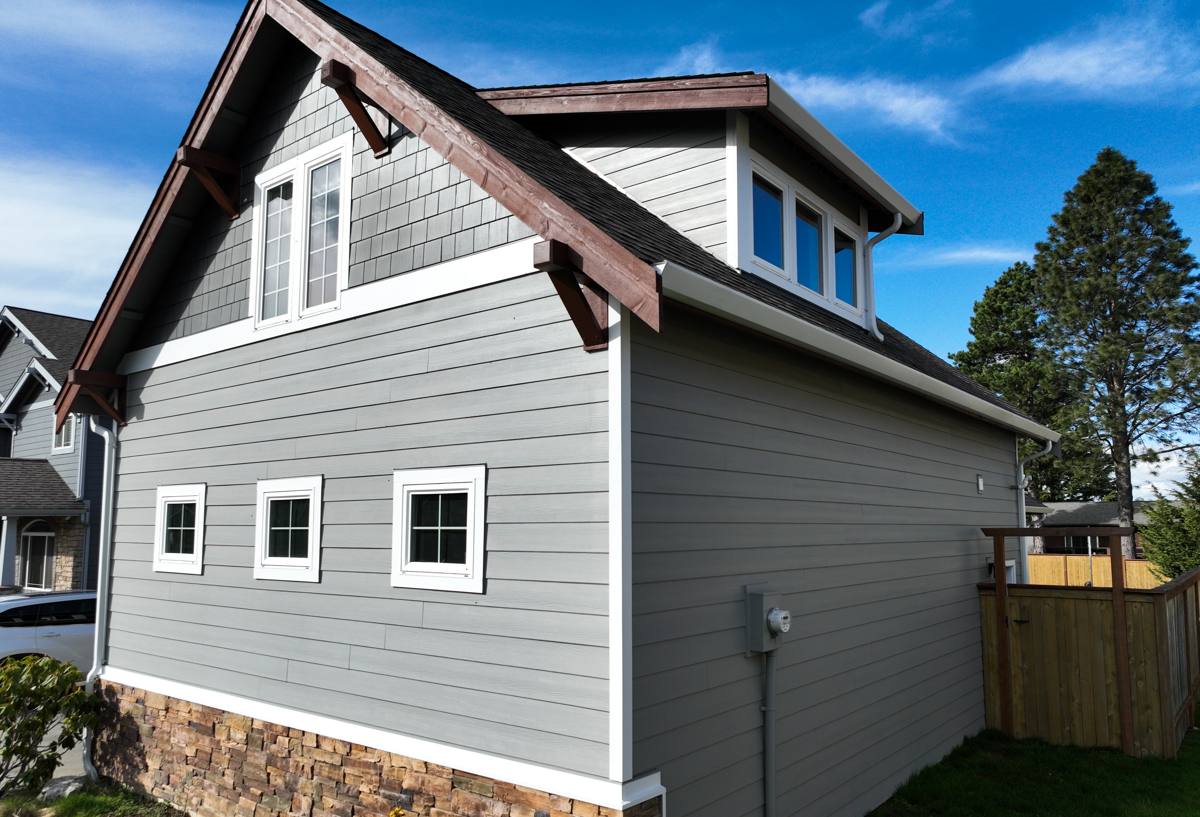
What the Climate Actually Does to a House Here
Salt Air and Corrosion
Airborne salt doesn't just sit on a surface — it works into seams, fastener heads, and any place moisture can collect. Over years, that accelerates the failure of caulk joints, promotes rust on exposed metal fasteners, and breaks down lower-grade paint finishes faster than inland homes ever experience. Siding systems that rely on surface-applied paint (rather than a factory-cured finish) tend to show chalking, fading, and peeling noticeably sooner this close to the water.
Wind-Driven Rain
It's rarely just rain in this part of Florida — it's rain moving sideways under wind pressure, which means water gets tested against every lap, joint, and penetration in a wall system. Siding that isn't installed with correct clearances, flashing, and fastening patterns can allow water behind the cladding even when the material itself is sound. This is one of the most common root causes of hidden rot we find when we open up an older wall system.
UV Exposure
Florida sun is intense and consistent nearly year-round. UV breaks down the polymers in vinyl siding, causing warping and brittleness, and it fades paint on wood and fiber cement products that don't have a factory-applied, UV-stable finish. A material's real-world lifespan in Redington is often shorter than its lifespan on a spec sheet written for a milder climate.
Wind Load
Pinellas County construction has to account for high design wind speeds, and siding is a structural-adjacent decision, not just an aesthetic one. Fastening schedules, panel weight, and impact resistance all matter more here than in a low-wind-zone market.
Why We Install Only James Hardie Fiber Cement
We get asked fairly often why we don't offer vinyl, LP SmartSide, or other fiber cement brands like Cemplank or Allura. It's a fair question, and the honest answer is that after years of doing exterior work in this exact climate, we standardized on one product line because it consistently holds up better here — not because of marketing, but because of what we see when we're called back to older installs.
Vinyl siding is affordable and easy to install, but it's a petroleum-based product that softens, warps, and becomes brittle under sustained heat and UV — and it's not rated to stand up to the kind of wind loads Pinellas County design codes are built around. LP SmartSide is an engineered wood product; it performs well in many climates, but any wood-based substrate carries more moisture sensitivity than a fiber cement product, and that's a real consideration in a wind-driven-rain environment. Other fiber cement brands, like Cemplank and Allura, are legitimate products, but James Hardie has the longest track record specifically in Florida and Gulf Coast markets, the most refined HZ5 product formulation for high-humidity, high-salt regions, and a factory finish system (ColorPlus) that we consider meaningfully more durable than field-applied paint.
James Hardie fiber cement is non-combustible, doesn't expand and contract with heat the way vinyl does, resists moisture intrusion far better than wood-based siding, and comes with a strong transferable warranty that reflects the manufacturer's confidence in the product. When it's installed to spec — correct clearances, correct fastening, correct flashing details — it's the product we're most comfortable standing behind on a barrier-island-adjacent home.
James Hardie Product Lines We Work With
| Product Line | Best Use | Notable Feature |
|---|---|---|
| HardiePlank Lap Siding | Most common wall application | Classic lap profile, multiple textures |
| HardiePanel Vertical Siding | Accent walls, gable ends, modern styling | Clean vertical lines |
| HardieShingle | Accent areas, coastal/cottage styling | Staggered or straight-edge shingle look |
| HardieTrim | Corners, fascia, window/door trim | Matches siding finish, resists moisture at edges |
| HZ5 Climate Formulation | Standard for our high-humidity/coastal region | Engineered for moisture and humidity exposure |
How We Approach a Siding Job in Redington
Inspection First
Before we quote anything, we look at what's actually happening on the house — sheathing condition, existing moisture damage, window and door flashing, and how the current siding has performed against sun and salt exposure. A house near the water that's never had its siding properly maintained often has hidden issues that need to be addressed before new cladding goes on, not after.
Substrate and Moisture Barrier
Any rotted sheathing gets replaced, not covered over. We install a proper weather-resistive barrier and flash all penetrations — windows, doors, hose bibs, vents — before a single piece of siding goes up. This is the step that determines whether wind-driven rain actually stays outside the wall assembly.
Installation to Manufacturer Spec
James Hardie's warranty is tied to installation according to their published specifications — proper fastener spacing, correct clearance from grade, decking, and roof lines, and correct joint treatment. We follow those specs as a baseline, not a suggestion, because it's what keeps the product performing the way it's designed to over decades, not just years.
Local Crew, Local Accountability
We're a Pinellas County contractor, not a crew brought in from out of state for storm-chasing work. That matters for a few practical reasons: we're available for warranty follow-up, we understand local permitting and wind-code requirements, and we have a reputation in this community that we have to stand behind long after the invoice is paid.
Beyond Siding: Roofing, Windows, and Decks
Siding doesn't work in isolation — it's one piece of a home's exterior envelope, and the same coastal stressors (salt air, UV, wind, wind-driven rain) affect the roof, windows, and any exterior decking. We handle all four trades so that flashing details, water management, and wind performance are coordinated across the whole exterior rather than treated as separate, disconnected projects. A siding replacement is often a good time to evaluate whether the roofline, window seals, or an aging deck are due for attention too.
What Drives Cost on a Redington Siding Project
| Factor | Why It Matters Here |
|---|---|
| Home size and wall complexity | More corners, gables, and dormers mean more cutting, trim, and labor |
| Substrate condition | Rot or moisture damage found during tear-off adds repair scope |
| Product line and profile | HardiePlank vs. panel vs. shingle accents price differently |
| Color and finish | Factory ColorPlus finishes vs. field-painted options |
| Trim and accessory scope | Full trim replacement adds cost but improves long-term water management |
| Access and site conditions | Waterfront and tightly set lots can affect staging and logistics |
Questions Worth Asking Before You Hire Anyone for Exterior Work Here
- Is the crew installing to the manufacturer's published specifications, not just "close enough"?
- Will damaged sheathing be replaced and documented, not covered over?
- Is the fastening and clearance schedule appropriate for Pinellas County wind requirements?
- Does the warranty transfer if you sell the home?
- Is the company licensed and insured to work in Florida, with a real local presence?
- Are flashing details being addressed at every window, door, and penetration?
Maintenance Expectations After Installation
One advantage of a properly installed James Hardie system with a factory finish is that maintenance is genuinely low compared to wood or repainted surfaces — periodic rinsing to clear salt residue, a visual check of caulking at joints and trim, and prompt attention to any impact damage. It's not a zero-maintenance product, but the maintenance burden is meaningfully lighter than what we see with wood-based sidings that need repainting on a recurring cycle.
Get a Straightforward Estimate
If your Redington home's siding is showing chalking, fading, soft spots, or visible wear from years of sun and salt exposure, it's worth having a local crew take a look before small issues become expensive ones. We're happy to walk the exterior with you, point out what we actually see, and put together a clear, no-pressure estimate — use the form below to get started.