 Seminole Siding
 Serving St. Petersburg from Right Down the Road in Seminole
St. Petersburg sits in the middle of Pinellas County, surrounded on nearly every side by water — Tampa Bay to the east, the Gulf of Mexico to the west, and a network of bayous, canals, and inlets running through the neighborhoods in between. That geography makes St. Pete one of the more punishing places in Florida for exterior building materials, and it's a big part of why we run our crew out of nearby Seminole rather than dispatching from somewhere out of the region. When our estimator or installers pull up to a St. Pete job, they're not learning the climate on your dime. They've already seen how it treats siding, trim, and roofing a few miles away.
We handle siding, roofing, windows, and decks, and for most homes those four systems all fail for related reasons: sun, wind, water, and salt working on the building envelope year after year. A contractor who only knows one of those trades tends to miss how they interact — a roof leak that rots siding from behind, a window flashing detail that determines whether wind-driven rain gets into the wall cavity, a deck ledger board that needs the same moisture management as the siding next to it. Treating the exterior as one connected system is how we approach every St. Petersburg project.
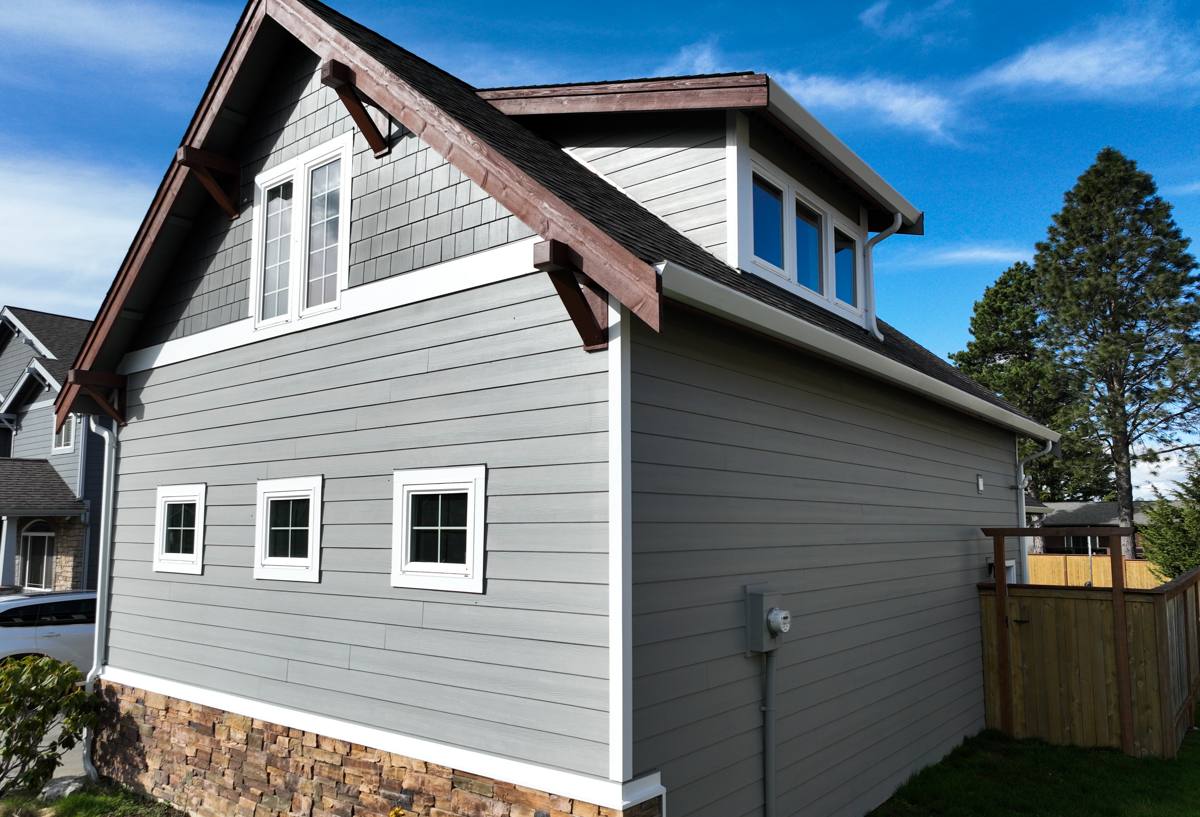
What St. Petersburg's Climate Actually Does to a House
Sun and UV Load
St. Petersburg gets sun almost every day of the year, and that constant UV exposure is brutal on painted wood, vinyl, and lower-grade composite siding. Paint chalks and fades faster than manufacturers' color charts suggest, vinyl can warp or become brittle, and caulk joints dry out and crack open years before a homeowner expects to be doing maintenance again.
Wind and Wind-Driven Rain
Pinellas County sees tropical storm and hurricane conditions on a regular basis, and St. Petersburg's exposure to open water means wind-driven rain can push moisture sideways into siding laps, window frames, and trim joints that would stay dry in a calmer climate. Products and installation details that aren't built for that kind of lateral water pressure show it in the form of stains, soft trim, and interior moisture problems.
Salt Air
Even homes that aren't waterfront in St. Petersburg get a steady dose of salt-laden air carried in off the bay and the Gulf. Salt accelerates corrosion of fasteners and metal flashing, and it degrades certain finishes faster than inland exposure would. Material choice and hardware selection both matter more here than they would fifty miles from the coast.
Humidity and Moisture Cycling
High year-round humidity means siding and trim rarely get a long dry stretch to fully release moisture they've absorbed. Materials that swell and shrink with moisture content are working through that cycle constantly, which is a major driver of long-term warping, cupping, and paint failure in wood-based products.
Why We Only Install James Hardie Fiber Cement
We made a decision as a company to stop installing several products that are common in this market — vinyl siding, LP SmartSide, and other engineered wood or fiber cement alternatives like Cemplank or Allura. That's not a marketing position; it's a standard we hold ourselves to because of what we've seen those products do, and not do, in a climate like St. Petersburg's over a full ownership cycle.
Vinyl Siding
Vinyl is inexpensive and low-maintenance in mild climates, and we're not going to pretend otherwise. But in intense, sustained Florida sun it can fade unevenly and become brittle over time, and it has real limits in high wind events compared to a heavier, mechanically fastened material. For a coastal Pinellas County home taking direct sun and storm exposure for decades, we don't think it's the right long-term investment.
LP SmartSide and Other Engineered Wood
Engineered wood siding has improved a great deal and performs well in many parts of the country. Its vulnerability is moisture at cut edges and joints — if a seam isn't perfectly sealed and maintained, water intrusion can lead to swelling and deterioration. In a humidity and rain profile like St. Petersburg's, that maintenance margin is thinner than we're comfortable installing and standing behind.
Other Fiber Cement Brands
Products like Cemplank and Allura are legitimate fiber cement materials, and the category itself is sound. Our decision to standardize on James Hardie specifically comes down to their engineered-for-climate product lines, the depth of their factory-applied ColorPlus finish options, and the strength and transferability of their warranty. Consistency in one system also lets our crew install to the same spec on every job, which keeps quality predictable.
| Factor | Vinyl | Engineered Wood | James Hardie Fiber Cement |
|---|---|---|---|
| Combustibility | Combustible | Combustible | Non-combustible |
| Coastal humidity/moisture cycling | Can warp/fade under heat | Vulnerable at cut edges/seams | Engineered for moisture resistance |
| UV/fade resistance | Fades over time | Depends on paint upkeep | Factory ColorPlus finish, long fade warranty |
| Wind performance | Lower impact resistance | Moderate | Rated for high-wind installation |
| Maintenance | Low, but degrades with age | Regular sealing/painting needed | Repaint interval much longer |
James Hardie's HZ5 Line for This Region
James Hardie engineers different HZ (HardieZone) formulations for different climate zones, and Pinellas County falls in the zone that calls for their HZ5 product line — formulated specifically for high-humidity, high-moisture-exposure regions like ours. That's a meaningful distinction: a fiber cement product engineered for a dry inland climate isn't necessarily the same formulation you want on a home a few miles from Tampa Bay. Installing the correct zone-matched product is part of doing the job right, not just installing "Hardie" in a generic sense.
Roofing, Windows, and Decks — The Rest of the Envelope
Siding doesn't work in isolation. A roof that's shedding granules or has failing flashing will eventually send water down behind even well-installed siding. Windows with worn seals or outdated flashing tape let wind-driven rain into wall cavities during the same storms that stress the siding. And a deck attached to the house shares ledger board and moisture-management details with the siding right next to it. Because we handle all four trades, we look at a St. Petersburg home's whole exterior during an estimate rather than quoting one system and hoping the others hold up.
- Roofing: inspection of flashing, ventilation, and underlayment condition, especially around any siding tie-in points
- Windows: proper flashing and sealing details suited to wind-driven rain exposure, not just the window unit itself
- Decks: ledger board attachment and moisture separation from the house structure, built to handle humidity cycling
- Siding: full HZ5 James Hardie system, correctly fastened and finished for coastal Pinellas conditions
What Correct Hardie Installation Involves
James Hardie siding is only as good as its installation. The manufacturer's warranty and real-world performance both depend on details that are easy to shortcut: proper starter strips and clearances, correct fastener type and spacing (especially given salt-air corrosion concerns), properly lapped and caulked joints, and flashing integration at windows, doors, and rooflines. In a coastal market like St. Petersburg, we also pay close attention to gaps and clearances at grade and around hardscaping, since standing moisture at the base of a wall is one of the more common long-term failure points we see on older installations of any siding material.
Cost Factors for a St. Petersburg Siding Project
| Factor | Why It Matters Here |
|---|---|
| Home size and story count | More surface area and access complexity on two-story bay-area homes |
| Existing wall condition | Water damage behind old siding is more common near the coast and adds repair scope |
| Product line and finish | HZ5-rated boards and ColorPlus finish options vary in price by style and color |
| Trim and detail work | Older St. Pete homes often have more architectural trim to match or replace |
| Tear-off vs. overlay | Full removal is usually the right call once moisture has reached the sheathing |
Choosing a Contractor for a Coastal Pinellas Home
- Confirm they're licensed and insured to work in Pinellas County
- Ask specifically what siding brand and product line they install, and why
- Ask how they handle moisture and flashing details at windows, doors, and grade
- Ask whether they're a certified installer for the products they're proposing
- Get the warranty terms in writing, including whether it's transferable to a future homeowner
- Ask if they inspect the roof and windows as part of a siding estimate, not just the walls
If you're in St. Petersburg and dealing with aging siding, a roof nearing the end of its service life, tired windows, or a deck that needs attention, we're happy to come take a look. Our crew is based right in Seminole, so we know this coastline's climate firsthand. Reach out for a free, no-pressure estimate — we'll walk the property with you and give you a straight answer on what actually needs doing.