 Seminole Siding
 Two Very Different Materials, One Big Decision
If you're re-siding a home in Seminole or anywhere else in Pinellas County, you'll almost certainly end up comparing fiber cement and vinyl. They're the two most common siding materials installed in Florida, they're both sold as "low maintenance," and at a glance on a spec sheet they can look more similar than they actually are. Once you get into how each one behaves on a house that sits through a Gulf Coast summer, a wind-driven rain event, and years of direct UV exposure, the differences get a lot more concrete.
This page lays out what each material is, how it's made, and how it actually performs in our climate — not which one is "better" in the abstract, but which trade-offs you're accepting with each. We install James Hardie fiber cement exclusively, so you should know that up front. But we'd rather explain our reasoning than pretend vinyl doesn't have real advantages, because it does.
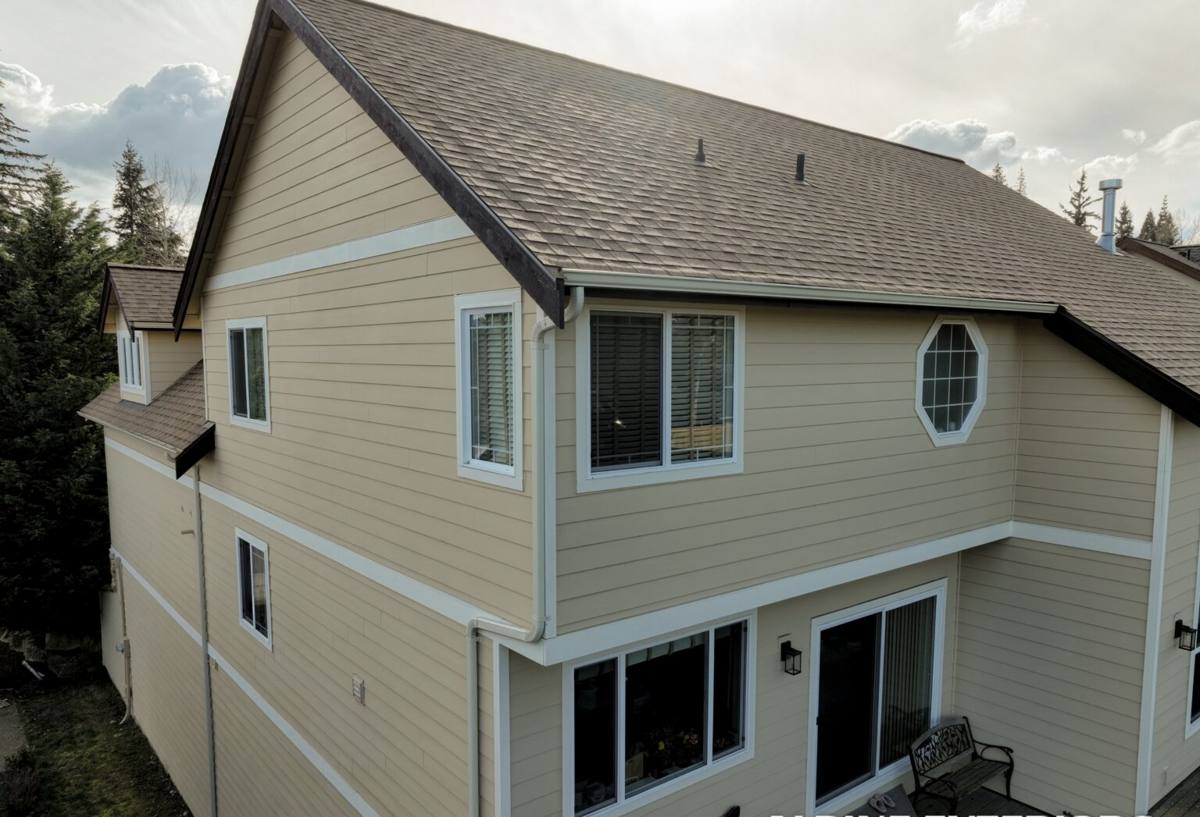
What Each Material Actually Is
Vinyl Siding
Vinyl siding is an extruded PVC (polyvinyl chloride) plastic panel, usually formed into overlapping horizontal planks that hang on the wall rather than being fastened rigidly to it — this "hanging" installation lets the panels expand and contract with temperature. Color is mixed into the plastic itself rather than painted on, and modern vinyl comes in a wide range of profiles, including options that mimic wood grain or board-and-batten.
Fiber Cement (James Hardie)
Fiber cement is a composite of Portland cement, sand, and cellulose fiber, cured into rigid boards or panels. It's fastened directly to the wall, not hung loosely. James Hardie's HZ5 product line is engineered specifically for high-humidity, storm-prone climates like Florida's, and the boards come with a factory-applied ColorPlus finish baked on in a controlled environment rather than field-painted after installation.
How Each One Handles Florida Heat and UV
Pinellas County gets intense, nearly year-round sun, and material behavior under sustained UV and heat is one of the clearest differentiators between these two products.
- Vinyl: Plastic expands and contracts significantly with temperature swings, which is why it's installed with room to move rather than nailed tight. Over years of Florida sun exposure, vinyl's color — which is mixed into the material — can fade unevenly, and the material itself can become more brittle with age, especially in darker colors that absorb more heat.
- Fiber cement: Cement-based composite has a much lower coefficient of thermal expansion than vinyl, so it moves far less with heat. The ColorPlus factory finish is baked on and warranted separately for fade resistance, which matters a lot under Florida's UV load compared to a finish applied on-site.
Neither material is immune to Florida sun — nothing is — but the physical stability of fiber cement under heat cycling is a meaningful practical advantage here, not just a marketing point.
Wind and Storm Performance
This is the category that matters most for a Seminole roofline facing the Gulf. Both materials can be rated for high-wind installation, but the way each one fails under wind load is different, and that difference is worth understanding before you choose.
Vinyl in Wind
Vinyl siding is inherently lighter and more flexible, which is part of why it needs to hang loose rather than be rigidly fastened. In sustained high winds, that same flexibility means panels can flex, rattle, and in severe events, detach from their track entirely — especially at corners, edges, and anywhere the installation wasn't done with exact attention to fastener spacing and nail-hem engagement. Impact-rated and higher-gauge vinyl products exist and perform better than standard-grade vinyl, but they're a step up in cost from what most homeowners picture when they think "vinyl siding."
Fiber Cement in Wind
Because fiber cement is rigid and fastened directly to the wall (not hung), it doesn't flex or rattle in wind the same way. James Hardie's HZ5 products are engineered and tested for high-velocity hurricane zones, and correctly installed fiber cement holds up well against sustained wind pressure. The trade-off is that correct installation matters enormously — fastener pattern, edge clearances, and flashing details have to be done to spec, because fiber cement doesn't forgive sloppy installation the way a flexible material sometimes can.
Moisture, Salt Air, and Wind-Driven Rain
Seminole's proximity to the Gulf means salt-laden air and wind-driven rain are a fact of life, not an occasional event. Both materials handle moisture very differently.
| Factor | Vinyl Siding | Fiber Cement (Hardie) |
|---|---|---|
| Water absorption | None — plastic doesn't absorb water | Engineered for moisture resistance; HZ5 line rated for humid climates |
| Behind-the-panel moisture risk | Can trap moisture against the wall if house wrap/flashing details are wrong | Requires correct rain-screen and flashing detailing; unforgiving of shortcuts |
| Salt air exposure | Plastic doesn't corrode, but fasteners and trim can | Doesn't corrode; factory finish resists salt-air staining better than field paint |
| Mold/mildew on surface | Can develop surface mildew, especially in shaded, humid areas | Factory finish resists surface growth; still needs occasional washing |
The important nuance here: vinyl itself doesn't absorb water, but it's installed as a loose "rain screen" over the wall, so if the house wrap, tape, and flashing behind it aren't done correctly, moisture can get trapped and cause rot in the sheathing underneath without being visible from outside. Fiber cement has the same requirement for correct water management behind the panel — no siding material eliminates the need for good flashing and house wrap. The difference is that fiber cement itself won't degrade the way wood-based sheathing can if moisture does get behind it occasionally, and Hardie's engineered installation details are built specifically around humid, wind-driven-rain climates like ours.
Impact Resistance and Durability
Wind-borne debris is a real consideration during Pinellas County storm season. Vinyl is a relatively thin, flexible plastic — it can crack or puncture from flying debris, and once a panel is damaged, the whole panel typically needs replacing since it can't be patched invisibly. Fiber cement is far more rigid and impact-resistant, and it's also non-combustible, which vinyl (a petroleum-based plastic) is not. That fire-resistance difference doesn't come up often, but it's a real, permanent distinction between the two materials.
Maintenance Over Time
- Vinyl: Low maintenance in the sense that it never needs painting, but it can crack, warp, or fade, and repairs are visible because color-matching aged panels to new ones is difficult. Pressure washing has to be done carefully — too much pressure can force water behind panels or crack aged, brittle vinyl.
- Fiber cement: Also low maintenance — the ColorPlus finish is warranted against fading and doesn't need repainting on the manufacturer's typical cycle. Occasional washing keeps it looking clean, and because boards are fastened rigidly, there's no rattling or loosening to watch for over time.
Upfront Cost vs. Long-Term Value
We won't pretend fiber cement is the cheaper option — it isn't. Vinyl has a genuine, honest advantage on upfront material and labor cost, and for some budgets that's the deciding factor, full stop. Where the comparison shifts is over a 20-30 year ownership horizon: fiber cement's resistance to wind, impact, and UV degradation, combined with a strong transferable warranty, tends to mean fewer panel replacements, less visible aging, and a stronger resale impression. Vinyl can absolutely be a reasonable, cost-effective choice — it's just a different set of trade-offs, and homeowners deserve to make that choice with the full picture, not just a sales pitch.
Why We Standardized on James Hardie
We made a decision as a company to install only James Hardie fiber cement — not LP SmartSide, not vinyl, not Cemplank or Allura, not primed wood. That's a narrower offering than most siding contractors run, and we did it on purpose. After years of installing and repairing siding on homes exposed to hurricane-force wind, intense UV, and salt air, fiber cement engineered specifically for this climate (Hardie's HZ5 line) gave us the most consistent, defensible long-term results. It's not that vinyl is a bad product — it's that we'd rather install one material extremely well, to spec, every time, than offer several products at varying levels of confidence in how they'll hold up on a Seminole roofline in year fifteen.
A Practical Checklist If You're Deciding
- Get your actual wind-load and coastal exposure rating for your address before comparing products, not after
- Ask any contractor exactly which fastening pattern and flashing details they use — not just which brand of siding
- Compare warranties side by side, including what happens to material warranty vs. labor/installation warranty
- Factor in your realistic ownership timeline — 5 years and 25 years can point to different answers
- Ask to see the manufacturer's climate-specific product line (Hardie's HZ5, for example) rather than a generic national spec sheet
- Don't evaluate cost only on install day — ask what a repair or partial replacement looks like 10 years in
Getting an Honest Answer for Your House
Every home in Seminole has its own exposure — how close it sits to open water, how much direct sun it takes, what direction storms typically hit it from. A siding recommendation that ignores that isn't a real recommendation. If you'd like a straightforward look at what your home's siding situation actually calls for, we're happy to walk your property and give you a free, no-pressure estimate — with the reasoning behind it, not just a number.