 Seminole Siding
 Belleair Beach's Exposure: Barrier Island Conditions
Belleair Beach sits on a narrow barrier island in Pinellas County, with the Gulf of Mexico on one side and the Intracoastal Waterway on the other. That geography is beautiful, and it's also demanding on a home's exterior. Homes here don't just deal with "Florida weather" in the generic sense — they deal with a specific combination of salt-laden air moving in off the Gulf, wind-driven rain that gets pushed sideways during storms, and sun exposure that runs nearly year-round without much seasonal relief. Add hurricane-force wind events that are a matter of when, not if, and you have an exterior envelope that has to work hard, all the time, in ways that inland Pinellas County homes simply don't experience to the same degree.
Seminole Siding Company works throughout this part of the county, and Belleair Beach is one of the barrier island and near-coastal communities where we see the clearest evidence of what salt air and moisture do to the wrong siding, roofing, and trim materials over time. That experience shapes how we recommend homeowners approach exterior projects here — not with a one-size-fits-all product, but with materials and installation methods matched to what this specific environment throws at a house.
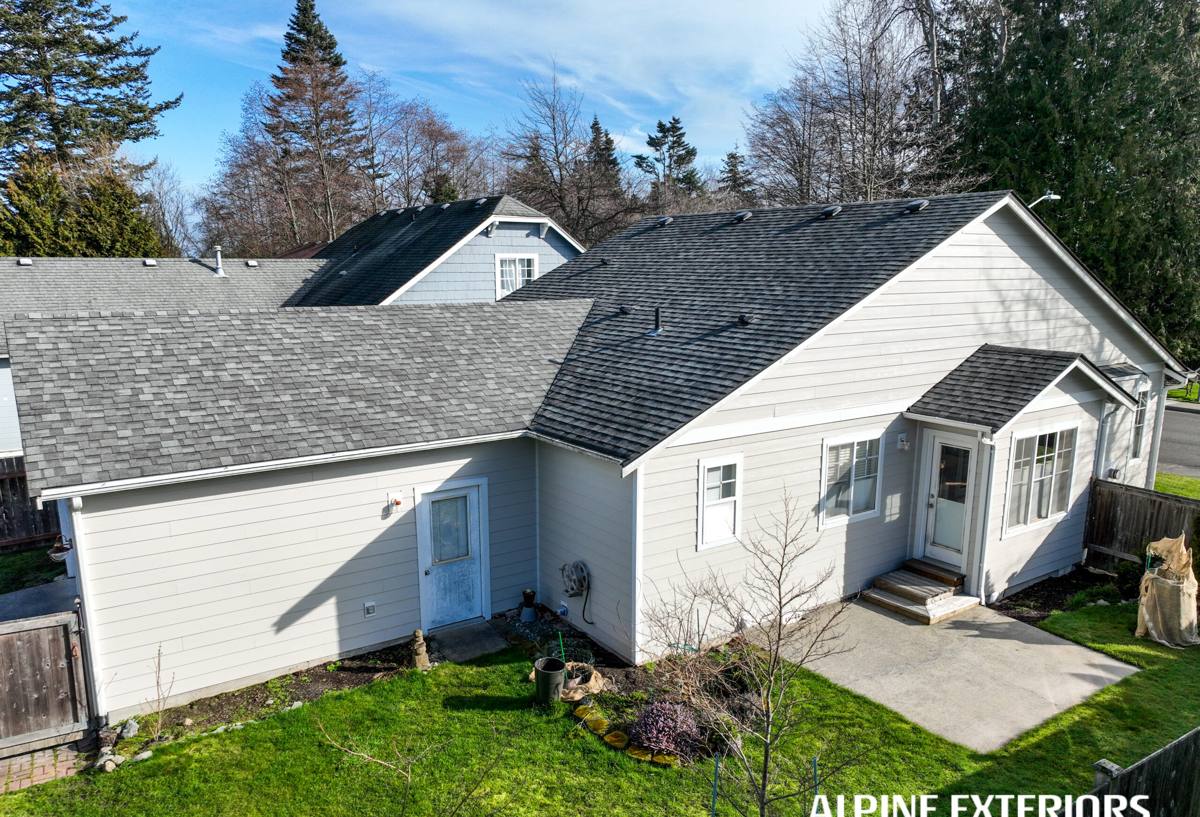
What Salt Air and Wind-Driven Rain Do to Siding Over Time
Salt air is corrosive to metal fasteners and trim, and it's also abrasive and moisture-retentive against porous or wood-based siding materials. On a barrier island, that salt exposure is constant, not occasional — it settles on exterior surfaces daily, gets rinsed by rain, and builds up again. Combined with wind-driven rain that can force moisture into seams, joints, and fastener penetrations that would stay dry in a calmer climate, siding materials that aren't engineered for this environment tend to show problems years before they would inland: swelling, delamination, paint failure, soft spots at butt joints, and fastener corrosion that eventually loosens panels.
UV Exposure Adds a Second Front
Intense, near-constant UV breaks down pigments and surface coatings faster than in most of the country. Paint on wood or engineered wood siding chalks and fades faster near the coast, and the maintenance cycle — scraping, priming, repainting — comes around more often than most homeowners expect when they first move in. That's not a hypothetical; it's a pattern we see repeatedly on siding that wasn't built with this level of sun exposure in mind.
Why We Install Only James Hardie Fiber Cement
Seminole Siding Company installs James Hardie fiber cement siding exclusively. We don't install vinyl, LP SmartSide, Cemplank, Allura, or primed spruce or cedar siding, and that's a deliberate professional standard, not a lack of options. Each of those alternatives has real strengths, but each also carries trade-offs — moisture sensitivity in wood-based products, expansion and contraction issues in vinyl under intense heat, or coating and warranty structures that don't hold up as well under sustained coastal exposure. On a barrier island property like a Belleair Beach home, those trade-offs get magnified.
James Hardie fiber cement is non-combustible, dimensionally stable, and manufactured with a factory-applied ColorPlus finish that's baked on and backed by its own finish warranty — which matters enormously in a climate where field-applied paint fails faster than almost anywhere else in the country. Hardie also produces climate-engineered product lines, including HZ5 formulations built specifically for high-humidity, coastal, and freeze-adjacent regions. For a home exposed to Gulf salt air, that engineering isn't a marketing detail — it's the difference between siding that holds its finish for a decade-plus and siding that needs repainting every few years.
What ColorPlus Actually Solves
A factory finish is applied in a controlled environment, cured properly, and backed by a manufacturer warranty against fading and chipping that a field-painted product can't offer. In a market where UV and salt exposure are both working against a painted finish simultaneously, starting with a factory-cured coating rather than a field-applied one removes one of the biggest long-term maintenance variables from the equation.
Why Not the Alternatives
Vinyl siding is affordable and low-maintenance in mild climates, but it can warp or distort under sustained high heat and doesn't offer the same fire resistance or impact durability as fiber cement — a real consideration in a wind-driven-debris hurricane event. Wood-based products like LP SmartSide, primed spruce, and cedar depend on an intact factory or field coating to keep moisture out; once that coating is compromised by UV or storm damage, the substrate itself is vulnerable to swelling and rot in a way fiber cement simply isn't. Cemplank and Allura are also fiber cement products and share some of Hardie's core advantages, but we've standardized on Hardie specifically for its regional-engineered HZ lines, its ColorPlus finish and warranty structure, and the consistency we get from installing one system to spec across every job.
Comparing Siding Materials in a Coastal Climate
| Material | Moisture Behavior | UV/Coastal Durability | Fire Resistance | Typical Maintenance |
|---|---|---|---|---|
| James Hardie Fiber Cement | Dimensionally stable, engineered HZ lines for humid/coastal exposure | Factory ColorPlus finish resists fading and chipping | Non-combustible | Periodic caulk/inspection, minimal repainting |
| Vinyl | Doesn't rot, but seams can allow moisture behind panels | Can warp or fade under intense sustained heat | Combustible, can melt/deform | Low, but panels can crack or distort over time |
| LP SmartSide / Primed Wood | Vulnerable if coating is breached | Coating degrades faster under high UV; needs recoating | Combustible | Regular repainting/recaulking cycle |
| Cedar (unfinished/primed) | Natural material, absorbs moisture without diligent sealing | Grays and weathers quickly in full sun and salt exposure | Combustible | Frequent sealing/staining or repainting |
Roofing, Windows, and Decks: The Full Exterior Envelope
Siding is only part of what protects a Belleair Beach home. We also handle roofing, windows, and decks, and on a barrier island property those systems are just as exposed as the siding — often more so, since the roof takes the most direct sun and wind load, and windows are the weak point for wind-driven rain intrusion during storms.
Roofing
A roofing system near the Gulf needs to handle sustained UV, salt exposure, and high wind uplift, with attention to underlayment, flashing detail, and fastening patterns rated for the wind exposure category the home sits in. We evaluate roofing the same way we evaluate siding: what will actually hold up in this specific location, not just what's cheapest to install.
Windows
Impact-rated and properly flashed windows matter enormously this close to the coast, both for storm protection and for keeping wind-driven rain out of the wall cavity. Window replacement is also a natural pairing with a siding project, since the trim and flashing details around openings get addressed at the same time rather than as an afterthought.
Decks
Outdoor living structures on a barrier island face constant salt exposure and near-daily sun. Fastener selection, board material, and structural connections all need to account for that, and we build decks with the same coastal-durability mindset we apply to siding and roofing.
What Correct Fiber Cement Installation Involves
James Hardie siding performs the way it's rated to perform only when it's installed correctly, and installation quality is where a lot of the real-world performance difference between contractors shows up — not in the product itself. Correct installation on a coastal home includes:
- Proper clearance between the bottom edge of siding and the roofline, deck surfaces, and grade, so water can't wick into the panel
- Correctly flashed and sealed window and door penetrations, since these are the most common points of water intrusion in any siding failure
- Manufacturer-specified fastener type, spacing, and embedment depth — under-driven or over-driven fasteners are a common cause of panel movement and cracking
- Properly caulked and painted (or factory-finished) cut edges, since an exposed raw edge is a moisture entry point
- Correct panel overlap and joint treatment at butt seams to shed water rather than trap it
- A compatible weather-resistive barrier installed underneath, sized and lapped correctly for the wall assembly
Every one of those details matters more on a barrier island than it does inland, because the margin for error against wind-driven rain and salt exposure is smaller. A siding job that's technically finished but has a few of these details wrong may look fine on day one and cause real problems within a few storm seasons.
Cost Factors for a Belleair Beach Siding Project
| Factor | Why It Affects Cost |
|---|---|
| Home size and wall complexity | More square footage and more corners, gables, and cutouts increase material and labor |
| Existing siding removal | Tear-off and disposal of old siding adds labor versus installing over a prepped surface |
| Substrate condition | Wood rot or moisture damage found underneath existing siding requires repair before new siding goes on |
| Hardie product line and profile | Lap siding, shingle-style panels, and board-and-batten carry different material and labor costs |
| Trim and accessory work | Fascia, soffit, and trim replacement done alongside siding affects total project scope |
| Access and site conditions | Barrier island lot constraints, staging space, and proximity to water can affect logistics |
We provide project-specific pricing after an on-site evaluation rather than broad estimates, since the substrate condition and scope of a project can vary a lot from house to house even on the same street.
Choosing a Contractor for Coastal Exterior Work
Not every siding, roofing, or window contractor is set up to do coastal-grade work correctly, and a barrier island community like Belleair Beach is not the place to find out the hard way. Some things worth checking before hiring anyone for exterior work here:
- Confirm the contractor is licensed and insured to work in Pinellas County, and ask to see proof rather than taking it on faith
- Ask specifically about their experience with coastal and barrier island properties, not just general exterior work
- Ask what wind rating and fastening spec they'll use for your specific wind exposure category
- Ask which siding, roofing, and window products they install and why — a contractor who installs everything usually isn't specializing in any of it
- Get manufacturer warranty details in writing, and confirm whether the installer is a certified/preferred installer for the product line
- Ask how they handle substrate repair if rot or moisture damage is found once old siding comes off
Hurricane Season and Storm Preparedness
Hurricane season shapes the calendar for exterior work throughout coastal Pinellas County, and Belleair Beach residents are especially attuned to it given the island's direct Gulf exposure. Fiber cement siding installed to Hardie's specifications, along with properly rated roofing and impact windows, contributes meaningfully to how a home's exterior holds up under high wind and wind-driven debris. We plan project timing with storm season in mind and use fastening and flashing details appropriate to the wind exposure this location actually experiences, not a generic inland spec.
A Local Crew That Understands This Coastline
Working this stretch of the Pinellas County coast regularly means recognizing the early signs of salt and UV damage before they become structural problems, understanding which details actually matter on a barrier island wall assembly, and knowing how local wind exposure requirements apply to a given project. That familiarity comes from doing this work repeatedly in these conditions, not from a general contractor's checklist.
If you're planning a siding, roofing, window, or deck project for your Belleair Beach home, we're happy to walk the property, look at what your exterior is currently dealing with, and put together a straightforward, no-pressure estimate. There's no obligation — just a clear look at what your home needs and what it would take to address it right.