 Seminole Siding
 Why Decks Fail Faster on Belleair Beach
Belleair Beach sits right on the barrier island strip of Pinellas County, which means every deck out there takes a harder hit than a deck ten miles inland in Seminole. The combination is brutal: salt-laden air corrodes metal fasteners and connectors from the inside out, intense year-round UV bakes and fades wood fibers and composite surfaces, and wind-driven rain finds its way into every seam, screw hole, and board gap that isn't properly flashed or sealed. Add in the risk of hurricane-force wind gusts working a deck structure like a lever every storm season, and you have an assembly that ages years for every year that passes.
We work Seminole and the surrounding Pinellas County coastline regularly, and Belleair Beach decks are consistently among the hardest-used structures we see. That's not a knock on any particular builder — it's just what happens when a wood or composite structure lives twenty feet from saltwater with almost no tree cover to block the sun or wind. A deck built with inland assumptions in mind will not hold up the same way out here.
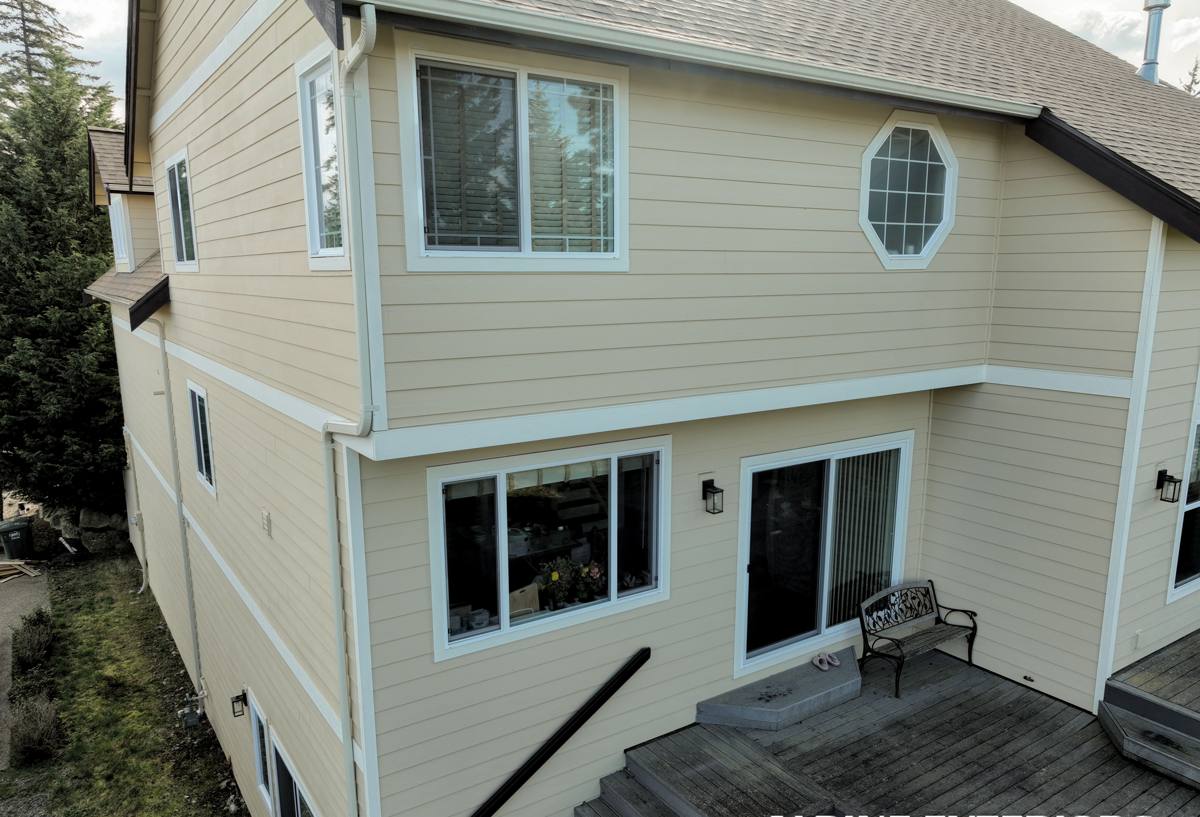
Signs a Deck Needs Replacement, Not Another Repair
Homeowners often call us for a repair quote and end up learning the deck is past the point where patching makes sense. Some signs are obvious, others hide underneath the decking boards where you can't see them without pulling a few up.
- Soft, spongy, or bouncy spots when you walk across the surface
- Rust streaks bleeding out around fastener heads or joist hangers
- Visible gaps opening up between boards, or boards cupping and warping
- A ledger board pulling away from the house, even slightly
- Railing posts that wiggle or feel loose when pushed
- Any wood that probes soft with a screwdriver near ground contact or under the house wrap
- Repeated repairs to the same area over the last few years
Any one of these on its own might be a repair. Two or three together, especially on a deck older than 12-15 years in this environment, usually means the substructure has been compromised long enough that a repair is just delaying the same conversation.
What a Correct Deck Replacement Actually Involves
A deck replacement done right is not just swapping old boards for new ones. It starts from the ground up:
Tear-Off and Inspection
We remove the decking, railings, and any compromised framing down to a point where we can actually see and test the structure — footings, posts, beams, joists, and the ledger connection to the house. This is where hidden rot or corrosion usually shows up, and it's information you need before any new decking goes down.
Structural Rebuild
Footings and posts that don't meet current wind-load requirements get addressed here, not covered over. Joist spacing gets matched to whatever decking material is going on top, since composite and PVC boards often call for tighter spacing than traditional wood.
Fasteners and Connectors
This is the detail that separates a coastal-grade rebuild from a standard one. Every hanger, screw, and bolt should be rated for the corrosive environment — stainless steel or heavy hot-dip galvanized, not the standard coated hardware that's fine for an inland yard but starts rusting within a couple of seasons this close to saltwater.
Ledger Flashing
The ledger-to-house connection is the single most common point of hidden water damage on any deck. Proper flashing here, installed correctly against the house's water-resistive barrier, is not optional — it's the difference between a deck that lasts and one that rots the band board behind it.
Decking and Railing Installation
Whatever surface material is chosen goes down last, following the manufacturer's fastening pattern and gap spacing for thermal movement — which matters more here than in a mild climate, since Florida sun heats these materials significantly.
Choosing a Decking Material for a Barrier Island Home
There's no single "best" decking material — there's a best fit for how much upkeep you want to do and what budget you're working with. Here's how the common options actually perform in a salt air, high-UV environment like Belleair Beach.
| Material | Salt Air / UV Behavior | Maintenance | Honest Trade-Off |
|---|---|---|---|
| Pressure-treated wood | Prone to graying, splitting, and fastener corrosion staining without regular sealing | Sealing every 1-2 years | Lowest upfront cost, highest ongoing labor |
| Capped composite | Holds color well, resists moisture absorption into the core | Occasional washing, no sealing | Higher upfront cost, very low maintenance |
| Cellular PVC | Excellent moisture resistance, doesn't rot or support mold growth | Occasional washing | Premium cost, can flex more in high heat if not fastened correctly |
| Aluminum decking | Extremely durable against salt corrosion when properly coated | Minimal | Higher cost, different look and feel underfoot than wood-style boards |
We'll walk through these options honestly during an estimate, including what we've seen hold up well and what tends to need more attention out here — not to steer you toward the most expensive product, but so you know what you're actually signing up for in terms of upkeep.
Cost Factors for a Belleair Beach Deck Replacement
Every deck is different, so we don't quote sight-unseen numbers, but these are the factors that actually move the price up or down on a project like this.
| Factor | Why It Matters |
|---|---|
| Deck size and shape | More square footage and more corners/angles mean more material and labor |
| Decking material chosen | Wood, composite, PVC, and aluminum span a wide cost range |
| Substructure condition | Rotted framing or undersized footings found during tear-off add rebuild scope |
| Height and stairs | Elevated decks with stairs or multiple levels add framing and railing complexity |
| Railing system | Cable, glass, and aluminum systems cost more than standard baluster railing |
| Permitting requirements | Coastal setback and wind-load review can add time and fees depending on scope |
Permits and Code Requirements in This Area
Deck replacement work in Pinellas County generally requires a permit, and that's especially true for coastal properties like those on Belleair Beach where wind-load standards and, in some cases, flood zone or setback rules come into play depending on the property's location relative to the water. Skipping the permit might save a few days upfront, but it creates real problems later — unpermitted structural work can complicate a home sale, an insurance claim, or a future renovation. We handle the permitting as part of the job rather than leaving it for the homeowner to sort out.
Our Deck Replacement Process
- On-site walkthrough and honest assessment of what's salvageable versus what needs to come out
- Written scope and estimate covering structure, materials, and finish options
- Permit submission and approval before any demo begins
- Tear-off and disposal of the old deck
- Structural rebuild — footings, framing, ledger flashing, coastal-grade hardware
- Final decking and railing installation
- Walkthrough with the homeowner before we consider the job finished
We keep the property as clean and accessible as possible throughout, since we know a torn-up deck means a torn-up backyard in the meantime.
Maintaining a New Deck in Salt Air
Even a well-built deck needs some ongoing attention out here. A simple rinse with fresh water every so often helps clear salt residue before it has a chance to sit on the surface or work into fastener heads. Wood decking needs periodic sealing; composite and PVC decking mainly need occasional washing to keep surface grime from building up. Railings and hardware are worth a visual check after any major storm — loose connections show up faster in this environment than they would inland, and catching them early is a lot cheaper than a repair down the road.
What to Ask Before Hiring a Deck Contractor Near Belleair Beach
- Are you licensed and insured to pull permits in Pinellas County?
- Will you inspect and address the substructure, or just replace the surface boards?
- What fastener and connector grade do you use for coastal properties?
- How is the ledger board flashed against the house?
- Do you handle the permit process, or is that on the homeowner?
- Can you explain the maintenance difference between the material options you're quoting?
A contractor who answers these clearly, without hedging, is generally one who's actually done this kind of work in this kind of environment before.
Why Working With a Local Seminole Crew Matters
A crew that already works Seminole and the surrounding Pinellas County coastline isn't guessing about what salt air, UV exposure, and hurricane-season wind do to a deck over time — we've seen it firsthand on other properties along this same stretch of coastline. That means fewer surprises during the estimate, hardware and fastening choices that match the actual environment instead of a generic inland spec sheet, and a crew that understands the local permitting process instead of learning it as they go. For a barrier island property like a home on Belleair Beach, that local familiarity often ends up mattering as much as the materials themselves.
If your deck is showing its age or you're just not sure whether it needs a repair or a full replacement, we're happy to take a look and give you a straight answer. Reach out for a free, no-pressure estimate using the form below.