 Seminole Siding
 Siding Built for Ridgecrest's Corner of Pinellas County
Ridgecrest sits inland from the coastline but still close enough to Boca Ciega Bay and the Gulf that homes here take on the same environmental stress as properties much closer to open water. Seminole's neighborhoods, including Ridgecrest, deal with a specific combination of punishment: hurricane-force wind events, wind-driven rain that gets pushed sideways into wall assemblies, near-constant UV exposure, and a steady drift of salt air that doesn't stop just because a house isn't waterfront. Siding in this part of Pinellas County has to hold up to all four at once, year after year, not just survive one bad storm season.
We work on homes throughout Seminole and the surrounding Ridgecrest area regularly, and the wear patterns we see are consistent. Older siding materials — vinyl that's warped or cracked from heat cycling, wood trim that's soft at the corners, budget fiber cement that's chalking or delaminating at the seams — show up on houses of every age and style. The common thread is always the same: whatever was on the house wasn't specified or installed for this specific climate.
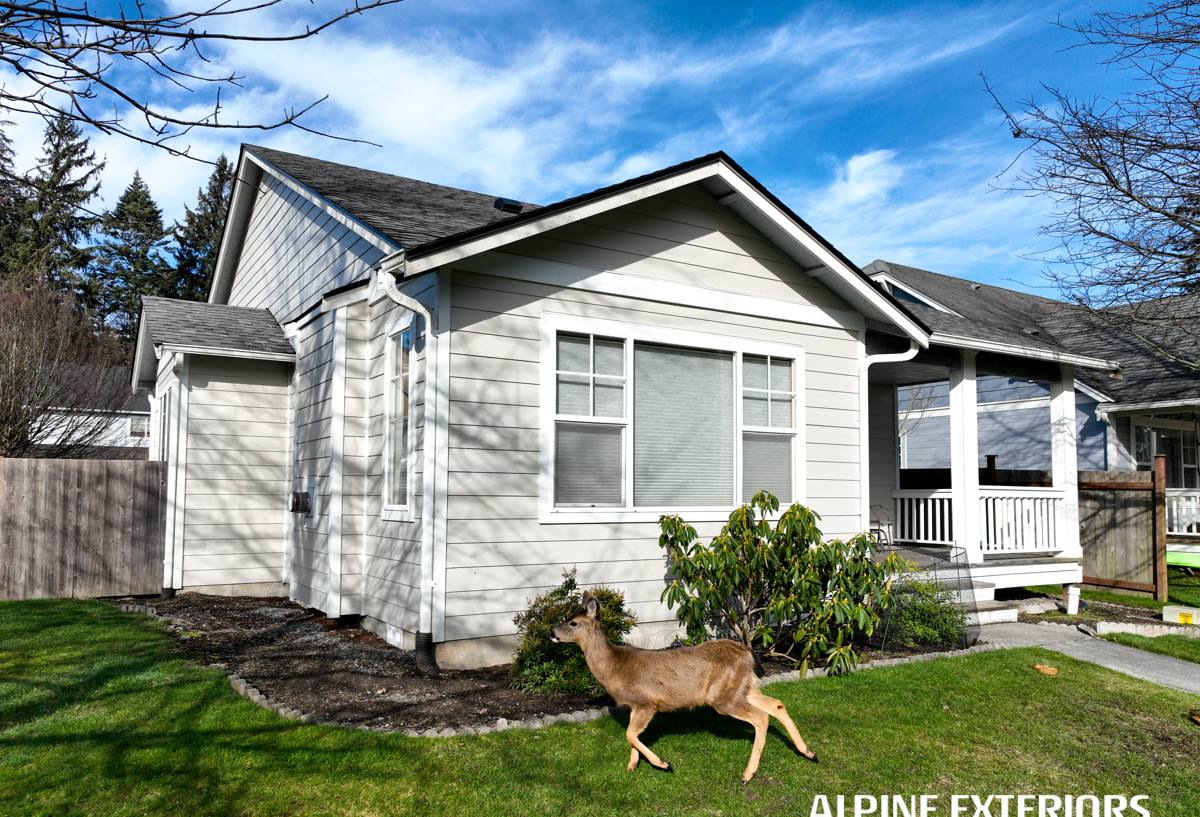
What Ridgecrest Homes Actually Face
Wind and Storm Pressure
Pinellas County sits in a wind-borne debris region, and Ridgecrest is no exception. Siding here needs a wind rating and a fastening pattern that match the exposure category for the neighborhood, not a generic national spec. When siding is under-fastened or the wrong product is used for the wind zone, the failure point usually isn't the field of the wall — it's the edges, corners, and areas around windows and doors where uplift pressure concentrates during a named storm.
Wind-Driven Rain
Straight-down rain is rarely the problem. It's rain pushed horizontally into a wall system during a squall or tropical system that finds every gap in flashing, trim, and butt joints. Over time, wind-driven rain intrusion is what rots sheathing and framing behind siding that looks fine from the curb. This is a moisture-management problem as much as a materials problem, and it's where installation detail matters as much as the product itself.
UV and Heat
Florida sun is relentless on painted and coated surfaces. Field-applied paint jobs on wood or older fiber cement fade unevenly, chalk, and need repainting far sooner than most homeowners expect. Factory-cured finishes hold color and sheen dramatically longer than anything painted on-site after installation.
Salt Air
Even set back from the water, Ridgecrest gets enough salt-laden air moving through on Gulf breezes to accelerate corrosion on fasteners, hardware, and any metal trim components. Salt exposure also speeds up the breakdown of lower-grade coatings and adhesives used in some siding systems.
Why We Only Install James Hardie Fiber Cement
We made a decision as a company to install exactly one siding system: James Hardie fiber cement, in the HZ product lines engineered for high-humidity, high-moisture climates like ours. We don't install vinyl, LP SmartSide, Cemplank, Allura, primed spruce, or cedar. That's not a marketing position — it's a practical one, built from watching how different products actually perform on Gulf Coast homes over years, not just at installation.
The Trade-Offs With Common Alternatives
- Vinyl siding can soften, warp, or crack under sustained high heat and UV, and it isn't rated for the wind pressures we see in named storms here without heavier-gauge, more expensive products — and even then, it doesn't offer the impact resistance fiber cement does.
- LP SmartSide and other wood-strand products use an engineered wood core. Wood-based products are more vulnerable to moisture intrusion at cut edges and seams, which matters in a climate with this much wind-driven rain and humidity.
- Primed spruce and cedar are natural wood. They require ongoing maintenance — recaulking, repainting, and inspection for rot — at a pace that's hard to keep up with in this climate, and they're more attractive to pests and moisture damage over time.
- Cemplank and Allura are also fiber cement, and they're not bad products in general terms. Our decision to standardize on Hardie specifically comes down to their ColorPlus factory-finish process, their climate-specific HZ engineering, and the depth of their installed track record and warranty backing in Florida markets.
We'd rather turn down a job than install something we don't believe will hold up on a Ridgecrest home for the next 20 to 30 years.
The James Hardie System We Install
HZ5 Engineering
Hardie's HZ5 product line is engineered specifically for climates like ours — hot, humid, storm-prone, and salt-exposed. It's built to resist moisture intrusion, cracking, and the freeze-thaw concerns that don't even apply here, in favor of the humidity and UV concerns that do.
ColorPlus Technology
Rather than painting siding after it's installed, Hardie bakes a color finish onto the board at the factory in a controlled process. That finish holds up to Florida sun significantly longer than field-applied paint, resists fading and chipping, and comes backed by its own finish warranty separate from the substrate warranty.
Non-Combustible Core
Fiber cement is non-combustible, which matters for insurance conversations and for straightforward peace of mind — it's simply a different risk category than wood-based or vinyl products.
Fastening and Wind Performance
Correctly installed with the right fastener spacing, clearances, and flashing details, Hardie's siding systems carry wind-load ratings suited to coastal Pinellas County exposure. The product's performance is only as good as the installation behind it, which is why we follow Hardie's published fastening and clearance specs exactly rather than treating them as optional.
How We Approach Installation on a Ridgecrest Home
Moisture Management First
Before a single piece of siding goes up, we address the water-resistive barrier, flashing at windows and doors, and drainage plane behind the cladding. This is the layer that actually protects the house — the siding is the second line of defense, not the first.
Fastening to Spec
We follow Hardie's fastener type, spacing, and penetration requirements for the local wind exposure category rather than a generic national minimum. Corners, edges, and openings get the reinforced attention these high-pressure zones need in a storm.
Trim, Caulking, and Sealant Details
Gaps and seams are where wind-driven rain finds its way in. We use sealants and trim details rated for sustained UV and moisture exposure, and we don't rely on caulk alone to do a flashing detail's job.
Why a Local Crew Matters Here
Seminole's building requirements, wind exposure category, and permitting process aren't identical to inland Pinellas County or to other parts of the Tampa Bay area. A crew that works this specific area regularly knows the local permitting office, understands what inspectors here are looking for, and has already seen how different details on similar Ridgecrest-style homes have held up or failed over time. That local, repeated experience is worth more than a general contractor's siding crew) passing through for a one-off job.
We're also positioned to respond quickly if something needs attention after a storm — a torn piece of flashing, a section that needs a closer look — because we're not driving in from another market to do it.
Cost Factors for a Ridgecrest Siding Project
| Factor | Why It Affects Cost |
|---|---|
| Home size and stories | More square footage and multi-story access change labor and equipment needs |
| Existing siding removal | Tear-off of old vinyl, wood, or fiber cement adds labor versus a bare-wall install |
| Moisture or rot repair | Sheathing or framing damage found during tear-off needs to be corrected before new siding goes on |
| Trim and architectural detail | Corner boards, window trim, and accent details add material and labor time |
| Product line and color | HZ5 lath, plank profiles, and ColorPlus color selections vary in material cost |
| Roofing, window, or door work bundled in | Combining siding with other exterior work can improve overall efficiency and scheduling |
We give straightforward, itemized estimates rather than vague lump-sum numbers, so you can see exactly what's driving the price.
Beyond Siding: A Full Exterior Approach
Since we also handle roofing, windows, and decks, we look at a Ridgecrest home's exterior as one connected system rather than siding in isolation. Roof drainage affects how water sheds off the wall below it. Window flashing has to tie into the siding's water-resistive barrier correctly. Deck ledger connections and flashing matter for the same wind-driven rain reasons siding does. When we're on-site for a siding estimate, we'll flag anything we notice in these other areas — not to upsell, but because they're genuinely connected.
A Quick Homeowner Checklist Before You Call Any Contractor
- Ask what specific product line and profile they're quoting, not just "fiber cement" or "siding"
- Ask how fastening will be adjusted for your home's wind exposure
- Ask what happens to flashing and moisture barriers during the tear-off, not just the new siding
- Ask for the manufacturer's actual warranty document, not just a verbal summary
- Ask whether the crew doing the physical install is licensed and insured, not just the company on the contract
Get a Local Estimate for Your Ridgecrest Home
If your Ridgecrest home's siding is showing chalking, cracking, soft spots, or just isn't holding up the way it used to under Seminole's sun and storm exposure, we're happy to take a look. There's no pressure and no obligation — just a straightforward assessment of what's going on and what it would take to fix it right, using a system we're confident will hold up here. Fill out the form below to schedule a free estimate.