 Seminole Siding
 Decking That Has to Earn Its Keep in Clearwater
A deck in Clearwater doesn't get an easy life. It sits under some of the most intense year-round UV in the country, takes wind-driven rain off the Gulf, and lives in salt-laden air that finds every seam, fastener, and unsealed edge. Add hurricane-season wind loads on top of that, and you've got a structure that's tested harder than almost anything else on the outside of your home. Composite decking has become the go-to choice for homeowners here for good reason, but "composite" isn't one product — it's a category, and the difference between a deck that looks great at year ten and one that's warping, fading, or pulling loose largely comes down to material choice and installation quality.
This page is about composite decking specifically for Clearwater properties — what the local climate demands, what a correct installation looks like, and how we approach the job so it's still performing a decade from now.
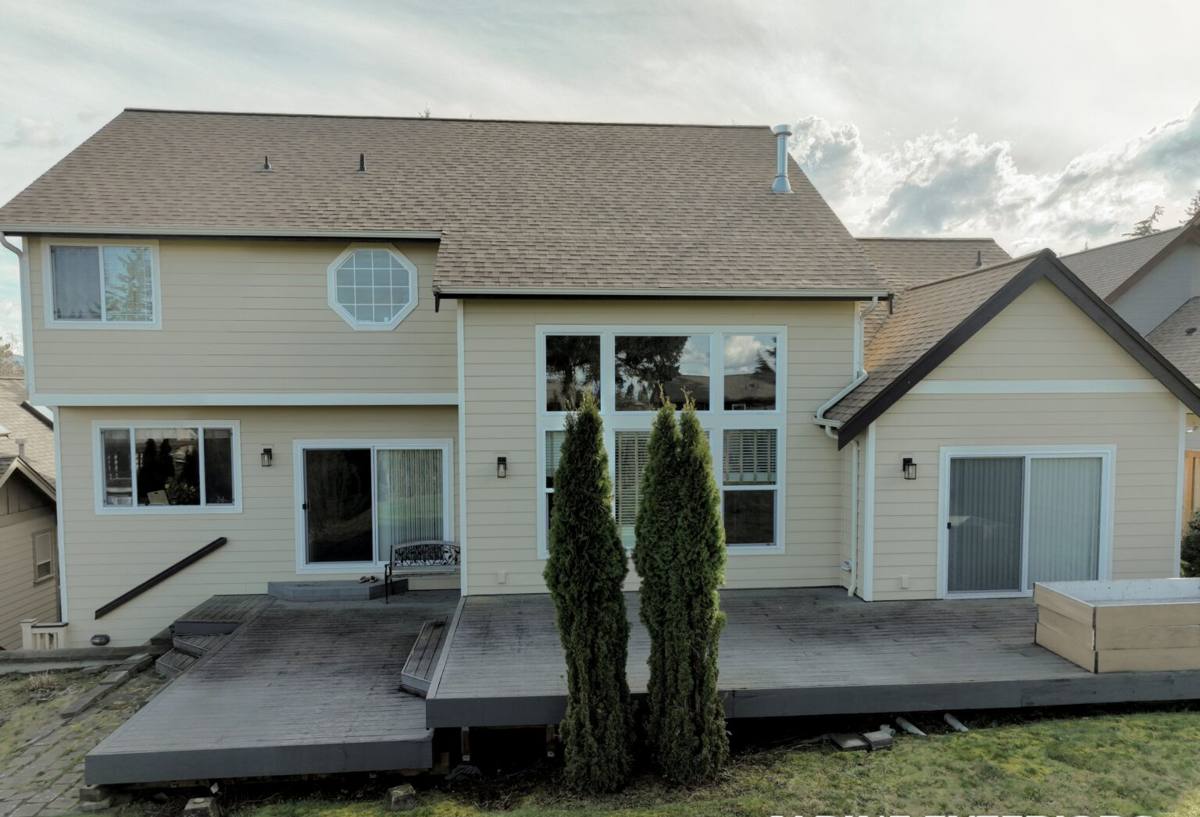
Why Clearwater's Climate Is Hard on Decking
Every part of a deck's job description gets harder near the coast. It's worth understanding the specific stresses before you pick a material or a crew.
UV Exposure
Florida sun is relentless, and a deck typically has no roof over it. Lower-grade composite boards can fade, chalk, or go brittle at the surface faster than their warranty language suggests. UV resistance isn't a marketing line here — it's a real durability factor.
Salt Air and Humidity
Even homes that aren't waterfront pick up salt in the air this close to the Gulf. Salt accelerates corrosion on fasteners, hidden clips, and any metal hardware in the substructure. It also interacts with moisture to speed up mold and mildew growth on surfaces that don't drain or dry properly.
Wind-Driven Rain
Rain in this region rarely falls straight down. Wind pushes it sideways and up under boards, into end grain, and into fastener holes. A deck that isn't detailed to shed water at every joint will hold moisture in places you can't see, which is where rot, mold, and structural fastener failure start.
Hurricane-Force Wind Loads
Pinellas County construction has to account for real wind events, not worst-case-scenario theory. A deck attached to your home is a structural component during a storm — ledger attachment, post connections, and railing anchorage all need to be built to hold, not just to look finished.
Why Composite Makes Sense Here — With Honest Trade-Offs
We install composite decking on the majority of the deck projects we do in this area, and the reasoning is straightforward: quality composite doesn't absorb water the way wood does, doesn't need annual staining or sealing, and resists the UV fade and splintering that wood decking suffers under constant Florida sun. That said, composite isn't automatically the right answer for every situation, and we won't pretend otherwise.
- Moisture behavior: Composite doesn't rot, but hollow-core boards can trap water internally if end caps or cut edges aren't sealed correctly — that's an installation issue, not just a product issue.
- Heat underfoot: Darker composite colors absorb more heat in direct sun than natural wood. Worth factoring into color choice for decks with heavy south or west exposure.
- Installation sensitivity: Composite has different expansion and contraction behavior than wood, and manufacturers specify gap spacing, fastener type, and substructure requirements that have to be followed precisely — get this wrong and you'll see buckling or fastener pop within a couple of years.
- Warranty structure: Composite warranties are typically stronger against rot and insect damage than against fading or staining. Read what's actually covered rather than assuming "lifetime" means everything.
We're upfront about these trade-offs during your estimate. Our job is to help you pick a product and a build spec that fits your specific deck, not to oversell one material.
What a Correct Composite Deck Build Involves
The board itself is maybe half the story. The other half is everything underneath and around it — the part most homeowners never see until it fails.
Substructure First
Joists, beams, and posts need to be sized and spaced for the composite manufacturer's specifications, which often differ from standard wood-decking spacing. In coastal Pinellas County conditions, we favor corrosion-resistant fasteners and hardware throughout — not just at the visible surface — because salt air attacks hidden connections just as readily as exposed ones.
Ledger Attachment and Flashing
Where the deck ties into your home is the single most important structural connection on the project, and it's also a common water-intrusion point if flashing isn't installed correctly. Proper flashing keeps wind-driven rain from working its way behind the ledger board and into your home's wall structure.
Proper Gapping and Fastening
Composite boards need consistent gapping for drainage and thermal movement — too tight and boards can buckle in heat, too loose and it looks sloppy and traps debris. Hidden fastener systems, when used correctly, give a clean surface without the exposed screw heads that can back out over time under thermal cycling.
Railing and Structural Connections
Railings need to meet code for both height and load resistance, and in a wind-prone area, post connections to the frame matter as much as the railing material itself. This is a place where cutting corners doesn't show up until it's tested by a storm.
Ventilation Underneath
Airflow beneath the deck helps everything dry out after Florida's frequent downpours. We build in ventilation rather than closing off the substructure, which reduces the moisture and mildew buildup that humid, low-airflow spaces are prone to.
Our Process for Clearwater Deck Projects
- On-site assessment: We look at sun exposure, drainage, existing structure (if replacing a deck), and how the space connects to your home before recommending anything.
- Material and layout discussion: We walk through composite options, colors, and board profiles suited to your exposure and how you'll use the space.
- Written estimate: Clear scope, materials, and price — no vague allowances you have to chase down later.
- Permitting: Deck work typically requires permitting in Pinellas County; we handle that process as part of the job.
- Build: Substructure, flashing, decking, railing, and finish work, done in sequence with attention to the details that don't show up in a quick walk-through.
- Final walkthrough: We go over the finished deck with you, including basic care guidance specific to composite in this climate.
Composite Decking Cost Factors
Pricing on any deck project depends on size, structure complexity, board tier, and site access, so we won't quote a number that doesn't mean anything without seeing the job. What we can lay out are the factors that actually move the price:
| Factor | Why It Affects Cost |
|---|---|
| Deck size and shape | Square footage and complexity (multiple levels, curves, cutouts) both add labor and material |
| Board tier | Composite lines range from value-grade to premium capped boards with better fade and stain resistance |
| Substructure condition | New builds vs. replacing decking over existing framing changes the scope significantly |
| Height and railing requirements | Elevated decks need more substantial railing systems and code-compliant post connections |
| Site access | Tight side yards or obstructed access can add time and labor |
| Fastening system | Hidden fastener systems cost more than exposed screws but give a cleaner, longer-lasting surface |
Why Local Experience with Clearwater Conditions Matters
A deck spec that works fine inland can underperform here. Fastener and flashing choices, ventilation detailing, and even board color selection all shift when you're building against year-round UV, salt air, and the wind-driven rain that comes with being close to the Gulf. A crew that regularly works Clearwater and the surrounding Pinellas County area has already seen what happens when those details are skipped — the callback for a buckled board, the ledger that let water in, the fastener that corroded out early — and builds to avoid repeating it. That's the value of hiring locally rather than a crew passing through from somewhere with an easier climate.
Maintaining Your Composite Deck
Composite decking is low-maintenance, not no-maintenance. A few basics keep it performing well in this climate:
- Rinse or sweep off salt residue, pollen, and debris regularly, especially after storms
- Clean mildew or algae spots promptly with a composite-safe cleaner rather than letting them set into the surface texture
- Check railing and post connections periodically for looseness, particularly after major wind events
- Keep planters and heavy objects from sitting in one spot long-term, which can trap moisture against the board surface
- Confirm gutters and downspouts near the deck are directing water away rather than onto the decking surface
If you're weighing a new composite deck or replacing an aging wood one, we're glad to walk the site with you and give you a straight assessment — no pressure, no upsell, just what the space and the climate actually call for. Reach out using the form below for a free estimate.