 Seminole Siding
 Why Decks Fail Faster in Clearwater and Seminole
A deck in the Clearwater area lives a harder life than one built a few hundred miles inland. The combination of intense, nearly year-round UV exposure, salt-laden air moving off the Gulf, wind-driven rain, and the occasional hurricane-force gust puts constant stress on every material and fastener in the structure. Homeowners in this part of Pinellas County often come to us not because they neglected their deck, but because the climate here simply wears decks out faster than the national averages most manufacturers and DIY guides are written around.
UV breaks down the lignin in wood fibers and the resin binders in some composite boards, leaving surfaces gray, brittle, or chalky. Salt air accelerates corrosion in anything metal — nails, screws, joist hangers, bolts — often from the inside out, so the damage isn't visible until a board flexes or a railing wobbles. Add in sudden downpours that drive rain sideways into ledger boards and under railings, and you have a structure that's fighting moisture intrusion and material fatigue at the same time, every single season.
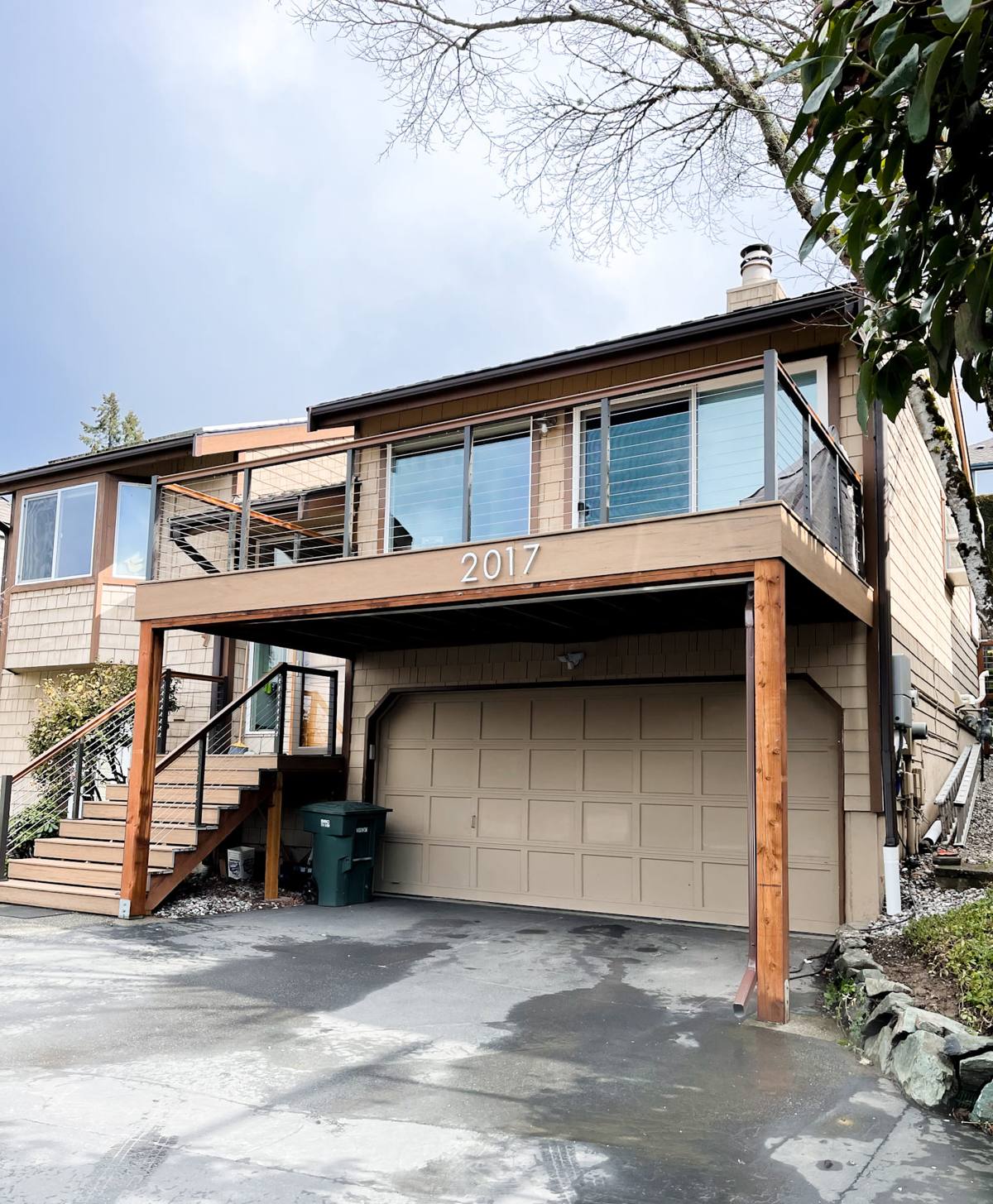
How to Tell a Deck Needs Replacement, Not Repair
Not every tired-looking deck needs to be torn out. But there are signs that go beyond cosmetic and point to a structural problem that repair boards won't fix.
- Soft, spongy, or spring-back decking when you walk across it
- Rust streaks or crumbling wood around fasteners and joist hangers
- A ledger board pulling away from the house, or gaps behind the flashing
- Railings or posts that move independently of the deck frame
- Visible rot at the base of posts, especially where they meet concrete footings
- Boards that have cupped, split, or delaminated across a large section rather than a single spot
If the problems are limited to a handful of surface boards and the frame underneath is sound, a repair may be the honest answer — we'll tell you that on-site. Replacement becomes the right call once the framing, ledger connection, or footings are compromised, since patching decking over a weak substructure just hides the real issue.
What a Correct Deck Replacement Involves
The Frame Comes First
The decking boards are the part everyone sees, but the framing underneath is what actually holds up under Gulf-coast wind and rain. A correct replacement starts with pressure-treated joists and beams sized to current Florida Building Code spans, proper joist hangers rated for coastal exposure, and a ledger board attached with through-bolts and flashing that actually sheds water away from the house rather than trapping it against the siding.
Footings and Post Connections
Post bases and footings need to sit below grade to the depth local code requires, and post-to-beam connections should use structural hardware, not just toe-nailing. This matters more here than in calmer climates — uplift from high wind events puts real load on every connection point, and undersized or corroded hardware is one of the most common failure points we find when we tear out an old deck.
Fasteners and Hardware
Standard galvanized fasteners corrode faster in salt air than most homeowners expect. We use stainless steel or heavy-duty coated fasteners rated for coastal and ACQ-treated lumber contact, since the wrong fastener-to-lumber pairing can cause corrosion within a few years, not decades.
Railings and Code Compliance
Railing height, baluster spacing, and stair guard requirements are governed by code, and older decks in this area were often built before current standards or with materials never meant for a beach-adjacent climate. Replacement is the opportunity to bring all of that up to current code, which also matters if you ever sell the home.
Choosing Materials for This Climate
There's no single "best" decking material — the right choice depends on budget, maintenance tolerance, and how much direct sun and salt exposure the deck actually gets. We walk every homeowner through the honest trade-offs rather than pushing one product.
| Material | How It Handles Sun & Salt Air | Maintenance | Typical Lifespan Here |
|---|---|---|---|
| Pressure-treated wood | Needs sealing to resist UV graying and moisture cycling | Annual cleaning, re-sealing every 1-2 years | 10-15 years with upkeep |
| Composite decking | Strong UV and moisture resistance; quality varies by brand and core construction | Periodic washing, no staining or sealing | 20-25+ years |
| Tropical hardwoods | Naturally dense and rot-resistant, but can check/split under intense sun without oiling | Regular oiling to prevent graying and surface checking | 20-30 years with upkeep |
| PVC decking | Excellent moisture and salt resistance; can run hot underfoot in direct summer sun | Low — occasional washing | 25+ years |
We don't install every product on the market. When we steer a homeowner away from a particular material or fastening method, it's because our own installations have shown it doesn't hold up to this specific combination of sun, salt, and storm exposure — not because the product is inherently bad in every setting. We'd rather explain that trade-off up front than build something we know will disappoint you in five years.
Our Deck Replacement Process
- On-site evaluation. We inspect the existing deck's framing, ledger connection, footings, and hardware to determine the real scope — not just what's visible from the surface.
- Honest scope and estimate. You get a clear breakdown of what's being replaced, what materials are recommended and why, and a straightforward price range before any work begins.
- Permitting. Deck replacement in Pinellas County typically requires a permit; we handle the paperwork and inspections so you don't have to navigate that process yourself.
- Careful demolition. Old decking, railings, and compromised framing come out, with attention to protecting the house siding, landscaping, and any utilities running under or near the deck.
- Framing and structural work. New or reinforced joists, beams, posts, footings, and ledger flashing go in to current code, sized for the deck's actual use and local wind requirements.
- Decking, railing, and stairs. Installed per manufacturer spec for your chosen material, with fastener spacing and hardware selected for coastal durability.
- Final walk-through. We check every board, connection, and railing with you before calling the job done, and pass along basic care guidance specific to the material installed.
Why Hiring a Crew That Works Clearwater and Seminole Regularly Matters
A contractor who works this specific stretch of Pinellas County day in and day out has already seen how Gulf humidity, salt air, and afternoon storm patterns actually affect deck framing and fasteners over time — not in a manual, but on real jobs a few miles from your house. That translates into practical decisions: which fastener grade holds up, where flashing tends to fail first, how footing depth needs to account for local soil and drainage, and which materials are worth the extra cost here versus where corners can honestly be cut without shortening the deck's life.
It also means familiarity with Pinellas County permitting and inspection expectations, so the job doesn't stall waiting on paperwork or fail an inspection over a detail an out-of-area crew wouldn't have anticipated.
Maintaining a New Deck in This Climate
A well-built deck still needs some seasonal attention to reach its full lifespan in coastal Florida conditions.
- Rinse off salt residue and debris every few weeks, especially after storms
- Check railings and stair connections twice a year for movement or corrosion
- Keep gutters and downspouts clear so runoff isn't dumping onto the deck or ledger area
- Re-seal or re-oil wood decking on the schedule appropriate to that material — don't wait until it's visibly gray
- Inspect under the deck yearly for signs of moisture pooling or pest activity near posts and footings
- Address any soft spots, loose boards, or rust spots promptly rather than letting them spread
What Deck Replacement Typically Costs
Cost depends heavily on deck size, material choice, framing condition, and whether railings, stairs, or lighting are part of the scope. Rather than quote a number that won't reflect your actual deck, we provide a detailed, itemized estimate after the on-site evaluation so you know exactly what you're paying for and why.
Main Cost Factors
| Factor | Why It Affects Price |
|---|---|
| Decking material | Pressure-treated wood costs less upfront than composite or PVC, but has higher long-term maintenance costs |
| Framing condition | Reusing sound existing framing lowers cost; full structural replacement adds labor and material |
| Deck footprint and height | Larger, multi-level, or elevated decks require more framing, footings, and stair work |
| Railing style | Code-compliant standard railing costs less than custom or glass/cable systems |
| Permitting and inspections | Required for most replacements in Pinellas County; included in project handling, not a hidden add-on |
If a deck replacement in Clearwater or Seminole is on your radar, we're happy to take a look and give you a straightforward, no-pressure estimate — fill out the form below and we'll get back to you.