 Seminole Siding
 Building Decks for a Barrier Island, Not a Subdivision
St. Pete Beach sits right on the Gulf, and that changes what a deck has to survive compared to a yard a few miles inland in Seminole or elsewhere in Pinellas County. Salt-laden air moves through every day, sun exposure is close to constant most of the year, and when a tropical system tracks through, wind and wind-driven rain hit exposed outdoor structures harder here than almost anywhere else in the region. A deck built to a generic spec sheet, without accounting for that combination, tends to show its age fast — fading unevenly, loosening at the fasteners, or warping at the edges within a few seasons.
Composite decking earns its reputation in this environment because it doesn't rely on a painted or stained surface to protect it. The color and wear-resistance are built into the material itself, and it doesn't absorb and release moisture the way wood does. That doesn't mean any composite board installed any old way will hold up — the installation details matter just as much as the product, especially this close to the water.
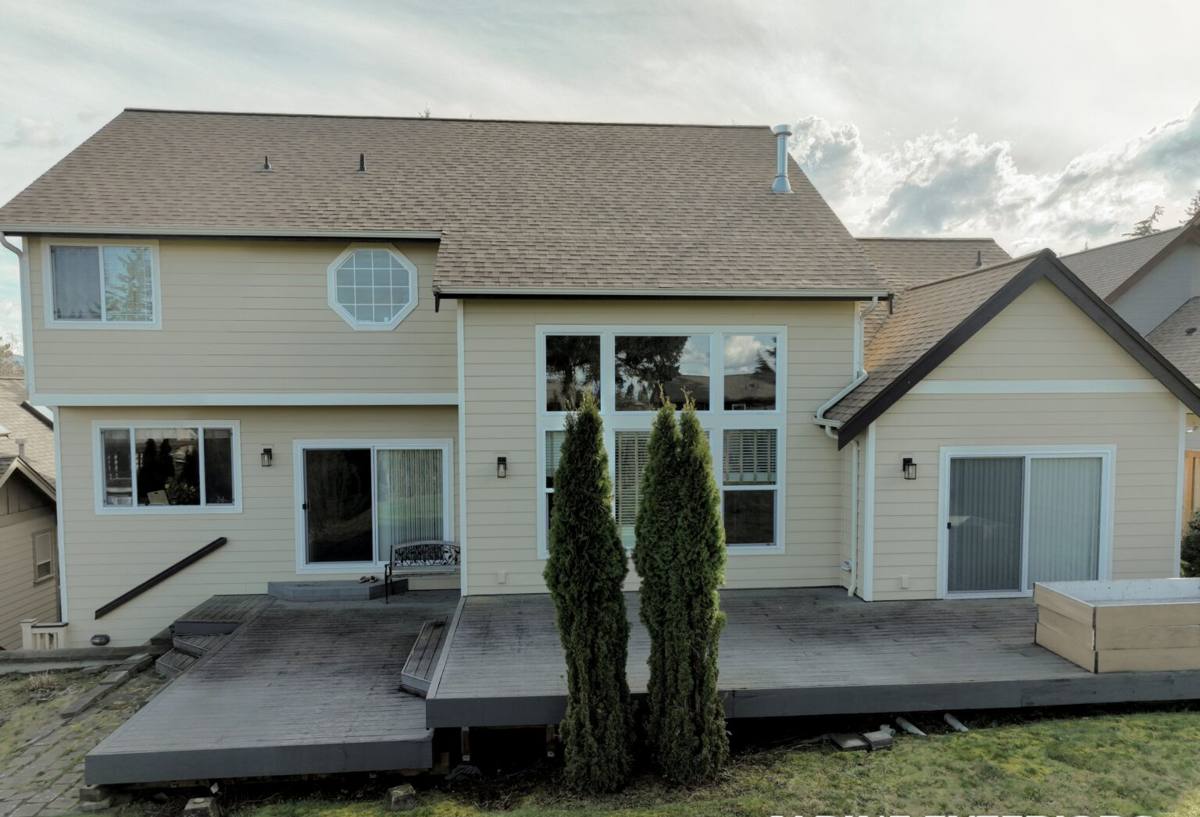
What Salt Air, UV, and Storm Winds Actually Do to a Deck
Understanding the failure points helps explain why the details on this page matter, rather than just taking our word for it.
Salt Air and Corrosion
Airborne salt settles on every exposed surface, including fasteners, brackets, and any metal hardware under the deck. Standard hot-dip galvanized or uncoated steel hardware corrodes noticeably faster in a barrier island environment than it would a few miles inland. Once fasteners start to rust, they weaken, stain the surrounding decking, and eventually fail structurally — long before the boards themselves show any wear.
UV Exposure
Florida sun is intense year-round, not just in summer. Wood decking and lower-grade composites without UV-stabilized capping will fade, chalk, or become brittle at the surface over time. Uneven fading is common where furniture, planters, or shade patterns block the sun inconsistently across the deck.
Wind and Wind-Driven Rain
During tropical storms and hurricanes, decks take wind loading both from above and from underneath if they're elevated or attached to a home near the water. Wind-driven rain also gets forced sideways and upward under railings and board edges, which is why proper drainage, ventilation, and fastening at the substructure level matter as much as the decking material on top.
Moisture and Substructure Rot
Even with composite boards on the surface, most decks still have a wood or wood-hybrid substructure underneath — joists, beams, and posts. If that framing isn't properly ventilated, flashed, and protected, moisture trapped by humidity and salt air will rot it from the inside long before the visible decking shows a problem.
What a Correctly Installed Composite Deck Involves
A composite deck is only as good as what's underneath it and how it's fastened. For a St. Pete Beach install, we treat these as non-negotiable:
- Pressure-treated or naturally rot-resistant framing lumber, sized and spaced for the specific composite board being installed — composite typically needs tighter joist spacing than wood decking to prevent flex and long-term sagging
- Corrosion-resistant fasteners and hardware rated for coastal or marine-grade exposure, not standard interior-grade hardware
- Proper ledger board flashing and attachment where the deck ties into the home, to keep wind-driven rain from working its way behind the siding
- Adequate airflow beneath the deck surface, so trapped humidity doesn't sit against the framing
- Correct board spacing gaps, which account for composite's thermal expansion and contraction in Florida's heat swings
- Hidden fastener systems or approved face-fastening methods installed to the manufacturer's specific pattern, since incorrect fastening is one of the most common causes of composite board warping and buckling
Skipping any one of these doesn't usually cause an immediate problem — it shows up eighteen months or two years later as a soft spot, a rust streak, or a board that's started to cup. By then it's a repair job instead of a simple installation detail.
Composite vs. Wood vs. PVC: What Actually Fits This Environment
Homeowners near the water often ask us to compare their options honestly rather than just push one product. Here's how the three common decking approaches stack up for a barrier island setting like St. Pete Beach.
| Factor | Pressure-Treated Wood | Capped Composite | Cellular PVC |
|---|---|---|---|
| Salt air / moisture resistance | Weakest — absorbs moisture, prone to splitting and rot near the coast | Strong — capped shell resists moisture absorption | Strongest — fully synthetic, no organic material to rot |
| UV fade resistance | Fades and grays quickly without frequent refinishing | Good with UV-stabilized capping; some gradual fading is normal over years | Very good, though color options are more limited |
| Maintenance | Annual sanding, staining, or sealing to hold up here | Occasional washing; no staining or sealing required | Occasional washing; no staining or sealing required |
| Heat expansion/contraction | Moderate | Moderate — requires correct gapping at install | Higher — needs experienced installation to avoid buckling |
| Typical upfront cost | Lowest | Mid-range | Highest |
| Typical lifespan with correct install | Shortest in this climate without heavy upkeep | Long, low-maintenance | Long, low-maintenance |
Wood costs less up front, but in a Gulf-front environment it usually demands the most ongoing attention to look and perform well. Composite is our most common recommendation for St. Pete Beach homeowners who want a long-term, low-maintenance deck without the highest price point. PVC is a reasonable step up for homeowners who want maximum moisture resistance and are comfortable with the added cost and more limited color range.
Our Process for a St. Pete Beach Composite Deck
1. On-Site Evaluation
We walk the property, assess sun and wind exposure, check the existing structure if it's a replacement, and talk through how the deck will actually be used before recommending a layout or board style.
2. Design and Material Selection
We help homeowners choose board profile, color, and railing style based on both looks and how that specific product performs in coastal exposure — not just what's on sale.
3. Permitting
Deck work in Pinellas County, including St. Pete Beach, typically requires a permit, and elevated or beachside properties can have additional review depending on flood zone designation and setback rules. We handle this as part of the project rather than leaving it to the homeowner to sort out.
4. Framing and Substructure
This is where most of the long-term performance is decided — correct footing depth, joist spacing, flashing, and corrosion-resistant hardware, built for this specific site's exposure.
5. Decking Installation
Boards are installed to the manufacturer's fastening and spacing specifications, with attention to drainage and airflow underneath.
6. Final Walkthrough
We check the finished deck with the homeowner, cover basic care, and note anything specific to that property — shade patterns, drainage, or areas that will need attention over time.
Living With a Composite Deck Near the Water
Composite decking is low-maintenance compared to wood, but "low-maintenance" doesn't mean "no maintenance" in a salt-air environment. A simple seasonal routine keeps a composite deck performing the way it should for the long haul:
- Rinse the deck surface periodically to clear salt residue, pollen, and debris buildup, especially after storms
- Wash with soap and water or a manufacturer-approved deck cleaner a couple of times a year to prevent surface grime and mildew
- Keep gutters and nearby drainage clear so water isn't pooling or running across the deck surface longer than it should
- Check railings, stair connections, and any visible hardware periodically for corrosion or loosening
- Trim back landscaping that traps moisture or blocks airflow under or around the deck
- After a major storm, do a quick visual check for lifted boards, loose railings, or debris trapped underneath
Why It Matters That We Already Work in St. Pete Beach
A contractor who mostly builds decks well inland can still do competent work, but they're often applying a general Florida spec rather than one calibrated to barrier island exposure. Fastener grade, framing spacing, flashing detail, and even board gapping can shift slightly based on how directly a property faces the Gulf and how much salt exposure it gets. As a Seminole-based crew that regularly works properties throughout St. Pete Beach and the surrounding Pinellas County coastline, we've built enough of these decks in this specific environment to know where the shortcuts show up two years later — and we don't take them.
We also stay familiar with local permitting expectations for this stretch of coastline, which saves homeowners time and back-and-forth compared to a contractor working outside their usual territory.
Ready to Talk Through Your Deck Project
If you're planning a new composite deck or replacing an aging one in St. Pete Beach, we're happy to take a look at your property and walk you through honest options for material, layout, and budget. Fill out the form below for a free, no-pressure estimate — no obligation, just a straight answer on what your project will actually take.