 Seminole Siding
 Why Madeira Beach Decks Wear Out Faster Than Everyone Expects
A deck built two miles inland and a deck built on Madeira Beach are not the same project, even if the blueprints look identical. Homes here sit close to open water, which means salt-laden air is in constant contact with every board, fastener, and joist connector, day and night, whether or not a storm ever comes through. Add in the intense, nearly year-round Florida UV load, wind-driven rain that gets pushed sideways under railings and against ledger boards, and the occasional hurricane-force gust, and you have a structure that's under attack from four directions at once.
Most deck failures we get called out to inspect near the coast aren't dramatic collapses. They're slow: a fastener that started rusting from the inside of a joist hanger, a ledger board that trapped moisture behind it for two years before anyone noticed the soft spot, railing posts that loosened because the hardware wasn't rated for this environment in the first place. Building correctly for Madeira Beach isn't about upgrading for looks — it's about choosing materials and methods that were designed for salt exposure from day one, not decking that happens to survive it for a while.
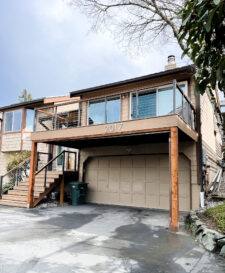
What a Correctly Built Coastal Deck Actually Involves
A deck that's going to hold up near the Gulf needs to be right below the surface, not just on top of it. The decking boards get the attention because they're visible, but the framing, fasteners, and flashing underneath determine whether the whole structure is still sound in ten or fifteen years.
Framing and Fasteners That Won't Corrode
Standard hot-dip galvanized hardware is not enough this close to salt water. We frame with fasteners, joist hangers, and structural screws rated for coastal or marine-grade use — typically stainless steel or heavy-duty coated products specifically tested for high-corrosion environments. Mixing metals matters too: the wrong combination of fastener and connector material can accelerate corrosion through galvanic reaction, so every piece of hardware in the frame needs to be compatible with everything it touches.
Ledger Attachment and Flashing
Where the deck attaches to the house is the single most common point of failure on any deck, coastal or not, but wind-driven rain makes it worse here. Correct ledger flashing directs water away from the band board instead of letting it wick in behind the siding or into the rim joist. We flash every ledger connection properly and confirm the attachment is engineered for the loads it needs to carry — not just nailed or lag-bolted on and called done.
Footings Sized for Local Soil and Wind Loads
Footing depth and post spacing aren't guesses — they're calculated based on the deck's height, size, and the wind loads it needs to resist under Pinellas County's building code. Undersized or shallow footings are one of the more common shortcuts we see on older decks in this area, and they're a real liability during a serious wind event.
Choosing a Decking Material for Salt Air and Sun
There's no single "best" decking material for every homeowner — it depends on your budget, how much maintenance you're willing to do, and how the deck will be used. Here's how the common options actually perform in a salt-air, high-UV coastal environment like Madeira Beach:
| Material | Salt Air / Moisture Behavior | Maintenance Needed | Sun & UV Performance |
|---|---|---|---|
| Pressure-Treated Pine | Resists rot when properly sealed; end cuts and fastener holes are vulnerable if not treated | Regular sealing/staining, roughly every 1-2 years | Fades and can splinter without upkeep |
| Capped Composite | Excellent — the cap layer resists moisture intrusion and salt residue washes off easily | Occasional washing; no sealing or staining | Stable color, most brands warranty against fading |
| PVC / Cellular Decking | Fully synthetic, essentially immune to salt and moisture damage | Lowest maintenance of any option | Very stable, though can run hotter underfoot in direct sun |
| Tropical Hardwood (e.g., ipe) | Naturally dense and rot-resistant, but still needs oil treatment near salt air | Periodic oiling to maintain color and prevent graying | Excellent durability, high upfront cost |
For most Madeira Beach homeowners, capped composite or PVC decking ends up being the practical choice — not because pressure-treated wood or hardwood are bad products, but because the maintenance schedule that keeps them performing well is harder to stay on top of in a salt-air environment where boards see near-constant sun and periodic saltwater spray. We'll walk you through the honest trade-offs for your specific project rather than push one material for everyone.
Railings, Hardware, and the Details That Fail First
Railings take more direct salt and sun exposure than almost any other part of the deck, and they're a life-safety component, not just a design element. We use fasteners and post connectors rated for the same corrosion resistance as the deck frame, and we pay close attention to how the railing posts are anchored — through-bolted to blocking rather than just screwed into the rim joist. Loose or corroding railings are one of the more common issues we find on decks that are otherwise in decent shape, because the hardware was never upgraded from a standard inland-grade kit.
Stair stringers, cable rail hardware if you go that route, and any exposed steel brackets all need the same coastal-grade treatment. It's a small percentage of the total material cost on a project, and it's not a place to cut corners.
Permits, Setbacks, and Flood Considerations Near the Beach
Deck projects in and around Madeira Beach typically require a building permit, and depending on your property's elevation and flood zone designation, there may be additional requirements around footing depth, structural attachment, or how close the deck can sit to grade. Pinellas County and local jurisdictions also enforce wind-load standards that are stricter than what you'd see further inland, which affects everything from post spacing to fastener specification. We handle the permitting process as part of the job and design the structure to meet current code rather than assuming an older deck's specs are still acceptable — codes here have gotten more stringent over time, particularly around wind resistance.
If your property has HOA guidelines or deed restrictions on deck size, materials, or railing style, it's worth checking those before design begins so we're not redesigning mid-project.
Our Deck Building Process
We keep the process straightforward and communicate at each stage so you're not guessing what happens next:
- Site visit and consultation. We look at your space, discuss how you'll use the deck, and talk through material options honestly based on your budget and maintenance preferences.
- Design and engineering. We size the framing, footings, and fastener specification to meet Pinellas County wind and structural requirements for your specific deck.
- Permitting. We prepare and submit the permit package so the project is fully compliant before any work begins.
- Demolition or site prep. If we're replacing an existing deck, we remove it and inspect the ledger and house connection for hidden moisture damage before building new.
- Framing. Footings, posts, beams, and joists go in first, using coastal-rated hardware throughout.
- Decking, railing, and stairs. Your chosen decking material is installed along with railings and stairs, finished to spec.
- Final walkthrough. We inspect the completed deck with you, confirm everything is solid and finished correctly, and answer any maintenance questions before we consider the job done.
Keeping Your Deck Sound After We Build It
Even a correctly built coastal deck needs some routine attention to reach its full lifespan. A short seasonal checklist goes a long way:
- Rinse salt residue and debris off the deck surface periodically, especially after storms or high-wind days
- Check railing posts and stair stringers for looseness once or twice a year
- Inspect the ledger board area where the deck meets the house for any signs of moisture staining
- If you have wood decking, keep to your sealing or staining schedule rather than letting it lapse
- Clear leaves and organic debris from between boards so moisture doesn't sit trapped against the frame
- Look underneath the deck occasionally for corrosion on fasteners or joist hangers, particularly after the first couple of years
Why It Matters That We Already Work in Madeira Beach
A contractor who mostly builds decks inland can still do competent framing, but they may not default to coastal-grade fasteners, they may not know the local permitting expectations, and they may not think about wind-driven rain intrusion at the ledger the way a crew that works this specific stretch of coastline does. We work throughout Seminole and the surrounding Pinellas County beach communities regularly enough that coastal-grade hardware, correct flashing, and wind-rated framing aren't upgrades we suggest — they're just how we build here by default. That familiarity is the difference between a deck that looks good for a season and one that's still structurally sound after years of salt air and Gulf storms.
Get a Straightforward Estimate
If you're planning a new deck or need to replace one that's showing its age, we're happy to come take a look and give you a straightforward, no-pressure estimate. Fill out the form below and we'll walk the site, talk through material options that make sense for your budget and your home's exposure, and give you a clear picture of what the project involves.