 Seminole Siding
 Why Decks Take a Beating in St. Petersburg's Climate
A deck in St. Petersburg lives a harder life than one built almost anywhere inland. Between the Gulf Coast sun, the humidity that never really lets up, and the wind that comes with every serious storm off Tampa Bay, the structure underneath your deck boards is under constant stress even when the surface still looks fine. Homeowners are often surprised to learn that the visible boards are rarely the first thing to fail — it's usually the framing, fasteners, and connections underneath doing the real damage control, and once those give out, no amount of surface repair fixes the problem.
Sun and UV Exposure
Pinellas County gets strong, direct sun for most of the year. UV breaks down the lignin in wood fibers, which is why untreated or poorly finished wood decking grays, splinters, and gets brittle years before it should. Composite and PVC products fade too if they're low-grade or installed without attention to the manufacturer's UV-stabilization specs, so material choice matters as much as installation.
Salt Air and Coastal Humidity
Even homes that aren't waterfront pick up airborne salt this close to the Gulf. Salt accelerates corrosion in any fastener, bracket, or post base that isn't rated for coastal exposure. Combine that with Florida's humidity and you get a slow, steady breakdown of hardware that a homeowner never sees until a board starts to feel spongy or a railing starts to wobble.
Storm Season Stress
Hurricane-force winds and wind-driven rain put real lateral load on a deck structure, especially at the ledger board connection to the house and at railing posts. A deck that was built to minimum code decades ago, or repaired piecemeal since, often doesn't have the connection hardware to handle repeated storm seasons the way a properly engineered rebuild does.
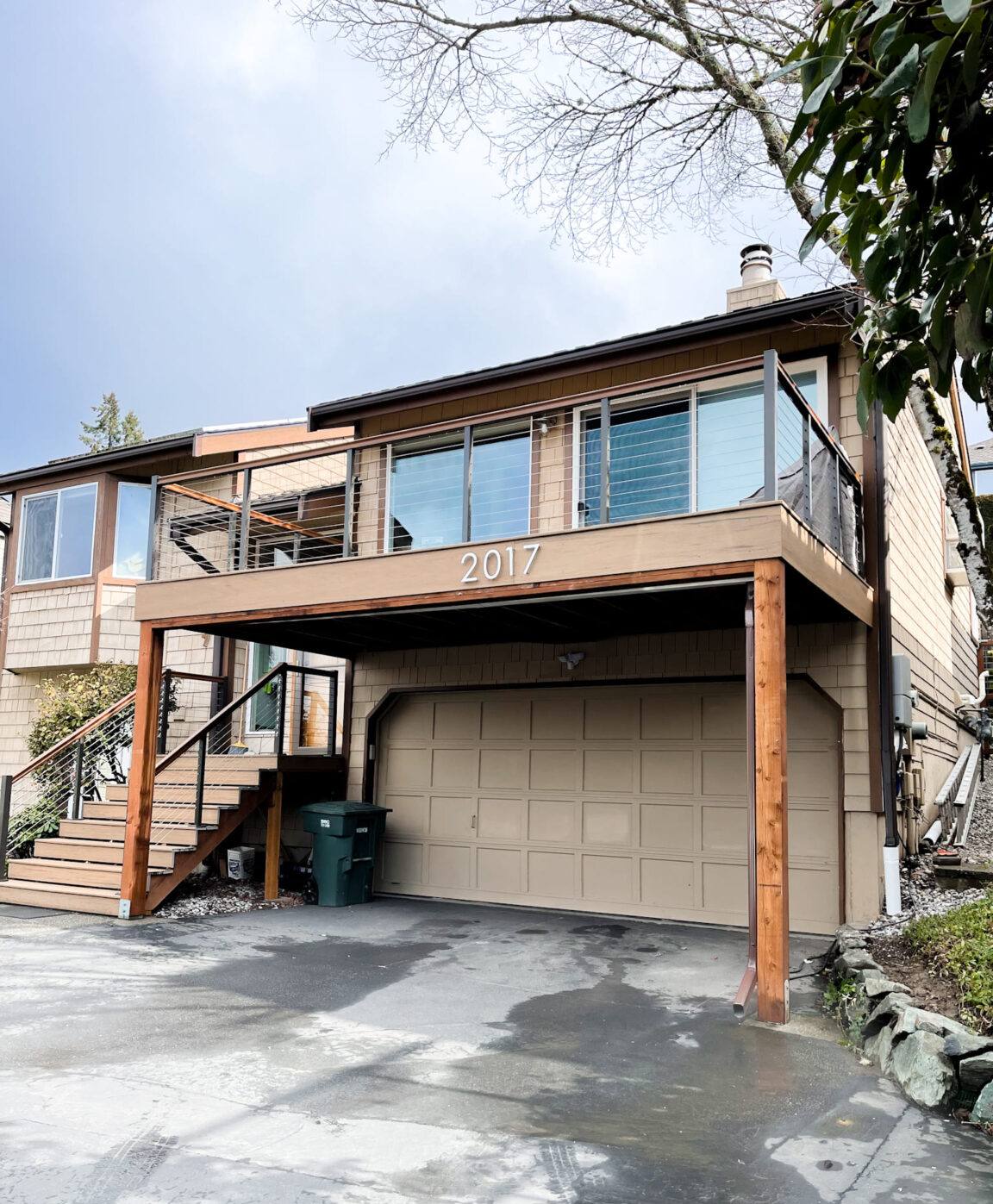
Signs It's Time to Replace, Not Patch, Your Deck
Repairs make sense when the problem is isolated. Replacement makes sense when the damage is systemic — when the framing, ledger, or majority of the boards have all been exposed to the same years of sun, moisture, and salt. Here's what tells us a deck has crossed that line:
- Boards that feel soft, spongy, or flex noticeably when you walk on them
- Rust streaks running down from screws, nails, or brackets
- A ledger board that's discolored, soft, or pulling away from the house
- Railings or posts that wobble or have visible cracking at the base
- Cupping, splitting, or widening gaps across multiple boards, not just one or two
- Visible rot or insect damage in support posts or joists
- A deck that was never properly flashed at the house connection, regardless of age
If you're only seeing one or two of these on a deck that's otherwise sound, targeted repair is often the honest answer. When several show up together, that's usually the framing telling you it's done, and replacement is the more cost-effective path over the next repair cycle.
What a Proper Deck Replacement Includes
A deck replacement is a structural project, not a cosmetic one, and it should be scoped that way from the start. Anyone quoting you should be looking at the whole system, not just the decking surface.
Structural Framing and Footings
Posts, footings, beams, and joists all get evaluated and typically replaced as part of a full rebuild. Spacing and sizing need to match the span and load requirements for the decking material you're choosing, since composite and PVC products often call for tighter joist spacing than traditional lumber.
Ledger Board and Moisture Management
The ledger board — where the deck attaches to the house — is the single most common failure point on any deck in a humid climate. Correct flashing here keeps water from tracking behind the siding or into the rim joist. This is the detail that gets skipped most often on lower-bid jobs, and it's the one that causes the most expensive damage down the road when it's missed.
Permits and Local Code Considerations
Structural deck work in Pinellas County generally requires a permit and inspection, and the connection hardware and post spacing get reviewed against wind-load requirements for the area. Skipping the permit might save time up front, but it leaves you without an inspected paper trail if there's ever an insurance question after a storm.
Decking Material Comparison for a Coastal Pinellas County Home
There's no single "best" decking material — there's the right one for your budget, your maintenance tolerance, and how close you are to the salt air. Here's how the common options actually compare once you factor in this climate.
| Material | UV / Fade Resistance | Salt Air & Moisture | Maintenance | Typical Lifespan |
|---|---|---|---|---|
| Pressure-Treated Wood | Fades and grays without regular refinishing | Vulnerable if fasteners or sealant are neglected | Annual cleaning/sealing recommended | 10–15 years with upkeep |
| Capped Composite | Good, holds color better than wood | Strong resistance, doesn't absorb moisture like wood | Low — occasional washing | 25+ years |
| PVC / Vinyl Decking | Very good, engineered for sun exposure | Excellent, fully moisture-resistant | Low | 25–30+ years |
Pressure-treated wood is still the lowest upfront cost and it's a legitimate choice if you're willing to stay on top of sealing and refinishing on a schedule. Composite and PVC cost more to install but hold up better against the exact conditions St. Petersburg throws at a deck year-round, which is why we see more homeowners in this area choosing them for full replacements rather than repeat repairs on wood.
Hardware and Fasteners: The Detail Most Contractors Skip
The decking material gets all the attention, but the fasteners and structural connectors are what actually fail first this close to the Gulf. Standard galvanized hardware corrodes faster in salt air than most homeowners expect, and once a fastener weakens, the board or bracket it's holding is only as strong as that connection. On every replacement, we use stainless steel or coated fasteners rated for coastal and treated-lumber contact, along with hurricane-rated structural connectors at the posts and ledger. It costs more than standard hardware, but it's the difference between a deck that holds up through a normal storm season and one that needs hardware repairs within a few years.
Our Deck Replacement Process, Start to Finish
- On-site assessment. We inspect the existing framing, ledger connection, and posts to confirm what's actually failing and scope the rebuild honestly — not every deck needs a full teardown, and we'll tell you if it doesn't.
- Design and material selection. We walk through decking, railing, and hardware options based on your budget and how much maintenance you actually want to do long-term.
- Permitting. We handle the permit application and schedule required inspections so the finished structure is documented and code-compliant.
- Demolition. The old deck comes down, including footings or posts that don't meet current spacing or structural requirements.
- Framing and flashing. New posts, beams, joists, and ledger flashing go in first, built to the load and spacing requirements for your chosen decking material.
- Decking and railing installation. Boards, railings, and any stairs are installed with corrosion-resistant fasteners throughout.
- Final inspection and walkthrough. We confirm the work passes inspection and walk the finished deck with you before calling the job done.
Cost Factors to Expect
Every deck replacement quote should account for the same handful of variables. Knowing them ahead of time makes it easier to compare quotes apples-to-apples instead of just looking at a bottom-line number.
- Square footage — the most direct driver of material and labor cost
- Decking material — pressure-treated, composite, and PVC carry different price points, as shown above
- Height and substructure complexity — a deck with multiple levels or extra footings costs more than a simple single-level rebuild
- Railing style — basic wood or composite railing versus metal or glass systems
- Stairs — each set adds material, labor, and code requirements
- Permit and inspection fees — required for structural replacement in this area
We won't quote a price without seeing the deck, but we'll always break the number down by these factors so you know what you're paying for, not just a lump sum.
Why Hire a Crew That Already Works St. Petersburg
A deck replacement is a structural job in a place with real wind-load and moisture demands, and that's a different job than the same deck would be inland. A crew that already works in St. Petersburg and across Pinellas County knows the local permitting process, has already seen how ledger boards and fasteners fail in this specific climate, and isn't learning coastal-grade hardware requirements on your project. Our team is based in nearby Seminole and works this stretch of the Gulf Coast regularly, so the framing, flashing, and hardware decisions on your deck are based on what actually holds up here — not on generic specs written for a different climate.
If your deck is showing any of the signs above, or it's simply reached the age where a rebuild makes more sense than another round of patching, we're happy to take a look. Reach out for a free, no-pressure estimate using the form below and we'll walk the deck with you and give you a straight assessment of what it needs.