 Seminole Siding
 Belleair Beach Sits Right in the Line of Fire for Exterior Damage
Belleair Beach is barrier-island real estate, and that location comes with a specific set of exterior problems most inland Florida homes never have to deal with. The siding on these houses isn't just shielding against ordinary weather — it's absorbing salt-laden air off the Gulf, tropical-storm and hurricane-force wind loads, wind-driven rain that gets pushed sideways into wall assemblies, and some of the most intense, sustained UV exposure in the continental United States. Any one of those on its own is manageable. Stacked together, year after year, they're what separates siding that holds up for decades from siding that starts failing in five or six years.
Salt Air and Corrosion
Airborne salt doesn't just affect metal railings and hardware — it settles into porous or poorly sealed siding materials, accelerates the breakdown of paint films, and speeds up rot in anything wood-based. Homes closer to the water take the brunt of it, but salt drift travels well inland on a barrier island, so this isn't a concern limited to homes with a direct water view.
Wind-Driven Rain and Water Intrusion
Florida's Gulf-side storms don't deliver rain straight down — wind pushes it sideways and forces it up under laps, around trim, and into any gap in the water-resistive barrier. Siding that isn't installed with the right clearances and flashing details will let moisture behind the cladding long before the surface itself looks damaged. By the time a homeowner notices staining or soft spots, the sheathing underneath may already be compromised.
UV Load, Twelve Months a Year
Pinellas County doesn't get a real off-season for sun exposure. Unstable paints and lower-grade composite products chalk, fade, and become brittle faster here than in almost any other part of the country. A siding product's finish system has to be engineered for this, not just rated for it on paper.
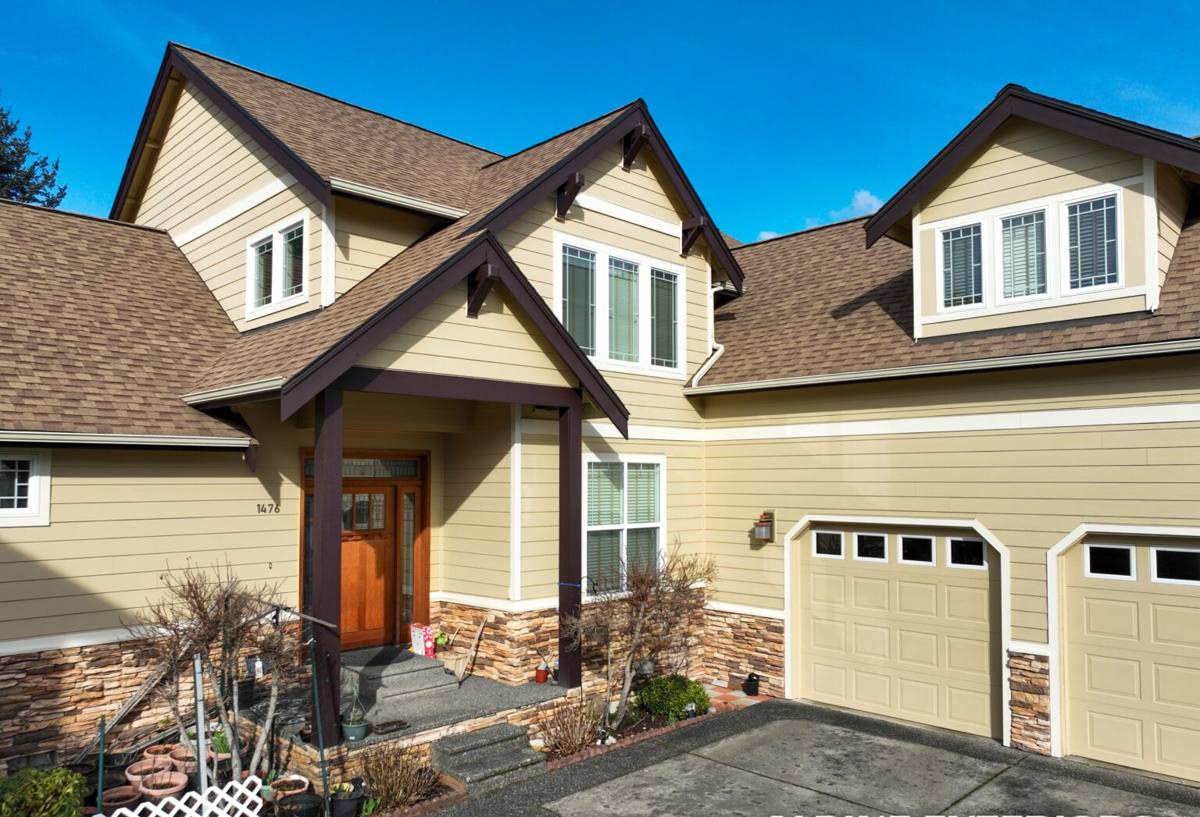
What Siding Actually Has to Do on a Barrier Island Home
Given that environment, the material and the installation both have a short list of non-negotiables: it has to resist moisture without swelling or rotting, hold color and finish integrity under constant UV, stay put and stay sealed under high wind pressure, and shrug off salt exposure without accelerated corrosion or degradation at the fastener and trim level. Not every siding product on the market meets all four at once.
| Requirement | Why It Matters Here | How Fiber Cement Performs |
|---|---|---|
| Moisture resistance | Wind-driven rain, humidity, occasional flooding risk | Non-organic composition, doesn't swell or rot when installed correctly |
| UV/finish stability | Year-round intense sun fades and chalks weaker finishes | Factory-baked finish holds color far longer than field-applied paint |
| Wind performance | Hurricane and tropical storm wind loads | Rated for coastal wind zones when installed to fastening spec |
| Fire resistance | Coastal brush, grill/BBQ proximity, general safety | Non-combustible material, will not ignite or contribute fuel to a fire |
Why We Install Only James Hardie Fiber Cement
We made a deliberate decision to standardize on James Hardie and only James Hardie. We don't install LP SmartSide, vinyl siding, Cemplank, Allura, or bare cedar or primed spruce products, and we're upfront with homeowners about why. It isn't that every one of those products is without merit — vinyl is inexpensive and low-maintenance in mild climates, engineered wood has a lower material cost than fiber cement, and cedar has real curb appeal. The trade-offs, though, are the kind that show up specifically in a coastal Pinellas County environment: engineered wood siding is organic at its core and more sensitive to sustained moisture exposure than fiber cement; vinyl can distort in intense heat and has real limits under hurricane-force wind loads; unprimed or field-primed wood products demand a maintenance schedule most homeowners underestimate until the first repaint comes due years ahead of schedule.
What About Other Fiber Cement Brands?
Even within fiber cement, product lines differ in formulation, finish warranty, and how well the manufacturer engineers specifically for high-wind and coastal-moisture regions. James Hardie's HardieZone system and ColorPlus factory finish are built around exactly the exposure profile Belleair Beach homes deal with, and the company backs the product with a strong, transferable warranty. Standardizing on one manufacturer also means our crews aren't relearning installation specs and fastening patterns from job to job — every install follows the same proven detailing.
Matching the Right Hardie Product to a Coastal Application
James Hardie's HZ5 product line is engineered for hot, humid, high-moisture climates — which is exactly the classification Pinellas County falls into. That matters for more than marketing: the HZ5 formulation and finish system are built to perform in the humidity and moisture exposure a Gulf-adjacent home sees constantly, not just occasionally. We also factor in the home's specific wind exposure category, since a house with an open, unobstructed line to the water needs the same fastening rigor as one set back a few streets, and sometimes more.
Color and profile choice matter too, but they come after the performance decisions. HardiePlank lap siding is the most common choice for single-family homes in this area; HardiePanel and HardieShingle come into play for accent sections, gable ends, or homes going for a specific coastal or shingle-style look. We walk through the options during the estimate rather than pushing a single default.
What Correct Installation Looks Like This Close to the Gulf
Fastening and Clearances
Fastener type, spacing, and embedment all change based on wind zone, and cutting corners here is invisible until the next major storm tests it. Ground clearance and clearance from roofing, decks, and hardscape also matter more here than in a low-moisture climate — siding installed too close to grade or to a horizontal surface stays wet longer and fails faster, regardless of how good the material is.
Flashing and Joint Treatment
Every window, door, and penetration is a place water can get behind the cladding if it's flashed wrong. Butt joints, corners, and transitions need the right sealants and the right sequencing with the water-resistive barrier underneath — this is where a rushed or inexperienced install shows up as a callback two or three years later, not on day one.
Factory Finish vs. Field Painting
ColorPlus factory-applied finish is baked on under controlled conditions and holds up to UV and salt exposure noticeably better than a field-applied topcoat. We install pre-finished product wherever the color selection allows it, because it removes an entire category of finish-failure risk in a climate that's hard on paint.
How We Run a Belleair Beach Project
The process doesn't change dramatically from house to house, but the sequencing matters:
- On-site inspection of existing siding, sheathing, and any moisture or storm damage already present
- Wind zone and exposure assessment specific to the home's location and orientation
- Product and color selection, reviewed against the home's HOA or deed restrictions if applicable
- Removal of existing siding and inspection of the sheathing and water-resistive barrier underneath
- Repair of any compromised sheathing before new siding goes on — this step gets skipped by crews in a hurry, and it shouldn't be
- Installation to James Hardie's fastening, clearance, and flashing specifications for the applicable wind zone
- Final walkthrough and documentation for warranty registration
What Belleair Beach Siding Projects Typically Cost
Every home is different, but the same factors drive cost on nearly every project in this area. We give a firm number after an on-site walkthrough, not a phone estimate, because these variables genuinely change the scope.
| Cost Factor | Why It Moves the Price |
|---|---|
| Sheathing condition | Rot or moisture damage found during tear-off adds repair scope before new siding can go on |
| Home size and complexity | Roofline height, gables, and architectural detail all add labor time |
| Product line and profile | HardiePlank, HardiePanel, and HardieShingle carry different material and labor costs |
| Color selection | Factory ColorPlus finishes vary in price by color family; custom field-painting adds cost |
| Wind zone detailing | Higher-exposure sites may need tighter fastening schedules, which adds labor |
| Access and site conditions | Waterfront lots, tight setbacks, and landscaping can add staging time |
A Homeowner's Checklist Before Hiring
- Ask whether the crew is James Hardie factory trained, not just "familiar" with the product
- Ask what wind zone rating your home falls under and how that changes the fastening plan
- Get the sheathing inspection and repair process spelled out in writing before tear-off starts
- Confirm whether the finish is factory ColorPlus or will be field-painted, and understand the difference
- Ask how the warranty works, what's covered, and whether it's transferable if you sell the home
- Get references or examples of other work completed specifically in coastal Pinellas County
Why a Crew That Already Works This Coastline Matters
Belleair Beach and the surrounding barrier-island communities have their own permitting requirements, wind-load expectations, and, in some cases, HOA or architectural review rules that inland Seminole neighborhoods don't deal with in the same way. A crew that already works this stretch of coastline knows what inspectors are looking for, knows how to detail a job for the actual exposure the home faces rather than a generic statewide minimum, and isn't learning barrier-island installation practices on your house for the first time. That local track record is worth asking about directly when you're vetting a contractor — it's a fair question, and any contractor confident in their work will be glad to answer it.
If you're weighing a siding replacement for a Belleair Beach home, we're happy to walk the property, look at what's there now, and give you a straight answer on what it would take to do it right with James Hardie fiber cement. Reach out below for a free, no-pressure estimate.