 Seminole Siding
 Siding Built for a Barrier Island, Not Just Any Florida House
Indian Rocks Beach sits on a narrow strip of land between the Intracoastal Waterway and the Gulf of Mexico, and that location changes what a home's exterior has to survive. Homes here take on a combination most inland Pinellas County properties never see at the same intensity: constant salt-laden air, wind-driven rain that gets pushed sideways during storms, and direct, unfiltered UV exposure for most of the year. Add in the periodic threat of hurricane-force wind gusts, and it's clear that siding on this stretch of coastline is doing a harder job than siding just a few miles inland in Seminole proper.
We're based in Seminole and work Indian Rocks Beach regularly, which matters more than it might sound. A crew that only occasionally works this close to the Gulf doesn't build the same instinct for how salt air corrodes fasteners, how wind uplift behaves on a narrow lot with few windbreaks, or how quickly a poorly flashed seam turns into a moisture problem in this environment. This page focuses on one product, for one area: James Hardie fiber cement siding, installed correctly, for Indian Rocks Beach homes.
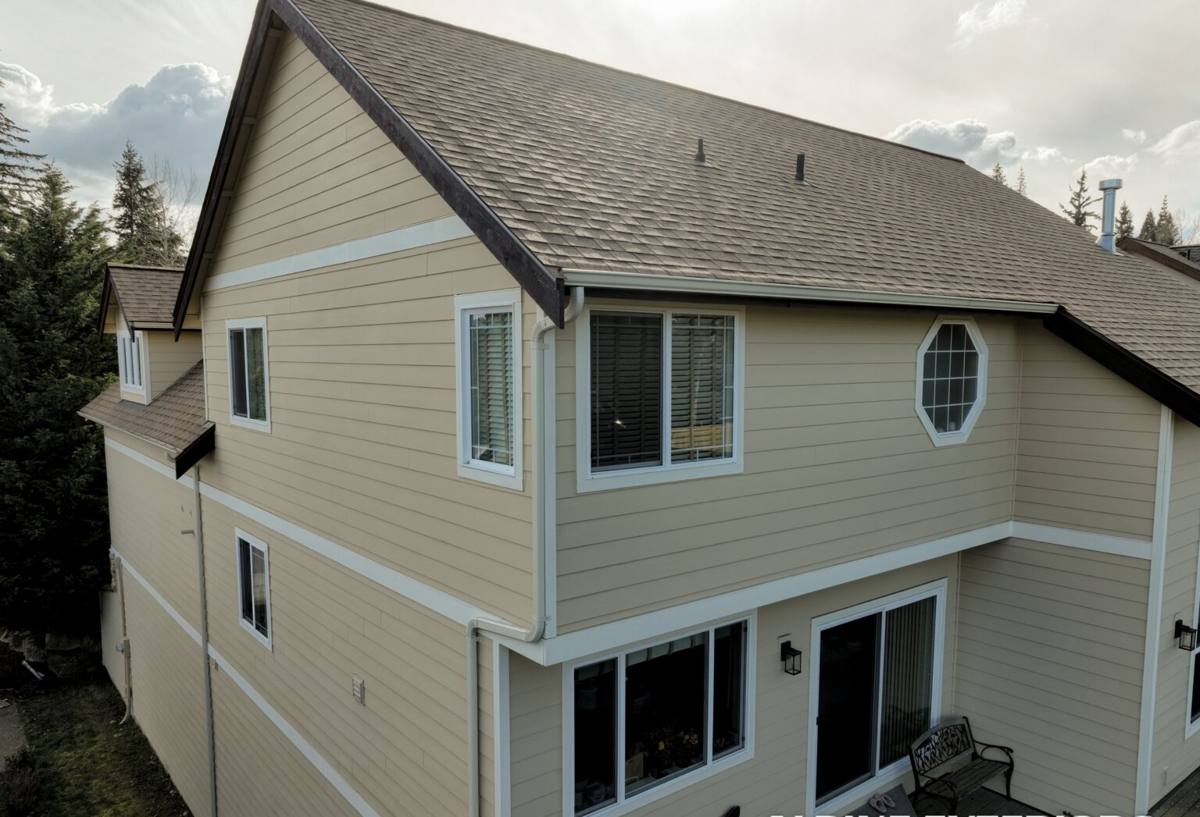
What the Coastal Climate Actually Does to Siding
Salt Air and Corrosion
Salt carried on Gulf breezes settles on every exterior surface, including siding, trim, and fasteners. Over time it accelerates corrosion of untreated or poor-quality metal components and can degrade materials that aren't formulated to resist it. This is one of the reasons fastener selection and flashing details matter as much as the siding panel itself on a barrier island installation.
UV Exposure
Florida's sun is intense nearly year-round, and homes near the beach get it with almost no shade cover from tree canopy in many cases. Constant UV exposure breaks down pigments and surface coatings on lower-quality siding products, leading to fading, chalking, and a tired look well before the material has structurally failed. A factory-applied, UV-stable finish is not a cosmetic upgrade here — it's a functional requirement.
Wind-Driven Rain and Storm Exposure
During tropical storms and hurricanes, rain doesn't fall straight down on Indian Rocks Beach — it's driven horizontally into wall assemblies. Combined with the higher wind speeds that barrier island properties are exposed to compared to inland lots, this puts real stress on how siding is fastened, how seams and joints are treated, and how water is managed behind the cladding, not just on its surface.
Why We Install Only James Hardie Fiber Cement Here
We standardized on James Hardie fiber cement siding for every home we side, and that decision is even easier to defend on Indian Rocks Beach than it is a few miles inland. Fiber cement is non-combustible, dimensionally stable in humidity swings, and — when it's the HZ5 formulation Hardie engineers for hot, humid climates — built specifically to resist the moisture and temperature cycling that coastal Florida produces. The ColorPlus factory finish is baked on and warranted against fading, which matters enormously in an area getting this much direct sun.
We don't install vinyl, LP SmartSide, Cemplank, Allura, or primed wood siding, and we're upfront about why. Each of those products has legitimate strengths, but none of them combine the fire performance, factory-cured color stability, and manufacturer track record in high-UV, high-salt coastal conditions the way Hardie's HZ5 line does. On a barrier island property, we don't want to be the crew that installed something we knew would need premature attention.
Fiber Cement vs. Other Common Siding Choices for Coastal Homes
| Factor | James Hardie Fiber Cement (HZ5) | Vinyl | Engineered Wood (LP SmartSide) |
|---|---|---|---|
| UV/color stability | Factory ColorPlus finish, warranted against fading | Can fade and become brittle over years of direct sun | Field-painted finish, repaint cycle needed |
| Moisture behavior | Engineered for humid, coastal exposure | Resists water itself but can trap moisture behind panels if installed poorly | Wood-based core is moisture-sensitive if edges aren't sealed and maintained |
| Fire performance | Non-combustible | Combustible plastic product | Combustible wood-based product |
| Wind/impact resistance | Rigid, dense panel holds up well when properly fastened | Lighter panels can be more prone to wind damage | Solid but reliant on maintained coatings for long-term integrity |
What a Correct Fiber Cement Job Looks Like Here
The product is only half of the equation. On a coastal property like this, installation quality is what actually determines whether the siding performs for its full service life. A correct James Hardie installation on Indian Rocks Beach includes:
- Corrosion-resistant fasteners rated for coastal exposure, driven to Hardie's specified pattern and depth
- Proper house wrap and a drainage plane behind the siding so any incidental moisture has a path out
- Correctly lapped and sealed flashing at every window, door, and roofline intersection
- Manufacturer-specified starter strips, joint treatment, and caulking compatible with fiber cement
- Field-cut edges primed or sealed per Hardie's installation instructions, so cut ends aren't left exposed to moisture
- Attention to minimum clearances from grade, roofing, and decks to keep the bottom edge of the siding out of standing water and debris
Skipping any one of these steps doesn't necessarily show up right away. It shows up two, five, or ten years later as a callback — a soft spot near a window, a seam that's let water behind the wall, or fasteners bleeding rust through the finish. That's why we treat the installation details with the same seriousness as the product choice.
Our Process for Indian Rocks Beach Homes
1. On-Site Assessment
We walk the property in person, not just from photos. That includes checking the current siding or substrate condition, looking at how the home is oriented relative to prevailing wind and rain, and identifying any existing moisture or ventilation issues that need to be addressed before new siding goes on.
2. Product and Line Selection
For this area, we typically recommend Hardie's HZ5 zone products and walk homeowners through the relevant plank profiles and ColorPlus color options, factoring in HOA or neighborhood aesthetic considerations where they apply.
3. Prep and Moisture Management
Before any panel goes up, we confirm the water-resistive barrier, flashing, and drainage plane are correct. On a barrier island lot, this step gets extra attention because there's little margin for error once the siding is closed in.
4. Installation to Manufacturer Spec
Fastening pattern, clearances, joint treatment, and sealing are all done to James Hardie's published installation requirements — not shortcuts that happen to look fine on day one.
5. Final Walkthrough
We review the completed work with the homeowner, covering basic care and what to watch for over time, particularly after major storm events.
Maintenance Realities for a Gulf-Facing Home
Even the right product installed correctly still benefits from basic homeowner attention on a barrier island property. A periodic rinse to remove accumulated salt film, prompt attention to any caulking that starts to separate, and a visual check after major storms for loose trim or displaced panels all go a long way. None of this is heavy maintenance — fiber cement is chosen precisely because it demands far less upkeep than wood-based alternatives — but coastal exposure means "set it and forget it" isn't quite realistic for any exterior material.
Simple Homeowner Checklist
- Rinse siding periodically to remove salt buildup, especially on Gulf-facing walls
- Inspect caulking at joints, windows, and trim once or twice a year
- Walk the exterior after named storms to check for loose panels, trim, or flashing
- Keep irrigation heads and sprinklers from spraying directly on siding long-term
- Address any small issues promptly rather than waiting for them to spread
Why Local Experience on This Stretch of Coast Matters
Seminole and Indian Rocks Beach are close geographically, but the exposure conditions are not identical, and a crew that regularly works this specific barrier island environment develops a feel for it that general contractors don't. We know to expect corrosion-prone conditions on Gulf-facing elevations, we know how wind behaves differently on narrow island lots than on wider inland properties, and we know which installation details tend to get tested hardest here. That local pattern recognition is part of what a homeowner is paying for when they hire a crew that already works this specific coastline, not just Pinellas County broadly.
Cost Factors Specific to Coastal Installations
Every home is different, but a few factors tend to influence project scope and cost specifically on Gulf-facing or barrier island properties:
| Factor | Why It Affects Scope |
|---|---|
| Existing substrate condition | Salt and moisture exposure can mean more repair or replacement of underlying sheathing than an inland home |
| Flashing and window detail complexity | Homes with more window/door penetrations need more careful, and more time-intensive, flashing work |
| Access and staging | Narrow island lots can affect equipment access and material staging logistics |
| Fastener and hardware upgrades | Coastal-grade fasteners and hardware cost more than standard-grade options but are not optional here |
We don't quote broad numbers on a page like this because every home's exposure, size, and existing condition are different — but these are the honest variables that move a price up or down, and we'll walk through them plainly during an on-site estimate.
If you own a home in Indian Rocks Beach and are weighing your siding options, we're happy to take a look and give you a straightforward, no-pressure estimate — including what we'd actually recommend for your specific exposure, not just a generic quote. Use the form below to get started.