 Seminole Siding
 Why Indian Rocks Beach Puts More Stress on Siding Than Most Homes Inland
Indian Rocks Beach sits directly on the Gulf, and that changes what siding has to survive. A wall panel on a barrier island community absorbs a different combination of stresses than the same product a few miles inland in Seminole or elsewhere in Pinellas County: near-constant salt-laden air, direct sun exposure with little tree cover to break it up, wind-driven rain that gets pushed sideways into seams and laps, and the periodic threat of hurricane-force gusts. None of these alone is unusual for Florida. Stacked together, on a home with unobstructed Gulf exposure, they accelerate whatever weaknesses a siding product has.
Salt air is corrosive to exposed metal fasteners and trim, and it also degrades many paint and coating systems faster than it would inland — chalking, fading, and losing adhesion sooner than the manufacturer's published timelines assume. UV breaks down pigments and the top layer of many siding materials, which is why homes on this stretch of coast often show visibly more fading and chalking than similar homes twenty minutes away. Wind-driven rain doesn't just wet a wall — it drives moisture up under laps and around penetrations that would stay dry in a normal rainstorm. And wind load itself is a structural question: fastener spacing, panel engagement, and starter strip detailing that pass inspection inland can be marginal on a home with direct, unbroken Gulf exposure.
What This Means for Material Choice
A siding product that performs adequately in a typical Florida subdivision isn't automatically a good fit for a home facing the Gulf. The material has to hold its finish under intense UV, resist moisture intrusion at the seams, and stay mechanically fastened through real wind events — not just meet a baseline code requirement. This is the reason we don't treat every siding job the same way, and it's the reason our product decision for this coastline is deliberate rather than default.
Why We Install Only James Hardie on Homes Like This
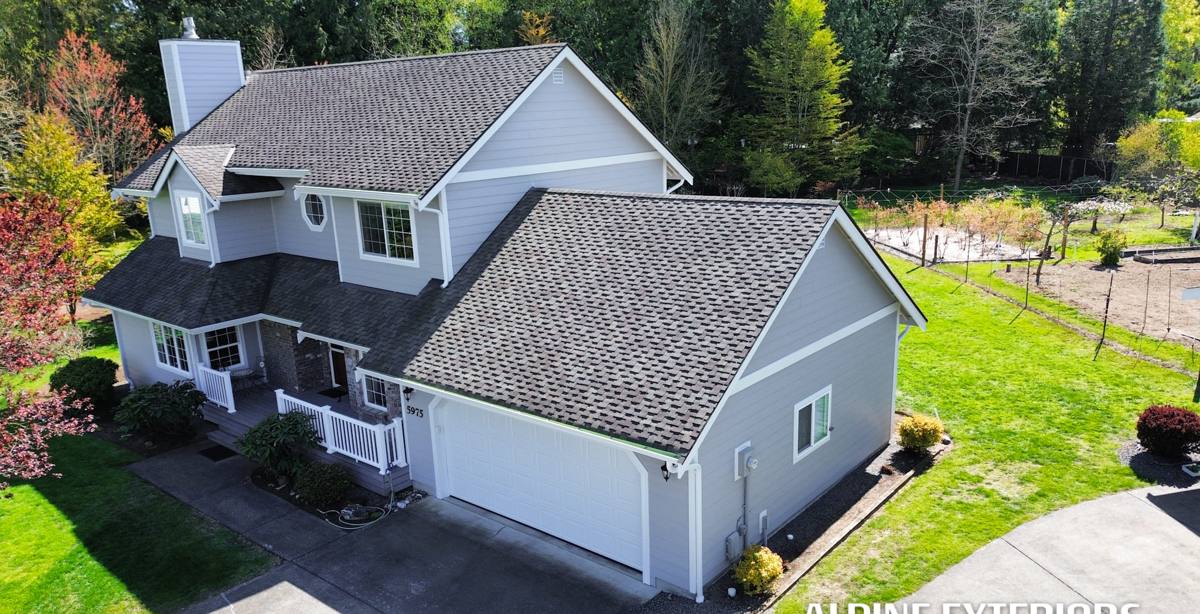
We install James Hardie fiber cement siding exclusively — not vinyl, not LP SmartSide, not Cemplank, Allura, or primed wood products. On a barrier island property, that decision matters more than it would on an inland lot. Fiber cement is dimensionally stable in a way wood-based and vinyl products are not: it doesn't expand and contract with heat the way vinyl does, and it doesn't absorb and swell with moisture the way wood-based composite products can. James Hardie's ColorPlus factory-applied finish is baked on and warranted against fading and chipping, which matters directly here — a finish that holds its color under sustained coastal UV saves the homeowner from an early repaint that a lot of other siding systems eventually require.
Fiber cement is also non-combustible, which is a real advantage during Florida's dry, high-wind fire-weather stretches, and it holds up to wind-driven rain differently than lap products with foam backing or wood substrates — it doesn't wick and hold moisture the same way. None of this means Hardie is maintenance-free or immune to installation mistakes. It means that, of the products available to a siding contractor today, it's the one we're willing to put our name behind on a home that takes this much weather.
James Hardie's HZ10 vs. HZ5 Engineering
James Hardie engineers its siding to different climate zones, labeled HZ5 and HZ10. HZ10 is the formulation built for higher-moisture, higher-humidity coastal and Gulf climates — it's the version we specify for Indian Rocks Beach and the surrounding coastal areas of Pinellas County. HZ5 is intended for drier, more moderate climates and isn't the right specification for a home sitting this close to the water.
| Factor | HardiePlank HZ10 | Standard HZ5 |
|---|---|---|
| Designed for | Humid, coastal, high-moisture climates | Moderate, drier inland climates |
| Moisture/humidity resistance | Formulated for sustained high humidity | Adequate for lower-moisture regions |
| Recommended for Indian Rocks Beach | Yes | No |
What a Correct James Hardie Installation Involves on This Coastline
James Hardie's own installation instructions are detailed for a reason — most siding failures homeowners run into aren't the material's fault, they're the result of a crew rushing the details that matter most in a harsh climate. On a Gulf-facing home, a handful of details separate a job that lasts decades from one that develops problems in a few years.
- Correct starter strip placement so the first course sits at the right angle and drains properly
- Proper water-resistive barrier and flashing at every window, door, and penetration, lapped correctly so water sheds outward, not inward
- Manufacturer-specified fastener type, spacing, and embedment depth — under-driven or over-driven fasteners are a common source of early problems
- Correct minimum clearances from the roofline, decks, and grade so the siding isn't sitting in standing water or trapped moisture
- Field-cut edges and butt joints properly sealed and primed, since factory finish doesn't extend to a fresh cut
- Caulking and joint treatment appropriate for a coastal climate, not a generic inland spec
Skipping or rushing any one of these doesn't usually show up on day one. It shows up two, three, or five hurricane seasons later, as moisture intrusion, fastener failure, or a finish that's degrading faster than it should. That's a hard lesson to learn on a home that just went through a full siding replacement.
Trim, Corners, and Water Management Details
Beyond the field of the wall, the trim and water-management details are where a lot of coastal siding jobs go wrong. Corner boards, window and door trim, and transition points need to be detailed so water is directed away from the wall assembly, not funneled toward a seam. On a home exposed to wind-driven rain off the Gulf, these details aren't cosmetic — they're the difference between a wall assembly that stays dry behind the siding and one that slowly takes on moisture without anyone noticing until there's a visible problem.
Our Process for an Indian Rocks Beach Project
We run every coastal job through the same sequence, and we don't skip steps to move faster.
1. On-Site Assessment
We walk the exterior, check the current siding and substrate condition, look at existing flashing and water-management details, and note anything specific to the home's exposure — how much direct Gulf wind and sun it takes, and where the trouble spots on the current siding already are.
2. Written Scope and Estimate
We put the plan in writing: which James Hardie products, which HZ specification, the trim and flashing approach, and a clear cost breakdown. No verbal-only agreements and no vague allowances.
3. Preparation
Old siding and any compromised sheathing or water-resistive barrier are removed and addressed before new material goes up. Installing new siding over a damaged substrate just hides a problem instead of fixing it.
4. Installation to Manufacturer Spec
Starter strips, flashing, fastener spacing, clearances, and joint treatment are all done to James Hardie's published installation requirements — not a shortcut version of them. This is also what keeps the manufacturer's warranty intact; installing outside spec can affect warranty coverage.
5. Final Walkthrough
We walk the finished job with the homeowner, point out what was done and why, and make sure everything matches the written scope before we consider the job complete.
Choosing Colors and Textures for a Gulf-Facing Home
James Hardie's ColorPlus finishes come in a range of factory-applied colors and several texture options, including smooth and cedar-textured lap profiles. On a barrier island home, color choice has a practical side beyond aesthetics: darker colors absorb more heat and can show fading contrast more noticeably over time under intense coastal UV than lighter, more reflective tones. That's not a reason to avoid darker colors — plenty of coastal homes use them successfully — but it's worth discussing during the estimate so the homeowner knows what to expect from a given color over the life of the siding.
What Drives Cost on a Job Like This
Every home is different, but the same handful of factors drive most of the cost variation we see on Indian Rocks Beach and similar coastal properties.
| Cost Factor | Why It Matters Here |
|---|---|
| Substrate condition | Water-damaged sheathing found during tear-off adds repair scope before new siding goes up |
| Home height and access | Multi-story or elevated coastal homes take more time and equipment to work safely |
| Trim and detail complexity | More corners, windows, and transitions mean more flashing and trim work |
| Product selection | Lap profile, texture, and HZ10 specification affect material cost |
| Color | Standard ColorPlus colors vs. premium or custom options price differently |
We don't publish a flat per-square-foot number because these variables shift the total meaningfully from one home to the next. What we will always do is give a specific, written number after we've actually looked at the house.
Maintaining James Hardie Siding in a Salt-Air Environment
Fiber cement is low-maintenance compared to wood, but "low-maintenance" isn't "no-maintenance," especially this close to the Gulf. A short, realistic maintenance routine keeps the siding performing the way it's designed to.
- Rinse the exterior periodically to clear accumulated salt residue, especially on the Gulf-facing side
- Inspect caulking at joints, trim, and penetrations annually and re-caulk where it's cracked or pulling away
- Check fastener heads and trim for any early signs of corrosion or loosening after major storms
- Keep irrigation heads and sprinklers from spraying directly on the siding, which accelerates staining and mineral buildup
- Address any impact damage from storm debris promptly rather than leaving an exposed cut edge unsealed
None of this is heavy lifting, but skipping it on a coastal home tends to catch up with a homeowner faster than it would inland.
Why Hiring a Crew That Already Works This Coastline Matters
James Hardie siding installed correctly inland and James Hardie siding installed correctly on a Gulf-facing barrier island home aren't quite the same job. A crew that mainly works inland Pinellas County subdivisions may not default to HZ10 specification, may not think through wind-driven rain flashing details the same way, and may not have a feel for how a specific color or texture holds up under this level of sun and salt exposure. A crew that already works Indian Rocks Beach and the surrounding coastal area has usually seen what goes wrong on the jobs that got rushed, and builds around it as a matter of habit rather than an afterthought.
That local experience shows up in small decisions throughout a project — fastener choice, clearance details, how trim gets sealed — that don't show up on an estimate sheet but do show up in how the siding performs five or ten years out.
If you're weighing a siding project for a home in Indian Rocks Beach or elsewhere along this stretch of Pinellas County coastline, we're happy to walk the property, look at what's there now, and put together a straightforward, no-pressure estimate using the form below.