 Seminole Siding
 Why Indian Shores Is a Different Kind of Siding Job
Indian Shores sits on a narrow barrier island, with the Gulf of Mexico on one side and the Intracoastal Waterway on the other. That geography means every home here takes on more weather than a comparable house a few miles inland in Seminole or elsewhere in Pinellas County. Salt-laden air moves across the island constantly, storm winds arrive with less to slow them down, and direct sun off the open water adds hours of intense UV exposure that inland siding never sees. None of that is unique to any one house on the island — it's the baseline every exterior surface here has to survive, year after year.
That's the lens we bring to every Indian Shores siding conversation. It's not just "what does this house need," it's "what does a barrier island house need," and those two questions have different answers.
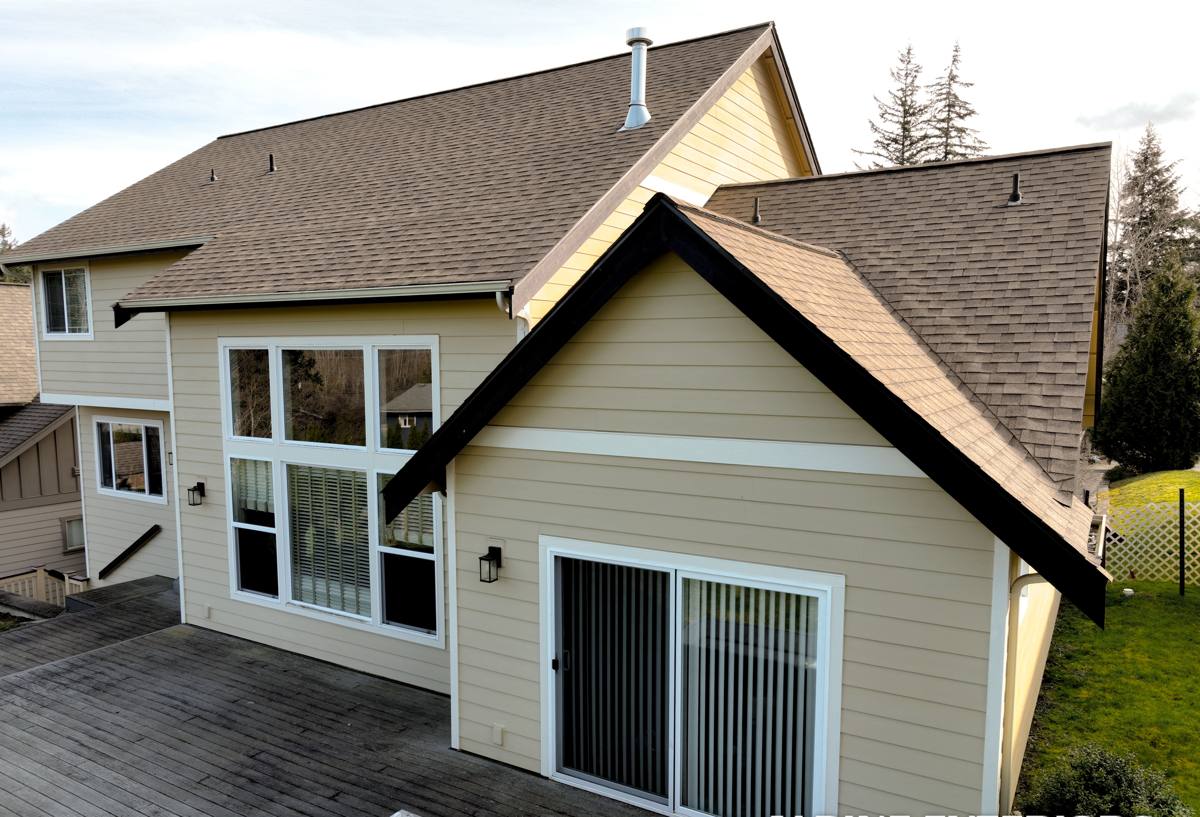
What Barrier Island Exposure Actually Does to Siding
Salt Air and Corrosion
Airborne salt doesn't just sit on the surface — it works into fastener heads, seams, and any place moisture can collect behind the cladding. Over years, that accelerates corrosion of poorly chosen fasteners and trim hardware, and it breaks down finishes that weren't formulated to handle it. Materials and fastening systems that hold up fine forty minutes inland can fail noticeably sooner a few hundred feet from the Gulf.
Wind-Driven Rain
Pinellas County's building code accounts for high wind, but wind alone isn't the whole story — it's wind pushing rain sideways and upward, forcing water into laps, joints, and penetrations that would stay dry in a normal rainstorm. Siding that isn't installed with the right clearances, flashing, and fastening pattern will let that water in eventually, even if the material itself is sound.
Constant UV
A house facing open water gets far more direct sun exposure than one shaded by neighboring homes or tree canopy inland. Paint and coatings that aren't engineered for that level of UV fade, chalk, and break down faster, which is one of the most common reasons siding starts looking tired well before it's structurally failing.
Hurricane-Force Wind Events
Beyond day-to-day exposure, Indian Shores homes have to be built to withstand direct hurricane impact — sustained high winds and wind-borne debris. Siding that isn't rated and installed for that load is a liability, not just a maintenance headache, when a storm actually arrives.
Why We Install Only James Hardie Fiber Cement Here
We made a standing decision as a company: we install James Hardie fiber cement siding, and we don't install vinyl, LP SmartSide, Cemplank, Allura, primed spruce, or cedar. That decision holds everywhere we work, but it matters even more on a barrier island. Fiber cement is non-combustible, dimensionally stable, and doesn't rely on a surface coating alone to resist moisture the way wood-based products do. James Hardie backs its siding with a factory-applied ColorPlus finish engineered to hold color and resist fading under sustained UV — a real advantage on a stretch of coastline where the sun is part of the daily weather, not an occasional event.
We're not going to tell you vinyl or engineered wood siding can't be installed on the Gulf coast — they can, and plenty of houses have them. But vinyl can become brittle and distort under intense heat and UV over time, and its seams and J-channels give wind-driven rain more places to find a way in. Engineered wood products depend entirely on their factory coating and ongoing maintenance to keep moisture out, and once that coating is compromised near salt air, the wood substrate underneath is exposed to exactly the conditions it handles worst. On a barrier island, we don't think that's a trade-off worth making, which is why we standardized on fiber cement instead.
The Right Hardie Product for This Climate
James Hardie engineers its siding in two climate configurations: an HZ5 formulation for colder, freeze-thaw climates, and an HZ10 formulation built for hot, humid, moisture-heavy regions like the Gulf Coast. Florida installations use the HZ10 line, which is formulated specifically for the humidity, heat, and moisture cycling that a house like yours in Indian Shores deals with all year.
| Product Line | Best Use | What It Offers a Barrier Island Home |
|---|---|---|
| HardiePlank Lap Siding | Whole-house primary siding | Classic horizontal profile, wide color range, proven wind and moisture performance |
| HardiePanel Vertical Siding | Accent walls, gables, coastal/modern styling | Clean vertical lines popular on Gulf-front and island homes |
| HardieTrim | Corners, fascia, window and door trim | Matches durability of field siding so trim doesn't fail first |
| HardieSoffit | Eaves and overhangs | Resists the humidity and salt exposure that rot out wood soffits |
Material Comparison: What Barrier Island Exposure Rewards and Punishes
| Material | Salt Air / Corrosion | Wind-Driven Rain | UV / Fade Resistance | Typical Real-World Lifespan Here |
|---|---|---|---|---|
| James Hardie fiber cement (HZ10) | Strong — cement substrate doesn't corrode; factory finish holds up well | Strong when installed with correct clearances and flashing | Strong — ColorPlus finish engineered for sustained UV | Decades, with normal recoating cycles for field-painted trim |
| Vinyl siding | Doesn't corrode, but can distort under sustained heat/UV | Moderate — seams and channels are entry points | Moderate — colors fade, material can become brittle | Shorter service life in high-heat, high-UV coastal exposure |
| Wood / cedar siding | Vulnerable once coatings degrade | Weak without diligent maintenance | Weak — requires frequent refinishing | Shortest, and maintenance-intensive on the island |
| Engineered wood (e.g. LP SmartSide) | Depends entirely on coating integrity | Moderate — moisture intrusion risk if coating fails | Moderate, coating-dependent | Shorter if moisture gets behind the coating near salt air |
What a Correct Installation Looks Like on the Island
The product is only half of it — how it's installed determines whether an Indian Shores home actually gets the protection Hardie siding is capable of providing. A correct installation includes:
- Corrosion-resistant fasteners rated for coastal/marine exposure, not standard interior-grade hardware
- Proper clearance between the bottom of the siding and roofing, decks, and grade to prevent wicking
- Correct flashing and weather barrier detailing at every window, door, and penetration
- Manufacturer-specified fastener spacing and nailing pattern to meet wind load requirements
- Properly sealed and painted cut edges, since exposed raw edges are where moisture problems start
- Ventilated, correctly detailed soffit and trim work so humid air isn't trapped against the wall assembly
Skip any one of these and the siding itself can be excellent while the installation still fails early. This is where most siding problems we're called out to look at actually originate — not the material, the details.
Our Process for Indian Shores Projects
1. On-Site Assessment
We walk the exterior, check the condition of the current siding and underlying sheathing, and note anything specific to the home's exposure — how much direct Gulf-facing wall area it has, existing moisture damage, and trim or soffit condition.
2. Straightforward Proposal
We lay out the product lines, colors, and trim details that make sense for the house, along with a clear scope of work — no vague allowances, no upsell menu of products we don't stand behind.
3. Prep and Substrate Check
Before new siding goes up, we address any compromised sheathing or framing underneath. Installing new siding over an already-failing substrate just hides a problem instead of fixing it.
4. Installation to Manufacturer Spec
Fastening, clearances, and flashing are done to James Hardie's published installation requirements for HZ10 climates — that's what keeps the manufacturer's warranty intact and what actually determines how the siding performs in a storm.
5. Final Walkthrough
We go over the finished work together before we call the job done, including care basics specific to a barrier island environment.
Signs Your Current Siding Is Already Losing the Battle
- Visible fading, chalking, or color loss, especially on Gulf-facing walls
- Soft spots, bulging, or warping anywhere on the siding
- Rust streaks running down from fasteners or trim hardware
- Gaps opening up at seams, corners, or trim joints
- Peeling or bubbling paint, particularly near the base of the walls
- Visible rot or staining on soffits and fascia
Any one of these is worth a look before the next storm season, not after.
Why Hiring a Crew That Already Works Indian Shores Matters
Barrier island work isn't the same job as an inland Seminole install, even though the two are only minutes apart. Permitting and inspection expectations for wind and flood-related requirements can differ from mainland Pinellas County jobs, staging and material access on a narrow island lot takes more planning, and a crew that hasn't worked this stretch of coast before is more likely to underestimate how hard the salt air and sun actually are on materials and hardware. A contractor who already understands those realities plans the job right the first time instead of learning the hard way at the homeowner's expense.
Ready for a Straight Answer About Your Siding?
If your Indian Shores home's siding is showing its age, or you're planning ahead of the next storm season, we're happy to take a look and give you an honest read on what it needs. Reach out for a free, no-pressure estimate — the form below will get you started.