 Seminole Siding
 Siding Installation Built for Largo's Climate, Not Just Any Climate
Largo sits inland from the Gulf but still gets the full brunt of Pinellas County weather — hurricane-force wind gusts during tropical systems, year-round UV intensity that breaks down cheaper materials faster than homeowners expect, wind-driven rain that finds every gap in a poorly flashed wall, and salt-laden air that drifts in off the coast and works into fasteners, trim, and seams over time. Siding here isn't just an appearance upgrade. It's the primary barrier protecting the wall assembly, insulation, and structural sheathing behind it.
A siding job done to a generic national standard, without accounting for what a Largo home actually faces every season, tends to show problems early: cupped or swollen panels, cracked caulk lines, fading finishes, and moisture intrusion at the corners and penetrations. A job done correctly for this specific climate holds up for decades. The difference is almost entirely in material choice and installation detail, not in how the finished wall looks on day one.
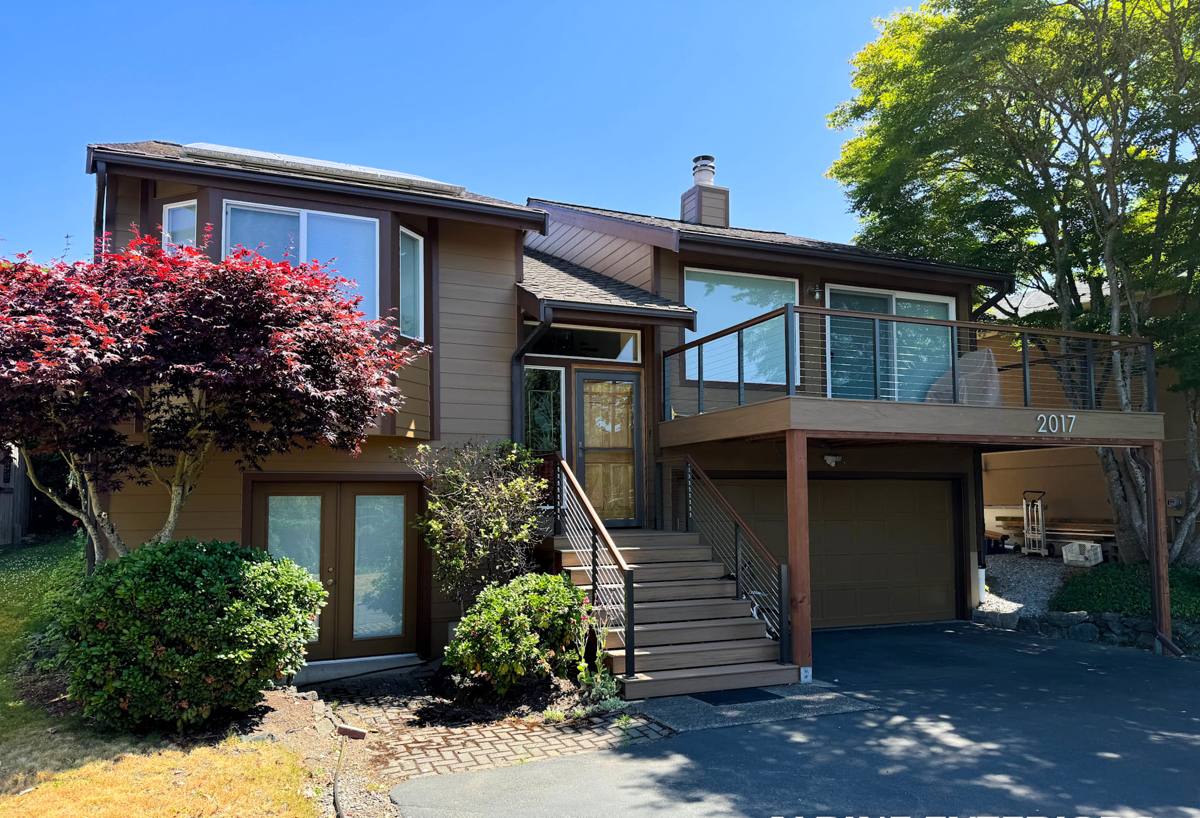
What a Correct Siding Installation Actually Involves
Siding installation is a system, not a single product nailed to a wall. Every layer has a job, and skipping or rushing any one of them is where failures start — usually years later, after the crew that installed it is long gone.
The Moisture Management Layer
Behind every siding panel needs to be a continuous water-resistive barrier, properly lapped shingle-style so water sheds downward and outward rather than working its way behind the barrier at seams. In a market like Largo, where wind-driven rain during storms can push water sideways and even slightly upward against a wall, lap direction and seam taping matter more than in drier, calmer climates.
Flashing at Every Penetration
Windows, doors, hose bibs, light fixtures, vents — every penetration through the siding plane is a potential entry point for water. Correct flashing detail at each one, integrated with the water-resistive barrier rather than just caulked over the surface, is what actually keeps a wall dry over time. Caulk fails; properly lapped flashing doesn't rely on caulk to do the whole job.
Fastening and Clearances
Fiber cement siding has specific nailing patterns, fastener types, and blind-nail versus face-nail requirements depending on the product line and wind exposure. Manufacturer-specified clearances from grade, roof lines, and other transitions also matter — too little clearance and the bottom edge of the siding wicks up moisture from splashback or holds water against the substrate.
Joints and Trim
Butt joints, corners, and trim transitions are where most siding failures actually start. Backer flashing behind field joints, correctly sized trim, and factory-finished cut edges sealed before installation all prevent the slow water intrusion that otherwise shows up as soft spots or staining years down the road.
Why We Install Only James Hardie Fiber Cement
We standardized on James Hardie fiber cement siding and don't install vinyl, LP SmartSide, or other fiber cement alternatives. That's a deliberate decision based on what holds up best under the specific stresses a Pinellas County exterior sees: hurricane wind loads, constant UV exposure, humidity, and salt air.
Fiber cement is non-combustible, dimensionally stable in heat and humidity, and doesn't rely on an engineered wood core that can be vulnerable to moisture if a installation detail is ever compromised. James Hardie's ColorPlus factory finish is baked on under controlled conditions, which gives it more consistent UV and fade resistance than field-applied paint. The HZ5 product line is engineered specifically for high-humidity, hurricane-prone climates like ours, and the transferable warranty backs that engineering with real coverage terms homeowners can actually read.
None of that replaces correct installation — even the best siding product fails early if the water-resistive barrier, flashing, and fastening aren't done right. But starting with a material engineered for this climate gives every installation a real margin for error that lower-cost products don't offer.
Our Installation Process, Start to Finish
- On-site assessment: We look at your home's current siding condition, wall assembly, exposure to prevailing wind and sun, and any existing moisture issues before recommending a scope of work.
- Material and color selection: We walk through James Hardie's plank profiles, panel styles, and ColorPlus finish options so you land on something that fits the home and the neighborhood.
- Tear-off and substrate check: Old siding comes off and we inspect the sheathing underneath for rot, soft spots, or prior water damage before anything new goes up.
- Water-resistive barrier and flashing: New barrier installed with correct lapping, and flashing integrated at every window, door, and penetration.
- Siding installation: Panels or lap siding installed to James Hardie's fastening specifications for our wind zone, with attention to clearances at grade and roof transitions.
- Trim, caulk, and touch-up: Factory-cut edges sealed, trim installed, and any factory finish touch-up done with manufacturer-matched product.
- Final walkthrough: We go over the finished job with you before calling it done.
Siding Options Compared
| Factor | Vinyl Siding | Engineered Wood (LP SmartSide) | James Hardie Fiber Cement |
|---|---|---|---|
| Wind resistance | Lower impact resistance; can crack or blow off in high gusts | Solid when intact, but core is vulnerable if the surface is breached | Rated for high wind zones; dense, non-combustible material |
| Moisture behavior | Doesn't absorb water, but seams can trap moisture behind panels | Wood-based core can swell or degrade if water gets past the coating | Dimensionally stable; engineered for high-humidity climates |
| UV/fade resistance | Can fade and become brittle with sustained UV exposure | Field or factory finish, variable fade resistance | ColorPlus factory finish designed for long-term UV stability |
| Fire rating | Combustible | Combustible (wood-based) | Non-combustible |
| Typical lifespan when correctly installed | 15–25 years | 20–30 years | 30-plus years, often longer |
This isn't a knock on other products — vinyl and engineered wood both have legitimate uses and reasonable performance when installed correctly and maintained. We simply found that for the wind, sun, and salt-air combination our region sees, James Hardie's fiber cement gives homeowners the strongest long-term match, which is why it's the only siding we install.
Signs a Largo Home Needs New Siding
- Visible cracking, warping, or buckling panels, especially on sun-exposed or wind-facing walls
- Soft spots when you press on the siding near the bottom edge or around windows
- Peeling or bubbling paint that keeps coming back no matter how often it's repainted
- Staining or discoloration that suggests water is tracking behind the siding rather than shedding off it
- Rising energy bills that may point to a compromised wall assembly behind aging siding
- Visible gaps at trim, corners, or joints where caulk has failed or pulled away
What to Expect and What to Ask
A homeowner comparing bids on a siding installation project should be asking about more than just the sticker price. The installation detail is where quality actually lives, and it's usually invisible once the job is finished — which is exactly why it's worth asking about up front.
- Ask how the water-resistive barrier will be lapped and sealed at seams
- Ask how window and door flashing will be integrated, not just caulked
- Ask what fastening pattern will be used and whether it matches the manufacturer's wind-zone spec
- Ask whether cut edges will be factory-sealed before installation
- Ask for the manufacturer warranty terms in writing, not just a verbal summary
Why a Crew That Already Works in Largo Matters
Siding installation done by a crew unfamiliar with the local wind exposure, humidity patterns, and typical home construction in this part of Pinellas County is more likely to miss the details that matter here specifically — nailing patterns rated for the correct wind zone, clearances appropriate to our humidity and rain patterns, and flashing choices that hold up against the kind of wind-driven rain Largo actually sees during storm season. A crew that regularly works in and around Seminole and Largo has already run into the local conditions and building patterns that matter, and builds those lessons into every job rather than relearning them on your house.
After Installation: Keeping It Performing
James Hardie fiber cement is low-maintenance compared to painted wood siding, but it isn't zero-maintenance. A periodic rinse to clear salt residue and airborne debris, prompt attention to any caulk lines that show separation, and keeping vegetation trimmed back from the siding all help the material perform for its full engineered lifespan in our climate. None of this is difficult, but it's worth doing on a regular schedule rather than waiting until a problem is visible.
If your Largo home's siding is showing its age, or you're planning ahead rather than waiting for a failure, we're happy to walk the exterior with you and give you a straight assessment — no pressure, no inflated urgency, just what we actually see. Reach out for a free estimate using the form below.