 Seminole Siding
 Bardmoor's Siding Environment: What Seminole Weather Actually Does to a Wall
Bardmoor sits well within Pinellas County's marine air zone, close enough to the Gulf that every siding system on a Bardmoor home is dealing with four stresses at once, year-round: tropical humidity that never lets a wall fully dry out, UV exposure strong enough to break down paint films and caulk in a fraction of the time it takes further north, wind-driven rain that gets tested every time a summer storm rolls through, and a steady trace of airborne salt that accelerates corrosion on anything metal. None of these is dramatic by itself. Stacked together over ten or twenty years, they're what turns a small siding problem into a costly one if it isn't caught and repaired correctly.
Hurricane season adds a sharper edge. Even when a storm doesn't make a direct hit on Seminole, hurricane-force gusts and the wind-driven rain that comes with them push water sideways into seams, trim joints, and fastener holes that were never designed to hold moisture. That mechanism — not one dramatic failure, but small entry points letting water in gradually — is behind most of the repair calls we get in this neighborhood. By the time it's visible as soft trim, bubbling paint, or a panel pulling away from the wall, the damage has usually been building for a while.
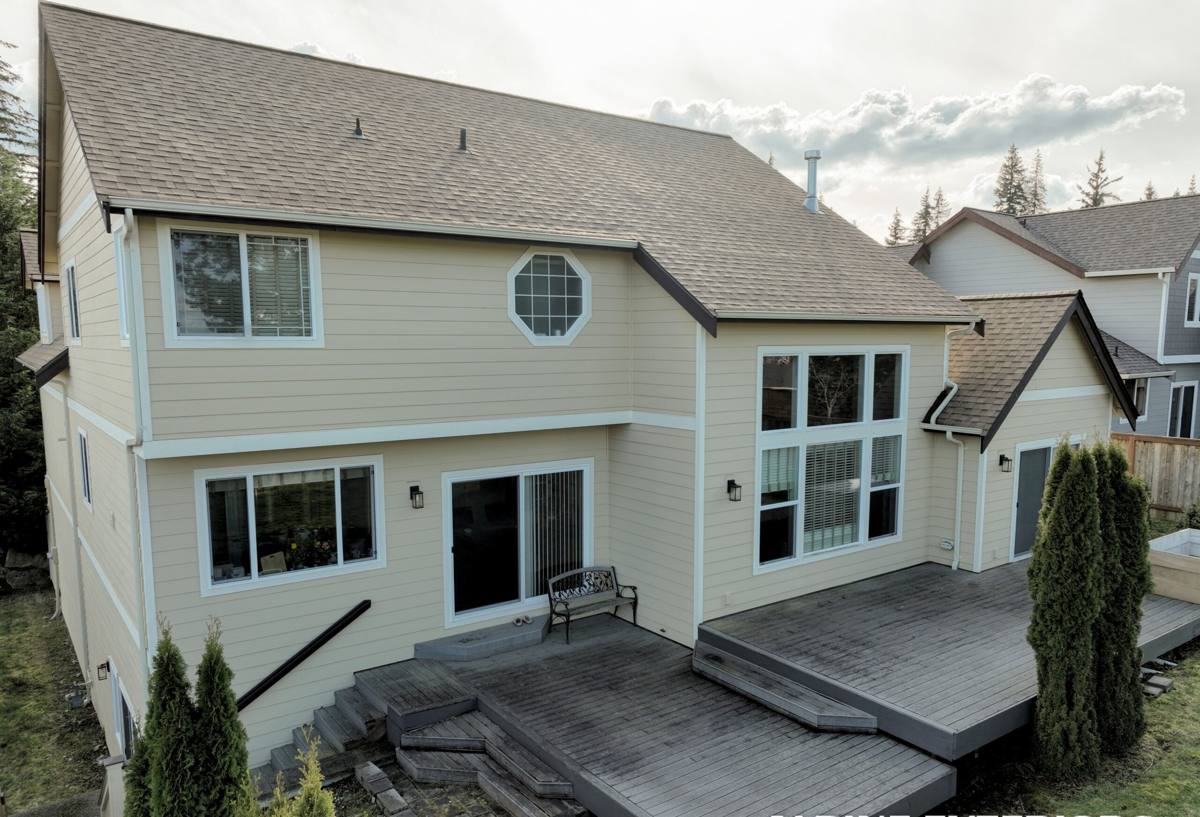
Recognizing Repair-Stage Damage Before It Becomes Replacement-Stage Damage
The homes that come out ahead are the ones where a problem gets caught while it's still a failed caulk joint or a section of damaged trim — not after moisture has worked its way into the sheathing behind the siding. Here's what a repair-focused inspection in Bardmoor is actually looking for, broken down by cause.
Storm and Wind Damage
Wind load and windborne debris are the most obvious culprits: cracked or dented boards, siding pulled loose at a corner or edge, and fasteners backed out or sheared after a strong gust event. Loose siding is not cosmetic — once a board can move, wind gets under it, and the next storm does more damage than the last one did.
Moisture and Rot Damage
This is the damage that hides the longest. Failed caulking at trim joints, window and door casings, and butt joints lets water track behind the siding instead of running off it. On wood-based products this shows up as soft, swollen, or delaminating material. Even on non-wood siding, moisture behind the panel can rot the wood trim, fascia, and sheathing it's fastened to, which is often the real reason a repair is needed even when the visible siding looks intact.
Sun and Finish Damage
Central Florida's UV load is hard on any painted or coated exterior surface. Chalking, fading, and finish failure show up faster here than in most of the country, and once a finish is compromised the substrate underneath starts absorbing moisture instead of shedding it. Repainting alone doesn't fix that if the underlying material is already saturated or damaged.
Salt-Air Corrosion at Fasteners and Trim
Salt-laden air corrodes exposed metal — nail heads, trim flashing, fastener caps — faster than it does inland. Rust streaking below a fastener is an early warning sign worth acting on, because a corroded fastener eventually loses its holding power, and that's exactly the kind of small failure that lets a board work loose in the next wind event.
- Cracked, split, or visibly warped siding boards or panels
- Sections of siding that flex, rattle, or feel loose when pressed
- Caulk that has cracked, shrunk, or pulled away from trim and joints
- Soft or spongy trim, fascia, or corner boards
- Paint that's bubbling, peeling, or chalking heavily to the touch
- Rust streaks running down from fastener heads or metal trim
- Visible daylight or gaps at butt joints and corners
- Musty odor or interior wall staining near an exterior wall
Repair or Replace? How We Make the Call
Not every damaged section needs a full re-side, and not every repair is worth doing if the underlying problem is bigger than the visible symptom. We look at scope, cause, and what's behind the siding before recommending either path.
| Situation | Repair Is Usually Enough | Full Replacement Is the Better Call |
|---|---|---|
| Damage extent | Isolated boards, a single wall section, or storm-damaged trim | Damage spread across multiple elevations or recurring in the same areas |
| Sheathing condition | Sheathing behind the damage is still sound and dry | Sheathing shows rot, soft spots, or long-term moisture damage |
| Age of existing siding | Siding is mid-life and otherwise performing well | Siding is near or past its expected service life |
| Cause of failure | A single storm event or a localized flashing/caulk failure | A systemic installation flaw affecting the whole house |
| Color/finish match | Repaired sections can be reasonably matched | Fading is uniform enough that patches would stand out permanently |
What a Correct Siding Repair Actually Involves
A repair that's done right addresses the cause, not just the visible symptom. Skipping steps here is exactly how a homeowner ends up paying for the same repair twice.
- Diagnose before removing anything. We trace visible damage back to its source — a failed seal, a flashing gap, a fastening error — instead of just replacing what's cracked and moving on.
- Open up and inspect what's underneath. Damaged siding comes off far enough to check the house wrap, flashing, and sheathing behind it. If those are compromised, that's addressed before new siding goes back on.
- Repair or replace the substrate. Any soft or water-damaged sheathing, trim, or framing gets corrected — new siding over bad substrate just hides a problem, it doesn't fix it.
- Re-flash and re-seal properly. Correct flashing details and quality sealant at joints, penetrations, and trim are what actually keep wind-driven rain out — this is the step most likely to get shortcut on a rushed repair.
- Install matched replacement material. Boards or panels are installed to the same fastening spec as the original, with attention to expansion gaps and proper clearances.
- Finish and blend. Paint or factory-finished material is matched as closely as possible so the repair doesn't stand out as a patch.
Why We Repair and Rebuild With James Hardie Fiber Cement
We install James Hardie fiber cement exclusively — we don't install vinyl, LP SmartSide, or other fiber cement brands, and that standard carries over into how we approach repairs. When a repair calls for replacing sections of siding rather than patching in-kind, we use James Hardie product to do it. There's a practical reason for that beyond preference: fiber cement doesn't burn, doesn't warp or swell from moisture the way wood-based products can, and holds paint and factory finish longer under Florida's UV load than most alternatives. On a home already sided in Hardie, that also means a proper repair uses the same material system it was built with, rather than a different product with different expansion behavior and a different service life.
Where an existing home has non-Hardie siding — vinyl, older wood, or another fiber cement brand — we'll still assess and discuss repair options honestly. But if the scope of damage points toward replacing whole sections or walls, our recommendation is James Hardie, including color-matched ColorPlus factory finish where a full elevation is being redone, because that's the system we stand behind with our own installation work and warranty.
Our Bardmoor Siding Repair Process
A repair call starts with a straightforward walk-through, not a sales pitch. We look at the damage, check what's happening behind it where we can, and give a straight answer on whether it's a repair or something bigger. From there:
- Written scope and price before any work starts — no vague verbal estimates
- Material and color match confirmed with the homeowner before ordering
- Substrate check built into every repair, not treated as an upsell
- Cleanup and disposal of removed material included
- A final walk-through so the homeowner sees exactly what was done and why
We're not trying to turn a repair into a full re-side unless the inspection genuinely supports it. If a section can be properly repaired, that's what we recommend and price.
Why a Crew That Already Works in Bardmoor Matters
Siding repair in a hurricane-exposed, salt-air climate isn't the same trade as siding repair in a dry inland market. A crew that regularly works Seminole and the surrounding Pinellas County neighborhoods has already seen how local storm patterns, humidity, and UV exposure play out on real houses — which fastener and flashing details actually hold up here, which finish products handle the sun load, and which shortcuts show up as failures within a couple of years instead of a couple of decades. That local pattern recognition is what separates a repair that lasts from one that reopens the same failure point at the next storm.
It also means faster, more accurate estimates. A crew familiar with the housing stock and construction common to this part of Seminole isn't guessing at what's behind the siding — they've opened up enough similar walls to know what to expect and to price the job accurately the first time.
What Siding Repair Typically Costs in Bardmoor
Repair pricing depends heavily on scope and cause, so broad, honest ranges are more useful than a single number. The table below covers the main cost drivers we walk through with homeowners.
| Cost Factor | Why It Matters |
|---|---|
| Size of the damaged area | A single board or trim section costs far less than a full wall elevation |
| Condition of the substrate | Rotted sheathing or framing adds material and labor beyond the visible siding |
| Accessibility | Second-story or hard-to-reach sections require additional equipment and time |
| Color and finish match | Factory-finished material matched to existing color adds sourcing time versus a stock match |
| Cause of the damage | Storm-related repairs may involve insurance documentation, which affects timeline more than price |
We won't quote a number without seeing the specific damage, but we will give a clear, written price before any work begins — and we'll tell you plainly if a repair isn't the right fix for what we find.
If you've got siding damage in Bardmoor — from a recent storm, ongoing moisture, or just age and sun exposure — we're glad to take a look. The estimate is free, there's no pressure to move forward, and you'll get a straight answer on whether it's a repair or something more.