 Seminole Siding
 Why St. Petersburg Roofs Wear Out Faster Than the Owner's Manual Says
Every asphalt shingle sold in Florida comes with a lifespan estimate printed on the wrapper, and almost none of those estimates were written with St. Petersburg in mind. Between the hurricane-force wind gusts that roll off Tampa Bay and the Gulf, the nearly year-round UV exposure, the sudden wind-driven downpours, and the salt-laden air drifting in off the water, a roof here is working harder than the same product would in a drier, cooler climate. That doesn't mean asphalt shingles are the wrong choice for St. Petersburg — they're still the most practical, cost-effective option for most homes in Pinellas County. It means the installation details matter more here than almost anywhere else in the country.
We're a Seminole-based crew, and St. Petersburg is part of our regular service area. We see the same failure patterns over and over: shingles that lifted at the edges because the nailing pattern was wrong, granule loss from UV breakdown that started years before it was visible from the ground, and fastener corrosion from salt air that let shingles work loose long before their rated lifespan was up. A roof built correctly for this climate looks almost identical to one built for anywhere else — the difference is in details most homeowners never see.
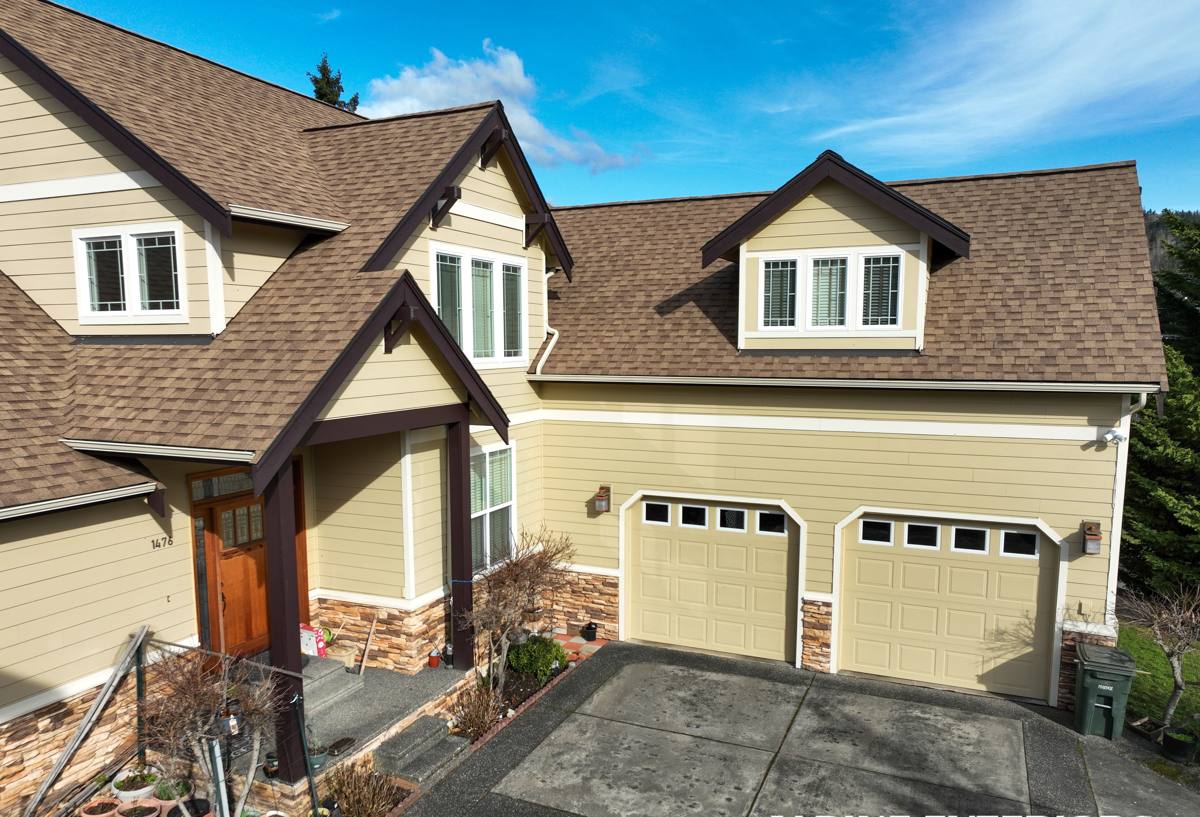
What a Correctly Installed Shingle Roof Actually Includes
"Asphalt shingle roof" describes the visible top layer, but the shingles are only one part of a system. In a coastal Pinellas County climate, every layer underneath has to be right, because the shingles are the first thing that fails if the system beneath them is cut short.
Underlayment and Secondary Water Protection
Underneath the shingles, a synthetic or felt underlayment is the roof's backup plan for the water that gets past the shingles during a wind-driven rain event — which, on this stretch of the Gulf coast, isn't rare. Synthetic underlayment holds up better to UV exposure during construction and resists tearing in wind better than old-style felt. On many St. Petersburg homes, we also install a self-adhering secondary water barrier at eaves, valleys, and roof-to-wall transitions — the spots most likely to leak when rain comes in sideways. Florida's building code also credits a properly installed secondary water barrier toward wind mitigation insurance discounts, which is worth knowing before you sign off on a roofing quote.
Fastening and Wind Resistance
Nail pattern and nail placement are where a lot of roofs quietly fail. Florida Building Code requires a six-nail pattern (rather than the four-nail pattern common in calmer climates) for shingle roofs in high-wind areas along the coast, and the nails have to land in the manufacturer's specified nailing zone — not too high, not too low. A shingle that's nailed correctly but placed a half-inch off can lose most of its rated wind resistance. We also use corrosion-resistant fasteners throughout, since standard fasteners can start rusting years earlier this close to the water.
Flashing, Ventilation, and Edge Details
Flashing around chimneys, skylights, and wall intersections, plus drip edge along the eaves and rakes, is what keeps water from finding its way under the shingle field at transition points — these are the most common leak locations on any roof, shingle quality aside. Attic ventilation matters too: a roof deck that can't breathe traps heat and moisture, which shortens shingle life from underneath and can void a manufacturer's warranty outright. In Pinellas County's humidity, an underventilated attic is a slow, expensive problem.
Signs a St. Petersburg Roof Needs Attention
Most shingle roof failures don't announce themselves with a dramatic leak. They show up gradually, and homeowners often miss the early signs because they're not looking for them.
- Granules collecting in gutters or at downspout outlets — a sign the shingle surface is breaking down from UV exposure
- Shingle edges that curl, cup, or look slightly lifted, especially on the side of the roof facing prevailing winds
- Dark streaking or discoloration, which is usually algae growth rather than structural damage, but worth addressing
- Soft spots or sagging when walked (we check this — homeowners shouldn't walk their own roof)
- Visible daylight or water stains in the attic, particularly near chimneys, vents, or valleys
- Missing shingles or exposed fastener heads after a storm, even a moderate one
- A roof approaching 15–20 years old, which is when many Florida insurers start requiring an inspection to keep or renew coverage
If a roof is showing more than one or two of these signs, it's usually more cost-effective to plan a replacement on your timeline than to wait for an emergency repair during hurricane season.
Choosing the Right Shingle for This Climate
Not every asphalt shingle product is built the same, and the right choice depends on how much wind resistance and longevity you want versus upfront cost. We install a range of options and will walk through the honest trade-offs for your specific roof rather than pushing one product.
| Shingle Type | Typical Wind Rating | Best For | Cost Factor |
|---|---|---|---|
| 3-Tab | Lower end of code-rated options | Budget-conscious re-roofs, rental properties | Lowest |
| Architectural / Dimensional | Mid-to-high, varies by manufacturer | Most St. Petersburg homes — balance of durability and appearance | Moderate |
| Impact-Rated (Class 4) | High wind and impact resistance | Homes seeking maximum insurance credit and storm resilience | Higher, often offset by insurance savings |
Architectural shingles have become the standard choice for most homes we work on in this area — they're heavier, sit flatter against the roof deck, and generally carry a stronger wind rating than 3-tab shingles at a manageable cost difference. Impact-rated shingles cost more upfront but can qualify a home for meaningful wind mitigation insurance discounts, which sometimes closes most of the price gap over a few years. We'll show you real numbers for your roof rather than a generic recommendation.
Permits, Inspections, and Insurance — the Part Homeowners Don't See
A re-roof in St. Petersburg requires a permit, and the work gets inspected — typically a dry-in inspection once the underlayment is on and a final inspection once the shingles are complete. This isn't paperwork for its own sake; it's the mechanism that confirms the wind mitigation features an insurer will later ask about. After the work is done, we can provide the documentation needed for your insurance company's wind mitigation inspection, which covers things like roof shape, deck attachment, and secondary water barrier — all factors that can lower your premium. Skipping permits to save time is a shortcut that tends to cost homeowners later, either at claim time or at resale.
Our Process, Start to Finish
The process is straightforward, and we keep it that way on purpose.
- Inspection and estimate. We get on the roof, check the deck condition, flashing, ventilation, and existing shingle wear, and give you a written estimate with real options — not a single take-it-or-leave-it number.
- Material selection. We go over shingle types, colors, and warranty terms so you understand what you're buying, including where Class 4 impact-rated shingles make financial sense.
- Permit and scheduling. We pull the required permit and schedule the job around weather, which in Pinellas County means watching the forecast closely rather than working around a fixed calendar date.
- Tear-off and deck inspection. Old shingles come off and we inspect the roof deck itself — rotted or soft plywood gets replaced before anything new goes on, not covered up.
- Underlayment, flashing, and shingle installation. Installed to code-required nailing patterns and manufacturer specifications, with attention to every valley, penetration, and edge.
- Inspection and cleanup. Final inspection is scheduled, and the property is cleaned of debris and nails with a magnetic sweep before we consider the job done.
Why a Crew That Already Works St. Petersburg Matters
Roofing crews who don't work this specific area regularly tend to make the same mistakes: underestimating local wind design requirements, using standard fasteners that corrode faster in salt air, or not knowing which inspection timelines the local permitting office actually follows. We're based in Seminole, and St. Petersburg is part of the territory we work in week to week — we're not driving in from another region to bid the job and disappearing afterward. That matters for warranty follow-up, for storm-season response, and for simply knowing what this coastline does to a roof over time versus what a spec sheet says it should do.
Simple Maintenance That Extends Roof Life
A correctly installed roof still needs basic upkeep, especially in a climate this demanding. None of this requires climbing on the roof yourself.
- Keep gutters and downspouts clear so water doesn't back up under the shingle edge
- Trim overhanging branches that scrape shingles or drop debris into valleys
- After any major storm, do a visual check from the ground for missing or displaced shingles
- Watch for granules in gutters as an early sign of UV wear
- Have the attic checked periodically for proper ventilation and any sign of moisture
- Schedule a professional inspection every few years, and definitely before it's time to renew homeowners insurance
If you're noticing wear, planning ahead of an insurance renewal, or just want an honest read on how much life is left in your current roof, we're happy to take a look. Fill out the form below for a free, no-pressure estimate — we'll tell you what we actually see, not just what sells a job.