 Seminole Siding
 Storm Damage Roof Repair Built for Belleair's Exposure
Belleair sits close enough to the Gulf that every roof in the neighborhood takes a different kind of beating than a roof twenty miles inland. Between Pinellas County's hurricane-season wind events, the salt-laden air rolling off the water, wind-driven rain that finds its way under anything loose, and sun exposure that runs hard nearly year-round, roofs here age faster and fail in specific, predictable ways. We repair storm-damaged roofs for Belleair homeowners with that exposure in mind, not with a one-size-fits-all patch job.
A storm damage roof repair done right isn't just about stopping today's leak. It's about correctly diagnosing what the wind and water actually did to the roof system, fixing that specific damage with materials rated for coastal Pinellas conditions, and leaving a roof that can take the next storm without the same weak point failing again.
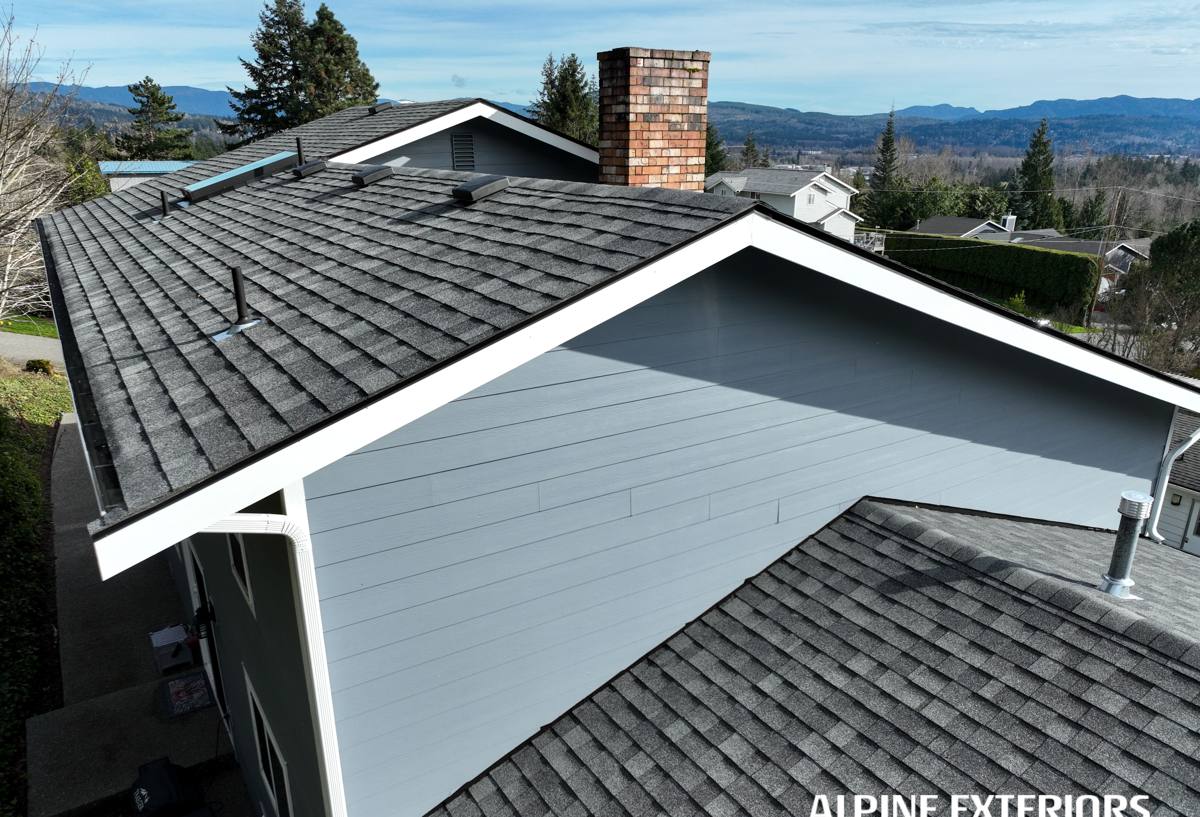
How Storms Actually Damage a Belleair Roof
Wind Uplift and Lifted Shingles or Tiles
Sustained wind and gusts get under the leading edge of a shingle or tile, break the seal, and lift it. Sometimes it blows off completely and you find it in the yard. More often, it lifts, re-seats slightly out of place, and looks fine from the ground while the seal underneath is broken. That gap is where the next rain gets in.
Wind-Driven Rain
Straight-down rain and sideways rain behave differently on a roof. Wind-driven rain during a storm can travel uphill under shingle edges, around flashing, and through fastener penetrations that would never leak in a normal rainstorm. This is why a roof that's "never leaked before" can suddenly leak during a tropical system, and why storm damage often shows up as water stains days after the wind has died down.
Impact Damage
Branches, debris, and hail (less common here but not unheard of) can bruise or crack shingles, dent metal flashing, and crack tiles. Impact damage doesn't always cause an immediate leak, which is why it gets missed until it's a bigger problem.
Flashing Failure
Flashing around chimneys, skylights, vent pipes, and roof-to-wall transitions is the single most common source of storm leaks. It's metal, it's sealed with caulk or sealant that degrades under UV, and wind can work it loose over time. A storm is often what finally pushes already-weakened flashing past the point of holding.
Long-Term Salt Air and UV Wear
None of the above happens in isolation. Salt air corrodes exposed fasteners and metal flashing faster than it would inland, and constant UV exposure dries out shingle granules, sealant, and underlayment. A roof weakened by years of that exposure is far more vulnerable to acute storm damage than a newer or well-maintained one. This is a big part of why storm damage repair in a coastal Pinellas community isn't the same job as storm repair fifty miles from the water.
What a Correct Storm Damage Repair Actually Involves
A repair that just covers the visible hole is a temporary fix. A correct repair addresses the full extent of what the storm did, even the parts that aren't obvious yet.
- Full roof inspection, not just the leak point. We check the whole roof plane, not only where water is showing up inside, because wind damage rarely happens in just one spot.
- Underlayment and decking check. If water got past the shingles or tiles, we look at whether the underlayment and the decking underneath took on moisture. Covering wet decking with new shingles just traps the problem.
- Flashing inspection at every penetration. Chimneys, vents, skylights, and roof-to-wall joints get checked individually, since these are the most common recurring leak points after a storm.
- Matching materials and fastening method. Repairs are done with materials and fastening patterns suited to coastal wind exposure, not just whatever matches the color.
- Sealant and flashing renewal where UV has degraded it. If existing sealant is cracked or chalky from sun exposure, it gets replaced as part of the repair rather than sealed over.
- Photo documentation. Useful for your records and often necessary if you're filing an insurance claim.
Our Storm Damage Repair Process
1. Inspection and Assessment
We walk the roof (or use a drone where a walk-on inspection isn't safe or advisable) and document every area of damage, not just the spot causing the visible leak. You get a clear explanation of what we found and what it means, in plain language.
2. Written Scope and Estimate
Before any work starts, you get a written scope covering exactly what will be repaired, the materials being used, and the cost. No vague line items, no surprise add-ons once the work is underway.
3. Temporary Protection If Needed
If a roof is actively leaking and full repair can't happen immediately, we can install temporary protection (tarping, temporary flashing) to stop further interior damage while permanent repairs are scheduled.
4. The Repair
We replace damaged shingles or tiles, repair or replace compromised flashing, address any wet underlayment or decking, and reseal penetrations with materials rated for sun and salt exposure. We match existing roofing as closely as possible so the repair blends in rather than standing out as a patch.
5. Final Walkthrough and Documentation
We walk the completed repair with you, explain what was done, and provide documentation and photos you can keep for your records or use with an insurance claim.
Repair vs. Replacement: How We Help You Decide
Not every storm-damaged roof needs to be replaced, and not every roof can be safely patched forever. The honest answer depends on the roof's age, how much of it was affected, and what condition the rest of it is in.
| Factor | Leans Toward Repair | Leans Toward Replacement |
|---|---|---|
| Roof age | Under roughly 10-12 years | Nearing or past expected lifespan |
| Extent of damage | Isolated to one section or a few penetrations | Spread across multiple roof planes |
| Underlayment/decking condition | Dry, undamaged | Widespread moisture or rot found |
| Storm history | First significant damage event | Repeated damage over recent seasons |
| Overall roof condition before the storm | Well-maintained, granule loss minimal | Already showing wear, brittle shingles, corroded flashing |
We'll tell you plainly which category your roof falls into. If a repair is the honest answer, that's what we'll recommend and price. We don't push a full replacement on a roof that a proper repair will genuinely fix.
Insurance and Documentation
Storm damage repairs are often tied to a homeowner's insurance claim. We're not a public adjuster and we don't handle your claim for you, but we do provide the kind of documentation that makes the claims process smoother: clear photos of the damage, a written description of what happened and what's needed to fix it, and an itemized estimate. Keep in mind that insurance policies and claim requirements vary, so it's worth confirming directly with your carrier what they need before repairs begin, especially if the roof is actively leaking and timing matters.
Why It Matters to Hire a Crew That Already Works in Belleair
Roofing crews that mostly work inland don't see the same failure patterns day to day that we see on Belleair roofs. Salt-air corrosion on fasteners, UV-brittle sealant on south- and west-facing slopes, and the specific way wind-driven rain finds its way into a coastal-exposed roof aren't things you learn from a general roofing background — they're things you learn from repairing roofs in this specific environment repeatedly. A crew already familiar with Pinellas County's coastal conditions and local permitting knows what to check first, what tends to fail here, and what actually holds up afterward.
There's also a practical side: storm damage often needs a fast response, and a crew that already works this area can typically get to you sooner than one traveling in from further inland, especially in the days after a regional storm event when everyone's roof needs attention at once.
Signs You May Have Storm Damage Worth Inspecting
- Missing, cracked, curled, or visibly lifted shingles or tiles
- Granules collecting in gutters or downspouts after a storm
- Water stains on interior ceilings or walls, especially after wind-driven rain
- Visible gaps or lifted edges in flashing around chimneys, vents, or skylights
- Soft spots or sagging when walking near the roof deck (attic inspection)
- Debris impact marks or dents on metal roofing or flashing
- A musty smell in the attic, which can indicate a slow, ongoing leak
None of these guarantee major damage, but any of them are worth a professional look, especially after a named storm or a stretch of high wind. Catching storm damage early is almost always cheaper and less disruptive than waiting until it becomes an interior repair too.
Maintaining Your Roof Between Storms
Coastal exposure means Belleair roofs benefit from more frequent attention than a roof in a less exposed inland setting. A periodic check of flashing, sealant condition, and visible shingle or tile condition — ideally before hurricane season ramps up and again afterward — catches small issues like a cracked seal or a loosening fastener before a storm turns them into a leak. It's a smaller task than a storm repair and it's the single best way to reduce how much damage a given storm actually does to your roof.
If you're dealing with storm damage or just want a roof checked over after a recent weather event, we're happy to take a look. Fill out the form below for a free, no-pressure estimate — we'll tell you honestly what we find and what it would take to fix it.