 Seminole Siding
 Building a Deck That Can Handle Treasure Island's Coastline
Treasure Island sits right on the Gulf, which is exactly why decks here fail faster than decks fifteen miles inland. The same barrier island setting that makes the view worth having also means your outdoor living space is exposed to salt-laden air, near-constant UV, wind-driven rain, and the occasional direct hit from a tropical system. A deck built the same way you'd build one in a landlocked subdivision usually doesn't hold up here — the fasteners corrode faster, the boards fade unevenly, and moisture finds its way into places it shouldn't.
We install composite decking for homeowners across the Seminole and Pinellas County area, and Treasure Island jobs get treated differently from the start. The framing, the fastening hardware, the flashing details, and even the board spacing all get adjusted for a barrier island environment. This page covers what that actually looks like — not generic decking talk, but what a deck on Treasure Island specifically needs to last.
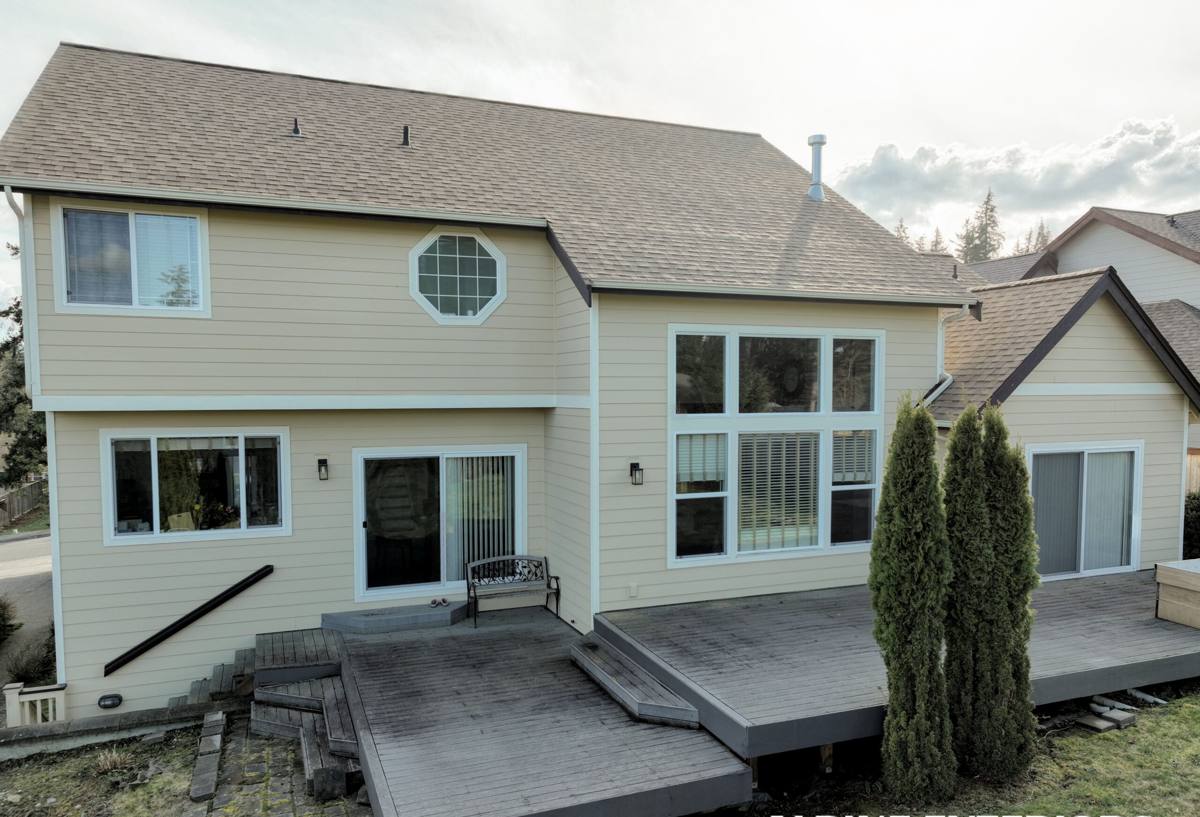
What Salt Air and Sun Actually Do to a Deck
It helps to understand the specific ways this environment attacks a deck, because it changes almost every material decision.
Salt Air and Corrosion
Airborne salt doesn't just sit on the surface — it works into any exposed metal fastener, connector, or bracket and accelerates rust and corrosion far faster than standard products are rated for. On a barrier island, hardware that would last decades elsewhere can start failing within a few years if it isn't rated for coastal exposure.
UV Exposure
Florida sun is intense year-round, not just in summer. Composite boards are far more UV-stable than wood, but not all composite products resist fading and surface degradation equally — this is one of the biggest differentiators between decking lines, and it matters more here than almost anywhere else in the state.
Wind-Driven Rain and Moisture
Storms here don't just drop rain straight down — wind pushes it sideways, into ledger connections, under railings, and into any gap that wasn't properly flashed or sealed. Trapped moisture is what causes rot in the substructure even when the decking surface looks fine.
Wind Uplift
Treasure Island sees hurricane-force wind gusts, and a deck surface can act like a sail if it isn't fastened and framed to resist uplift. This affects fastener choice, board attachment method, and how the frame itself is tied to the house and footings.
Composite Decking: Why It's Our Standard for This Environment
We install composite decking as our default recommendation for coastal Pinellas County homes, and it's worth explaining why rather than just asserting it.
Wood decking — even pressure-treated lumber — depends on maintaining a sealant or stain layer to keep moisture out. In a salt-air, high-UV, high-humidity environment, that protective layer breaks down faster than it does inland, which means more frequent refinishing to avoid splitting, graying, and rot. Skipping that maintenance schedule is what leads to most of the failed wood decks we see on service calls.
Composite boards are engineered from wood fiber and polymer, which means they don't absorb moisture the way solid wood does, don't require staining or sealing, and hold their color and structure more consistently under sun and salt exposure. That doesn't mean composite is maintenance-free — it still needs periodic cleaning, especially here — but the maintenance burden is lighter and the failure modes are more predictable.
The trade-off is upfront cost and installation sensitivity. Composite decking is less forgiving of mistakes in the substructure than wood — it doesn't hide framing errors the way a wood board sometimes can, and it expands and contracts with heat differently, which means gapping and fastening have to be done correctly the first time.
What a Correct Installation Involves
A composite deck is only as good as what's underneath it. Most of the decking failures we get called out to inspect trace back to the substructure or fastening, not the boards themselves.
Ledger and Flashing Details
Where the deck attaches to the house is the single most common point of water intrusion. Proper flashing — installed so water is directed away from the house framing, not trapped against it — is non-negotiable in a wind-driven rain environment. This is also one of the most commonly rushed details on lower-quality installs.
Framing and Joist Spacing
Composite boards typically require tighter joist spacing than solid wood decking, particularly at angles, stair treads, and hot tub or heavy-load areas. Manufacturer specifications vary by product line, and following them matters for long-term board performance, not just initial appearance.
Fasteners and Hardware
This is where coastal jobs diverge most from inland ones. We use stainless steel or coated fasteners and connectors rated for coastal/marine exposure rather than standard galvanized hardware, which corrodes noticeably faster this close to the Gulf. Hidden fastening systems are also common with composite decking, which improves appearance and reduces the number of exposed fastener points where corrosion or water intrusion can start.
Drainage and Gapping
Boards need consistent gapping for both drainage and thermal expansion. Too tight, and boards can buckle in summer heat; too loose, and the deck looks and feels unfinished. Proper gapping also keeps standing water from pooling on the surface after the frequent, sudden downpours common to the area.
Railings and Edge Details
Railing posts need to be through-bolted into properly blocked framing, not just screwed to the rim joist — this matters both for everyday safety and for wind load during storm events.
Permitting and Wind Load on a Barrier Island
Treasure Island falls under Pinellas County's coastal building requirements, and decks — particularly elevated ones or those attached to the primary structure — generally require a permit and inspection. Wind load requirements here are stricter than in inland jurisdictions, which affects footing depth, post sizing, and connection hardware. We handle the permitting process as part of the job rather than leaving it to the homeowner, and we build to the wind load standards that apply on the island, not a generic statewide minimum.
Our Process
- On-site assessment: We look at existing structure (if replacing a deck), grade, drainage, and how exposed the location is to prevailing wind and salt spray.
- Design and material selection: Board style, color, and railing system chosen based on both aesthetics and how the specific product performs in coastal exposure.
- Permitting: We pull the required permits and coordinate inspections through Pinellas County.
- Demo (if applicable): Removal of failing wood decking or old composite, checking the substructure and ledger connection for hidden damage.
- Framing: Joists, ledger flashing, and footings built to coastal wind load specs.
- Decking and railing install: Boards fastened per manufacturer spec with corrosion-resistant hardware, railings through-bolted into blocked framing.
- Final walkthrough: We review the finished deck with you, including basic care guidance specific to a salt-air environment.
Living With a Composite Deck Near the Gulf
Composite decking is lower-maintenance than wood, but "lower" isn't "none," especially this close to the water.
- Rinse salt residue off the surface periodically — it can dull the finish and contribute to grime buildup over time
- Wash the deck with mild soap and water a few times a year to prevent mildew, especially in shaded or low-airflow areas
- Keep gutters and downspouts near the deck clear so runoff doesn't pool on or under the surface
- Check railing posts and stair connections annually for any looseness, especially after a significant storm
- Trim back vegetation that shades sections of the deck and keeps them damp longer than the rest
- Inspect fastener heads and hardware periodically for early signs of corrosion, particularly on older or lower-grade hardware
Cost Factors on a Treasure Island Composite Deck
Every deck is priced based on size, layout complexity, board tier, and site conditions, so we won't quote a number without seeing the property. What we can do is walk through what actually moves the price up or down.
| Factor | Why It Matters Here |
|---|---|
| Deck height/elevation | Elevated decks common on barrier island lots need deeper footings and more substantial framing for wind resistance |
| Board tier | Higher-tier composite lines generally offer better UV and fade resistance, which matters more under constant Gulf sun |
| Hardware grade | Marine-grade stainless fasteners cost more than standard hardware but resist salt-air corrosion significantly longer |
| Railing system | Composite or aluminum railings hold up better than wood in this environment but add to material cost |
| Ledger/flashing complexity | Homes with tricky attachment points or existing water damage need extra remediation before decking begins |
| Permitting requirements | Coastal wind load compliance can add engineering or inspection steps compared to an inland deck |
Why a Local Crew Matters for This Job
Decking work on Treasure Island isn't the same job as decking work in a subdivision ten miles from the coast. A crew that hasn't dealt with barrier island conditions before tends to under-spec the hardware, skip the coastal flashing details, or run into permitting surprises they didn't anticipate. We work throughout the Seminole and Pinellas County area regularly, which means we already know what Treasure Island's wind load requirements involve, how the permitting process runs for this jurisdiction, and which fastening and framing details actually hold up against salt air rather than just looking right on installation day.
That local familiarity translates into fewer surprises during the permitting process, fewer callbacks for corrosion or water issues down the road, and a deck that's actually built for the conditions it has to survive — not just the conditions on the day it was installed.
Questions to Ask Before You Hire
- Do you use marine-grade or coastal-rated fasteners, or standard galvanized hardware?
- How do you flash and seal the ledger board connection to the house?
- What joist spacing do you use for composite boards, and does it match the manufacturer's spec?
- Are you pulling the required Pinellas County permit and scheduling inspections?
- What's your experience with elevated decks or barrier island wind load requirements specifically?
- What composite product lines do you install, and how do they differ in UV and fade resistance?
If you're planning a new composite deck or replacing one that's showing its age on Treasure Island, we're happy to take a look and walk you through what your specific property needs. Use the form below to request a free, no-pressure estimate.