 Seminole Siding
 Why Redington Beach Roofs Take a Different Kind of Beating
Redington Beach sits right on the barrier island strip along the Gulf, which means every roof out here deals with a harder combination of stresses than a home a few miles inland in Seminole or elsewhere in Pinellas County. Wind off the open water hits harder and more often. UV exposure is close to constant, with very little tree canopy to break it up. Salt-laden air corrodes metal fasteners and flashing faster than it does further from the coast, and wind-driven rain gets pushed sideways into laps and edges that a calm-weather roof would never have to deal with. None of this means a shingle roof can't work well on a barrier island home — it means the roof has to be installed with those specific stresses in mind, not just built to a generic spec sheet.
We work in this neighborhood regularly, and the patterns repeat: shingle edges lifting first at the rakes and ridges where wind gets underneath, granule loss showing up faster on south- and west-facing slopes, and corrosion on nail heads and flashing well before the shingles themselves are worn out. A correct installation addresses each of those failure points directly instead of hoping standard materials and standard methods hold up.
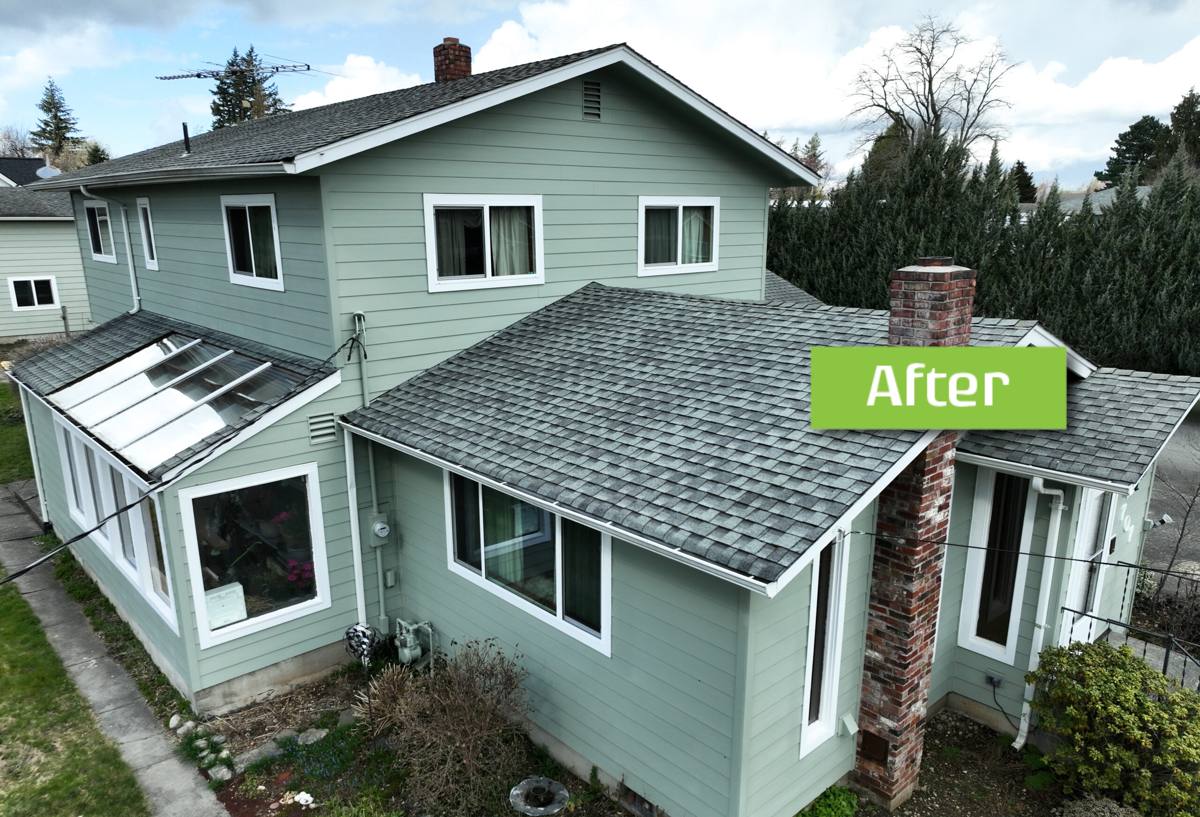
What a Correct Asphalt Shingle Roof Needs Here
A shingle roof built for Redington Beach isn't a different product line — it's the same asphalt shingle system installed with coastal-grade attention to a handful of details that matter more here than inland.
Wind Rating and Fastening
Shingles are rated for wind resistance based on how they're fastened and sealed, not just what's printed on the wrapper. That means the correct number of nails per shingle, nails placed in the manufacturer's nailing zone (not just anywhere that looks close), and starter strips run correctly at eaves and rakes so the first row has something solid to bond to. On a barrier island lot, we don't cut corners on fastener count to save time — it's the single biggest factor in whether a roof stays put in a bad wind event.
Underlayment and Water Barrier
Wind-driven rain doesn't fall straight down — it gets pushed up under shingle edges and laps. A synthetic underlayment (or a high-quality felt, depending on the manufacturer system) rated for high-wind, high-moisture conditions gives the roof a real second line of defense if any water works past the shingles themselves. Self-adhering underlayment at eaves, valleys, and around penetrations is not optional on this coastline.
Flashing and Metal Components
Standard flashing is often a lighter-gauge or lower-grade metal than what makes sense a few blocks from saltwater. We pay attention to flashing material at chimneys, walls, valleys, and pipe boots specifically because these are the components that fail from corrosion before the shingle field wears out.
Ventilation
An attic that isn't ventilated correctly runs hotter and holds more moisture, which shortens shingle life from underneath — a problem you won't see from the ground. Intake at the soffits and exhaust at the ridge, balanced correctly for the attic size, keeps the deck and the underside of the shingles drier and cooler year-round.
Our Redington Beach Roofing Process
The process is straightforward, but we don't skip steps to move faster — every one of these exists because skipping it is how coastal roofs fail early.
- Inspection and estimate: We look at the current roof, the deck condition where accessible, ventilation setup, and any trouble spots (valleys, penetrations, wall flashing) before quoting anything.
- Tear-off: Full removal of old material down to the deck. Layering new shingles over old is not something we do — it hides deck problems and voids most manufacturer wind warranties.
- Deck inspection and repair: Soft, delaminated, or water-damaged decking gets replaced before anything new goes down. This step is where hidden problems from old leaks usually show up.
- Underlayment and water barrier installation: Self-adhering membrane at eaves, valleys, and penetrations, synthetic underlayment across the field.
- Flashing: New flashing at all walls, chimneys, valleys, and penetrations rather than reusing old, corroded pieces.
- Shingle installation: Manufacturer-specified nailing pattern and count, starter strips at eaves and rakes, proper alignment and exposure.
- Ventilation check and correction: Intake and exhaust balanced for the attic, corrected if the existing setup is inadequate.
- Cleanup and final walkthrough: Magnetic sweep for nails, full site cleanup, and a walkthrough so you know exactly what was done and why.
Choosing the Right Shingle for a Barrier Island Home
Not every asphalt shingle product is built the same, and on a lot this close to the Gulf, the difference matters more than it would a few miles inland.
| Shingle Type | Wind Performance | Typical Lifespan Here | Best Fit |
|---|---|---|---|
| 3-tab | Lower wind rating, lighter weight | Shorter, due to constant wind/UV exposure | Budget-driven projects, secondary structures |
| Architectural (laminate) | Higher wind rating, heavier and more layered | Longer, holds up better to repeated wind and sun | Primary homes near the coast |
| Algae-resistant variants | Same as base product, added copper/zinc granules | Slower streaking/staining in humid coastal air | Homes with shaded or north-facing slopes |
For most Redington Beach homes, an architectural shingle rated for high wind is the more sensible choice. The higher upfront cost is offset by better wind performance and a longer service life in exactly the conditions this location produces year-round — it's a trade-off we'll walk through honestly rather than push whichever product carries the best margin.
Roof Ventilation and Attic Moisture Near the Gulf
Humidity near the water is higher and more constant than inland, and that moisture works its way into attics through normal daily temperature swings. A shingle roof that looks fine from the street can still be losing life from the underside if the attic isn't venting properly. We check soffit intake and ridge exhaust as a standard part of every inspection, not as an upsell — it's a cheap fix relative to the cost of premature shingle failure or deck rot.
Repair vs. Full Replacement
Not every roof problem on a barrier island home means a full tear-off. The right call depends on the age of the roof, how widespread the damage is, and what's happening under the surface.
| Factor | Leans Toward Repair | Leans Toward Replacement |
|---|---|---|
| Roof age | Under 10-12 years | Approaching or past manufacturer's rated life |
| Damage extent | Isolated area (one slope, one valley) | Widespread granule loss, multiple slopes affected |
| Deck condition | Solid, no soft spots | Soft decking or signs of water intrusion in the attic |
| Storm history | Minor wind event, cosmetic damage | Direct hurricane-force exposure, lifted or missing shingles |
We'll tell you straight if a repair is the honest answer — a full replacement isn't automatically the right recommendation just because it's the bigger job.
Why Local Experience in Redington Beach Matters
Working this stretch of the Pinellas County coastline regularly means we already know the things that slow down or trip up crews unfamiliar with barrier island jobs: permitting requirements tied to coastal construction and wind-borne debris regions, tighter lot access and staging logistics on narrow beach streets, and the faster corrosion timeline on fasteners and flashing that changes which materials are worth spending more on. A crew that's done this work in Seminole and the surrounding beach communities isn't guessing at any of that — it's routine.
That local familiarity also means fewer surprises during the permitting and inspection process, since we're used to working within the local building department's expectations for coastal roofing rather than learning them project by project.
Signs Your Redington Beach Roof Needs Attention
- Granule loss showing up as bald patches or excessive granules in gutters
- Shingle edges curling or lifting, especially at ridges and rakes
- Visible corrosion or rust streaking around flashing, vent pipes, or nail heads
- Dark streaking or staining across shingle faces (often algae growth in humid coastal air)
- Missing or displaced shingles after any wind event, even a minor one
- Daylight visible through the roof deck from inside the attic
- Musty smell or visible moisture staining on attic framing or insulation
- Sagging areas anywhere on the roof plane
Any one of these on its own might not mean an emergency, but on a barrier island home they're worth having looked at sooner rather than later — small problems here tend to get worse faster than they would a few miles inland.
Keeping a Coastal Roof Going Between Major Work
Between installations or repairs, a few habits go a long way on a home this close to the Gulf: keeping gutters clear so water doesn't back up under the shingle edge, having the roof looked at after any significant storm rather than waiting for a visible leak, and not ignoring small granule loss or staining just because the roof still looks intact from the driveway. Salt air and UV don't take a season off, so consistent attention matters more here than in most parts of the county.
If you're weighing a repair, a full replacement, or just want an honest read on where your roof stands, we're happy to take a look and walk you through what we find — no pressure, no obligation. Use the form below to request a free estimate.