 Seminole Siding
 Storm Damage in Bardmoor: What Seminole Homes Are Up Against
Bardmoor sits inland enough from the Gulf to avoid direct storm surge, but that doesn't mean the roofs here get an easy ride. Every roof in Seminole, whether it's a block ranch near the golf course or a two-story built in the last remodel wave, deals with the same four things year after year: hurricane-force wind gusts during the active season, intense subtropical UV nearly every day of the year, wind-driven rain that gets pushed sideways under loose or aging materials, and a steady dose of salt air carried in off the Gulf of Mexico and Boca Ciega Bay. None of these alone would be a big deal. Together, over years, they're what turns a small, unnoticed weak spot into a real leak.
What makes storm damage tricky in a neighborhood like Bardmoor is that it's rarely obvious from the driveway. A roof can look fine after a named storm or a hard summer squall and still have lifted shingle tabs, cracked tile, or compromised flashing that won't show up as a leak until the next heavy rain finds the gap. That lag between the damage event and the visible symptom is exactly why storm damage repair needs to be treated as its own specific job, not a generic "patch the leak" call.
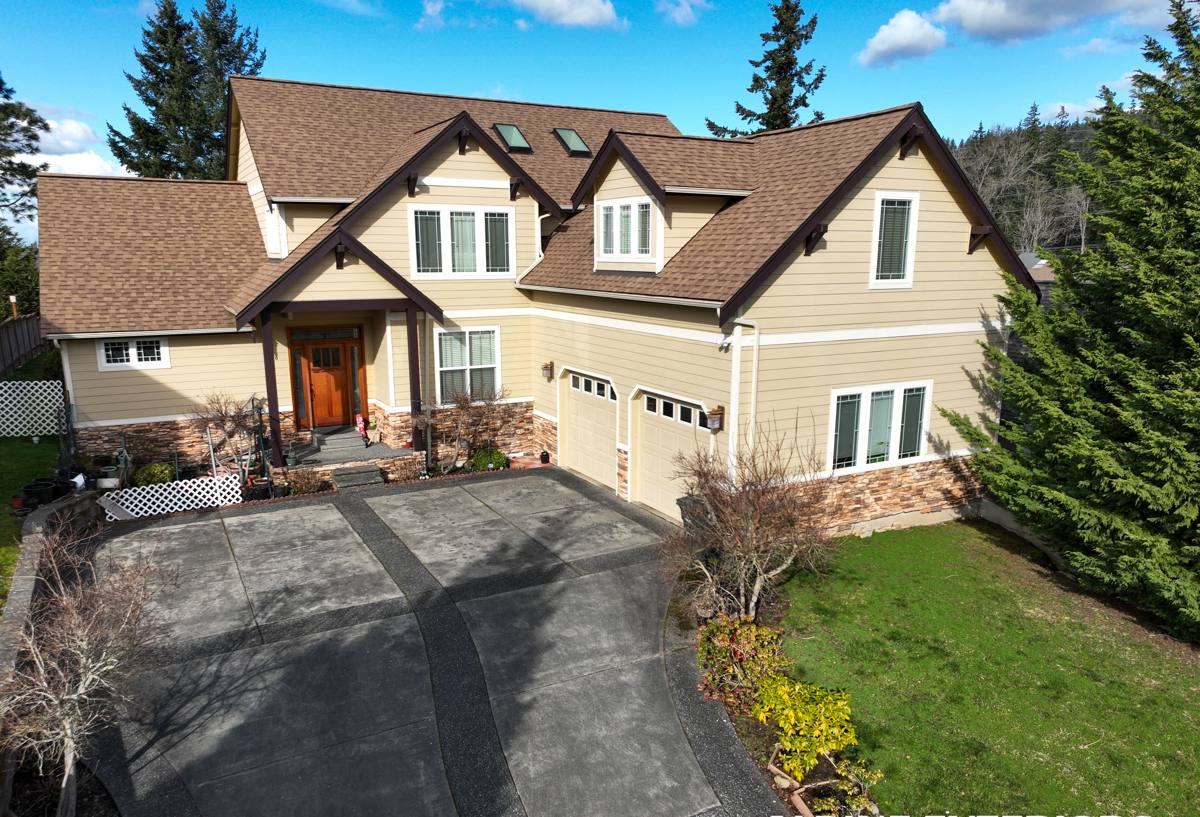
How to Tell If Your Roof Actually Has Storm Damage
Most homeowners in Pinellas County call us after they've spotted one of two things: a ceiling stain or an obviously missing shingle. Those are real signs, but they're the late-stage ones. A proper post-storm check looks for damage before it becomes a leak.
What we look for on the roof itself
- Lifted, creased, or torn shingle tabs, especially on the sides of the roof that face prevailing wind
- Cracked, slipped, or displaced tiles on tile roofs, even ones that look "mostly fine" from the ground
- Granule loss showing up in gutters or at downspout outlets after a storm
- Flashing pulled loose around chimneys, skylights, plumbing vents, and roof-to-wall transitions
- Soft spots or visible sagging in the roof deck when walked
- Debris impact marks — branch strikes, dented vents, dinged ridge caps
What we look for inside and around the house
- New or spreading ceiling stains, especially near exterior walls or where roof planes meet
- Musty smell in the attic, which usually shows up before a visible stain does
- Peeling paint or bubbling on exterior soffits and fascia
- Water intrusion around window and door headers on the top floor
What a Correct Storm Damage Repair Actually Involves
A storm damage repair done right is not just "find the hole, cover the hole." It's a sequence, and skipping steps is exactly how a roof ends up with a repeat leak eighteen months later in a different spot.
Isolate the actual entry point
Water on a roof rarely travels in a straight line. It follows the underlayment, decking seams, and rafters before it shows up as a stain, which is often several feet from where it actually entered. A repair that just chases the visible stain instead of tracing the water path is the single most common reason storm repairs fail.
Check the decking, not just the surface
Wind-driven rain that's been getting under shingles or tiles for even a short window can saturate the roof deck underneath. If that plywood has gone soft, replacing the surface material over it without addressing the deck is a repair that won't hold — and it's a step that's easy to skip if you're not physically getting up there and checking.
Rebuild the water-shedding layers in the right order
Underlayment, flashing, and the surface material (shingle, tile, or metal) all have to go back in the correct sequence and lap direction. Flashing installed in the wrong order or sealed with the wrong material is one of the most common causes of a leak that "comes back" after a repair.
Match materials correctly
On tile roofs especially, mismatched profiles or colors from a rushed repair stand out and can affect how water sheds at the repair line. On shingle roofs, mixing manufacturers or lot batches can create subtle color and granule differences that are avoidable with the right sourcing.
Our Process: From Inspection to Final Sign-Off
- Inspection. We walk the roof (not just look from the ground), check the attic from inside, and document everything with notes before any work starts.
- Honest scope. We tell you plainly whether this is a spot repair, a larger section replacement, or something that's crossed the line into full re-roof territory — and why.
- Written estimate. Materials, labor, and timeline in writing before anything is touched.
- Repair. Decking first if needed, then underlayment, flashing, and surface material, done in the correct order — not shortcuts stacked on top of each other.
- Final check. We re-inspect the repair and the surrounding areas, not just the exact spot we worked on, since storm damage often isn't isolated to one location.
Repair vs. Replacement: How We Make That Call
Not every storm-damaged roof needs to come off. But not every roof should be patched, either. Here's generally how the decision breaks down:
| Factor | Leans Toward Repair | Leans Toward Replacement |
|---|---|---|
| Age of roof | Under roughly half its expected service life | At or past its expected service life |
| Extent of damage | Isolated to one section or slope | Spread across multiple slopes or the whole roof |
| Deck condition | Solid, dry decking under the damaged area | Soft, delaminated, or repeatedly wet decking |
| Prior repair history | First real issue on an otherwise sound roof | Multiple past patches in different spots |
| Material availability | Matching material still available | Discontinued profile or color, poor match likely |
We'll walk you through where your roof falls on each of these before recommending anything. If a repair is the honest answer, that's what we'll quote — we don't upsell a full replacement to a roof that just needs a correct repair.
Insurance Claims and Storm Damage Repair
Most storm damage repairs in this part of Florida involve an insurance claim at some point. A few practical things matter here:
- Documentation before repair work starts matters more than documentation after — photos and notes of the actual damage carry more weight than a description of what was fixed
- Adjusters aren't roofers; a clear, specific scope of damage helps them evaluate the claim accurately
- Temporary protection (tarping an active leak) is often reasonable and expected between the storm and the adjuster visit, but should be noted as temporary, not the final repair
- We provide our own inspection findings and photos, which homeowners are free to share with their adjuster or insurance company
We're not a public adjuster and we don't handle the claim negotiation itself, but we'll give you a straight, documented assessment of what's actually damaged and what it takes to fix it correctly.
Materials and Methods for Bardmoor's Climate
Given the wind, UV, and salt air combination that defines roofing conditions across Seminole and the rest of Pinellas County, a few things matter more here than they might in a milder climate:
Fastening and wind resistance
Repairs need to meet or exceed the wind-rating standards the original roof was built to, not just be "good enough" to look sealed. Under-fastened shingles or improperly seated tiles are a common source of repeat storm damage on roofs that were patched in a hurry after a previous event.
UV-rated materials
Sealants, flashing components, and underlayment all break down faster under constant, intense sun exposure than in most of the country. Using materials rated for that kind of UV load, rather than whatever's cheapest, is part of what separates a repair that lasts from one that fails again in a season or two.
Corrosion resistance
Metal flashing, fasteners, and vent components near the coast need to be corrosion-resistant. Standard galvanized fasteners can start showing rust streaks and weakening well before they would inland, which is a direct result of the salt content in the air here.
Why Hiring a Crew That Already Works Bardmoor Matters
Storm damage repair isn't a generic skill you either have or don't — a lot of it comes down to local familiarity. A crew that regularly works Bardmoor and the surrounding Seminole neighborhoods already knows the common roof types, ages, and construction details in the area, which speeds up an accurate inspection instead of a guessing game. We're also familiar with Pinellas County permitting requirements and inspection expectations, so repairs that need a permit don't stall out on paperwork.
Just as important: after a storm hits a wide area, response time matters. A local crew can get to an active leak faster than one dispatched from farther away, and a tarp or temporary repair done same-day or next-day can be the difference between a contained problem and a ceiling that has to be replaced along with the roof.
What to Do Right After a Storm: A Practical Checklist
- Check the attic (not just the ceilings) for new stains, wet insulation, or a musty smell
- Look at gutters and the ground around downspouts for unusual amounts of granules or tile fragments
- Take photos of any visible roof damage from the ground — don't get on the roof yourself after a storm
- Note the date and approximate time of the storm event for insurance purposes
- Arrange temporary protection (tarping) quickly if there's an active leak, rather than waiting
- Get an inspection before the next rain event, even if the damage looks minor
- Keep any receipts or documentation related to temporary repairs for your insurance claim
If a recent storm has you wondering whether your Bardmoor roof came through clean or took damage that hasn't shown up yet, we're happy to take a look. The estimate is free, there's no pressure, and you'll get a straight answer about what — if anything — actually needs to be fixed.