 Seminole Siding
 Building a Deck That Actually Belongs on a Barrier Island
Belleair Beach sits on a narrow strip of sand between the Intracoastal Waterway and the Gulf, and that location changes what a deck needs to survive. A deck built the same way you'd build one twenty miles inland will fail faster here — not because the workmanship was bad, but because the materials and fasteners weren't matched to the environment. Salt air, constant sun, wind-driven rain, and the real chance of a tropical system all work on a deck year-round, not just during storm season.
This page is about one thing: building or replacing a deck for a home in Belleair Beach, done in a way that accounts for where the house actually sits. That means different hardware choices, different attention to flashing and elevation, and a permitting process that looks a little different than it does for a deck a few miles inland in Seminole or Largo.
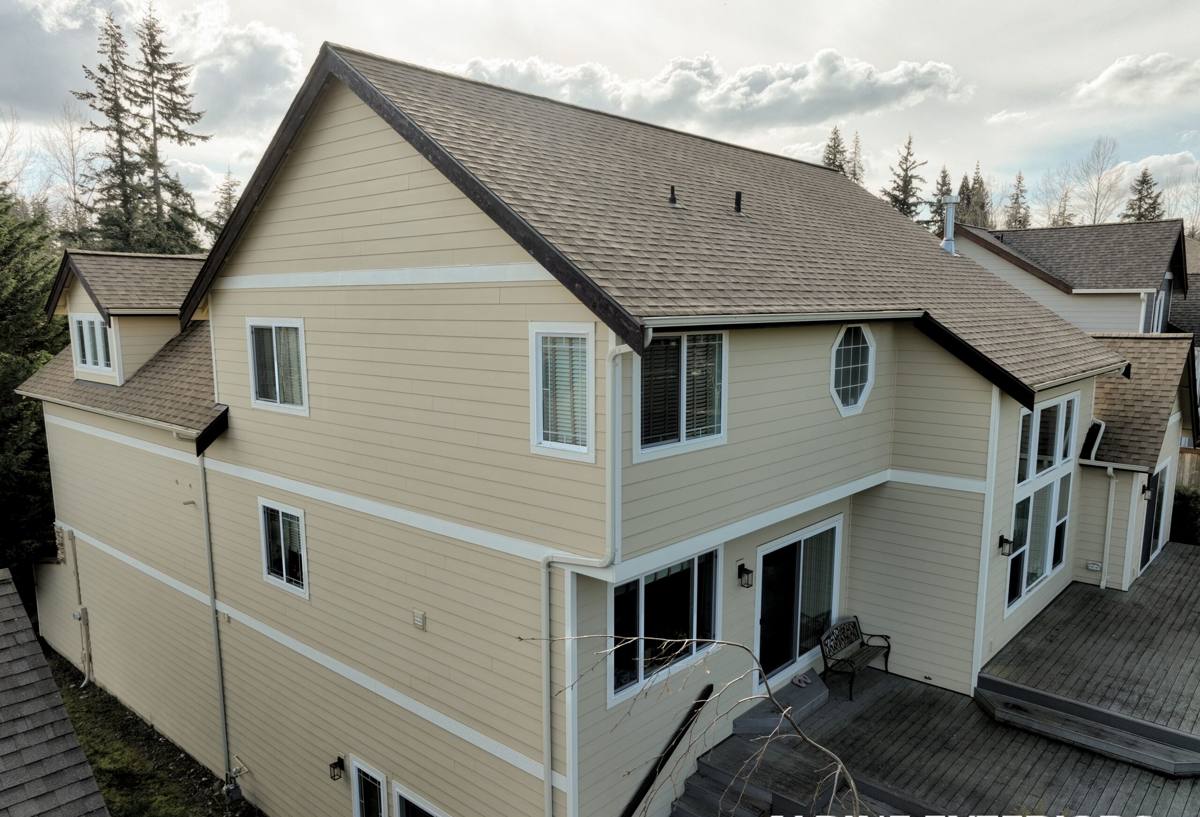
What Belleair Beach's Environment Actually Does to a Deck
Salt Air and Corrosion
Airborne salt travels well inland from the Gulf, but on a barrier island like Belleair Beach it's present at ground level every day, not just during onshore wind events. Salt accelerates corrosion in any metal fastener, connector, or bracket that isn't rated for it. A deck built with standard exterior-grade screws and joist hangers might look fine for a year or two, then start showing rust streaks, weakened connections, and staining on the decking itself well before the structure is actually old.
UV Exposure
Florida sun is intense everywhere, but a deck with open sky exposure near the water gets very little relief from tree cover or afternoon shade compared to a shaded inland lot. UV breaks down the surface fibers in wood decking and can fade or chalk lower-quality composite products over time. Material selection matters more here than in a shadier yard.
Wind-Driven Rain and Hurricane Wind Loads
Wind-driven rain gets pushed sideways and finds every gap in flashing, every unsealed fastener hole, and every spot where a ledger board wasn't properly detailed against the house. And because Belleair Beach is directly exposed to Gulf wind with no inland buffer, framing connections have to be engineered for real uplift and lateral loads, not just built "sturdy enough."
What a Correctly Built Deck Involves Here
Fasteners and Hardware
For a deck this close to salt water, we standardize on stainless steel or heavy hot-dip galvanized fasteners, joist hangers, and structural screws rated for coastal exposure — not the standard-grade coated hardware that's adequate for most inland builds. It costs more up front. It also means the connections that hold the deck together aren't the first thing to fail.
Ledger Attachment and Flashing
The ledger board — where the deck attaches to the house — is the single most common failure point on decks nationwide, and it's even less forgiving in a wind-driven rain environment. We flash it properly with corrosion-resistant flashing, back it with correct fastening into structural framing (not just siding), and detail it so water sheds away from the house rather than collecting behind the board.
Footings in Sandy, Low-Elevation Soil
Barrier island soil is sandy and often sits at a low elevation relative to the water table, which changes how footings need to be sized and set. We follow Florida Building Code frost-free depth and bearing requirements for the actual soil conditions on your lot, not a generic assumption — and where a home is elevated on pilings, the deck framing has to tie into that structure correctly rather than being an afterthought bolted on.
Elevated and Piling-Supported Homes
A number of homes in this part of Pinellas County are elevated for flood compliance, which means the deck sometimes needs to connect at a different level, work around piling locations, or include stairs and landings engineered as part of the overall structure rather than added later. We plan for that from the first site visit, not after materials are already ordered.
Choosing the Right Decking Material for Salt Air and Sun
There's no single "best" decking material — there's a best fit for your budget, how much upkeep you want to do, and how the deck will be used. Here's how the common options actually compare in a coastal Pinellas County environment:
| Material | Moisture & Salt Resistance | Sun/UV Behavior | Maintenance | Typical Lifespan Here |
|---|---|---|---|---|
| Pressure-Treated Wood | Good if sealed regularly; fasteners are the weak point | Grays and can splinter without upkeep | Annual cleaning and re-sealing recommended | 10-15 years with consistent maintenance |
| Wood-Composite (capped or uncapped) | Better than raw wood; uncapped boards absorb some moisture at cut edges | Capped versions resist fading much better than uncapped | Periodic washing; no sealing needed | 15-25 years depending on product grade |
| Cellular PVC / Fully Capped Composite | Excellent — non-porous, doesn't absorb salt spray or moisture | Best fade and chalk resistance of the group | Occasional washing only | 25+ years, longest manufacturer warranties |
We'll walk you through this trade-off honestly rather than pushing whatever has the best margin. If budget is the priority, a well-built pressure-treated deck with proper coastal-grade fasteners and a real maintenance routine can last a long time. If low maintenance matters more than upfront cost, capped composite or PVC decking earns its price difference here specifically because it doesn't care about salt exposure the way wood does.
Permits, Wind Load, and Flood Zone Requirements
Deck construction in Belleair Beach falls under Florida Building Code wind load provisions for coastal high-velocity zones, and permitting runs through the local building department covering this part of Pinellas County. Depending on your lot's flood zone designation and base flood elevation, there may be additional requirements around how the deck is attached to the house, ventilation openings if it's built under an elevated structure, or engineering sign-off for larger or multi-level designs.
We handle the permit application and coordinate any required engineering review as part of the job — you shouldn't have to be the one chasing down what your specific lot requires. What we won't do is skip a permit to save time; on a barrier island, an unpermitted deck is one of the first things that becomes a problem at resale or after storm damage when insurance gets involved.
Our Process, Start to Finish
- Site visit and assessment: we look at your home's elevation, existing structure, soil, and sun/wind exposure before recommending anything.
- Design and material selection: layout, decking material, and railing options based on how you'll use the space and your maintenance preference.
- Permitting and engineering: we prepare and submit what the local building department requires for your specific lot.
- Framing: coastal-grade fasteners and hardware, correctly flashed ledger attachment, footings sized for your soil conditions.
- Decking, railing, and finish work: installed per manufacturer spacing and fastening specs so warranties stay valid.
- Final walkthrough and inspection: we go over the finished deck with you and make sure it passes final inspection cleanly.
Keeping a Coastal Deck in Good Shape
Even a well-built deck needs some seasonal attention in this environment. A simple routine goes a long way toward protecting the investment:
- Rinse the deck surface periodically to clear salt residue, especially after wind events off the water
- Check fastener heads and railing connections once or twice a year for early corrosion signs
- Keep gutters and drainage clear so water isn't pooling near ledger attachment points
- Reseal wood decking on the manufacturer's recommended schedule — don't wait until it looks obviously weathered
- Inspect under-deck areas on elevated homes for debris or moisture buildup after storms
- Address any loose boards, popped fasteners, or soft spots promptly rather than letting them spread
Why Local Experience in Belleair Beach Matters
A contractor who mostly builds decks inland can still do competent framing — but they may default to standard hardware, standard flashing details, and standard assumptions about soil and elevation that don't hold up on a barrier island. Working regularly in Belleair Beach and the surrounding Seminole and Pinellas County coastline means we already know to spec coastal-grade fasteners by default, to plan around flood elevation requirements before design instead of after, and to build ledger and footing details for wind-driven rain rather than typical rainfall. That local familiarity shows up later as fewer surprises, fewer callbacks, and a deck that's still solid well past when a generically-built one would be showing problems.
If you're planning a new deck or need to replace one that's showing its age, we're happy to come take a look and give you a straightforward, no-pressure estimate — just fill out the form below.