 Seminole Siding
 Why Decks in Redington Shores Wear Out Faster Than Inland Homes
Redington Shores sits right on the barrier island strip of Pinellas County, which means every deck here is fighting a harder battle than a deck fifteen miles inland. Salt-laden air off the Gulf gets into every joint, fastener, and cut edge of wood or metal. Intense, near year-round UV breaks down wood fibers and the surface layer of composite boards. Wind-driven rain during summer storms and hurricane season doesn't just fall on a deck — it drives sideways into ledger connections, under railings, and into end grain that was never sealed. Add the structural stress of hurricane-force wind gusts pulling and pushing on railings, stairs, and framing, and you have a perfect storm of conditions that shortens the life of a poorly built or poorly maintained deck.
None of that means a deck in Redington Shores is doomed to fail. It means the repair work has to account for the specific way this climate attacks a structure, not just patch what's visibly broken. A board that looks fine on top can be hiding corroded fasteners underneath. A railing that feels solid can have a ledger connection that's slowly pulling away from the house. Good repair work here starts with understanding those failure patterns, not just replacing the first bad board you see.
Warning Signs Your Deck Needs Attention
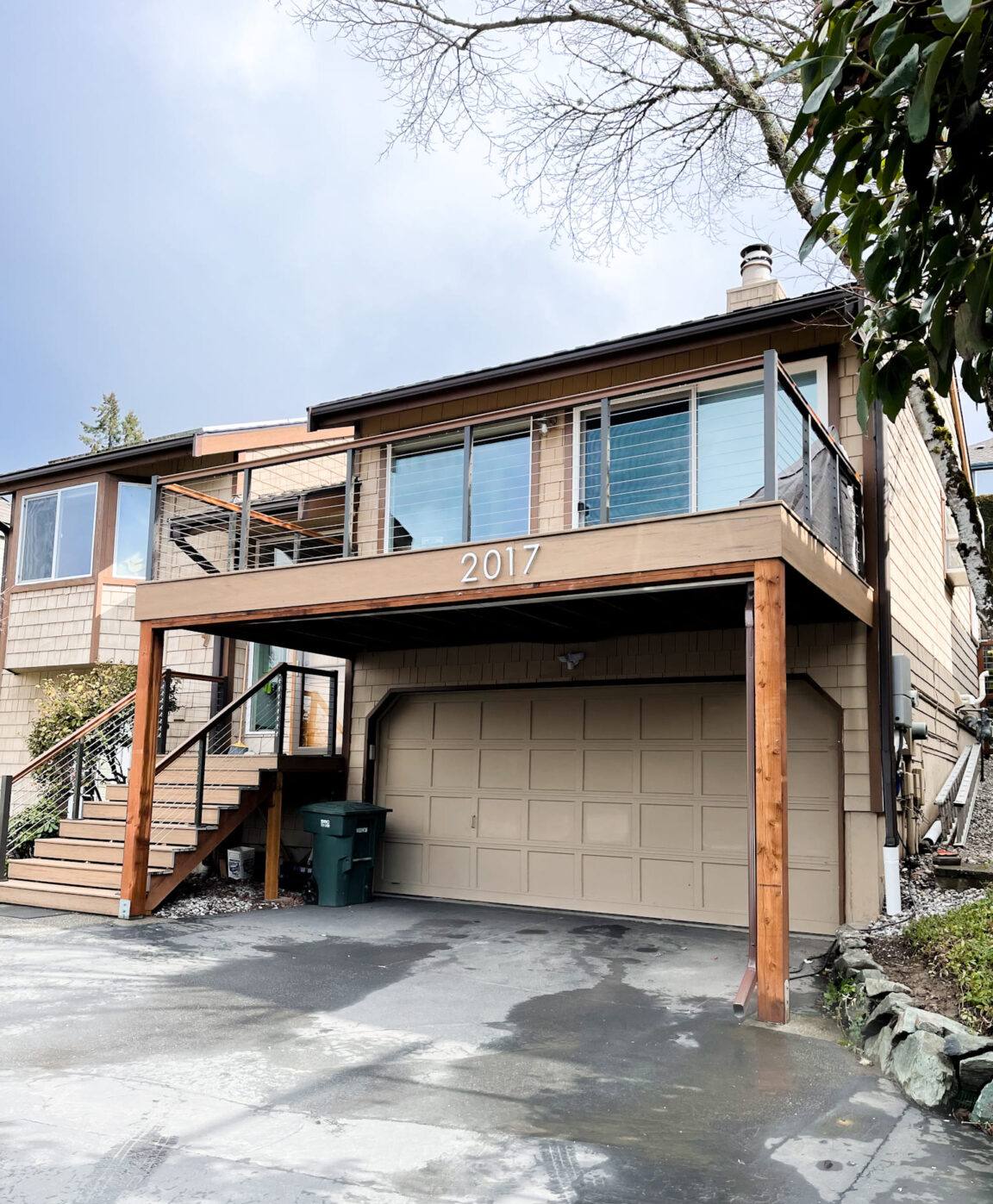
Most deck problems in this area don't show up overnight — they build slowly until something finally gives. Catching the early signs saves money and, more importantly, keeps the deck safe to use.
- Boards that feel spongy, springy, or noticeably softer underfoot than they used to
- Rust streaks or corrosion stains bleeding out around screws, nails, or bolts
- Gaps opening up where the deck meets the house (the ledger board connection)
- Railings or posts that wobble, flex, or feel looser than they should when leaned on
- Visible cupping, splitting, or graying of wood that hasn't been resealed in a few years
- Stair stringers that show cracking or separation at the connection points
- Any soft spots near posts or footings, especially after heavy rain
- Fasteners that are backing out or have visibly corroded heads
If you're seeing more than one or two of these, it's worth having the deck looked at before the next major storm rolls through, not after.
What a Correct Deck Repair Actually Involves
A lot of "deck repair" in this region amounts to swapping out a few obviously rotten boards and calling it done. That approach might make the deck look better for a season, but it rarely addresses what actually caused the failure. A repair done right looks at the whole system.
Ledger Board and Structural Connections
The ledger board — where the deck attaches to the house — is the single most important structural connection on most decks, and it's also the one most exposed to wind-driven rain working its way behind flashing over time. A proper repair checks the ledger's fastening, the condition of the flashing behind it, and whether water has been getting into the house's structure at that joint. This is not an area to patch cosmetically; if the ledger connection is compromised, everything downstream of it is unsafe regardless of how good the decking looks.
Fasteners and Hardware
Salt air corrodes standard fasteners faster than most homeowners expect. Nails, screws, and joist hangers that would last decades inland can weaken within a few years on a Gulf-facing deck. Any real repair replaces corroded hardware with fasteners and connectors rated for coastal exposure, not whatever matches what's already there.
Decking Surface and Framing
Beyond the boards themselves, the joists and beams underneath need to be checked for rot, especially near any spot where water tends to pool or where old fastener holes have let moisture into the wood grain. Replacing a deck board over a compromised joist just hides the problem for another year.
Railings and Code Compliance
Railings take direct wind load during storms and are one of the most common weak points we find. Repairs to railings and stair systems need to meet current railing height, baluster spacing, and load requirements — not just be reattached the way they were originally built, especially if the original work predates current code.
Repair or Replace: How We Help You Decide
Not every deck problem calls for a full rebuild, and not every deck is worth patching. The right call depends on the extent of the damage, the age of the structure, and what's underneath the surface. This is a general guide to how we weigh it:
| Factor | Leans Toward Repair | Leans Toward Replacement |
|---|---|---|
| Framing condition | Joists and beams are structurally sound | Widespread rot or corrosion in framing |
| Extent of damage | Isolated boards or connections affected | Damage spread across most of the deck |
| Age of the deck | Newer deck with a clear, isolated cause | Older deck nearing the end of its service life |
| Code compliance | Deck already meets current railing and fastening code | Deck predates current code by a wide margin |
| Fastener condition | Hardware still sound, isolated corrosion | Fasteners corroded broadly throughout |
We'll walk you through which category your deck falls into and why, so the decision is based on what we actually find, not a guess.
Our Deck Repair Process
1. On-Site Inspection
We start by physically checking the deck from top to bottom — not just the visible surface, but the ledger connection, framing, posts, footings where accessible, and hardware condition. On a coastal property, we pay particular attention to areas where salt exposure and wind-driven rain concentrate, like the Gulf-facing side and any spot near ground contact.
2. Diagnosis and Honest Estimate
Once we know what's actually going on, we explain it in plain terms: what's failing, why, and what it will take to fix it correctly. You get a clear scope of work and a written estimate before anything starts — no surprise add-ons once we're into the job.
3. The Repair Itself
We remove and replace only what needs replacing, using materials and fasteners suited to coastal exposure rather than standard hardware. Structural connections get corrected first, then decking, then railings and finish work. Anything that touches structure or safety is brought up to current code as part of the repair.
4. Final Walkthrough
Before we consider the job done, we walk the deck with you, point out what was repaired and why, and go over any maintenance recommendations specific to your deck's materials and exposure.
Materials We Use and Why
Material choice matters more on a Gulf-facing deck than almost anywhere else, because both wood and composite behave differently under constant UV and salt exposure.
Pressure-treated wood remains a solid, cost-effective choice for framing and is often the right call for structural repairs, but it needs consistent sealing to hold up to this climate — an unsealed or under-maintained wood deck will show UV graying and moisture damage faster here than inland. Composite decking resists rot and doesn't need staining, which appeals to a lot of homeowners who don't want an annual maintenance chore, but it still needs proper ventilation underneath and correct fastening to perform well — composite that's installed without attention to drainage and airflow can trap moisture against framing just like anything else.
We don't push one material as universally "better." We'll walk you through the real maintenance burden, moisture behavior, and installation requirements of each option for your specific deck, so the choice fits how you actually want to maintain your home.
Permitting and Pinellas County Considerations
Structural deck repairs — anything involving framing, footings, ledger connections, or railings — typically require a permit in Pinellas County, and coastal barrier island properties like those in Redington Shores can carry additional wind-load and flood-zone considerations depending on the property's location and elevation. Cosmetic work, like resurfacing boards without touching structure, may not require the same process. We handle the permitting conversation as part of the job so you're not left figuring out county requirements on your own, and so the repair is documented correctly if you ever sell the home.
Why a Crew That Already Works Redington Shores Matters
A contractor who mainly works inland properties may not think twice about using standard fasteners or skipping extra attention to flashing details, because inland conditions are more forgiving. On a barrier island deck, those shortcuts show up as rust stains and loose connections within a couple of years. Working regularly in Redington Shores and the surrounding Seminole area means we already know which fastener grades hold up, which flashing details actually keep wind-driven rain out, and which framing details tend to fail first on Gulf-facing structures. That familiarity shows up in repairs that last, not just repairs that look finished on handoff day.
It also means we're familiar with the practical side of working on the barrier islands — parking and access constraints on narrow streets, coordinating around HOA or condo association expectations where they apply, and scheduling around the seasonal weather patterns that affect outdoor work here.
Keeping Your Deck in Good Shape After the Repair
A repaired deck still needs regular attention in this climate to get its full expected life out of it. A few habits make a real difference:
- Rinse off salt residue periodically, especially after windy or stormy weather
- Reseal or restain wood decking on a regular schedule rather than waiting until it visibly grays
- Keep gutters and downspouts clear so runoff isn't dumping extra water onto or near the deck
- Check fastener heads and railing connections a couple of times a year for early signs of corrosion or looseness
- Keep the area under the deck clear of debris so airflow can help framing dry out after rain
- Address small issues — a loose baluster, a single soft board — right away rather than letting them spread
These are small habits, but on a coastal deck they're the difference between a repair that lasts a decade and one that needs revisiting in two years.
Get a Straightforward Deck Repair Estimate
If your deck in Redington Shores is showing any of the warning signs above, or you just want an honest read on its condition, we're happy to take a look. We'll give you a clear picture of what's going on, what it will take to fix it right, and what it will cost — no pressure, no obligation. Use the form below to request a free estimate.