 Seminole Siding
 Why Clearwater-Area Homes Need Windows Built for This Climate
Homes in and around Clearwater don't deal with a mild four-season climate — they deal with a coastal Gulf environment that pushes windows harder than almost anywhere else in the country. Between the heat, the UV exposure, the humidity, and the risk of hurricane-force wind, a window that's "good enough" somewhere else often isn't good enough here. If you're planning a window replacement in this part of Pinellas County, it pays to understand exactly what the local climate is asking of your windows before you pick a product.
Heat and UV Load Almost Year-Round
Windows in this area face long stretches of direct sun and high heat for most of the year. That constant UV and heat load does two things: it drives up cooling costs when glass and frames aren't doing their job, and it accelerates wear on lower-quality materials — fading, warping, and seal breakdown happen faster here than in cooler climates.
Wind-Driven Rain and Salt Air
Being close to the Gulf means salt-laden air is a constant, even well inland from the immediate coastline. Salt air corrodes hardware, pits poorly protected metal, and breaks down cheap seals and finishes over time. Add in wind-driven rain during storms and afternoon squalls, and any weakness in flashing or sealant around a window becomes a path for water intrusion.
Hurricane-Force Wind Events
Pinellas County sits in a hurricane-prone wind zone, and Florida Building Code reflects that. Windows here aren't just an energy-efficiency decision — they're a structural component of the home's envelope during a storm. A window that fails under wind pressure or flying debris can take pressurization and roof damage with it.
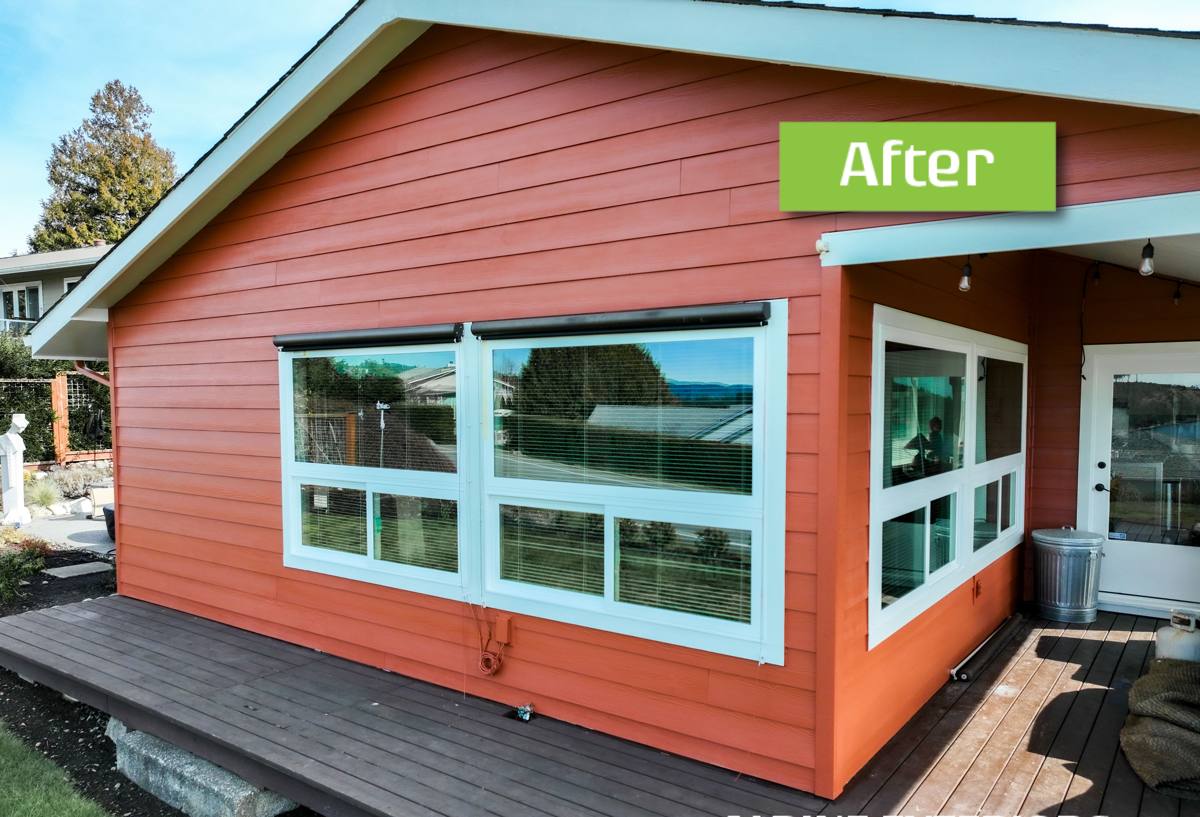
What "Energy-Efficient" Actually Means in a Hot, Humid Climate
Energy-efficient windows are often marketed with numbers designed for cold-climate homes — insulation values that matter more when you're fighting winter heat loss. In Clearwater-area homes, the bigger job is keeping solar heat and humidity out, not keeping furnace heat in. That changes what "efficient" should mean for your project.
Low-E Coatings and Glass Packages
Low-emissivity (Low-E) coatings reflect solar heat before it enters the home while still letting visible light through. For this climate, the priority is a Low-E coating and glass package tuned for solar heat gain control, not just general insulation. Paired with insulated (double- or triple-pane) glass and the right spacer system, this is what actually shows up as lower cooling bills.
Frame Material Matters as Much as Glass
Glass gets most of the attention, but frame material determines how well the window holds up to salt air, UV, and repeated heat cycling over the years. A frame that expands, contracts, or degrades unevenly will eventually let air and moisture past even good glass and good sealant. We factor frame performance into every recommendation, not just the glass package.
Impact Rating and Efficiency Aren't Separate Choices
In much of coastal Pinellas County, impact-rated glass is either required by code or strongly worth having regardless. The good news is that modern impact glass — laminated glass with a structural interlayer — also tends to perform well thermally and acoustically. You're not usually choosing between "efficient" and "storm-rated." A properly specified window does both jobs.
Signs Your Current Windows Are Costing You Money
Most homeowners don't replace windows on a schedule — they replace them when something starts bothering them or when a bill looks wrong. Here's what tends to show up first in homes around Clearwater:
- Rooms near windows feel noticeably hotter than the rest of the house in the afternoon
- Air conditioning runs longer or more often than it used to, with no other explanation
- Visible fog or moisture trapped between panes of double-glazed glass (a sign the seal has failed)
- Windows are difficult to open, close, or lock, or don't sit flush in the frame anymore
- You can feel air movement at the frame edges on a windy day
- Frames show soft spots, discoloration, pitting, or chalky residue from salt exposure
- Single-pane glass anywhere in the home, especially in rooms that get direct afternoon sun
- Visible daylight or gaps around the frame from outside
Any one of these is worth a look. Several at once usually means the windows are past the point where caulk and weatherstripping will fix the problem.
What a Correct Window Installation Involves
Removal and Rough Opening Inspection
Pulling the old window is when we find out what's actually going on behind the trim — whether the framing is sound, whether there's hidden water damage, and whether the opening is square and true. This step gets rushed on cut-rate jobs, and it's exactly where problems get buried instead of fixed. We inspect and address what we find before a new window ever goes in.
Flashing, Sealing, and Water Management
In a wind-driven-rain climate, how a window is flashed and sealed matters as much as the window itself. Water needs a clear path out if it ever gets past the outer seal, and every penetration point needs to be sealed with materials rated for sustained sun and moisture exposure — not just whatever caulk happens to be on the truck.
Impact Glass and Code Compliance
Where impact-rated glass applies, installation has to match the product's design pressure rating and the specific anchoring method it was tested with. Installing a code-rated window with the wrong fasteners or spacing undermines the rating even if the glass itself is correct. We install to the manufacturer's tested specifications and to current Florida Building Code requirements for this wind zone.
Interior and Exterior Finish Work
The trim, sill, and interior finish around a new window should look intentional, not patched. We treat the finish work as part of the job, not an afterthought — a clean installation should look like it belongs to the house.
Comparing Window Options for Coastal Pinellas County Homes
There's no single "best" window for every home — the right choice depends on your budget, the home's exposure, and how much upkeep you want to deal with. Here's a general comparison of the frame materials most commonly used in this area:
| Frame Material | Heat & UV Resistance | Salt-Air Resistance | Typical Maintenance | Best Fit |
|---|---|---|---|---|
| Vinyl | Good, with UV-stabilized formulations | Good — won't corrode | Low; occasional cleaning | Most homes seeking value and low upkeep |
| Aluminum | Good structurally, but conducts heat | Fair — needs quality coatings to resist corrosion | Moderate; watch for pitting over time | Larger openings needing extra structural strength |
| Fiberglass / Composite | Excellent — very stable in heat | Excellent | Low | Homeowners prioritizing longevity over upfront cost |
| Wood-clad | Fair to good depending on cladding | Fair — cladding quality is critical near salt air | Higher; interior wood needs periodic attention | Homeowners wanting a traditional interior look |
We'll walk through these trade-offs with you directly rather than pushing one material for every situation. The right answer often comes down to which openings face the harshest sun and weather, and what you're willing to maintain over the years.
Our Process, From Estimate to Final Walkthrough
- On-site assessment. We look at your existing windows, framing condition, sun exposure, and any problem areas you've noticed.
- Product recommendation. We explain frame and glass options in plain terms, including the trade-offs above, so you're choosing based on your home, not a sales script.
- Written estimate. You get a clear scope and pricing before any work begins — no surprise add-ons once the job starts.
- Permitting. Where permits are required, we handle the paperwork and inspections so the job is documented and code-compliant.
- Installation. Removal, opening inspection, flashing and sealing, window setting, and finish work, done in a logical sequence to protect your home's interior throughout.
- Final walkthrough. We check operation, seals, and finish work with you before we consider the job done.
Permits, Wind Zones, and Florida Building Code
Window replacement in Pinellas County typically requires a permit, and the applicable wind pressure and impact requirements depend on your home's specific location and exposure category under Florida Building Code. This isn't a formality — it's what determines which products are even legal to install at your address. We handle the permitting and code research as part of the job so you're not left trying to interpret wind-zone maps and product approval numbers yourself.
Why Local Experience in the Clearwater Area Matters
A window that performs well in Ohio isn't automatically a good fit for a home a few miles from the Gulf. Crews who work this area regularly know which failure points show up first in this climate — where salt air gets into hardware, where sun exposure breaks down seals fastest, and which installation shortcuts turn into water intrusion two or three years down the road. That local pattern recognition is hard to replace with a generic install crew that isn't used to Pinellas County conditions, code requirements, and permitting process.
As a siding and exterior contractor based in the Seminole area, we look at window replacement as part of the whole building envelope, not an isolated product swap. Windows, siding, flashing, and trim all have to work together to keep water out and energy costs down, and we approach every window job with that whole-house perspective.
Ready to Talk About Your Windows?
If your windows are original to the home, showing their age, or you're just tired of high cooling bills during the hottest months, we're happy to take a look and give you an honest read on your options. Use the form below to request a free, no-pressure estimate — we'll assess your home, explain your choices in plain language, and give you a clear price before any work begins.