 Seminole Siding
 Why Redington Beach Siding Takes More Punishment Than Most
Redington Beach sits on a narrow barrier island, which means every exterior surface on these homes is closer to open water and constant salt spray than almost anywhere else in Pinellas County. That proximity changes what "durable siding" actually has to mean. Salt-laden air accelerates corrosion of fasteners and trim, wind off the Gulf drives rain sideways into wall assemblies during storms, and the sun here is intense and nearly year-round, breaking down pigments and coatings that weren't built for it. Add the real possibility of hurricane-force wind gusts, and you have a short list of conditions that most siding products were never designed to survive together, in the same wall, at the same time.
We install siding across Seminole and the surrounding Pinellas County communities, and Redington Beach homes consistently show the fastest wear when the wrong product or a shortcut installation was used. This page focuses specifically on what fiber cement siding needs to deliver for a home on this stretch of coastline, and what a correct installation actually looks like out here.
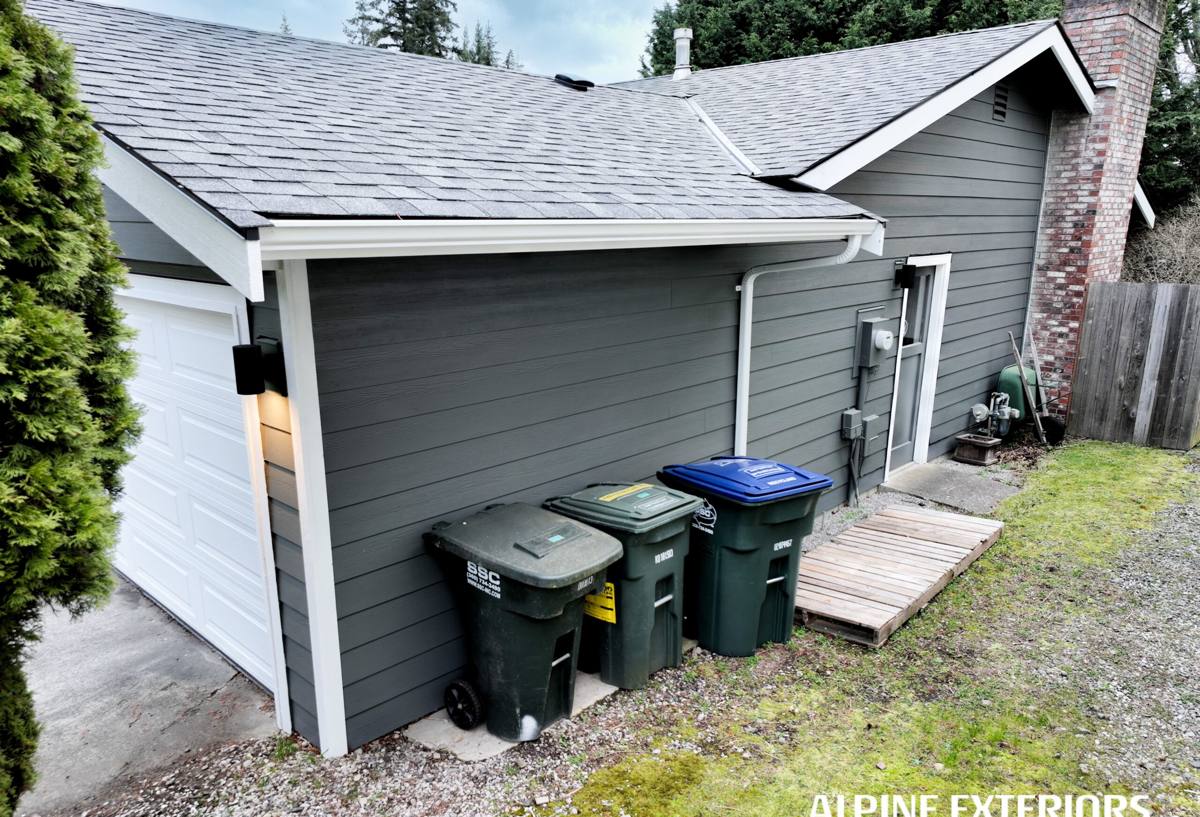
What the Coastal Environment Does to Siding Over Time
Salt Air and Corrosion
Airborne salt doesn't just sit on the surface — it works into fastener heads, trim joints, and any exposed metal. On a barrier island like Redington Beach, that process runs faster than it would even a few miles inland in Seminole proper. Siding materials and fasteners that aren't rated for coastal exposure can show corrosion staining and weakening within a few years instead of decades.
Wind-Driven Rain
Rain that's being pushed horizontally by strong onshore wind behaves differently than a normal downpour. It finds gaps, laps, and unsealed joints that would never be a problem in calmer conditions. A siding system's water-management details — how panels overlap, how flashing is integrated, how the weather-resistive barrier behind the siding is installed — matter more here than the siding material itself.
Intense, Near-Constant UV
Florida sun is hard on any exterior finish, but low-latitude coastal exposure with reflected light off the water adds to the load. Paint and factory finishes that aren't formulated for this level of UV exposure fade unevenly, chalk, and require repainting far sooner than a homeowner should have to deal with.
Hurricane-Force Wind Loads
Wind uplift and impact from wind-borne debris are real design considerations for any home this close to the Gulf. Siding has to be rated and fastened for the wind speeds this area can see, not just installed the way it might be in a calmer inland market.
Why We Install Only James Hardie Fiber Cement
Seminole Siding Company installs James Hardie fiber cement exclusively — we don't install vinyl, LP SmartSide, primed wood, or other fiber cement brands. That's not a marketing position; it's a standard we hold because of exactly the conditions described above. Fiber cement is non-combustible and dimensionally stable, meaning it doesn't expand and contract with heat and humidity the way vinyl or wood products do, which matters when a wall assembly is absorbing both sun and salt-laden moisture on a regular cycle.
Within fiber cement, James Hardie's HZ5 product line is engineered specifically for high-humidity, coastal-climate regions, which includes Redington Beach and the rest of coastal Pinellas County. The ColorPlus factory finish is baked on under controlled conditions and backed by its own finish warranty, which holds up to UV exposure far better than field-applied paint. We standardized on Hardie because when it's installed correctly, it's the product we're comfortable putting our name behind on a barrier island home.
What a Correct Installation Involves Here
The siding material is only part of the equation — most premature siding failures we see, in Redington Beach and elsewhere, trace back to installation shortcuts rather than the product itself. On a coastal home, we pay particular attention to:
- A continuous, properly lapped weather-resistive barrier behind the siding, with all penetrations sealed
- Correct flashing integration at windows, doors, and any wall penetrations, so wind-driven rain has nowhere to travel behind the cladding
- Proper fastener selection — corrosion-resistant fasteners rated for coastal exposure, placed according to James Hardie's fastening schedule for the local wind zone
- Manufacturer-specified clearances between the bottom of the siding and roof lines, decks, and grade, so water doesn't wick into the board
- Correctly sized gaps at butt joints and trim, sealed with a high-quality, paintable coastal-grade sealant rather than caulked tight, which can trap moisture
- Field-cut edges sealed per manufacturer specification, since raw cut edges are the most vulnerable point on any fiber cement board
Every one of these details is spelled out in James Hardie's installation instructions, and every one of them is also a place where an installer can quietly cut corners without it being obvious until years later, when moisture damage or fastener corrosion starts to show. We follow the manufacturer's specification because it's the difference between siding that earns its warranty and siding that voids it.
Our Process for Redington Beach Homes
Assessment and Product Selection
We start with an on-site look at the home's current siding, exposure direction, and any existing moisture or wind damage. Homes facing the Gulf directly typically warrant closer attention to flashing and water management than those set back or shielded by neighboring structures.
Wind Zone and Code Compliance
Barrier island construction in Pinellas County falls under wind-load and coastal building requirements that inland Seminole homes may not face in the same way. We fasten and install to meet the wind zone the home is actually in, not a generic inland standard.
Tear-Off and Substrate Check
Before new siding goes up, we inspect the sheathing underneath for any hidden moisture damage from the old system — a step that matters more on a barrier island where water intrusion, once it starts, tends to have been happening longer than it looks.
Installation to Manufacturer Spec
Panels, fasteners, flashing, and sealant are installed per James Hardie's published specifications for the applicable HZ zone, not shortcuts specific to "how it's usually done."
Final Walkthrough
We walk the finished job with the homeowner, checking sealant lines, trim, and paint consistency before calling it complete.
Cost Factors for Redington Beach Fiber Cement Siding
Every home is different, but the factors that most commonly move the price on a barrier island fiber cement project are consistent. We avoid quoting flat per-square-foot numbers up front because these variables genuinely change the scope:
| Factor | Why It Matters Here |
|---|---|
| Existing siding removal and substrate condition | Salt-air homes more often have hidden moisture damage requiring sheathing repair before new siding goes on |
| Home exposure (direct Gulf-facing vs. sheltered) | Higher wind and salt exposure can call for more attention to flashing, fastening, and trim detail |
| Trim and architectural detail | Corner boards, window trim, and fascia detailing add labor beyond flat wall panels |
| HardiePanel vs. HardiePlank profile | Different reveal styles and panel formats carry different material and labor costs |
| Color and finish selection | ColorPlus factory-finish options versus field-painted finishes affect both cost and long-term fade resistance |
| Access and site conditions | Narrow lots and close-set island homes can affect staging and labor time |
Maintenance and Longevity in This Climate
James Hardie siding installed correctly on a coastal home requires far less upkeep than vinyl or wood, but "less" isn't "none." We recommend homeowners in Redington Beach do a simple visual check after major storms — looking for lifted trim, cracked sealant joints, or staining near fastener heads — and rinse accumulated salt residue off the siding periodically with a garden hose. Caught early, sealant and trim issues are a quick fix; left alone, they're the kind of thing that turns into a moisture problem behind the wall. This is also where ColorPlus factory finish pays off: because the color is baked into the board rather than applied on site, homeowners aren't stuck repainting every few years just to keep ahead of UV fading.
What to Ask Before Hiring a Siding Contractor Here
Coastal siding work rewards experience with this specific environment. Before hiring anyone for a Redington Beach project, it's worth asking:
- Do you install to James Hardie's published fastening schedule for our wind zone, or a generic standard?
- What fastener type do you use, and is it rated for coastal salt exposure?
- How do you handle flashing at windows, doors, and penetrations?
- Will you inspect and address any substrate damage found during tear-off, or just cover over it?
- Is your installation backed by a manufacturer-recognized warranty, or only a workmanship guarantee?
A contractor who's done this work up and down the Pinellas County coastline should be able to answer all five without hesitation.
Let's Talk About Your Home
If your Redington Beach home's siding is showing its age, or you're planning ahead for a replacement, we're happy to take a look and walk you through what correct James Hardie installation would involve for your specific home and exposure. Reach out for a free, no-pressure estimate using the form below.