 Seminole Siding
 Siding Built for a Barrier Island, Not Just a Florida Zip Code
Indian Rocks Beach sits on a narrow barrier island in Pinellas County, with the Gulf of Mexico on one side and the Intracoastal Waterway on the other. That geography changes what "good siding" means. A siding job that holds up fine a few miles inland in Seminole can fail years early on a home that sits exposed to open Gulf wind and salt spray every single day. When we install siding on the island, we're not just installing a product — we're accounting for a specific, harsher exposure category than most of Pinellas County ever sees.
The short version: homes here need a siding system that resists moisture intrusion, won't corrode or degrade from salt in the air, holds paint and color under intense UV, and stays fastened through hurricane-force wind events. That's the standard we install to on every Indian Rocks Beach project.
What Coastal Exposure Actually Does to Siding
Salt Air
Airborne salt from the Gulf doesn't just sit on the surface — it works into seams, fastener heads, and any gap in the finish. Over years, that accelerates corrosion of fasteners and trim, and it breaks down coatings that weren't designed for a marine environment. Siding that's rated for "Florida" in general isn't automatically rated for a few hundred feet from open saltwater.
Wind-Driven Rain
On the island, rain rarely falls straight down — Gulf winds push it sideways into the wall assembly. Any siding system with weak seams, poor flashing, or gaps at penetrations becomes a path for water to get behind the cladding. Once moisture is behind the siding, it doesn't matter how good the face material looks; the sheathing, framing, and insulation underneath start to suffer, often invisibly, for years.
Year-Round UV
Florida's sun is intense and constant, not seasonal. Painted or poorly finished siding chalks, fades, and can start absorbing moisture as the finish breaks down — usually well before a homeowner expects to be repainting.
Hurricane-Force Wind
Wind uplift and wind-driven debris are the two failure modes that matter most in a named storm. Siding that isn't fastened to spec, or that uses a fastening pattern designed for a calmer climate, is far more likely to lift, crack, or blow off during a hurricane or even a strong seasonal squall.
Why We Install James Hardie Fiber Cement — And Nothing Else
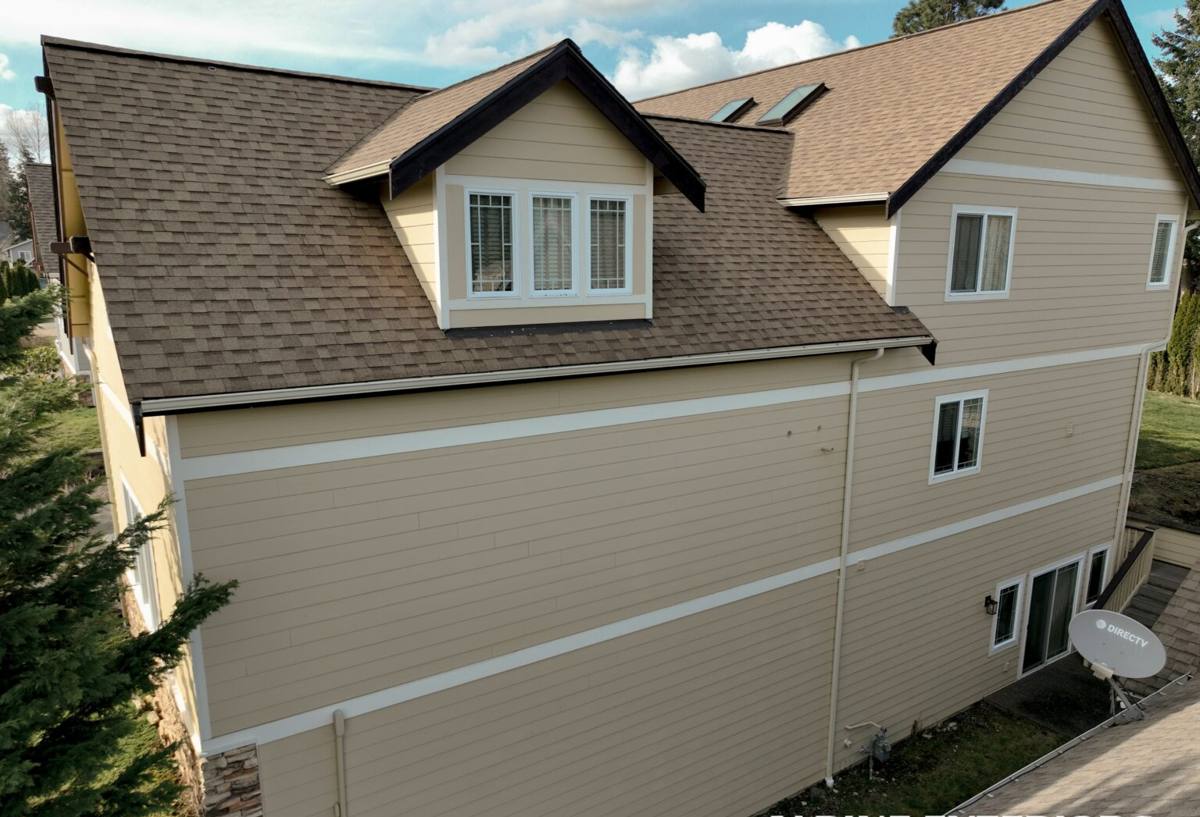
We install exclusively James Hardie fiber cement siding. We don't install vinyl, LP SmartSide, primed wood, or cedar, and on a barrier island home that decision matters more than almost anywhere else we work.
Vinyl siding can soften, warp, or become brittle under sustained heat and UV, and it's a poor match for high-wind coastal exposure — its fastening system relies on the panels being able to expand and contract freely, which limits how tightly it can be secured against wind uplift. Wood-based and wood-fiber products (including LP SmartSide) are organic materials at their core; keep them wet long enough — which wind-driven coastal rain is very good at doing — and they're vulnerable to swelling, delamination, and rot at the seams and cut edges, no matter how well the finish is maintained.
James Hardie fiber cement is cement, sand, and cellulose fiber — non-combustible, dimensionally stable, and not an organic material that rot fungi or moisture can break down the way they can wood. It doesn't expand and contract the way vinyl does, so it holds a tighter, more wind-resistant fastening pattern. And it's engineered specifically for high-humidity, high-UV, storm-prone climates like ours.
HardieZone: Product Engineered for This Exact Climate
James Hardie makes climate-specific versions of its siding under the HardieZone system — HZ5 for colder, drier, freeze-prone regions, and HZ10 for hot, humid, high-UV, storm-exposed climates like the Tampa Bay coastline. Indian Rocks Beach is squarely HZ10 territory. That's the product line we install here, not a one-size-fits-all national spec.
HZ10 products are engineered with coastal and subtropical conditions in mind: better resistance to moisture-related issues in high-humidity air, and a formulation suited to constant sun exposure. Paired with Hardie's ColorPlus Technology — a factory-applied, baked-on finish that's more UV- and fade-resistant than field-applied paint — you get color that holds up under Gulf sun far longer than a job-site paint job typically will.
What a Correct Installation Involves
The siding itself is only part of the system. On an island home, the details around it matter just as much, and they're the things that separate a job that survives twenty hurricane seasons from one that needs redoing in five.
- A continuous weather-resistant barrier installed correctly behind the siding, with no gaps or shortcuts at seams
- Properly lapped and sealed flashing at every window, door, and penetration — the single most common source of hidden water damage when done wrong
- Correct fastener type and spacing for the wind exposure category, not a generic inland pattern
- Manufacturer-specified clearance between the bottom of the siding and the ground, roofline, decks, and patios, so standing water and splash-back can't sit against the material
- Caulking and sealant only where James Hardie's install specs call for it — over-caulking can trap moisture just as easily as under-caulking lets it in
- Trim and corner details that shed water outward instead of channeling it toward seams
Skip or rush any one of these and the siding itself becomes almost irrelevant — water finds the weak point regardless of what the face material is rated for.
Our Process for an Indian Rocks Beach Home
1. On-Site Assessment
We walk the exterior, check the condition of the existing siding, sheathing, and trim, and look specifically for signs of past wind-driven water intrusion — a common finding on Gulf-facing and second-story walls that take the brunt of the weather.
2. Removal and Substrate Check
Old siding comes off and we inspect what's underneath before anything new goes up. On coastal homes we're specifically watching for soft sheathing or hidden moisture damage from years of exposure — problems that have to be addressed before new siding goes on, not covered up by it.
3. Weather Barrier and Flashing
This is the step that determines whether the job holds up in a storm. We install and detail the moisture barrier and flashing to manufacturer spec around every opening and penetration.
4. Hardie Installation
Panels or planks go up with the fastening pattern and clearances specified for our wind exposure zone, using James Hardie HZ10 product finished with ColorPlus.
5. Trim, Caulk, and Final Detailing
Trim work and sealant are finished per spec — enough to seal against wind-driven rain, not so much that moisture gets trapped.
6. Final Walkthrough
We walk the finished exterior with the homeowner and go over care and warranty registration.
Cost Factors on a Coastal Home
Every home is different, and we won't quote a number without seeing the house, but these are the factors that most often move the price on an Indian Rocks Beach project compared to a similar-size inland home:
| Factor | Why It Affects Cost |
|---|---|
| Substrate condition | Hidden moisture or sheathing damage found during removal has to be repaired before new siding goes on |
| Home height and access | Multi-story Gulf-facing homes and homes on stilts/pilings often need additional staging and access equipment |
| Flashing and window/door count | More penetrations mean more detail work, which is time-intensive but non-negotiable near saltwater |
| Wind exposure category | Higher exposure ratings can require tighter fastener spacing, which affects labor time |
| Product line and profile | HardiePlank, HardiePanel, and shingle-style profiles differ in material and install cost |
| Color and trim selection | ColorPlus finish options and trim complexity affect material pricing |
Why the Crew Matters as Much as the Product
Fiber cement siding is only as good as the installation behind it. A crew that mostly works inland Pinellas or Tampa Bay neighborhoods may not think twice about flashing details, fastener spacing, or clearances that matter far more on an exposed barrier island wall. A crew that regularly works Indian Rocks Beach and the surrounding Gulf-front communities already knows where water tends to find its way in on this kind of exposure, what wind loading actually demands here, and how to detail a home so it's not the first one with problems after the next tropical system moves through.
That experience shows up in decisions you won't necessarily see once the siding is up — where extra flashing gets added, how a corner is detailed, how tight the fastening pattern is run on a Gulf-facing wall versus a sheltered one. It's the difference between siding that looks right on installation day and siding that's still performing correctly a decade of storm seasons later.
Living With Hardie Siding on the Island
James Hardie fiber cement is low-maintenance, but "low-maintenance" doesn't mean "no maintenance," especially this close to saltwater.
- Rinse salt residue off the siding periodically with a garden hose, especially on Gulf-facing walls
- Keep an eye on caulking at trim and penetrations and have it touched up if it starts to crack or pull away
- Trim back landscaping and irrigation heads that spray directly onto the siding
- After a major storm, do a quick visual check for cracked panels, loose trim, or gaps that weren't there before
- Register your James Hardie warranty after installation so it's on file if you ever need it
None of this is heavy upkeep — it's the kind of periodic attention any coastal exterior needs, and it's a lot less than what wood or vinyl typically demand in this environment.
Get a Free, No-Pressure Estimate
If your Indian Rocks Beach home needs new siding — or you're not sure whether what's on it now is holding up the way it should — we're happy to take a look and give you an honest assessment. Fill out the form below for a free estimate, no pressure and no obligation.