 Seminole Siding
 Redington Shores Sits at the Edge of Everything the Weather Can Throw
Redington Shores is a barrier island community, which means homes here take on a different level of exposure than houses even a few miles inland in Seminole. Gulf-facing and Intracoastal-facing walls absorb salt-laden air almost daily, sun exposure is nearly constant and reflects off the water, and wind-driven rain during storms hits siding at angles a standard product line was never built to shed. Add in the humidity that never really lets up along Pinellas County's coastline, and you have a punishing combination: salt corrosion, UV breakdown, and moisture intrusion, all working on the same wall at the same time.
Cladding that performs fine in a landlocked subdivision can fail early here. Paint chalks and fades faster under reflected sun off open water. Caulk joints dry out and crack sooner in the heat-humidity cycle. Anything with seams, laps, or fasteners that aren't detailed correctly becomes a moisture entry point within a few storm seasons instead of a few decades. This is exactly the environment where the siding material and the installation quality both have to be right — there's very little margin for a shortcut on a barrier island.
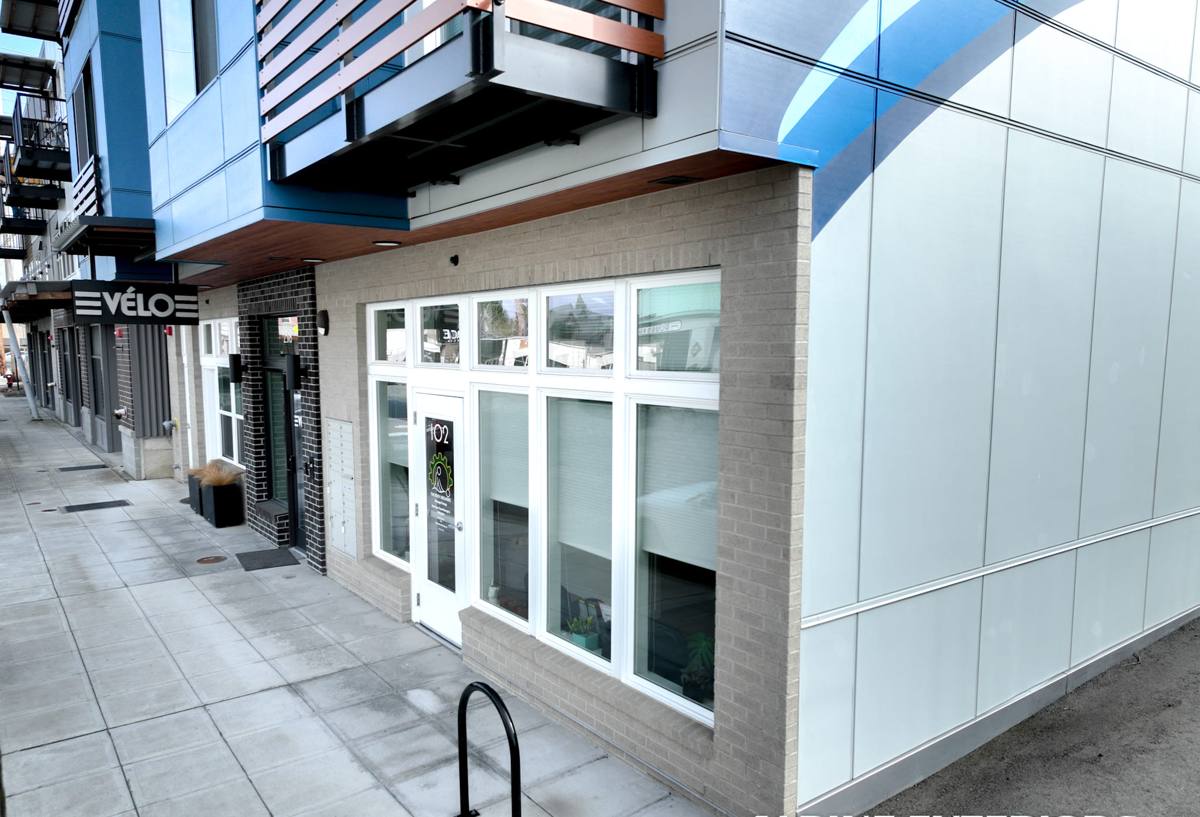
Why We Only Install James Hardie Fiber Cement Here
We don't offer vinyl, LP SmartSide, primed wood, or other fiber cement brands, and Redington Shores is a good example of why. Vinyl softens, warps, and becomes brittle faster under sustained coastal UV and heat, and it's a poor match for wind-driven rain because water can work behind panels at the laps. Wood-based and OSB-core products (like LP SmartSide) rely on a treated engineered wood substrate — if moisture gets past the coating or a damaged edge, the core can swell and break down, and salt air accelerates fastener corrosion at every penetration. Cedar and primed spruce need frequent refinishing to hold up to UV and humidity, which is a maintenance commitment most homeowners don't want to sign up for on an island where storms are a yearly reality.
James Hardie fiber cement is cement, sand, and cellulose fiber — it doesn't rot, it isn't a food source for pests, and it's non-combustible, which matters given how tightly some Redington Shores lots are spaced. It doesn't expand and contract with humidity the way wood-based products do, so it holds paint lines and caulk joints longer in a climate that's brutal on both. That's the whole reason we standardized on one product line instead of offering several — we'd rather install the product that's engineered for this exposure than sell homeowners something we know will need premature attention.
The HZ5 Climate Engineering That Matters on the Coast
James Hardie makes region-specific formulations under its HZ5® engineered-for-climate system, and the Gulf Coast version is built around high-moisture, high-humidity performance — different from the formulation Hardie sells in dry inland climates. For a barrier island property, that distinction isn't marketing detail; it's the reason the product resists moisture-related damage in a way a one-size-fits-all fiber cement board wouldn't.
What "Correct Installation" Actually Means on a Barrier Island Home
Fiber cement siding is only as good as the flashing, clearances, and fastening behind it. On a coastal property like the ones we work on in Redington Shores, a few details separate a siding job that lasts from one that lets water in behind the wall within a few years:
- Correct water-resistive barrier (house wrap) installed and lapped properly before any siding goes up, with all seams and penetrations sealed
- Flashing at every window, door, and roofline intersection, directed to shed water outward rather than trap it against the sheathing
- Minimum clearance maintained between siding and roof lines, decks, patios, and grade — a common shortcut that leads to wicking and rot at the bottom course
- Corrosion-resistant fasteners driven to Hardie's specified pattern and depth — not overdriven, not underdriven, and not the wrong fastener for a salt-air environment
- Properly caulked and painted cut ends, since an unsealed cut edge is one of the most common places moisture gets into fiber cement siding
- Manufacturer-specified gaps at butt joints and trim to allow for the board's normal expansion and contraction
Every one of these is written into Hardie's installation instructions, and every one of them is easy to skip and hard to spot once the siding is painted and up on the wall. That's the risk with any siding job — the mistakes that cause problems are usually invisible at final walkthrough and only show up as a stain, a soft spot, or a paint failure a couple of years later.
Our Process for a Redington Shores Job
We run the same disciplined process on every barrier island home we side, because the climate doesn't leave room for winging it:
- On-site assessment — we look at existing siding, trim, window and door flashing, and any signs of past moisture intrusion before quoting anything
- Tear-off and substrate check — old siding comes off and we inspect the sheathing underneath for hidden rot or damage before it gets covered back up
- Water-resistive barrier and flashing — installed to manufacturer spec at every penetration, corner, and transition
- Hardie installation — correct fastening, clearances, and joint treatment, following James Hardie's published instructions for the HZ5 climate zone
- Finish and detail work — trim, caulking, and touch-up on any factory-finish areas affected by cutting and fastening
- Final walkthrough — we go over the completed job with the homeowner before calling it done
We also pull the required permits and coordinate any inspections through the appropriate Pinellas County or Redington Shores building department process — that step protects the homeowner if there's ever an insurance question or a future sale.
Choosing the Right Hardie Product for Your Home
James Hardie makes several product lines, and the right one depends on your home's style and how much of the exterior faces direct Gulf or Intracoastal exposure.
| Product | Best Use | Coastal Consideration |
|---|---|---|
| HardiePlank® Lap Siding | Most common choice for full exterior re-siding | Widest range of ColorPlus finishes; standard for wind-driven rain resistance when installed with correct lap and fastening |
| HardiePanel® Vertical Siding | Modern or coastal-style facades, accent walls | Fewer horizontal laps means fewer potential water-entry seams on exposed elevations |
| HardieShingle® Siding | Coastal cottage or shingle-style aesthetics | More labor-intensive install detail; still requires strict clearance and fastening spec |
| HardieTrim® Boards | Corners, fascia, window and door trim | Matched material prevents the trim from failing before the field siding does |
Why Hiring a Crew That Already Works This Island Matters
Redington Shores isn't like every other Seminole-area neighborhood. Lot access can be tight, homes are often elevated, and the wind and moisture exposure on a Gulf-front or bay-front wall is more severe than what a crew used to inland siding jobs typically accounts for. A crew that regularly works this stretch of Pinellas County coastline already knows what extra flashing detail a bay-facing wall needs, understands the permitting process specific to the town, and doesn't treat this job the same way they'd treat a house ten miles inland.
That familiarity shows up in small decisions — where to add extra sealant, how tight to keep clearances near a raised foundation, which fastener spec actually holds up to salt air over time. Those are the details that separate siding that looks fine at handoff from siding that's still performing correctly ten and fifteen years later.
What Homeowners Can Do Between Now and a Full Re-Side
If you're not ready for a full siding replacement yet, a few habits help protect what's on the house now and give you an honest read on when it's time:
- Rinse salt residue off exterior walls periodically, especially on Gulf-facing and bay-facing elevations
- Walk the exterior after major storms and look for lifted boards, cracked caulk lines, or staining at trim joints
- Check caulk at windows, doors, and trim annually — it's usually the first thing to fail in this climate
- Watch for soft spots, bubbling paint, or dark staining near the bottom courses, which can signal moisture wicking from grade
- Don't paint over visible damage before having it inspected — it can hide a bigger problem underneath
Get a Straight Answer on Your Siding
Every home on the island wears differently depending on its orientation, age, and how it was originally sided. If you're seeing early wear, dealing with an aging install, or just want an honest opinion on where your siding stands, we're happy to take a look. Reach out for a free, no-pressure estimate — we'll walk the exterior with you and tell you what we actually see, not just what's easiest to sell.