 Seminole Siding
 Pinellas Park Siding Takes a Different Kind of Beating
Pinellas Park sits inland from the Gulf but close enough to feel every part of what Pinellas County weather throws at a house. Hurricane-force wind gusts test every fastener and seam. Intense, nearly year-round UV bakes paint and finish coats until they chalk and fade. Wind-driven rain finds its way sideways into laps and corner joints that would stay dry in a calmer climate. And salt air drifting in off the Gulf accelerates corrosion on fasteners, trim, and anything metal behind the siding. None of this is unique to one street or subdivision — it's the baseline for homes across this part of Pinellas County. But it means siding repair here isn't a cosmetic afterthought. Done wrong, a repair patches over a problem that keeps coming back. Done right, it actually solves what the climate is doing to the wall.
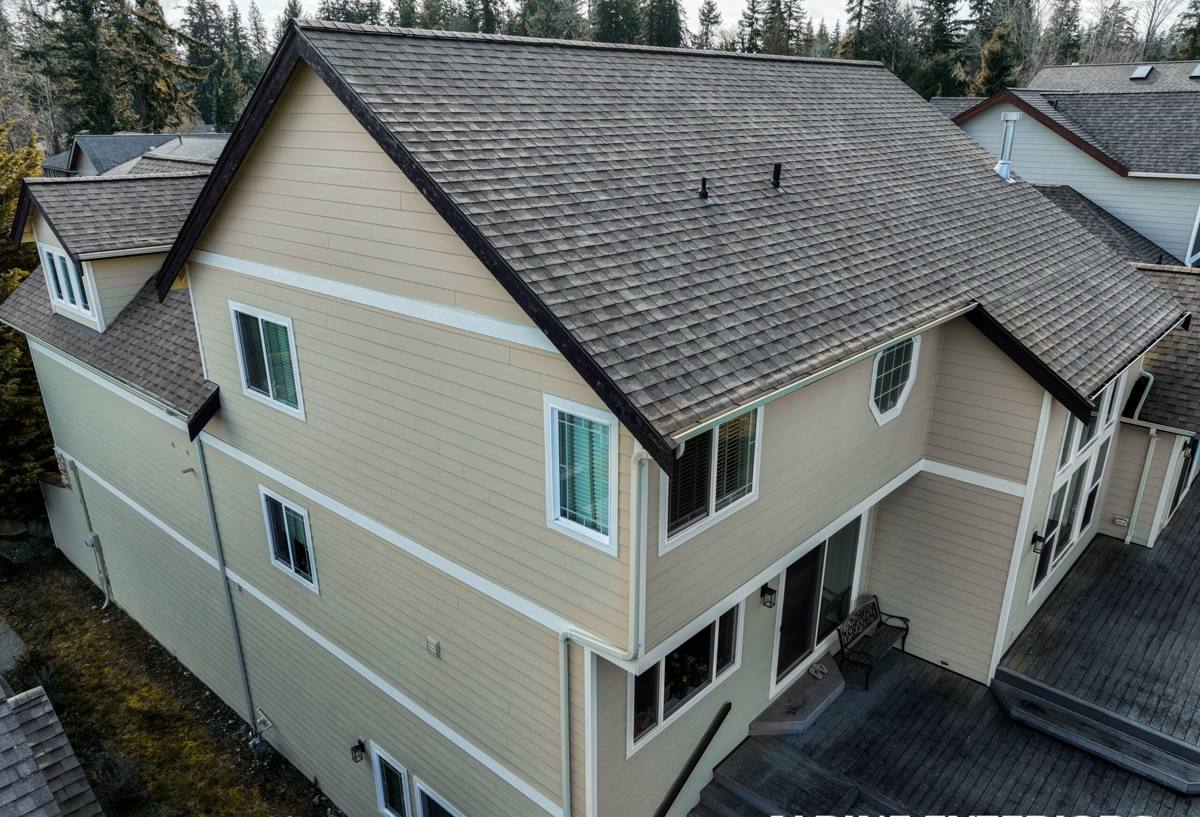
The Repair Calls We See Most Often in Pinellas Park
Storm and wind-driven damage
High wind events crack panels, pop fasteners loose, and peel corner boards away from the wall. Sometimes the damage is obvious — a cracked or missing section after a storm. Just as often it's subtle: a panel that's still in place but no longer sealed tight, quietly letting wind-driven rain behind it every time the weather turns.
Moisture intrusion and hidden rot
This is the repair call that worries us most, because by the time a homeowner notices it, the damage is usually already behind the siding. Soft spots, dark staining, a musty smell near an exterior wall, or paint that's bubbling — all of these point to moisture that's been getting in for a while, often through a failed seam, bad flashing, or a gap where trim meets siding.
Sun damage: fading, chalking, and warping
Florida sun doesn't just fade paint — it can break down the surface of lower-grade siding materials over time, causing warping, cupping, or a chalky residue that rubs off on your hand. Once a panel has warped, it usually can't be flattened back into place; it needs to come out.
Not All Siding Repairs Fairly the Same
What a repair actually requires depends heavily on what material is on the wall. This matters because a lot of siding repair calls in Pinellas Park involve homes with vinyl, older fiber cement, LP SmartSide, or even original wood siding — not just Hardie. Here's how repair reality differs by material:
| Siding Material | Common Failure Mode Here | Repair Difficulty | Long-Term Outlook |
|---|---|---|---|
| Vinyl | Cracking/brittleness from UV and heat cycling; wind uplift at loose panels | Moderate — matching older, sun-faded color is often impossible | Panels get more brittle with age; repairs multiply over time |
| Wood (original or cedar) | Rot, pest damage, paint failure from humidity and rain exposure | Labor-intensive — often requires carpentry, not just panel swaps | Ongoing maintenance burden; repair frequency tends to increase |
| LP SmartSide / OSB-based products | Edge swelling and delamination where moisture reaches the substrate | Can be tricky — swelling often means the damage extends past what's visible | Once moisture gets in, further failure nearby is common |
| Older fiber cement | Caulk failure at seams, coating wear, occasional impact cracking | Generally straightforward if matching material is available | Stable material; repairs usually hold well |
| James Hardie fiber cement (ColorPlus) | Rare — mostly impact damage; factory finish resists fading and moisture | Simple, clean panel replacement | Long-term reliable; repairs are the exception, not the routine |
We repair what's on the wall, regardless of brand. But we're honest with homeowners about what each material can and can't reasonably support long-term — that's part of giving a straight answer instead of just doing the work asked and moving on.
What a Correct Siding Repair Actually Involves
Diagnosis before demolition
A proper repair starts with figuring out why the siding failed, not just where. If a panel cracked because of an impact, that's a clean fix. If it cracked or warped because water was getting in behind it for months, replacing the visible panel without addressing the moisture path just resets the clock on the same failure.
Water management, not just patching
Siding is a system — panels, flashing, house wrap, seams, and trim all work together to keep water out. A repair that only replaces the damaged panel without checking the flashing and underlayment behind it is a cosmetic fix, not a real one. We check what's behind the siding whenever there's any sign moisture was involved.
Matching materials and finish
Nothing looks worse than a repair that stands out from the rest of the wall. With factory-finished products like Hardie ColorPlus, matching is straightforward because the color is baked in at the factory, not mixed on-site. With older or sun-faded materials, a perfect match isn't always possible, and we'll tell you that upfront rather than promise something we can't deliver.
Our Repair Process for Pinellas Park Homes
- Inspection: We look at the damaged area and the surrounding siding, plus anything visible behind it, to understand the full scope — not just the spot that prompted the call.
- Honest diagnosis: We tell you what caused the failure, whether it's isolated or likely to recur elsewhere on the house, and what your real options are.
- Straight pricing: You get a clear scope and cost before any work starts — no surprise add-ons once we're into the wall.
- The repair itself: Damaged material comes out, any underlying water management issue gets corrected, and new material goes in properly flashed and fastened to spec.
- Cleanup and check: We leave the area clean and walk the repair with you before we consider the job done.
Repair or Replace? An Honest Look
Not every damaged section needs a full re-side, and we're not going to tell you it does. A single storm-cracked panel, a popped fastener, or one section with failed caulking is a legitimate repair, and a good one should last. But there's a point where repair stops being the smart move:
- If you've had three or more separate repair calls on the same wall in a few years, the material itself may be the problem, not the workmanship.
- If moisture has reached the sheathing or framing in more than one spot, patch repairs are treating symptoms.
- If the siding is vinyl, wood, or LP nearing the end of its practical service life, sinking more money into repairs on a failing material rarely pays off.
- If fading and chalking are spread across the whole elevation rather than one section, no repair will make the house look uniform again.
In those cases, we'll say so plainly, and our recommendation for full replacement is James Hardie fiber cement siding. It's the only product we install as a company, for reasons that matter in a climate like this one: it's non-combustible, engineered for high-humidity, high-UV, storm-prone regions through Hardie's climate-specific HZ product lines, and finished with the factory-baked ColorPlus system so color doesn't chalk or fade the way field-applied paint does. It also carries a strong transferable warranty when installed to Hardie's specifications. We won't push a full replacement on a house that just needs a section repaired — but when the pattern points to a material at the end of its rope, we'd rather tell you that than keep billing you for patches.
Why a Crew That Already Works in Pinellas Park Matters
Wind exposure, flood zone designation, and local permitting requirements vary block to block in Pinellas County, and Pinellas Park has its own permitting process a contractor needs to know cold — not learn on your job. A crew that regularly works this area already understands the wind load expectations for this part of the county, knows what inspectors here are looking for, and has a realistic sense of how storm season timing affects scheduling. That familiarity shows up in small ways that matter: correct fastener patterns for the wind zone, flashing details that hold up to wind-driven rain rather than just looking finished, and a repair that's built to the same standard as a full installation, not a shortcut version of one.
After the Repair: Keeping Pinellas Park Siding in Shape
A good repair should buy you years, not months. A little routine attention afterward keeps it that way:
- Rinse salt residue and grime off the siding a few times a year, especially after dry spells followed by rain.
- Walk the exterior after any major storm and look for popped fasteners, gaps at seams, or loose trim before small issues become water intrusion.
- Keep caulking at trim and penetrations (vents, hose bibs, light fixtures) in good condition — this is one of the most common places for repeat leaks to start.
- Trim back vegetation and irrigation spray that keeps a section of wall damp longer than the rest of the house.
- If you notice soft spots, staining, or a musty smell near an exterior wall, get it looked at promptly rather than waiting — moisture problems rarely stay small.
If you're dealing with storm damage, a suspicious soft spot, or siding that's just showing its age in Pinellas Park, we're glad to take a look and give you a straight, no-pressure assessment of what it actually needs. Use the form below to request a free estimate.