 Seminole Siding
 Redington Shores is a narrow barrier island community tucked between the Intracoastal Waterway and the Gulf of Mexico, just west of Seminole in Pinellas County — and that location changes what a correct siding installation looks like compared to a job a few miles inland. Homes here take the full force of Gulf-front weather with almost nothing to slow it down: hurricane-force wind gusts with no tree line or rise in elevation to break them up, sun that reflects off open water as well as beating straight down, wind-driven rain pushed sideways into walls that were only ever designed to shed rain falling straight down, and salt air that settles on every exterior surface, day in and day out. Installing siding correctly on a Redington Shores home means building all of that into the plan from the first nail, not treating it as an afterthought once the panels are already up.
Why Redington Shores Needs a Different Approach to Siding Installation
Three things push siding work here past what a standard inland install requires. First, direct Gulf exposure means homes face fuller wind loads than comparable properties even a mile or two east in Seminole proper — there's less land mass, fewer buildings, and no meaningful windbreak between an open Gulf-facing wall and a storm system. Second, the housing stock is a mix of older beach cottages built decades ago to older or no wind standards, and newer or renovated homes built to current code — which means every project starts by figuring out what's actually behind the existing siding rather than assuming a like-for-like swap. Third, code: Pinellas County's wind-borne debris and fastening requirements get more demanding the closer a home sits to open water, so a siding installation here is a code compliance project as much as a cosmetic one.
None of that makes siding installation a risky undertaking in Redington Shores — it's routine work for a crew that already knows this stretch of coastline. But it does mean the job starts with an honest look at the specific home and its specific exposure, not a generic estimate.
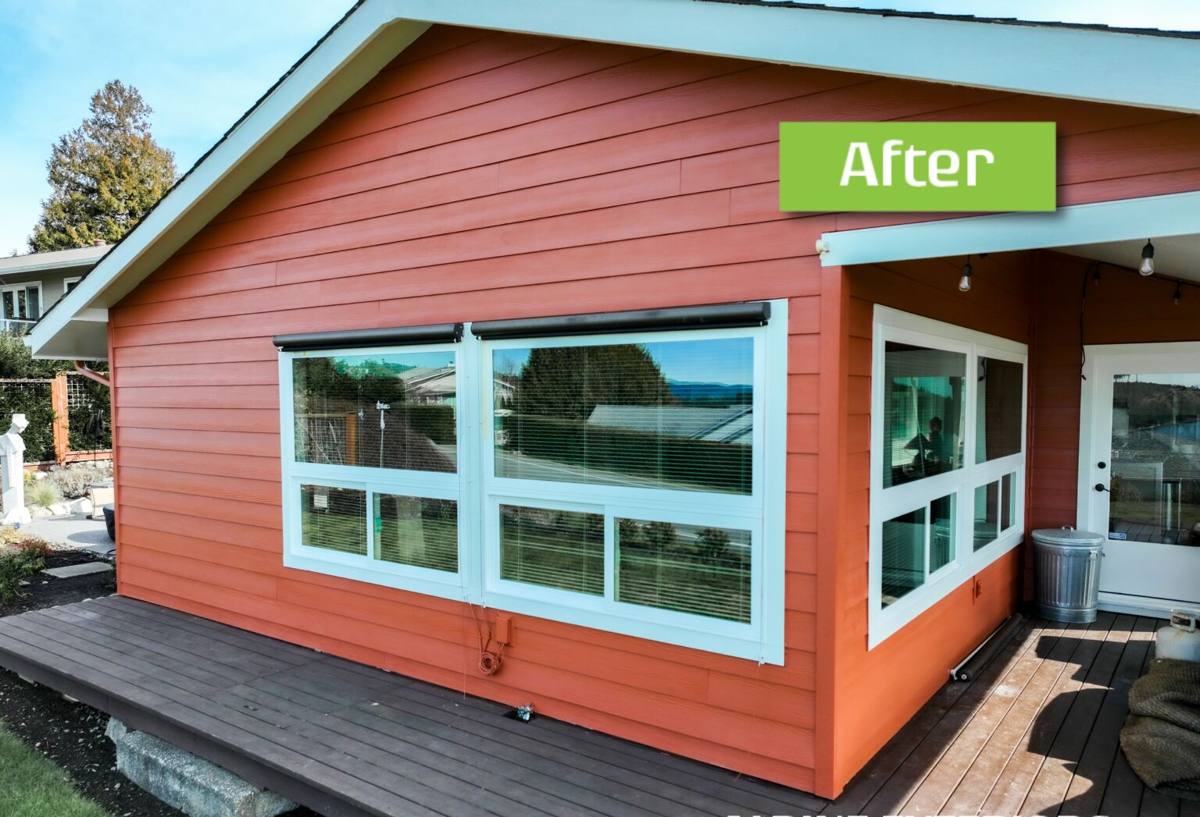
What the Local Climate Actually Does to Siding
Hurricane-Force Wind
Wind load on a Gulf-front wall isn't theoretical here — it's a defined part of the annual weather pattern. Every course of siding, every joint, and every fastener has to be installed to hold under sustained gusts, not just look right on a calm install day. A fastening schedule that would pass in a sheltered inland neighborhood can fall short on a wall with direct, unobstructed Gulf exposure.
Intense, Nearly Year-Round UV
Florida's sun angle and day length put more cumulative UV on exterior surfaces here than in most of the country, and on the water it's compounded by reflected glare off the Gulf. Lower-grade paints and field-applied coatings chalk, fade, and become brittle under that load years before a comparable product would show wear in a milder climate. A factory-applied finish engineered for UV resistance isn't a luxury upgrade on a Redington Shores home — it's the difference between siding that still looks right in year ten and siding that needs repainting by year four or five.
Wind-Driven Rain
Straight-down rain is easy for almost any properly lapped material to shed. Rain driven sideways by a real Gulf wind event is a different problem entirely — it finds butt joints, fastener penetrations, and trim intersections that a calm rain would never test. This is where a marginal flashing detail or an aging caulk line turns into an active leak, and it's why the water-resistive barrier and flashing sequence behind the siding matter as much as the siding itself.
Salt Air
Being this close to the Gulf and the Intracoastal means airborne salt is a constant, not an occasional event. It accelerates corrosion in exposed fasteners, trim, and any hardware that isn't specifically rated for it — a slow process that never really stops working on a house this close to salt water. Fastener choice and finish quality matter more here than they do a few miles inland, where the same corrosion process runs at a fraction of the speed.
Where Siding Problems Actually Start
It's rarely the field of the siding panel that fails first on a home like this. It's the transition points — a butt joint that wasn't sealed tight enough for wind-driven rain, a fastener that started corroding and lost its grip, a J-channel or trim detail that trapped moisture instead of shedding it, a bottom course installed too close to grade or a deck. Those are the spots that decide whether a siding job holds up through hurricane season after hurricane season, or starts showing problems within a couple of years.
Why We Install Only James Hardie Fiber Cement
We get asked why we don't offer vinyl, LP SmartSide, or other fiber cement brands like Cemplank or Allura, and the honest answer is that we standardized on one product because of exactly the conditions described above. Vinyl hangs on the wall with expansion room built in, which works fine in mild weather but leaves it more vulnerable to being torn loose in sustained hurricane-force gusts than a rigid, mechanically fastened product. Engineered wood siding has real strengths, but it's still a wood-fiber product at its core — in a climate that rarely lets surfaces fully dry between rain events, any compromise in the factory edge seal creates a point where the wood core can wick moisture and swell. And not every fiber cement brand is engineered the same way; we chose James Hardie specifically for its HZ5 and HZ10 product lines built for high-humidity, high-moisture climates, its factory-applied ColorPlus finish that resists the fading and chalking Gulf-front UV causes in field-painted siding, and the depth of its installation documentation and warranty backing. It's also non-combustible, which matters to a lot of homeowners regardless of climate.
Comparing Siding Options for a Gulf-Front Redington Shores Home
| Factor | Vinyl | Engineered Wood | James Hardie Fiber Cement |
|---|---|---|---|
| Sustained hurricane-force wind | Can be pulled loose in high sustained gusts | Holds when properly fastened and sealed | Rigid, mechanically fastened, engineered for wind zones |
| Direct sun and reflected Gulf glare | Can fade and become brittle over years | Factory finish quality varies by product | ColorPlus finish resists fading and chalking |
| Wind-driven rain at joints and seams | Seams and J-channels can collect water | Vulnerable if edge seal is compromised | Non-organic core, doesn't swell if joint is sealed correctly |
| Salt air and fastener corrosion | Panel is stable, fasteners can still corrode | Panel is stable, fasteners can still corrode | Panel is stable; correct fastener spec matters most |
| Combustibility | Can soften or deform in extreme heat | Combustible (wood-based) | Non-combustible |
What a Correct Siding Installation Involves Here
Tear-Off and Substrate Check
We remove the existing siding and inspect the sheathing underneath before anything new goes up. On older Redington Shores beach cottages, this is often the step that turns up soft or water-damaged sheathing behind siding that looked fine from the outside — we address that as part of the plan, not as a surprise change order once the wall is already open.
Water-Resistive Barrier and Flashing
This is the layer that matters most on direct Gulf exposure. A properly lapped water-resistive barrier and correctly sequenced flashing at every window, door, and penetration is what actually keeps wind-driven rain out when the siding itself gets tested by a real storm. We build this sequence around the specific wall and exposure, not a generic template.
Fastening and Wind Zone Compliance
Fastener type, spacing, and embedment are set by the wind zone the home sits in, and a Gulf-front wall in Redington Shores typically calls for a tighter fastening schedule than a comparable wall further inland. We install to the manufacturer's published specification for the applicable wind zone, not a generic minimum.
Joint Treatment and Trim
Butt joints, corner boards, and trim details are where wind-driven rain finds its way in if they're rushed. Every joint gets sealed and detailed to the manufacturer's specification, and trim is finished to hold up under the same UV and salt exposure as the field of the siding.
Quick Checklist Before You Hire
- Confirm the crew inspects the sheathing during tear-off, not just over the old siding
- Ask what fastening schedule they're using and whether it accounts for direct Gulf exposure
- Get the flashing plan explained for windows, doors, and any wall penetrations
- Confirm the siding and finish are rated for sustained UV and salt air, not a generic coastal claim
- Ask whether they pull their own permits and know Pinellas County's wind zone requirements
- Get a written scope that separates material warranty from installation labor warranty
Our Process, Start to Finish
- On-site assessment — we walk the exterior, evaluate the home's specific wind exposure, and check for visible signs of moisture behind the current siding
- Honest scope and recommendation — which James Hardie product line fits the home, what wind zone fastening applies, and what (if anything) needs repair before new siding goes on
- Tear-off and substrate repair — old siding comes off, sheathing is inspected, and any rot or damage is repaired before moving forward
- Water-resistive barrier and flashing — installed and sequenced correctly at every penetration, window, and door
- Siding installation — James Hardie panels, planks, or shingles installed to manufacturer spec and the applicable wind zone fastening schedule
- Trim, joints, and final walkthrough — corner boards and trim finished to match, joints sealed, and a final walkthrough covering care and maintenance
Cost Factors for Siding Installation in Redington Shores
| Factor | What Changes the Price |
|---|---|
| Wind zone and exposure | Direct Gulf-facing walls typically need a tighter fastening schedule than sheltered elevations, which affects labor and hardware |
| Sheathing condition | Rot or water damage found during tear-off on older cottages adds repair work before new siding goes up |
| Home size and stories | More wall area and multi-story access both add labor time |
| Trim and detail complexity | Corner details, multiple roof lines, and dormers all add joints and flashing work |
| Product line and profile | Different James Hardie plank, panel, and shingle profiles carry different material costs |
Signs a Redington Shores Home Needs Siding Attention
- Paint that's chalking or fading unevenly, especially on Gulf-facing walls
- Soft or spongy spots when pressing on siding near windows, doors, or bottom courses
- Visible gaps, warping, or buckling after a storm event
- Rust streaks or corrosion around fasteners and trim
- Musty odors or staining on interior walls that back up to exterior siding
- Siding installed more than 20-25 years ago with no documented replacement
None of these signs mean full replacement is urgent, but on a barrier island home they're worth a professional look before the next storm season rather than after water has already reached the sheathing and framing.
Why Hiring a Crew That Already Works Redington Shores Matters
Manufacturer installation instructions are written for average conditions, and a Gulf-front barrier island rarely qualifies as average. A crew that hasn't worked this stretch of coastline regularly can get the fastening schedule right on paper and still miss the details that actually keep water out — how much a joint needs to overlap on a wall with no windbreak, which fastener spec actually holds under real Gulf-front gusts versus a code minimum, when a sealant joint needs extra attention because of constant UV and salt cycling. Those are judgment calls made on the job, not decisions a spec sheet makes for you.
We work Redington Shores and the surrounding Seminole area regularly, so we're not guessing at how a particular elevation or wall type tends to hold up here over time. That shows up in the small decisions that determine whether siding is still performing after several hurricane seasons or starting to show problems within a couple of years.
If you're planning a re-siding project on a Redington Shores home, dealing with an older beach cottage that's due for an honest look, or just want to know where your current siding actually stands before the next storm season, we're happy to come take a look. We offer free, no-pressure estimates for siding installation in Redington Shores — use the form below to get a time on the schedule.