 Seminole Siding
 Redington Sits Right on the Line Between Beautiful and Brutal
The Redington communities — tucked along the Gulf beaches just west of Seminole in Pinellas County — offer some of the most desirable coastal living in the Tampa Bay area. That same location is also one of the hardest environments in the state for exterior building materials to survive. Homes here take a direct hit from salt-laden air, near-constant UV exposure, wind-driven rain, and the real possibility of hurricane-force wind loads in any given storm season. Siding that works fine forty minutes inland can fail years early a few blocks from the water.
We install siding across Seminole and the surrounding beach communities, and Redington properties get a different level of scrutiny from us — not because the installation steps change, but because the margin for error shrinks. A gap in flashing, a fastener pattern that's a little loose, a caulk joint that skips a seam — inland, those might just be sloppy. On a barrier island exposed to salt spray and sustained wind, they're the difference between siding that lasts decades and siding that starts failing in five years.
What Coastal Exposure Actually Does to Siding
Salt Air and Corrosion
Airborne salt doesn't just sit on the surface — it works into fasteners, trim seams, and any exposed edge of a panel. Over time it accelerates corrosion in the wrong hardware and breaks down finishes that weren't engineered to resist it. This is why fastener choice and trim detailing matter more here than almost anywhere else in the county.
UV and Fade
Florida sun is intense everywhere, but reflected glare off open water and sand adds to the UV load on a home's exterior. Paint-grade siding and some engineered wood products chalk, fade, or need repainting on a compressed timeline in this kind of exposure.
Wind-Driven Rain and Moisture Intrusion
Storms here don't just drop rain — they drive it sideways under eaves, into seams, and behind poorly lapped panels. Once moisture gets behind siding and can't dry out, rot, mold, and sheathing damage follow, often invisibly, until the damage is significant.
Hurricane Wind Loads
Redington's exposure means siding has to hold up under sustained high wind and wind-borne debris, not just look good on a calm day. Fastening schedule, panel engagement, and trim attachment all have to be installed to spec — not "close enough" — to perform when a real storm arrives.
Why We Install Only James Hardie Fiber Cement Here
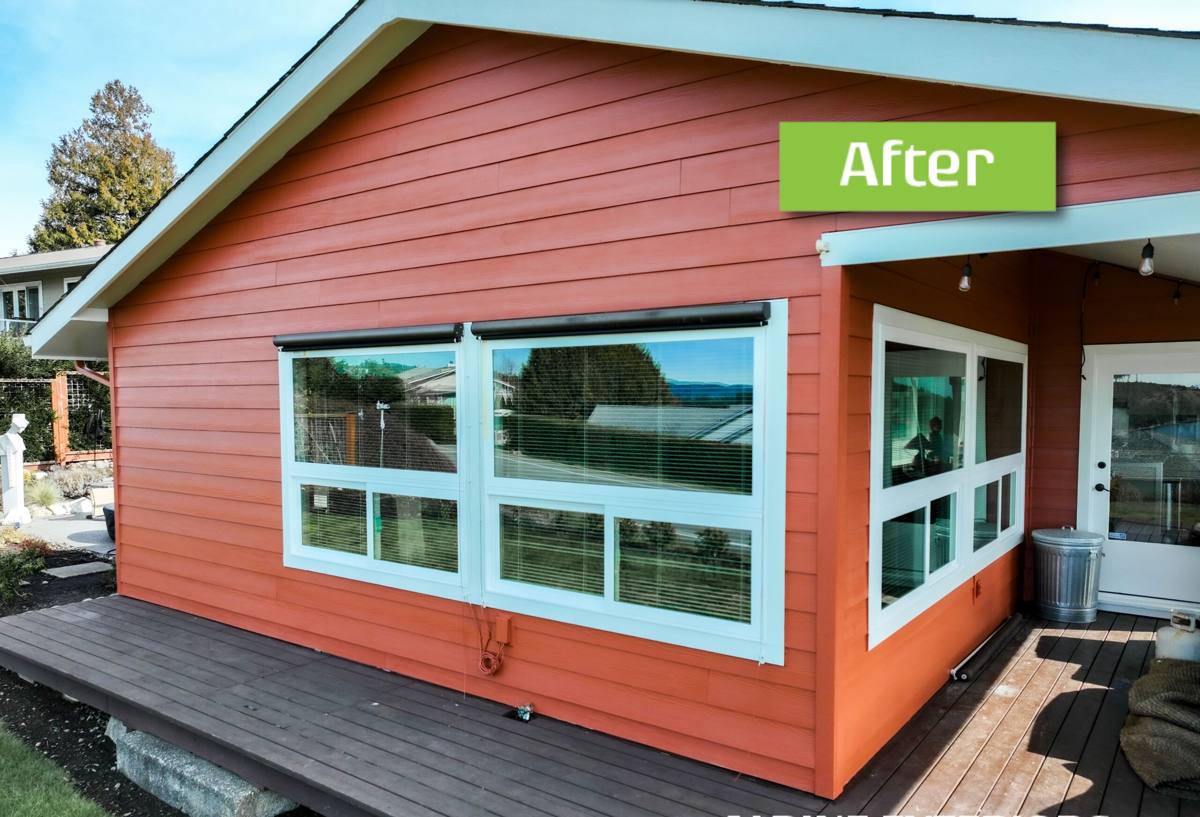
We made the decision to install James Hardie fiber cement exclusively, and nowhere does that decision matter more than in a location like Redington. Hardie's fiber cement is non-combustible, dimensionally stable in humidity swings, and manufactured with a factory-applied ColorPlus finish that's built to hold color under sustained UV exposure far better than field-applied paint. Hardie also engineers products specifically for high-humidity, storm-prone climates — their HZ5 formulation is designed for exactly the moisture and weather cycling that Gulf Coast homes experience year-round.
That's a meaningfully different starting point than vinyl, which can deform in sustained heat and isn't rated for the wind exposure a beachfront property needs, or engineered wood products like LP SmartSide, which rely on a wood-strand core and factory sealant to keep moisture out — a system that's less forgiving of the humidity and salt exposure this area sees. Fiber cement doesn't rot, doesn't feed pests, and doesn't have a wood core for moisture to compromise. For a home a short distance from open Gulf water, that's not a minor spec difference — it's the whole reason to choose it.
What a Correct Installation Involves
Fiber cement siding is only as good as its installation. The product can be rated for coastal wind exposure and still fail early if it's hung wrong. Every Redington-area installation we do follows the same non-negotiable details:
| Installation Detail | Correct Approach | Risk If Done Wrong |
|---|---|---|
| Ground and roofline clearance | Minimum clearance maintained per Hardie spec to keep panels away from standing moisture and splash-back | Wicking moisture at the bottom edge, early rot at the sheathing line |
| Flashing and weather barrier | Properly lapped house wrap and flashing at every penetration, window, and door before siding goes on | Wind-driven rain gets behind the cladding with no way to drain or dry |
| Fastening pattern | Corrosion-resistant fasteners placed per Hardie's wind-zone fastening schedule | Panels loosen or pull free under sustained coastal wind loads |
| Panel gaps and caulking | Manufacturer-specified gaps at butt joints, sealed with a coastal-rated sealant | Cracked joints that let moisture in and telegraph through the finish |
| Trim and corner details | Factory trim installed with matching attention to flashing and sealant | Corners and edges become the first failure point in wind and rain |
None of this is exotic — it's the manufacturer's own installation standard. The problem is that it takes more time and more attention to detail than a rushed install, which is exactly why so many siding problems on coastal homes trace back to installation shortcuts rather than the product itself.
Our Process for a Redington Installation
1. On-Site Assessment
We walk the home, check the condition of the existing substrate, and look for signs of moisture damage, prior repairs, or areas where wind and salt exposure have already taken a toll. This is also when we talk through product line, color, and any trim or accent details.
2. Prep and Substrate Check
Old siding comes off, sheathing gets inspected and repaired if needed, and a proper weather-resistive barrier goes on before anything else. Skipping this step is one of the most common ways coastal installations fail early — you can't fix a bad substrate by covering it with good siding.
3. Installation to Spec
Panels, trim, and fasteners go on following Hardie's published installation guide for the applicable wind zone, not a generalized inland approach. Seams, penetrations, and transitions get flashed and sealed as we go, not patched afterward.
4. Final Walkthrough
We inspect the completed job with the homeowner, checking fastening, caulk lines, and trim details before calling it finished. Any punch-list items get addressed before we consider the job done.
Why a Crew That Already Works This Area Matters
Redington isn't a generic Pinellas County address — it's a barrier island environment with its own wind exposure, humidity cycling, and permitting considerations tied to coastal construction. A crew that regularly works Seminole and the surrounding beach communities already knows the fastening schedules and detailing that this exposure requires, rather than treating it like any other job on the schedule. That familiarity shows up in the small decisions — how tight to run a caulk joint, where to add extra flashing attention, which trim details tend to take the most weather over time — that don't show up on a spec sheet but matter enormously to how the siding performs five or ten years down the road.
It also matters for permitting and inspection. Coastal-adjacent construction in Pinellas County often carries specific wind-load and code requirements, and a crew that's pulled permits and passed inspections in this exact area isn't guessing at what's expected.
Maintenance After Installation
Correctly installed Hardie siding is low-maintenance, but "low" isn't "none," especially this close to the Gulf. A periodic rinse to clear accumulated salt film, an annual look at caulk joints and trim seams, and prompt attention to any impact damage from storm debris will keep a coastal installation performing the way it's designed to. Avoid high-pressure washing directly at seams and penetrations — it can force water past details that are otherwise sound.
Signs It's Time to Talk to a Contractor
- Visible warping, soft spots, or delamination on current siding
- Paint that's chalking, peeling, or fading unevenly within just a few years
- Cracked or missing caulk at seams, corners, and trim
- Staining or discoloration near the base of walls or under windows
- Siding that flexes or feels loose when pressed by hand
- Any storm damage that hasn't been fully assessed by a professional
What to Ask Before Hiring
- Do you install to the manufacturer's wind-zone fastening schedule, or a generic standard?
- Who handles flashing and moisture barrier work before siding goes on?
- Can you walk me through your process for penetrations, corners, and trim?
- Do you pull the required local permits, or expect the homeowner to?
- What's covered under warranty, and is it transferable if I sell the home?
If you're weighing a siding project for a home in or near Redington, we're happy to take a look and walk you through what correct installation looks like for this specific location. Reach out for a free, no-pressure estimate using the form below — there's no obligation, just a straight answer about what your home needs.