 Seminole Siding
 Why Ridgecrest Decks Wear Out Faster Than People Expect
If you own a home in Ridgecrest, you already know your deck doesn't age the way it would inland or up north. Seminole sits close enough to the Gulf that salt-laden air is a constant presence, and Pinellas County's combination of intense year-round UV, wind-driven rain, and hurricane-season gusts puts real, cumulative stress on any outdoor structure. A deck that looks fine from a distance can be quietly failing underneath, and by the time the problem shows on the surface, it's often further along than homeowners realize.
Salt Air and Metal Corrosion
Salt air doesn't just dull finishes — it accelerates corrosion in fasteners, joist hangers, and structural connectors. Once those components start rusting, they lose holding strength long before the wood or decking above them shows any obvious damage. This is one of the most common failure points we find on older Ridgecrest decks: the boards look fine, but the hardware underneath is compromised.
UV Exposure and Wind-Driven Rain
Florida sun is relentless on exposed decking, drying out wood fibers, breaking down sealers, and fading composite surfaces faster than manufacturers' national averages suggest. Add in wind-driven rain that gets pushed sideways and up under railings and ledger boards during storms, and you get moisture intrusion in places a deck was never designed to shed water from. Over years, that combination is what turns a repairable deck into one that needs full replacement.
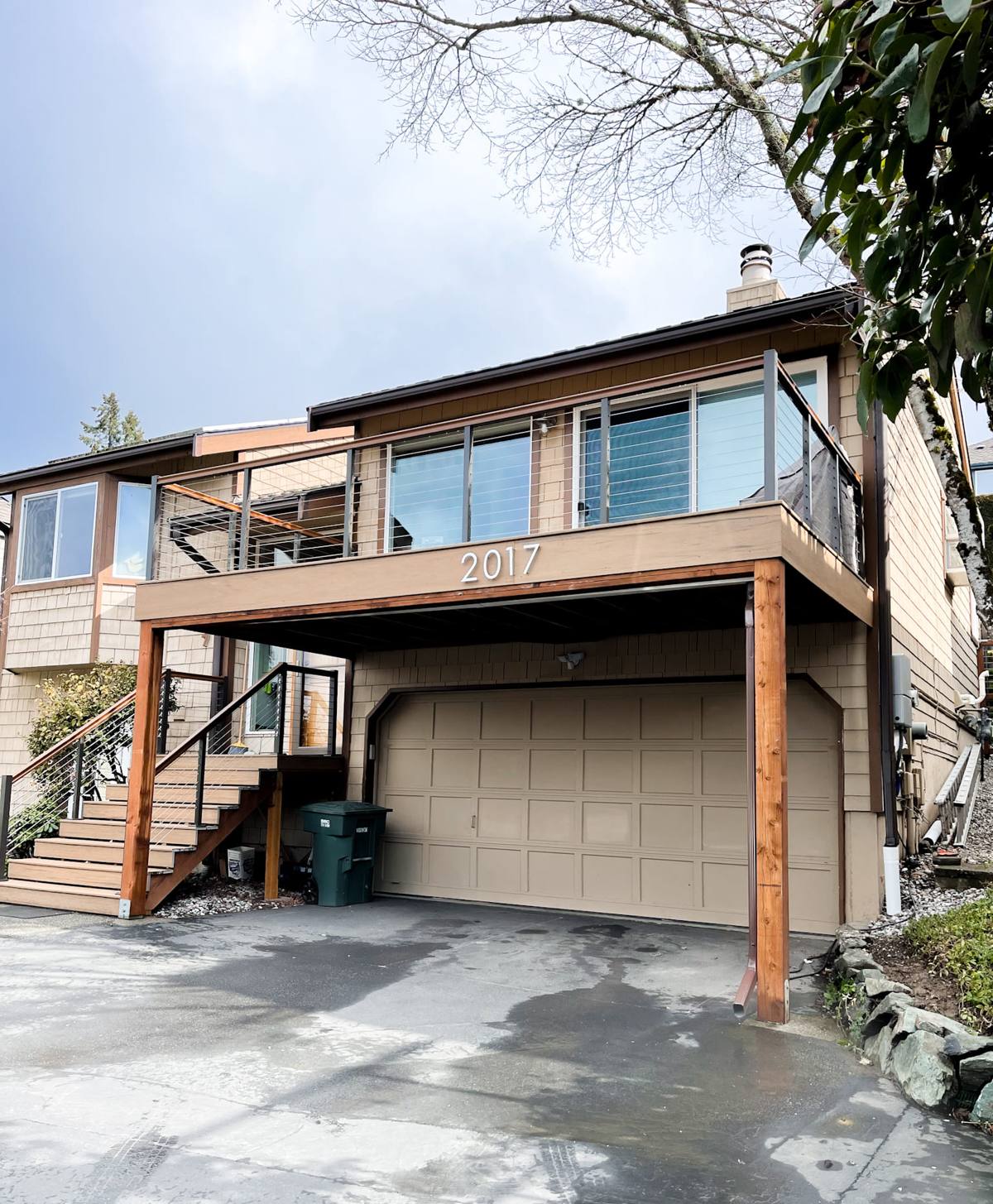
Signs Your Deck Has Reached the End of the Line
Not every issue means a full replacement, but certain signs tell us the structure itself — not just the surface — has been compromised. If you're seeing more than one or two of these, it's worth having someone look at the framing, not just the boards.
- Soft, spongy, or bouncy spots when you walk across the deck
- Visible rot or discoloration where boards meet the house (ledger board area)
- Rust streaking around fasteners, joist hangers, or post bases
- Railings or posts that wobble or have noticeable play
- Gaps opening up between boards that weren't there a year or two ago
- A musty smell coming from underneath the deck
- Stairs that feel less solid than they used to
- Visible daylight gaps at the ledger board where it meets the house
Repair or Replace? Making the Right Call
Homeowners often ask us to "just fix the bad boards," and sometimes that's genuinely the right answer — a handful of damaged boards on an otherwise sound structure doesn't need a teardown. But if the framing, ledger connection, or footings are compromised, replacing boards on top of a failing structure is a short-term patch that hides the real problem. Our job is to tell you honestly which situation you're in, even when that means recommending less work than you expected, not more. On decks built more than 12-15 years ago in this climate, we generally find the structural components have absorbed enough salt exposure and moisture cycling that a full replacement is the more honest long-term recommendation.
Choosing Decking Material for Seminole's Climate
Material choice matters more here than in drier, cooler regions, because UV intensity and humidity swings punish some products faster than others. There's no single "best" material for every homeowner — it depends on your budget, how much upkeep you want to do, and how long you plan to stay in the home.
| Material | How It Handles This Climate | Maintenance | Typical Lifespan Here |
|---|---|---|---|
| Pressure-treated wood | Affordable, but prone to cupping, splitting, and fastener corrosion under UV and humidity cycling | Annual sealing/staining recommended | 10-15 years with upkeep |
| Capped composite | Resists moisture and fading better than wood; cap layer protects the core from salt and sun | Occasional washing, no sealing | 20-25+ years |
| PVC (cellular) | Fully synthetic, essentially immune to rot and salt-driven corrosion of the board itself | Low; occasional cleaning | 25-30+ years |
| Tropical hardwoods | Naturally dense and rot-resistant, but requires disciplined oiling to prevent graying and checking | Regular oiling/maintenance | 15-25 years with strict upkeep |
Whatever surface material you choose, we always point out that the framing underneath deserves at least as much attention as the decking on top. A beautiful composite surface over corroded hardware or undersized joists is still a deck with a shortened lifespan.
What a Correct Deck Replacement Actually Involves
A deck replacement done right in this climate isn't just pulling up old boards and screwing down new ones. It's an opportunity to correct the structural weak points that caused the original deck to fail in the first place.
Footings and Structural Frame
We evaluate footing depth and condition, post spacing, and joist sizing against current load requirements — older decks in this area were often built to lighter standards than current code calls for. Undersized or corroded framing gets replaced, not reused, even if it adds a step most "board swap" jobs skip.
Ledger Board and Flashing
The ledger board — where the deck attaches to your house — is the single most common source of hidden water damage on Florida decks. Wind-driven rain finds its way behind poorly flashed ledger connections and rots both the ledger and the rim joist behind it, sometimes for years before it's visible. Correct flashing detail here isn't optional; it's the difference between a deck that lasts and one that fails from the inside out.
Fasteners and Hardware
Given how aggressively salt air corrodes standard hardware, we use fasteners, joist hangers, and structural connectors rated for coastal exposure rather than the generic hardware sometimes used on lower-bid jobs. It costs more upfront and makes no visible difference on installation day — but it's the part of the job that determines whether you're back to us in eight years or twenty-five.
Our Deck Replacement Process
We keep the process straightforward and communicate clearly at each stage, since a deck replacement disrupts your yard and outdoor living space for a stretch of time.
- On-site assessment: We inspect the existing structure from the framing up, checking footings, ledger condition, hardware, and code compliance, and explain honestly what we find.
- Material and design discussion: We walk through decking material options, railing styles, and layout considerations based on your budget and how you use the space.
- Permitting: We handle the permit application and coordinate required inspections with Pinellas County or the applicable local jurisdiction.
- Demolition: Complete removal of the old deck surface and any compromised framing, with debris hauled off promptly.
- Structural rebuild: Footings, framing, ledger flashing, and hardware installed to current code and coastal-durability standards.
- Decking and railing installation: Boards, railings, stairs, and any built-in features installed to manufacturer spec.
- Final walkthrough and inspection sign-off: We review the finished deck with you and confirm final inspection is complete.
Permitting and Wind Ratings in Pinellas County
Deck replacement in Seminole and throughout Pinellas County requires a building permit in nearly all cases, along with inspections tied to Florida's building code, which accounts for high-wind exposure this close to the Gulf. Skipping permitting is a real risk — beyond the legal exposure, an unpermitted deck can complicate a future home sale and, more importantly, means no third-party check confirmed the structure was actually built to withstand hurricane-force wind loads. We pull permits as a standard part of every replacement, not an upsell.
Cost Factors to Understand Before You Budget
Deck replacement costs vary widely based on size, material, and structural condition, so we won't quote a number without seeing the site — but understanding what drives the price helps you plan.
| Factor | Why It Affects Cost |
|---|---|
| Deck size and shape | Square footage and complex angles or multiple levels increase material and labor |
| Decking material | Pressure-treated wood costs less upfront than composite or PVC, which cost more but last longer here |
| Framing condition | Rotted or corroded footings, posts, and joists add rebuild scope beyond a simple surface swap |
| Height and stairs | Elevated decks and multi-flight stairs require more structural framing and railing |
| Railing style | Cable, glass, or composite railing systems cost more than standard wood or aluminum |
| Permitting scope | Larger or higher decks may require engineering review, adding time and fees |
Maintaining Your New Deck Long-Term
Even the most durable materials benefit from basic upkeep in this climate. A little routine attention goes a long way toward getting the full lifespan out of your investment.
- Rinse off salt residue and debris every few weeks, more often near open water
- Inspect fasteners and hardware annually for early signs of rust
- Keep gutters and downspouts clear so runoff doesn't pool near the ledger board
- Reseal wood decking on the manufacturer's recommended schedule, not just when it looks faded
- Check railings and stair connections for looseness after major storms
- Trim back vegetation that traps moisture against the deck's underside
Why a Crew That Already Works in Ridgecrest Matters
Deck replacement isn't a one-size-fits-all job, and a crew that primarily works inland climates may not build the same way we do for a home exposed to Seminole's salt air and storm patterns. Knowing which fastener grades hold up, how ledger flashing needs to be detailed for wind-driven rain, and how local permitting offices in Pinellas County expect submittals to be prepared all comes from doing this work here, repeatedly — not from a generic national playbook. That local familiarity shows up in fewer surprises during inspection and a deck that's actually built for the conditions it has to survive.
If your Ridgecrest deck is showing its age or you're just not sure whether it needs repair or full replacement, we're happy to take a look and give you an honest assessment. Reach out for a free, no-pressure estimate using the form below.