 Seminole Siding
 Siding Repair Is a Different Job in St. Petersburg
Homes in St. Petersburg deal with a harder set of conditions than siding in most of the country ever sees. You're close enough to the water to get salt air working on fasteners and finishes, you get some of the most intense year-round UV in the continental United States, and you sit in a corridor that takes wind-driven rain and hurricane-force gusts seriously every storm season. Siding repair here isn't just cosmetic patchwork — it's about restoring a weather barrier that has a genuinely tough job to do, on a house that's going to keep facing the same conditions again next year.
We work throughout the Seminole and St. Petersburg area, and the repair calls we get tend to share a pattern: damage that looks minor from the ground but points to a bigger moisture or wind problem underneath. Understanding that pattern is the difference between a repair that lasts and one that's back on your to-do list in two years.
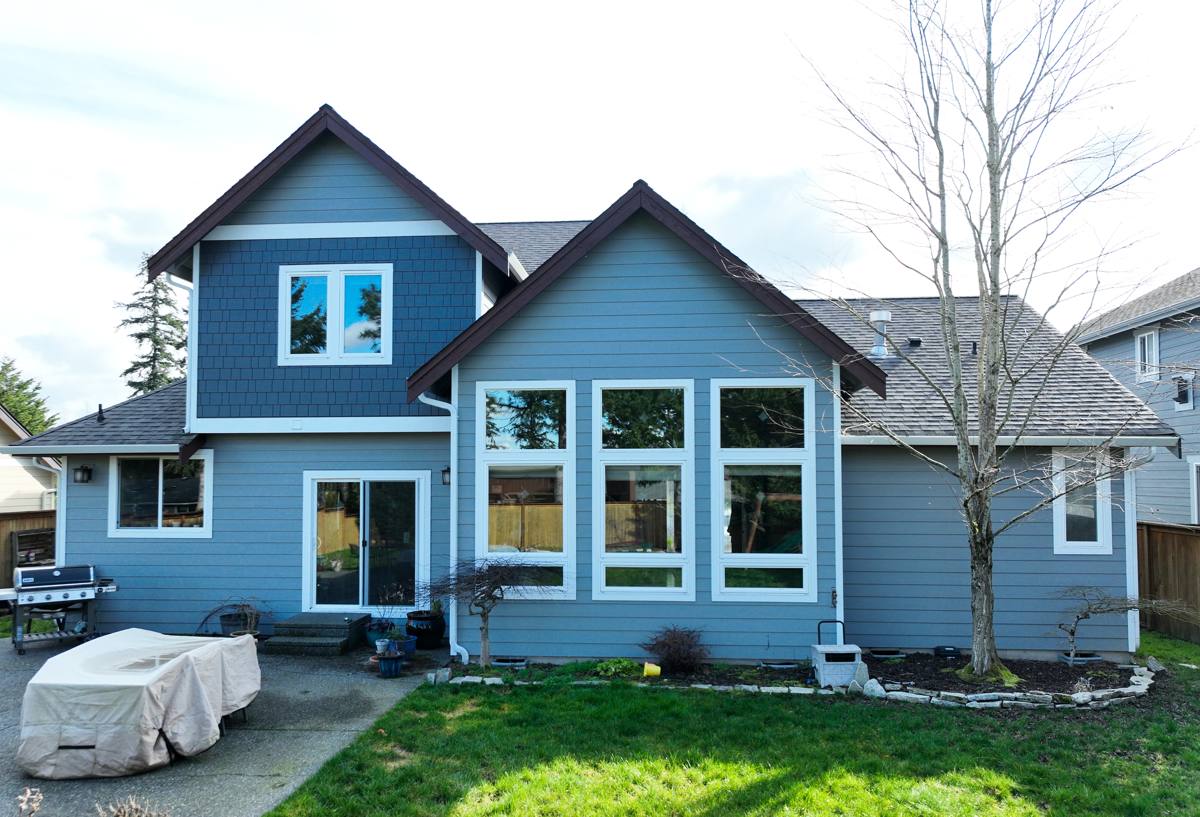
What's Actually Attacking Your Siding
Wind and Wind-Driven Rain
Pinellas County doesn't just get rain — it gets rain pushed sideways by wind, which finds every gap, loose panel, and unsealed seam on a house. During tropical systems and seasonal storms, that wind-driven rain gets forced up and under siding edges instead of running down and off like it would in calm weather. If the water-resistive barrier or flashing behind the siding isn't intact, that moisture doesn't stop at the surface — it gets into the wall assembly.
UV Exposure
Florida sun is relentless on exterior materials. Constant UV breaks down caulk, dries out and cracks lesser sidings, and fades paint finishes faster than almost anywhere else in the country. A siding repair that doesn't account for UV — using the wrong caulk, skipping a factory-matched finish — will look fine for a season and then fail early.
Salt Air
Even set back from the immediate coastline, St. Petersburg homes are close enough to Tampa Bay and the Gulf to catch airborne salt. Salt accelerates corrosion on fasteners, trim, and any exposed metal flashing, and it can quietly undermine a repair that looks solid on day one.
Wind-Borne Debris
Storm winds don't just push rain — they throw branches, palm fronds, and loose yard debris into siding at speed. Impact damage tends to show up as cracked panels, dented or dislodged sections, and popped fasteners, usually concentrated on the windward side of the house.
Signs Your Siding Needs Repair
Most siding problems in this climate start small and stay hidden for a while. Here's what we tell St. Petersburg homeowners to watch for:
- Cracked, warped, or buckled panels, especially after a storm
- Soft or spongy spots when you press on the siding near the bottom of the wall
- Staining, streaking, or a musty smell along interior walls that back up to exterior siding
- Caulk that's cracked, shrunk, or pulled away from joints and trim
- Fasteners that are rusted, backed out, or leaving rust streaks down the siding
- Paint or finish that's peeling, chalking heavily, or fading unevenly
- Gaps or separation at corners, window trim, or where siding meets the roofline
- Visible pest activity or soft wood trim near siding joints
Any one of these on its own might be minor. Several together, or damage that's spreading, usually means water has already gotten past the surface.
Repair or Replace? How We Actually Decide
Not every damaged section needs a full re-side, and we're not going to tell you it does. But there's a real point where patching stops making sense and starts costing more than it saves. Here's how we weigh it:
| Factor | Repair Usually Makes Sense | Replacement Usually Makes Sense |
|---|---|---|
| Extent of damage | Isolated to one or two sections | Spread across multiple walls or elevations |
| Moisture intrusion | Surface-level, caught early | Sheathing or framing already affected |
| Age and material | Newer siding, sound material underneath | Older siding at or past its service life |
| Underlying cause | One-time impact (storm debris, accident) | Ongoing water management or installation failure |
| Cosmetic match | Replacement panels can match closely | Faded/discontinued material won't blend |
We'll always tell you honestly which side of that line your house is on. If a repair genuinely solves the problem, that's what we'll recommend — a bigger job isn't automatically the better answer for you.
What a Correct Repair Actually Involves
A Real Inspection, Not a Patch Job
The first step is figuring out why the damage happened, not just covering it up. That means checking behind the visible siding for moisture, deteriorated sheathing, failed flashing, or gaps in the water-resistive barrier. Repairing the surface over a hidden moisture problem just hides it for a while — it doesn't fix it.
Matching the Material and Finish
Siding that's been on a St. Petersburg roofline for a few years has already weathered under intense sun. Replacement sections need to match not just the product but the finish and color as closely as possible, so the repair doesn't stand out as an obvious patch.
Restoring the Water Management, Not Just the Panel
Proper flashing, house wrap or water-resistive barrier continuity, and correctly lapped joints matter more than the panel itself. A siding repair that puts a new panel over a broken drainage plane will fail again — often faster than the original damage took to develop.
Fastening and Sealing to Spec
In a wind and salt environment, fastener choice and placement aren't a detail to skip. Correct nailing patterns, corrosion-resistant fasteners, and manufacturer-approved sealants at joints and penetrations are what keep a repair holding through the next storm season, not just the next dry spell.
Why We Only Repair and Install James Hardie Fiber Cement
We standardized on James Hardie fiber cement siding for every job we do, and that includes repair work. It's a decision that comes directly from what holds up in this climate. Fiber cement doesn't absorb and swell with humidity the way wood-based products can, it's non-combustible, and Hardie's ColorPlus factory finish is engineered to resist the UV fading that's such a problem in Florida. Hardie's HZ5 product line is specifically engineered for hot, humid climates like ours, which matters when a repair needs to hold up to the same conditions that caused the original damage.
When we repair an existing Hardie installation, we can match panel profile, texture, and factory finish precisely, because it's a defined product system rather than a variable material. That's a real advantage over patching wood, vinyl, or other fiber cement products where color batches, profiles, and finish quality vary and rarely blend cleanly with what's already on the wall.
Our Repair Process
- Inspection and diagnosis — we assess the visible damage and check behind it for moisture or structural concerns
- Honest recommendation — repair or replace, explained in plain terms, with the reasoning behind it
- Material matching — sourcing Hardie panels, trim, and finish that blend with your existing siding
- Removal and prep — pulling damaged sections without disturbing sound siding around them
- Water management repair — restoring flashing and barrier continuity before any new panel goes on
- Installation to spec — correct fastening, sealing, and finish work
- Final walkthrough — confirming the repair looks right and holds up to inspection
Why Local Experience in St. Petersburg Matters
A crew that works St. Petersburg and the surrounding Pinellas County area regularly sees the same failure patterns often enough to recognize them fast — where wind-driven rain tends to get in, which elevations take the worst sun exposure, how salt air affects fasteners and trim over time. That familiarity shortens the diagnostic part of the job and helps us catch problems a crew unfamiliar with this climate might miss on the first pass. It also means we're not guessing at how a repair will hold up through the next storm season — we've already seen how this climate treats siding, good and bad, on homes just like yours.
What Affects Repair Cost
| Cost Factor | Why It Matters |
|---|---|
| Size and location of damage | Ground-level patches cost less than second-story or hard-to-access repairs |
| Hidden moisture or sheathing damage | Repairs that require opening the wall assembly take more labor and material |
| Material matching | Matching older finishes may require more careful sourcing or blending work |
| Underlying water management issues | Fixing flashing or barrier problems adds scope beyond the visible panel |
| Number of affected sections | Scattered damage across a house costs more than one concentrated area |
We give straightforward, itemized estimates before any work starts — no surprise scope changes once we're on the wall, unless we find something during removal that genuinely changes the picture, and we'll walk you through that before proceeding.
If you're seeing damage, staining, or aging siding on a St. Petersburg or Seminole home, we're happy to take a look and give you a straight answer on what it actually needs. Reach out for a free, no-pressure estimate — we'll tell you honestly whether it's a repair or something bigger, and why.