 Seminole Siding
 Why St. Petersburg's Climate Is Hard on Exterior Siding
St. Petersburg sits on a peninsula surrounded by the Gulf of Mexico and Tampa Bay, which means homes here take on a combination of stressors that inland Florida properties simply don't deal with to the same degree. Salt-laden air moves inland on the sea breeze and settles on every exterior surface. Summer humidity stays high for months at a stretch, keeping wall assemblies damp longer after every rain. UV exposure is intense and nearly year-round, breaking down pigments and surface coatings faster than in most of the country. And when a tropical system or a strong summer squall rolls through, wind-driven rain gets forced sideways into seams, laps, and fastener points that would stay dry in a calmer climate.
Siding in this part of Pinellas County has to handle all of that at once, every year, for decades. That's a different job than "keep the rain off the wall," and it's why the material and the installation details matter more here than in a lot of the country.
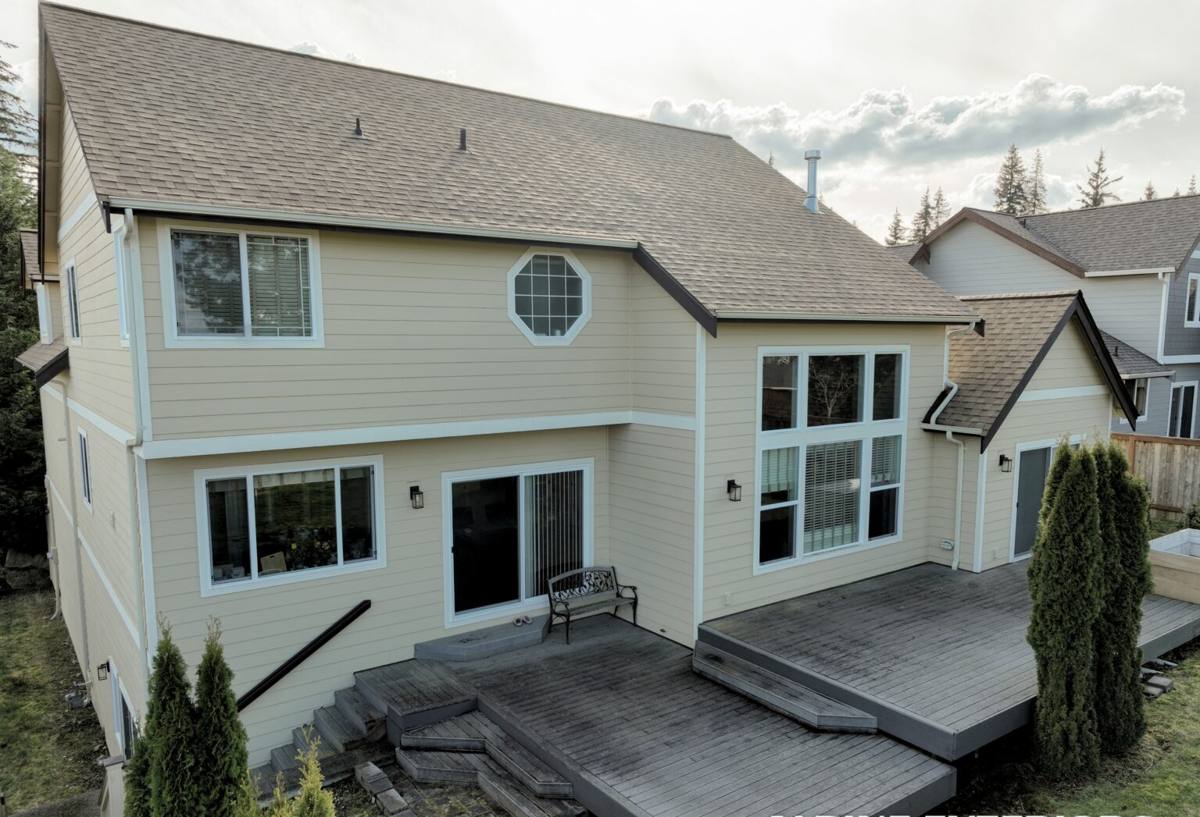
What Fiber Cement Siding Has to Deliver in This Environment
Resisting Moisture Without Rotting or Swelling
Fiber cement is made from a blend of Portland cement, sand, and cellulose fibers, cured into a dense, stable board. Unlike wood-based products, it doesn't absorb water and swell, and it doesn't provide a food source for rot or wood-boring insects. In a climate where a wall can stay damp for days after a summer storm, that moisture stability is the single biggest reason fiber cement holds up where organic materials eventually fail.
Standing Up to Salt Air
Salt accelerates corrosion on fasteners and trim, and it can degrade lesser coatings over time, leaving chalky, faded surfaces. James Hardie's ColorPlus Technology bakes a multi-coat finish onto the board at the factory under controlled conditions, which holds color and resists the fading and chalking that field-applied paint struggles with in a coastal setting.
Handling Hurricane-Force Wind
Wind isn't just about the storm itself — it's about what wind does to water. Wind-driven rain gets pushed uphill and sideways against a wall, which is why lap spacing, fastener patterns, and flashing details matter as much as the board itself. James Hardie's HardiePlank and HardiePanel products are engineered and tested for high-wind performance, but that rating only holds up if the installation follows the manufacturer's fastening schedule and clearances to the letter.
James Hardie's HZ10 Line: Built for This Exact Climate
James Hardie engineers its siding by climate zone, not as a one-size-fits-all product. Homes in St. Petersburg and the rest of Gulf Coast Florida fall into the HZ10 zone, which is formulated specifically for high-humidity, high-moisture climates like ours. HZ10 boards are engineered with enhanced moisture resistance for exactly the conditions Pinellas County sees — long wet seasons, high ambient humidity, and salt exposure. This is one of the practical reasons we install James Hardie exclusively: the HZ product lines aren't a generic national spec applied everywhere, they're built to match the region a home is actually in.
What a Correct Fiber Cement Installation Actually Involves
The board itself is only part of the equation. Most siding failures we get called to look at — regardless of brand — trace back to installation shortcuts, not the material. A correct job on a St. Petersburg home includes:
- A water-resistive barrier installed and lapped correctly behind the siding, with all penetrations properly sealed
- Proper flashing at windows, doors, and roof-to-wall intersections so wind-driven rain has nowhere to enter
- Minimum clearance maintained between the bottom of the siding and roof lines, decks, and grade, so water doesn't wick into the board
- Fasteners driven per James Hardie's published fastening schedule — correct type, spacing, and depth, not just "close enough"
- Panel and lap joints sealed with a high-quality, paintable, flexible sealant rated for exterior use
- Factory-cut and field-cut edges primed or sealed before installation, since exposed raw edges are a common entry point for moisture
- Proper nailing at butt joints and corners to prevent the buckling and gapping that shows up after a home's first few hurricane seasons
Skipping any one of these doesn't usually cause an immediate problem — it causes a problem three, five, or ten years down the road, often after the original installer is long gone. That gap between "installed" and "installed correctly" is where most siding complaints actually originate.
Fiber Cement Versus Other Siding Options in a Coastal Climate
Homeowners in St. Petersburg often ask how fiber cement stacks up against the other materials they see around the neighborhood. Here's an honest comparison based on how each material actually behaves in this climate over time:
| Factor | James Hardie Fiber Cement | Vinyl Siding | Untreated Wood |
|---|---|---|---|
| Moisture & humidity resistance | Engineered for it (HZ10 line) | Won't rot, but can warp and gap | Absorbs moisture, prone to rot |
| High-wind performance | Tested and rated when installed to spec | Can crack or blow off in strong gusts | Depends heavily on fastening and material quality |
| Salt air & UV exposure | Factory ColorPlus finish resists fading/chalking | Can fade and become brittle over time | Needs frequent repainting/sealing |
| Fire resistance | Non-combustible | Combustible | Combustible |
| Typical maintenance | Periodic cleaning, caulk checks | Low, but limited repair options | Regular repainting and sealing |
This isn't about declaring other materials worthless — vinyl and wood both have their place. It's about why, when a home's exterior has to survive Pinellas County's combination of sun, salt, humidity, and wind, we've standardized on a product engineered for that exact combination rather than installing whatever a homeowner saw at a big-box store.
Our Process for a St. Petersburg Siding Job
Assessment
We start by walking the exterior and looking at what's actually happening behind the current siding where accessible — water staining, soft sheathing, and existing flashing conditions all shape the scope of the job. On a coastal property, we're also checking how exposed each elevation is to prevailing wind and salt spray, since that can affect product selection and detailing.
Prep and Weather Barrier
Old siding comes off, damaged sheathing gets replaced, and a new water-resistive barrier goes on with every seam, window, and door properly flashed and sealed before a single piece of Hardie board goes up. This step is invisible once the job is done, which is exactly why it's the step that gets rushed on lower-quality installs.
Installation
Boards are installed per James Hardie's fastening and clearance specifications, with attention to corners, butt joints, and penetrations — the details that determine how the wall performs during the next tropical storm, not just how it looks on install day.
Final Walkthrough
We review the finished exterior with the homeowner, confirm caulking and trim details are clean, and go over basic care so the finish holds up for the long haul.
Choosing Colors and Profiles for St. Petersburg Homes
St. Petersburg neighborhoods have a mix of architectural styles — older bungalows, mid-century ranches, and newer builds sit side by side in a lot of areas. James Hardie's lap siding profiles and ColorPlus palette give homeowners flexibility to match a traditional look or update a dated exterior, without sacrificing the storm and moisture performance the HZ10 line is built for. Because the color is baked on at the factory rather than field-applied, it holds up to intense Gulf Coast sun exposure far better than a standard job-site paint job, which matters when a home faces near year-round direct sunlight.
Why Local Installation Experience Matters
Pinellas County enforces wind-load and building code requirements that reflect its hurricane exposure, and permitting expectations can vary by jurisdiction within the county. A crew that already works in and around St. Petersburg knows the local inspection process, understands how homes here are typically built, and has already worked through the practical realities of coastal installation — humidity affecting cure times, salt exposure driving fastener choices, and storm season scheduling. That local familiarity reduces the chance of delays, failed inspections, or details that look right on paper but don't hold up against an actual Gulf Coast storm season.
Caring for Fiber Cement Siding After Installation
Correctly installed James Hardie siding is low-maintenance, not no-maintenance. A simple annual routine keeps it performing the way it's designed to:
- Rinse the exterior periodically to remove salt residue and airborne grime, especially on sides facing prevailing wind
- Inspect caulk lines at trim, windows, and joints once a year and touch up any cracked or missing sealant
- Check for any signs of moisture staining near the base of walls, decks, or roof lines after a heavy storm season
- Keep sprinklers and irrigation from spraying directly onto siding on a regular basis
- Trim back landscaping so siding gets airflow and isn't held wet against foliage
None of this is complicated, but skipping it for years at a time is how small issues turn into bigger repairs.
If your St. Petersburg home's siding is aging, failing, or you're planning ahead of the next storm season, we're happy to take a look and walk you through what correct fiber cement installation looks like for your specific property. There's no pressure and no obligation — just a straightforward assessment and a written estimate using the form below.