 Seminole Siding
 St. Petersburg's Climate Is Hard on Siding
St. Petersburg sits close enough to Tampa Bay and the Gulf that its homes take on a specific combination of stress most inland siding never has to deal with. Salt-laden air moves in off the water and settles on exterior surfaces year-round, accelerating corrosion of fasteners and trim. Intense, near-constant UV exposure bakes painted and coated surfaces from spring through fall. Add in wind-driven rain during summer storms and the real possibility of hurricane-force gusts during the June-through-November season, and you have a climate that will find every weakness in a siding system within a few years, not a few decades.
This isn't a reason to panic about siding — it's a reason to be precise about how it's installed. Most siding failures we see in Pinellas County homes aren't caused by a bad product. They're caused by a product that was never built for this kind of exposure, or one that was installed without the moisture management details that coastal Florida requires. Siding installation here has to account for water intrusion at every seam, wind uplift at every fastener, and material stability under sun and salt that would be irrelevant in a drier, cooler climate.
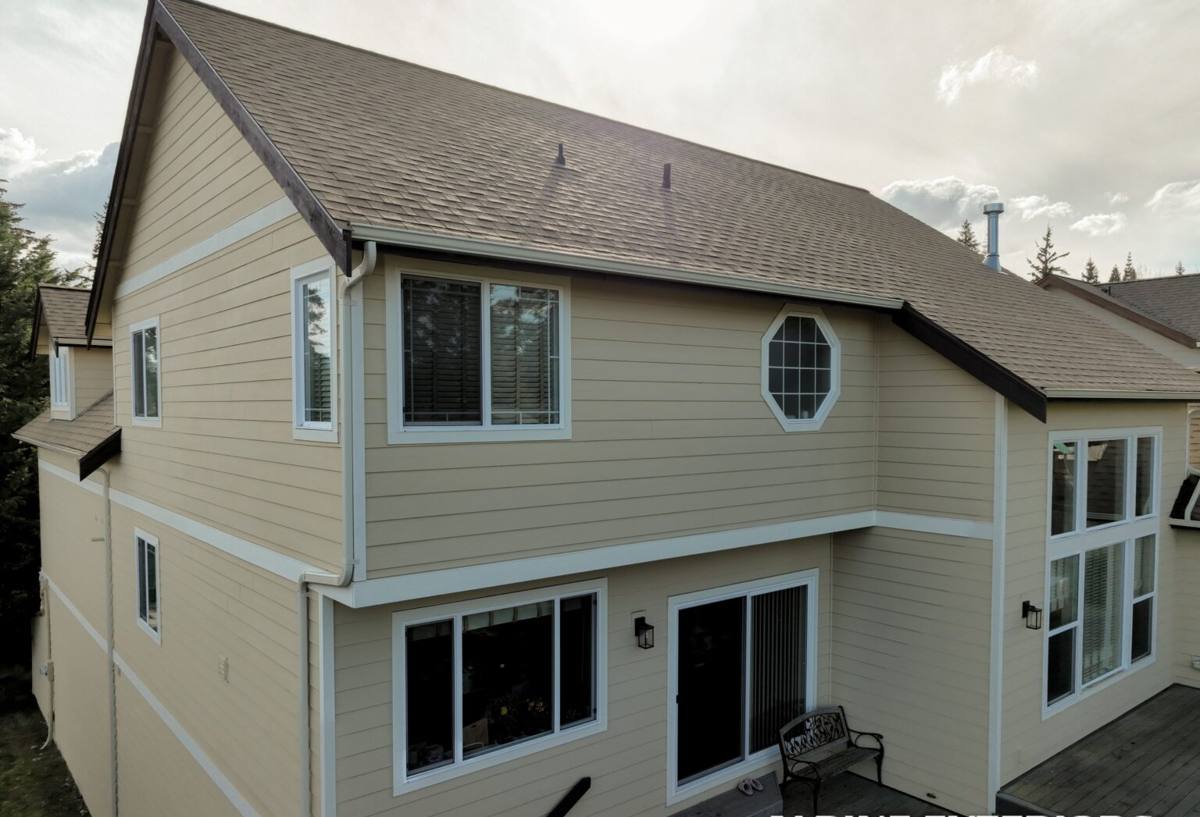
What a Correct Installation Actually Involves
Siding is a system, not a single layer. The visible boards are the last piece installed and the first thing anyone sees, but the work that determines whether that siding lasts happens underneath it.
Substrate and Sheathing Condition
Before any new siding goes up, the wall sheathing underneath the old siding needs to be checked for rot, delamination, or moisture damage. In a humid coastal climate, water can get behind siding slowly over years without showing obvious signs from the outside. Installing new siding over compromised sheathing just traps the problem and guarantees a shorter lifespan for the new material.
Weather-Resistive Barrier and Flashing
A correctly installed weather-resistive barrier (housewrap) goes on the sheathing before siding, and it has to be lapped correctly — upper layers over lower layers — so water sheds down and out rather than working its way in. Flashing at windows, doors, and any wall penetration is what actually stops wind-driven rain from reaching the sheathing during a summer storm. This detail work is invisible once the siding is up, which is exactly why it matters who's doing it.
Fastening for Wind Resistance
Pinellas County's wind exposure means fastener type, spacing, and placement aren't optional details — they're what keeps siding attached during a tropical storm or hurricane. Manufacturer fastening schedules exist for a reason, and in a high-wind coastal zone, following them precisely is the difference between siding that survives a storm season and siding that ends up in the yard.
Joints, Seams, and Caulking
Every horizontal and vertical joint is a potential water entry point. Correct installation uses proper gapping, backer rod where needed, and the right sealant for the material — applied so it can flex with temperature and humidity swings without cracking. Sloppy joint work is one of the most common causes of early siding failure we see on Gulf Coast homes.
Why We Install Only James Hardie Fiber Cement
We don't install vinyl, LP SmartSide, primed wood, or other fiber cement brands. That's a deliberate standard, not a limitation on what we're capable of installing. James Hardie's fiber cement is non-combustible, dimensionally stable in heat and humidity, and holds up to UV and salt exposure better than wood-based or vinyl alternatives over the long run. The factory-applied ColorPlus finish is baked on under controlled conditions, which gives it more consistent fade resistance than field-applied paint — a real advantage under St. Petersburg's sun load. Hardie's HZ5 product line is specifically engineered for hot, humid, high-moisture climates like ours, and the transferable warranty backs it when installation is done to spec. We'd rather install one product extremely well than offer several and let homeowners guess which one will actually hold up here.
Our Installation Process
Every job follows the same sequence, whether it's a full re-side or a partial replacement after storm damage.
1. On-Site Assessment
We walk the exterior, check the condition of the existing siding and sheathing where accessible, and look at exposure factors specific to the property — how close it is to open water, sun exposure on each elevation, and any areas showing prior water intrusion.
2. Removal and Substrate Repair
Old siding comes off, and any damaged sheathing is identified and repaired before anything new goes on. We don't cover up a problem — we fix it.
3. Weather Barrier and Flashing Installation
New housewrap and flashing go in at every window, door, and penetration point, installed to shed water down and away from the structure.
4. Hardie Panel or Plank Installation
Siding is installed per James Hardie's fastening and clearance specifications, with attention to ground clearance, joint placement, and fastener spacing suited to our wind zone.
5. Trim, Caulking, and Final Detail Work
Trim is installed, joints are sealed with appropriate sealant, and the full installation is checked for consistent reveal lines and tight seams before we call it finished.
6. Final Walkthrough
We walk the completed job with the homeowner, point out anything worth knowing for future maintenance, and answer questions before we consider the job done.
What Drives Cost on a St. Petersburg Siding Job
Every home is different, but the factors that move the price are consistent. We give honest, project-specific numbers after an on-site assessment — general ranges without seeing the house aren't useful to anyone.
| Factor | Why It Matters |
|---|---|
| Sheathing condition | Rot or moisture damage found during tear-off adds repair work before new siding can go on |
| Home size and elevation count | More wall area and more corners, gables, and transitions mean more labor and material |
| Existing siding type | Removal complexity varies by whether the home currently has vinyl, wood, stucco accents, or old fiber cement |
| Product line and profile | HardiePlank lap siding, HardiePanel vertical siding, and shingle-style profiles carry different material costs |
| Trim and accent work | Window trim, corner boards, and architectural detail add labor beyond flat wall coverage |
| Access and site conditions | Landscaping, fencing, tight setbacks, or multi-story sections affect scaffolding and staging time |
Signs a St. Petersburg Home May Need New Siding
Coastal exposure tends to show up gradually, so it helps to know what to watch for before small issues become structural ones.
- Visible cracking, buckling, or warping in siding panels or planks
- Soft or spongy spots when pressing gently on the siding surface
- Paint that's peeling or bubbling in a pattern that follows seams or joints, suggesting moisture underneath
- Persistent staining, streaking, or discoloration that pressure washing doesn't resolve
- Visible gaps, separation, or missing caulk at joints and trim
- Rising energy bills that may indicate compromised insulation behind aging or damaged siding
- Mold or mildew growth that returns quickly after cleaning
- Rust streaking from fasteners, a common early sign of corrosion in salt-air exposure
Why Local Installation Experience Matters
Siding manufacturers write general installation guidelines, but applying them correctly in a specific climate takes local judgment. A crew that regularly works in St. Petersburg and greater Pinellas County knows which elevations take the worst sun exposure, which wall assemblies are common in the area's housing stock, and how to sequence a job around Gulf Coast weather patterns rather than fighting them. That familiarity shows up in details a homeowner may never notice directly — flashing choices, fastener selection, and sequencing decisions that hold up specifically because they were made with this coastline in mind, not a generic install guide written for a different climate.
Caring for Hardie Siding After Installation
Fiber cement siding is low-maintenance compared to wood or vinyl, but "low-maintenance" isn't "no-maintenance," especially near open water. A periodic rinse with a garden hose removes salt residue and airborne grime before it builds up. Caulked joints and trim should be checked every year or two for cracking or separation, since sealant is the first line of defense against water intrusion and it doesn't last forever. Keeping irrigation heads and sprinklers from spraying directly on siding reduces mineral staining and unnecessary moisture exposure. None of this is difficult, but staying ahead of it is what lets a correctly installed system reach its full lifespan.
If your St. Petersburg home's siding is showing its age, or you're planning ahead for storm season, we're glad to walk the exterior with you and give a straight, no-pressure assessment of what it actually needs. Use the form below to request a free estimate.