 Seminole Siding
 Why New-Construction Windows Are a Different Job on Treasure Island
Treasure Island sits out on the Gulf side of Pinellas County, which means every window on that barrier island deals with conditions most inland Florida homes never see: direct salt air, near-constant UV exposure, and wind-driven rain that gets pushed sideways off open water. When a home is being newly built, substantially rebuilt, or elevated to meet current flood requirements, the windows go in before the exterior finish is closed up — set into open framing rather than an existing opening. That's what "new-construction" windows means in the trade, and it's a very different job from swapping a window into a wall that's already finished.
Because the opening is open to the studs, this is also the one chance to get the water management right at the window before siding, stucco, or trim goes back on. On a coastal lot in Seminole and the surrounding barrier islands, that first installation determines how the window performs in a storm five, ten, and twenty years from now — not just how it looks on move-in day.
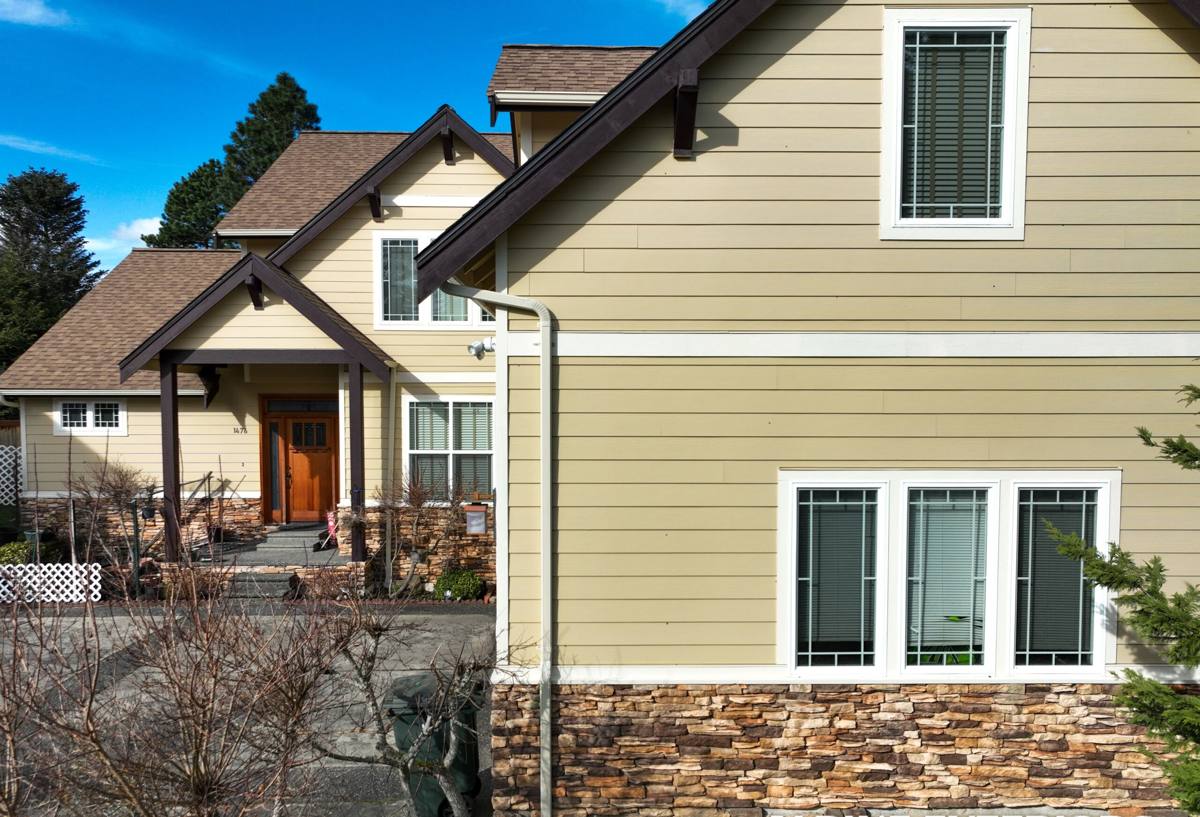
What the Local Climate Actually Does to Windows Over Time
Homeowners moving to Treasure Island often underestimate how fast Gulf-front exposure ages building materials. A few things we see consistently on barrier island homes:
- Salt air corrosion — airborne salt attacks hardware, fasteners, and lower-grade metal components, especially on west- and south-facing elevations that catch the prevailing breeze off the water.
- UV breakdown — year-round sun exposure fades and embrittles lower-quality vinyl and weatherstripping faster than it would in a shaded, inland lot.
- Wind-driven rain intrusion — Gulf storms don't just bring rain, they push it horizontally under pressure, which finds any gap in flashing or sealant that a calm-weather install might get away with.
- Sustained hurricane-force wind loading — even homes that never take a direct hit still cycle through repeated tropical storm and hurricane season wind events that stress frames, anchors, and glazing over the life of the window.
None of this is unique to Treasure Island — it's the reality of building anywhere on the Pinellas Gulf coast. But it's more pronounced on the barrier islands than a few miles inland, and it's exactly why the installation details matter more here than they would on a typical suburban replacement job.
New-Construction vs. Replacement: Which One Applies to Your Project
These two terms get used interchangeably by homeowners, but they describe physically different products and installation methods:
| New-Construction Window | Replacement (Insert) Window |
|---|---|
| Has a nailing flange, set into open stud framing | No flange; fits inside the existing window frame |
| Requires exterior wall finish removed down to the studs | Exterior finish stays in place around the opening |
| Flashing and weather-resistant barrier are built fresh around the unit | Relies on the condition of the existing frame and flashing |
| Used for new builds, additions, teardown-rebuilds, and elevations | Used when the existing frame is sound and finishes are being kept |
On Treasure Island specifically, we're doing a lot more new-construction work than a typical inland Pinellas neighborhood — driven by teardown-rebuilds, additions, and homes being elevated to meet current flood-zone requirements after storm damage. Any time framing is opened up that far, it's worth doing the window as a true new-construction install rather than forcing a replacement unit into a rebuilt opening.
Florida Building Code, Wind Zones, and What It Means for Your Windows
Coastal Pinellas County falls within Florida's wind-borne debris region, which means new-construction windows here have to meet specific wind load and impact requirements under the Florida Building Code — not just "hurricane-rated" as a marketing term, but an actual engineered design pressure (DP) rating tied to the home's exposure category, height, and location relative to the coastline. A window rated correctly for a home a mile inland is not automatically correct for a home facing open Gulf water on Treasure Island.
Every window we install carries a Florida product approval or Miami-Dade Notice of Acceptance number appropriate to the application, and we size the design pressure rating to the specific job — not a one-size-fits-all spec. This gets checked against:
- The home's exposure category (open water exposure is treated differently than a sheltered interior lot)
- Mean roof height and wall height at each opening
- Whether the opening is in a wind-borne debris zone requiring impact-rated glazing or code-compliant shutters
- Local Pinellas County and City of Treasure Island permitting requirements on top of the state code
This is engineering, not guesswork, and it's the part of the job a homeowner usually can't verify just by looking at the finished window — which is why the paperwork trail (permits, product approvals, inspection sign-off) matters as much as the installation itself.
Frame Material: What Holds Up on a Gulf-Front Lot
Frame material choice matters more on a barrier island than almost anywhere else in the county. Here's how the common options generally hold up under salt air, UV, and coastal wind loading:
| Frame Material | Salt Air / Corrosion | UV Resistance | Typical Coastal Use |
|---|---|---|---|
| Vinyl | No metal to corrode; quality varies by manufacturer | Depends heavily on formulation — lower-grade vinyl can chalk and become brittle | Common, cost-effective; we specify coastal-grade product lines |
| Aluminum | Prone to corrosion unless properly coated/anodized | Good dimensional stability in sun | Often used where narrow sightlines or larger spans are wanted |
| Fiberglass | Excellent — inert to salt exposure | Very stable, minimal expansion/contraction | Higher upfront cost, strong long-term coastal performance |
There's no single "correct" answer for every home — budget, architectural style, and how exposed the specific elevation is all factor in. What we won't do is put a builder-grade, inland-spec window on a Gulf-facing wall just because it's the cheapest option on the shelf. We'll walk through the honest trade-offs — upfront cost versus long-term maintenance and hardware life — for your specific lot and exposure.
How a Correct New-Construction Window Installation Comes Together
The window unit itself is only part of the job. The sequence around it is what actually keeps water out over the life of the house:
- Rough opening check — verifying the framed opening is square, plumb, and sized correctly for the specified unit before anything is installed.
- Sill pan flashing — creating a sloped, sealed pan at the bottom of the opening so any water that does get past the window sheds back outside rather than into the wall.
- Weather-resistant barrier integration — the housewrap or building paper is layered and taped in the correct shingle-lap order around the flange so water is always directed downward and outward.
- Setting and anchoring the unit — fastened per the manufacturer's and product approval's specified schedule, not just "enough screws to hold it."
- Sealant compatibility — using sealants that are actually compatible with the frame material and WRB; mismatched sealants fail early and are a common source of leaks on coastal homes.
- Final inspection tie-in — documentation ready for the local building inspector, since new-construction window work on Treasure Island is a permitted, inspected part of the build.
Skip or rush any one of these steps and the window can look perfect for years while quietly failing behind the wall — the kind of problem that only shows up as water stains or soft drywall long after the crew that installed it is gone.
What We Check Before We Ever Set a Window
Before installation day, every Treasure Island new-construction window job goes through the same pre-install checklist:
- Rough opening dimensions confirmed against the ordered unit's actual specs
- Wind load / design pressure rating confirmed against the wall's exposure and height
- Florida product approval or Miami-Dade NOA number matched to the application
- Permit pulled and scheduled with Pinellas County or City of Treasure Island as applicable
- Flashing and WRB sequence planned before the first unit goes in, not improvised on site
- Sealant and fastener compatibility verified for the specific frame material
This is the same checklist whether it's one replacement opening on a rebuild or a full house of new-construction windows — the barrier island climate doesn't give partial credit for skipping a step.
Why Working With a Crew That Already Knows Treasure Island Matters
A crew that mostly works inland Pinellas or Tampa Bay subdivisions is used to a different baseline — calmer wind exposure, less salt load, and inspectors and permitting processes that don't always overlap with what Treasure Island and the barrier islands require. Working this coastline regularly means we're already familiar with local permitting expectations, the wind exposure realities of open-Gulf lots, and which frame and glazing combinations actually hold up here rather than just meeting the minimum code number on paper.
It also means fewer surprises mid-project. Barrier island lots can have tighter access, elevation and flood-zone considerations tied to rebuild and addition projects, and inspection timelines that move differently than an inland new build. None of that should be a learning curve on your project.
If you're planning new-construction windows for a rebuild, addition, or elevation project on Treasure Island, we're glad to walk the site, talk through wind zone and product approval requirements for your specific lot, and give you a straightforward, no-pressure estimate. There's a form below — reach out and we'll get you scheduled.