 Seminole Siding
 Siding on a Barrier Island Isn't a Standard Job
Belleair Beach sits out on the Gulf side of Pinellas County, and that location changes what a home's exterior has to deal with day in and day out. Homes just a mile or two inland catch a fraction of the wind-driven rain, salt aerosol, and direct sun exposure that barrier island properties absorb constantly. Siding here isn't just a cosmetic choice — it's the first line of defense against conditions that will find every weak point in a lesser product or a rushed installation within a few years, not a few decades.
We install James Hardie fiber cement siding exclusively, and we've built this page specifically around what that means for a Belleair Beach property, not siding in general. If you're comparing options for a home in this part of Pinellas County, the climate context below should shape your decision more than any style preference.
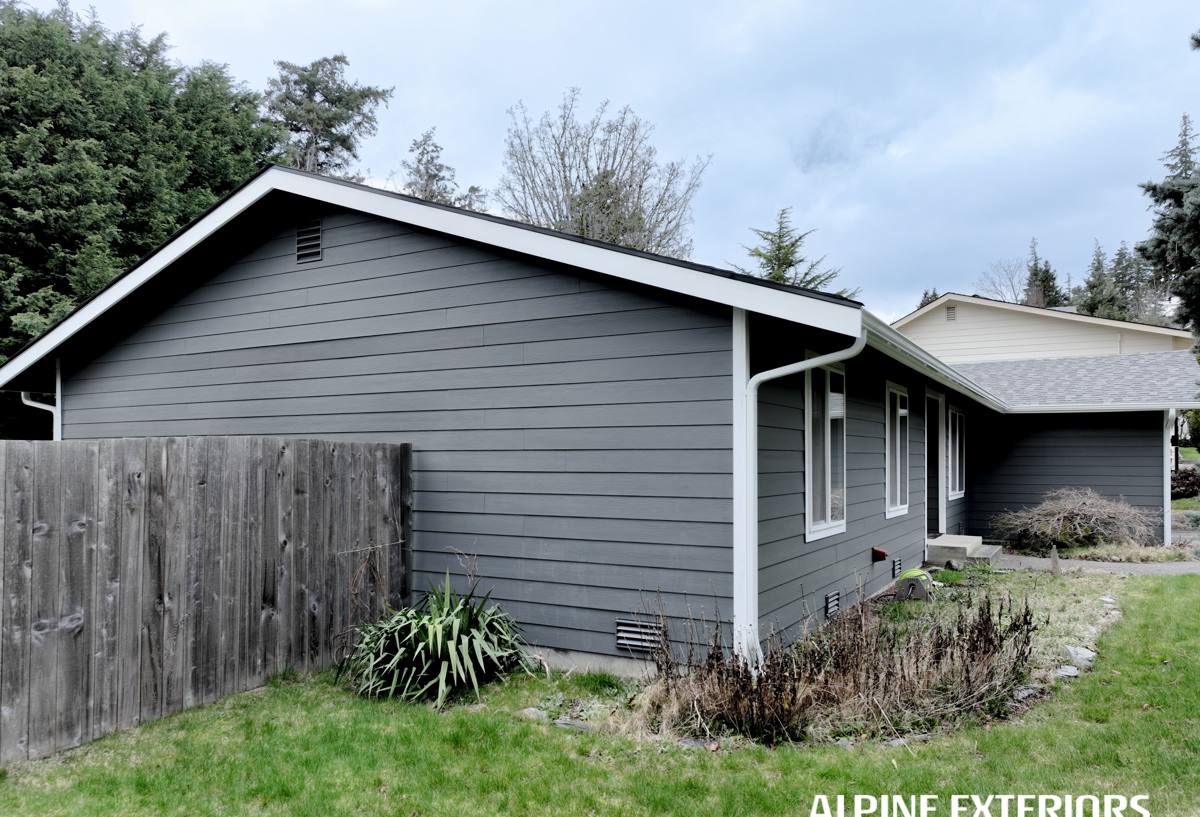
What Salt Air, Wind, and UV Actually Do to Siding Over Time
It helps to understand the specific mechanisms at work, because they're different from what siding faces even a few miles inland:
Salt Air and Moisture
Airborne salt from the Gulf settles on every exterior surface and accelerates corrosion of fasteners, trim, and any metal components in a siding system. It also draws moisture, which is a problem for any siding material that isn't dimensionally stable when wet. Materials that swell, warp, or delaminate when repeatedly damp and dried out will show it faster here than almost anywhere else in the state.
Wind and Wind-Driven Rain
Pinellas County barrier islands see sustained tropical-storm and hurricane-force wind events, and even routine summer storms push rain sideways into wall assemblies. Siding that isn't properly fastened, flashed, and lapped becomes a pathway for water intrusion long before the material itself visibly fails — the damage happens behind the siding, in the sheathing and framing, where you can't see it.
Year-Round UV Exposure
Florida's sun angle and the near-constant exposure on a beachfront or near-beach lot means paint and coatings degrade faster than in most of the country. Chalking, fading, and color mismatch between patched and original sections are common complaints on painted siding within just a handful of years.
Why We Install James Hardie Fiber Cement Here
James Hardie's fiber cement is non-combustible and dimensionally stable — it doesn't absorb water the way wood-based products do, so it doesn't swell, cup, or rot from repeated wetting and drying cycles. That matters enormously in a barrier island environment where humidity and salt moisture are constant, not occasional. The factory-applied ColorPlus finish is also baked on and warranted against fading in a way that field-applied paint simply can't match, which is a real advantage under Belleair Beach's UV load.
We don't install vinyl, LP SmartSide, Cemplank, Allura, primed spruce, or cedar. Each of those products has legitimate uses in the right climate, but we've standardized on James Hardie because, installed correctly, it holds up to this specific combination of wind, salt, and sun better than the alternatives we've evaluated — and because Hardie backs it with a strong, transferable warranty that reflects that confidence.
The HZ5 Product Line: Built for This Climate Zone
James Hardie engineers its siding by climate zone, and Pinellas County falls into the HZ5 category — their formulation for hot, humid, storm-exposed regions. HZ5 products are engineered specifically to resist moisture intrusion and cracking in high-humidity, high-exposure environments like the Gulf Coast, as opposed to the HZ10 formulation used in colder, freeze-thaw climates further north. Specifying the correct HZ line isn't a minor technical detail — it's the difference between siding designed for exactly what Belleair Beach throws at it and siding designed for a different problem entirely.
What a Correct Installation Involves on a Barrier Island Home
Fiber cement siding is only as good as the installation behind it. On an exposed coastal lot, a handful of details matter more than they would on a sheltered inland home:
- Weather-resistant barrier (house wrap) installed and lapped correctly before siding goes on, with all penetrations properly sealed
- Flashing at every window, door, and roof-to-wall intersection, directing water outward and down rather than behind the siding
- Correct fastener type, spacing, and embedment per James Hardie's published installation instructions — not generic nailing patterns
- Proper clearance between the bottom of the siding and grade, decks, roofs, and hard surfaces to prevent wicking and standing water
- Butt joints and panel seams caulked or flashed per spec, not just butted together and painted over
- Correct starter strip installation so the first course sits at the right angle and doesn't trap water
- Fastening pattern and blocking sized for the wind exposure category of the specific lot, since barrier island wind loads differ from inland requirements
Skipping or rushing any one of these doesn't usually show up immediately. It shows up two, five, or ten years later as a moisture problem inside the wall — which is far more expensive to fix than doing it right the first time.
Comparing Siding Options for a Belleair Beach Home
| Factor | James Hardie Fiber Cement | Vinyl Siding | Wood-Based / Engineered Wood |
|---|---|---|---|
| Wind resistance (properly installed) | Strong — rigid, holds fasteners well | Can deform, crack, or blow off in high winds | Adequate if installed correctly, but panels can warp over time |
| Salt air / moisture behavior | Dimensionally stable, doesn't absorb water like wood | Doesn't absorb water, but can become brittle and crack with heat/cold cycling | Prone to swelling, delamination, and rot with repeated moisture exposure |
| UV / fade resistance | Factory ColorPlus finish, warranted against fading | Color is through the material but can chalk and fade | Field-applied paint fades and requires repainting |
| Fire rating | Non-combustible | Combustible (petroleum-based) | Combustible |
| Typical maintenance | Occasional wash, caulk checks | Low, but repairs can be hard to color-match | Regular repainting and moisture monitoring |
This isn't meant to disparage every alternative in every climate — it's meant to show why, specifically for a wind- and salt-exposed Belleair Beach lot, fiber cement is the material we're willing to put our name behind.
Our Process for Belleair Beach Projects
Every project starts with an on-site inspection of the existing siding and wall assembly, not just a measurement for materials. On a barrier island home, that means checking for existing moisture damage, evaluating the current weather-resistant barrier, and confirming the wind exposure category for the lot so the fastening schedule is specified correctly from the start.
From there, we walk through James Hardie product and color options suited to the home, confirm the HZ5 specification, and provide a clear scope of work covering tear-off, sheathing repair if needed, house wrap, flashing details, and installation. We pull the required permits through Pinellas County and the Town of Belleair Beach before any work begins, and we schedule around weather windows rather than pushing installation into conditions that compromise sealing and fastening.
Maintenance After Installation
One of the practical advantages of James Hardie siding in this environment is how little ongoing maintenance it needs compared to painted wood siding. That said, a coastal location still calls for a bit of attention:
Rinse accumulated salt residue off periodically, especially after long dry spells followed by rain, which is when salt deposits are heaviest. Inspect caulked joints and trim annually, since caulk is the one component that will need refreshing over the years even though the panels themselves won't. Keep an eye on anything that touches the siding directly — landscaping, sprinklers, and gutters — since constant contact moisture is the most common cause of localized problems, regardless of material.
Why Hiring a Crew That Already Works Belleair Beach Matters
Wind exposure categories, permitting requirements, and typical wall assembly quirks vary block by block along the Pinellas County coast, and a barrier island town like Belleair Beach has its own permitting process separate from unincorporated Pinellas County or neighboring municipalities. A crew that already works this specific stretch of coastline has already worked through those local requirements and has seen firsthand what wind and salt exposure do to siding installed without the right details. That familiarity shows up in fewer surprises, fewer change orders, and a job that's specified correctly the first time instead of adjusted after a problem shows up.
If you're weighing siding options for a Belleair Beach home, we're happy to walk the property, look at what's there now, and give you a straightforward assessment of what correct James Hardie installation would involve — no pressure, no hard sell. Use the form below to request a free estimate.