 Seminole Siding
 Why Clearwater's Climate Is Hard on Siding
Homes near Clearwater sit close enough to the Gulf of Mexico and the Intracoastal Waterway that salt-laden air is a constant, not an occasional visitor. Combine that with Florida's intense year-round UV exposure, wind-driven rain that comes in sideways during summer storms, and the sustained gusts that arrive with hurricane season, and you have a climate that is genuinely tough on exterior building materials. Siding here does not fail because homeowners neglect it. It fails because the material, the installation, or both were never built for this specific mix of stressors.
Salt air accelerates corrosion on fasteners and trim hardware, and it breaks down paint and caulk faster than it would a few hundred miles inland. UV exposure fades color and dries out anything with an organic binder, which is why painted wood and some composite products chalk and crack years ahead of their rated lifespan. Wind-driven rain finds every gap in flashing and every loose seam, pushing moisture behind the siding where it can sit against sheathing for days after a storm. And Pinellas County's coastal wind exposure means siding has to hold up to repeated flexing and uplift, not just look good on a calm day.
None of this means siding replacement is a losing battle in Clearwater. It means the material choice and the installation details matter more here than they would in a milder climate, and cutting corners on either one shows up faster.
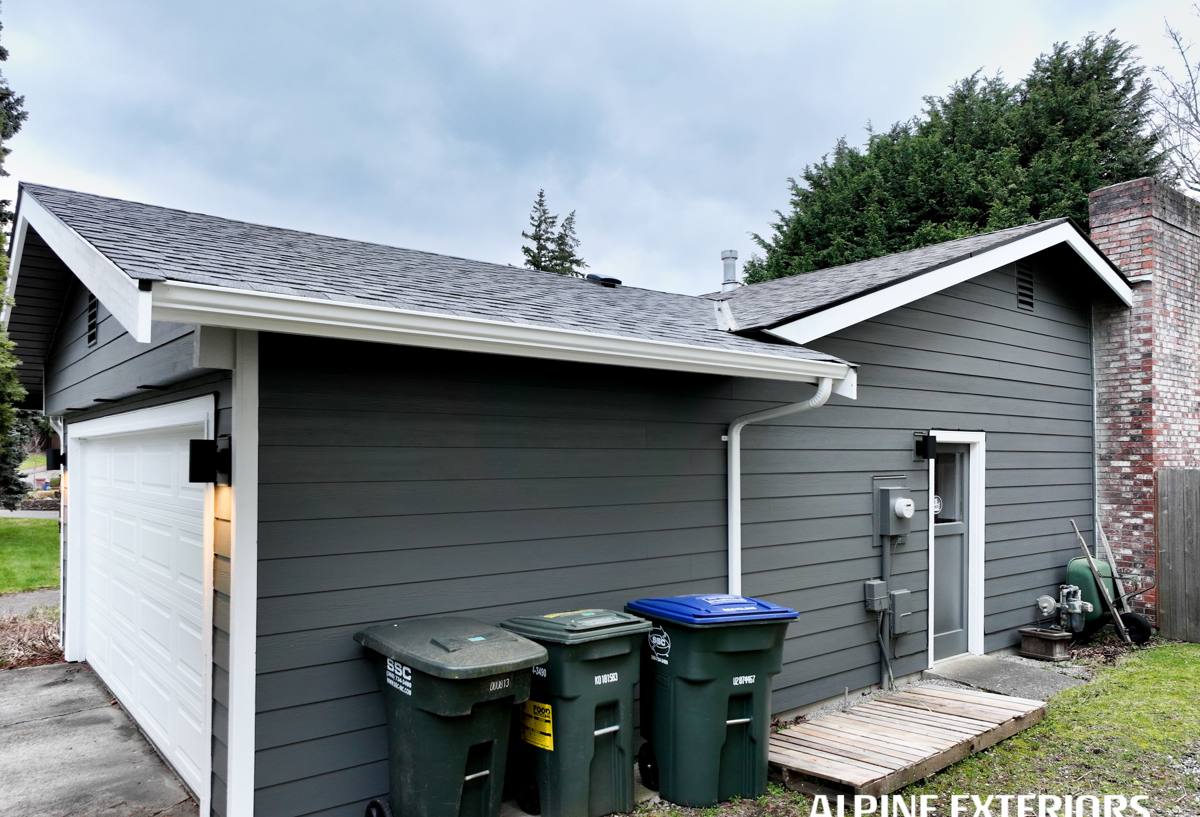
Signs It's Time to Replace, Not Repair
Not every siding problem calls for a full replacement. But there's a point where patching individual boards or recaulking seams stops being a fix and starts being a way to delay the inevitable. Here's what tells us a Clearwater home is past the point of spot repairs:
- Soft, spongy, or crumbling spots when you press on the siding, especially near the bottom courses or below windows
- Paint that keeps failing within a year or two of repainting, no matter how well it was prepped
- Visible buckling, warping, or widening gaps between panels or boards
- Mold or mildew streaking that comes back within weeks of cleaning
- Rot concentrated at butt joints, inside corners, or anywhere two pieces of siding meet
- Rising cooling bills that point to a compromised weather barrier letting heat and moisture into the wall cavity
- Siding that's 20-25+ years old and was never rated for coastal wind and moisture exposure to begin with
If you're seeing two or more of these at once, it's usually a sign the underlying weather barrier has been compromised somewhere, not just the visible surface layer.
What a Correct Siding Replacement Involves
Siding replacement is not just pulling off old boards and nailing up new ones. The parts of the job nobody sees are what determine whether the new siding lasts 30 years or needs attention again in five.
Tear-Off and Substrate Inspection
Once the old siding comes off, the sheathing underneath gets inspected before anything new goes up. This is often the first real look anyone has had at the wall assembly in decades, and on a Gulf Coast home it's common to find soft sheathing, rusted fasteners, or moisture staining behind sections that looked fine from the outside. Any compromised sheathing gets replaced before the new siding goes on — covering over damaged substrate just locks the problem inside the wall.
Weather-Resistive Barrier and Flashing
A correctly detailed weather-resistive barrier, with properly lapped and sealed seams, is what actually keeps wind-driven rain out of the wall cavity — the siding itself is the first line of defense, not the only one. Flashing around windows, doors, and any wall penetrations has to be installed so water is directed out and down, never trapped behind the cladding. This is the step that gets rushed on lower-quality jobs and is almost always the root cause when "new" siding starts showing moisture problems within a few years.
Fastening and Joint Treatment
James Hardie fiber cement has specific fastening patterns, nail penetration depths, and clearance requirements at joints, corners, and butt seams, all of which are engineered around wind performance and moisture management. Installing it to spec — not "close enough" — is what makes the difference between siding that performs through a coastal wind event and siding that lets go of a panel in the first serious storm.
Comparing Siding Materials for a Coastal Climate
Homeowners in Clearwater often ask why we've standardized on one product instead of offering several. The honest answer is that once you weigh how different materials actually perform against salt air, UV, and wind, one option consistently comes out ahead for this specific climate.
| Factor | James Hardie Fiber Cement | Vinyl Siding | Wood / LP SmartSide (engineered wood) |
|---|---|---|---|
| Wind resistance | Engineered and tested for high-wind regions; HZ10 product line built for Gulf/Atlantic exposure | Can crack or blow off in sustained coastal gusts; lighter panels flex more | Solid when new, but fastener pull-through increases as the material ages |
| Moisture behavior | Non-combustible, dimensionally stable, resists moisture-driven swelling | Doesn't absorb water itself, but traps moisture behind it if installed poorly | Wood-based core is vulnerable to swelling, delamination, and rot if the finish is breached |
| UV / color retention | ColorPlus factory finish baked on and warrantied against fading | Fades and can become brittle within 10-15 years in intense sun | Requires repainting on a recurring cycle to hold color and protection |
| Salt air / corrosion | Fiber cement itself doesn't corrode; not organic, doesn't feed mildew growth | Holds up chemically but hardware and trim can still corrode | More vulnerable to mildew and surface breakdown in salt-humid air |
| Maintenance | Occasional washing; repainting only if desired, not required for protection | Low maintenance but hard to repair invisibly; whole sections often need replacing | Recurring caulking and repainting required to keep the moisture barrier intact |
Vinyl and engineered wood both have legitimate uses elsewhere. In Clearwater's specific combination of salt exposure, UV load, and wind, we've found fiber cement holds its performance and appearance longer with less ongoing maintenance, which is why it's the only product we put on homes.
Our Siding Replacement Process
- Inspection and estimate. We walk the exterior, check for moisture damage and problem areas, and give you a clear, honest scope — including if repair rather than full replacement makes more sense.
- Product and color selection. We help you choose the right HardiePlank, HardiePanel, or shingle profile and ColorPlus finish for your home's style and your neighborhood's look.
- Permitting. Siding replacement in Pinellas County typically requires a building permit; we handle that paperwork so you don't have to chase it down.
- Tear-off and substrate repair. Old siding comes off, sheathing gets inspected, and any damaged material is replaced before moving forward.
- Weather barrier, flashing, and installation. New barrier and flashing go in first, then siding goes up to manufacturer fastening specs.
- Cleanup and walkthrough. Job site is cleared of debris and old material, and we walk the finished job with you before calling it done.
- Warranty registration. We register the installation so your James Hardie product warranty is properly on file.
Wind, Permits, and Local Code Considerations
Pinellas County falls under the Florida Building Code's coastal wind provisions, which means siding products and fastening schedules have to be rated for the wind speeds this area actually sees, not just meet a generic national minimum. That's part of why we install James Hardie's HZ10 product line here — it's engineered specifically for Gulf and Atlantic coastal exposure. Permitting requirements and inspection expectations can vary by jurisdiction within the county, which is one more reason it helps to work with a crew that pulls permits in this area regularly and knows what inspectors are looking for.
Why Hire a Crew That Already Works in Clearwater
Siding installation isn't identical everywhere in Florida, let alone the country. A crew that works Clearwater and the surrounding Seminole area routinely knows how tight to run fastening schedules for this wind exposure, how to detail flashing so wind-driven rain doesn't find its way in during the next summer storm, and which parts of a wall assembly tend to hide moisture damage on homes of this area's age and construction. That local repetition matters more than it sounds like — it's the difference between a crew that's installing to a generic spec sheet and one that's installing for the specific conditions your home actually faces.
It also matters for the parts of the job outside of installation itself: knowing local permitting offices, understanding typical HOA aesthetic guidelines in the area, and being reachable afterward if a punch-list item comes up. We're based nearby in Seminole and treat Clearwater as core service territory, not a drive-by market.
Get a Straight Answer About Your Siding
If your siding is showing its age or you're just not sure whether you're looking at a repair or a full replacement, we're happy to take a look. We'll give you a straightforward assessment, a clear estimate, and no pressure either way — request a free estimate using the form below.