 Seminole Siding
 Belleair Bluffs Homes Take a Different Kind of Beating
Belleair Bluffs is a small community, and homes here sit close enough to the water that the exterior of a house works harder than it would a few miles inland. You've got a mix of older ranch-style homes and updated remodels, many built before fiber cement siding was the standard choice for this part of Florida. If your siding is original vinyl, aging wood, or a builder-grade product from a previous renovation, it's likely showing its age faster than a similar house would in a drier, calmer climate. That's not a knock on the homeowner — it's just what happens when a house sits this close to Pinellas County's coastline.
We run a local crew that works Belleair Bluffs and the surrounding Seminole area regularly, which matters more than it sounds like. Siding installation isn't a generic skill you can apply the same way in every zip code — the flashing details, fastener choices, and moisture management that work fine in Ohio will fail here. A crew that already knows how this specific stretch of coastline treats a house has already made (and corrected) the mistakes that cost other homeowners money.
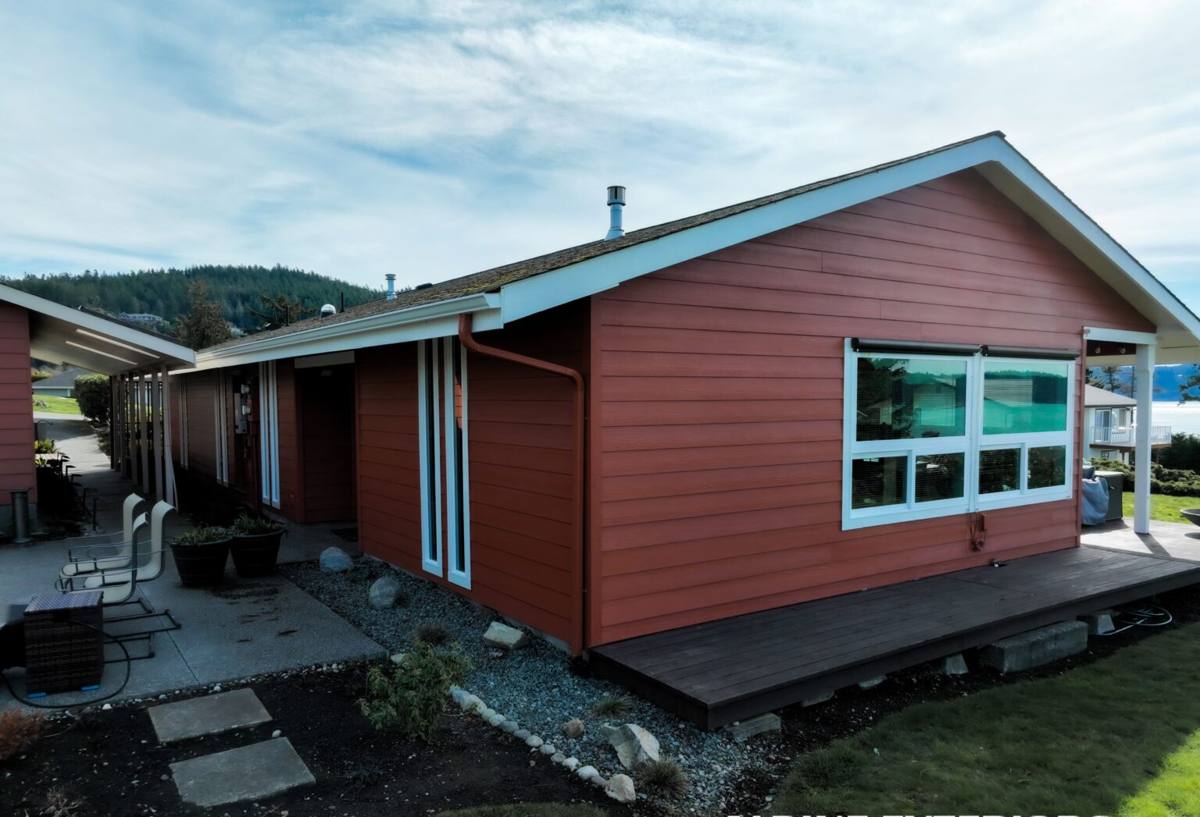
What the Climate Actually Does to Your Siding
It helps to be specific about what "coastal climate" means for the material on your walls, rather than just waving at it as a vague concern.
- Hurricane-force wind: Even storms that don't make landfall directly can drive sustained wind and gusts strong enough to work loose fasteners, lift poorly installed panels, and drive rain sideways into any gap in the wall assembly.
- Wind-driven rain: Florida rain rarely falls straight down. When it's pushed horizontally into a wall, any weak seam, missed caulk joint, or shortcut in flashing becomes a path for water to get behind the siding and into the sheathing.
- Intense, near-constant UV: Pinellas County gets strong sun exposure essentially year-round. Paint and lower-grade coatings chalk, fade, and break down faster here than almost anywhere else in the country.
- Salt air: Being close to the Intracoastal and Gulf means airborne salt settles on every exterior surface. It accelerates corrosion of fasteners and trim, and it degrades materials that weren't engineered with that exposure in mind.
- Humidity and moisture cycling: Florida doesn't get freeze-thaw damage, but it gets near-constant humidity swings that keep wood-based products damp longer than they should be, inviting rot and pest damage.
None of this means siding is doomed in Belleair Bluffs. It means the material and the installation both have to be chosen and executed with this environment specifically in mind — not just "siding in general."
Why We Only Install James Hardie Fiber Cement
We made a standing decision as a company to install James Hardie fiber cement siding exclusively. We don't install vinyl, LP SmartSide, Cemplank, Allura, or primed wood products like spruce or cedar. That's not a marketing position — it's a practical one, built around what we've seen hold up on Gulf Coast homes and what hasn't.
Fiber cement is non-combustible, which matters in a state where wildfire risk and lightning-driven brush fires are a real (if secondary) consideration, and it simply doesn't feed a fire the way wood-based sidings can. It doesn't warp, cup, or rot the way wood and wood-composite products can when humidity stays high for months at a time. And unlike vinyl, it doesn't soften, distort, or become brittle under the kind of sustained heat and UV that Pinellas County sees every summer.
James Hardie backs its products with a factory-applied ColorPlus finish and a strong, transferable warranty — both of which matter more in a climate that's actively trying to break down anything with less engineering behind it. We'd rather stand behind one product system we know thoroughly than offer several we can't fully vouch for in this environment.
HZ10: Engineered for This Exact Climate
James Hardie doesn't make one generic siding for the whole country — its products are formulated by climate zone, and Florida falls into the HZ10 category, engineered specifically for hot, humid, high-moisture regions. That distinction is worth understanding before you assume all fiber cement siding is interchangeable.
| Factor | HZ10 (Florida / Gulf Coast) | Why It Matters in Belleair Bluffs |
|---|---|---|
| Moisture resistance formulation | Engineered for high humidity and prolonged wet exposure | Constant coastal humidity and wind-driven rain demand a formulation that won't absorb and hold moisture |
| Fungal and mold resistance | Built into the product for high-humidity climates | Warm, damp air near the water is exactly the environment mold and mildew favor |
| Heat and UV performance | Formulated to handle sustained high heat and sun exposure | Year-round intense UV breaks down lesser materials faster than almost anywhere else in the country |
| Compliance with local wind codes | Installed per manufacturer specs matched to Florida Building Code wind zones | Homes here need siding fastened and flashed to withstand hurricane-force gusts |
This is one of the reasons a generic, one-size-fits-all installation approach doesn't serve Belleair Bluffs homeowners well. The right product line, matched to the right installation detailing for this specific wind and moisture zone, is what actually determines how the siding performs ten and twenty years down the line.
What a Correct Installation Actually Involves
Fiber cement siding is only as good as the installation behind it. A rushed or generic install can undercut even the best product on the market — and in a climate this demanding, the margin for error is smaller than it is elsewhere. A correct James Hardie installation on a Belleair Bluffs home includes:
- A weather-resistant barrier installed correctly behind the siding, with proper overlaps so water is directed out and away from the wall assembly, not trapped behind it.
- Flashing at every window, door, and roofline intersection — the points where wind-driven rain most commonly finds a way in.
- Correct fastener type, spacing, and depth, matched to Hardie's specifications and to the wind uplift requirements for this part of Pinellas County.
- Proper clearance between the bottom of the siding and the ground, roofline, decks, or patios, so moisture doesn't wick up into the board over time.
- Caulked and sealed joints at all panel seams and trim intersections, done with a product rated for sustained UV and salt air exposure.
- Inspection of the sheathing underneath before any new siding goes up — if the old siding failed and let moisture in, that damage needs to be addressed first, not covered over.
Skipping any one of these doesn't show up as a problem on day one. It shows up two, five, or ten years later as a soft spot, a stain, or a section that has to be torn out and redone — usually costing more than doing it right the first time would have.
ColorPlus Finish and Choosing Colors for a Coastal Home
James Hardie's ColorPlus finish is baked on at the factory under controlled conditions, rather than field-painted on site. That matters in a climate where site-applied paint has to fight UV breakdown and salt exposure from day one. A factory finish holds its color and resists fading, chipping, and chalking far longer than a job-site paint job can, which means fewer repainting cycles over the life of the siding.
For color selection, it's worth thinking about how a color will read against intense Florida sun and how it will look next to the water and greenery common in this part of the county. Lighter and mid-tone colors tend to show less heat-related fading stress over time than very dark tones exposed to constant direct sun, though Hardie's finish is engineered to hold up across its full color range. We can walk through the available lines and finishes and talk through what tends to work well on homes in this specific setting.
How We Approach a Belleair Bluffs Project
Working the same area repeatedly means we're not guessing at local conditions on every job. Our process for a Belleair Bluffs home typically looks like this:
- On-site assessment: We look at your current siding, trim, and any visible signs of moisture intrusion before quoting anything, so the estimate reflects the actual condition of your home rather than a generic assumption.
- Tear-off and sheathing check: Once old siding comes off, we inspect the wall sheathing underneath. If there's rot or water damage from years of exposure, we address it before anything new goes up — new siding over a damaged wall just hides the problem.
- Installation to spec: Weather barrier, flashing, fastening, and clearances are done to James Hardie's specifications for this climate zone and to the wind requirements that apply in Pinellas County.
- Trim and detail work: Corners, window and door surrounds, and transitions get the same attention as the field panels — these are usually where problems start on a lesser installation.
- Final walkthrough: We go over the finished job with you directly, not just leave a punch list unaddressed.
Because it's a smaller, tighter-knit community, access and staging can be more limited on some lots than on a larger inland property. Knowing that ahead of time lets us plan the job efficiently instead of running into surprises mid-project.
Cost Factors for a Belleair Bluffs Hardie Project
Every home is different, so we won't quote a number without seeing the property, but these are the factors that most commonly move a project's cost up or down:
| Factor | Why It Affects Cost |
|---|---|
| Home size and wall complexity | More square footage and more corners, gables, and trim detail mean more material and labor |
| Condition of existing siding and sheathing | Hidden moisture damage found during tear-off adds repair work before new siding can go on |
| Product line and profile selection | Different Hardie board profiles and textures carry different material costs |
| Color and finish choice | Some ColorPlus finishes and custom trim colors carry different pricing than standard options |
| Site access | Tight lots, fencing, or limited staging area near the water can affect labor time |
Signs Your Current Siding Already Needs Attention
Before you decide whether replacement makes sense right now, it helps to know what to actually look for. Common warning signs on homes in this area include:
- Soft, spongy, or bubbling spots when you press on the siding, especially near the bottom edges
- Visible warping, buckling, or gaps between panels
- Paint that's chalking heavily or peeling in sheets rather than wearing evenly
- Staining or streaking that keeps returning shortly after cleaning
- Rust stains around fasteners or trim, a common sign of salt air corrosion
- Any musty smell near exterior walls, which can indicate moisture trapped behind the siding
If you're seeing one or more of these, it's worth having someone look at it before it turns into a sheathing repair on top of a siding job.
If you're weighing a siding replacement on a Belleair Bluffs home, we're glad to come take a look and talk through what we're seeing — no pressure, no obligation. Fill out the form below and we'll set up a time for a free estimate.