 Seminole Siding
 Why Siding Installation in the Clearwater Area Has to Account for the Coast
Homes in the Clearwater area, just up the coast from our Seminole crew, take a beating that inland Florida homes never see. Pinellas County sits on a narrow peninsula between Tampa Bay and the Gulf of Mexico, which means every house here deals with four things at once: hurricane-force wind loads, near-constant UV exposure, wind-driven rain that gets pushed sideways into wall assemblies, and salt-laden air that corrodes fasteners and degrades cheap finishes faster than almost anywhere else in the country.
Siding is the single largest surface on a house, and it's the first line of defense against all four of those forces. When it's installed correctly, it sheds wind-driven rain, stays fastened through tropical-storm gusts, resists UV fade for decades, and shrugs off salt air without corroding or blistering. When it's installed poorly — or when the wrong product is used — those same conditions expose every shortcut within a few years. That's the gap we're in business to close for Clearwater-area homeowners: not just selling siding, but installing it the way this climate actually demands.
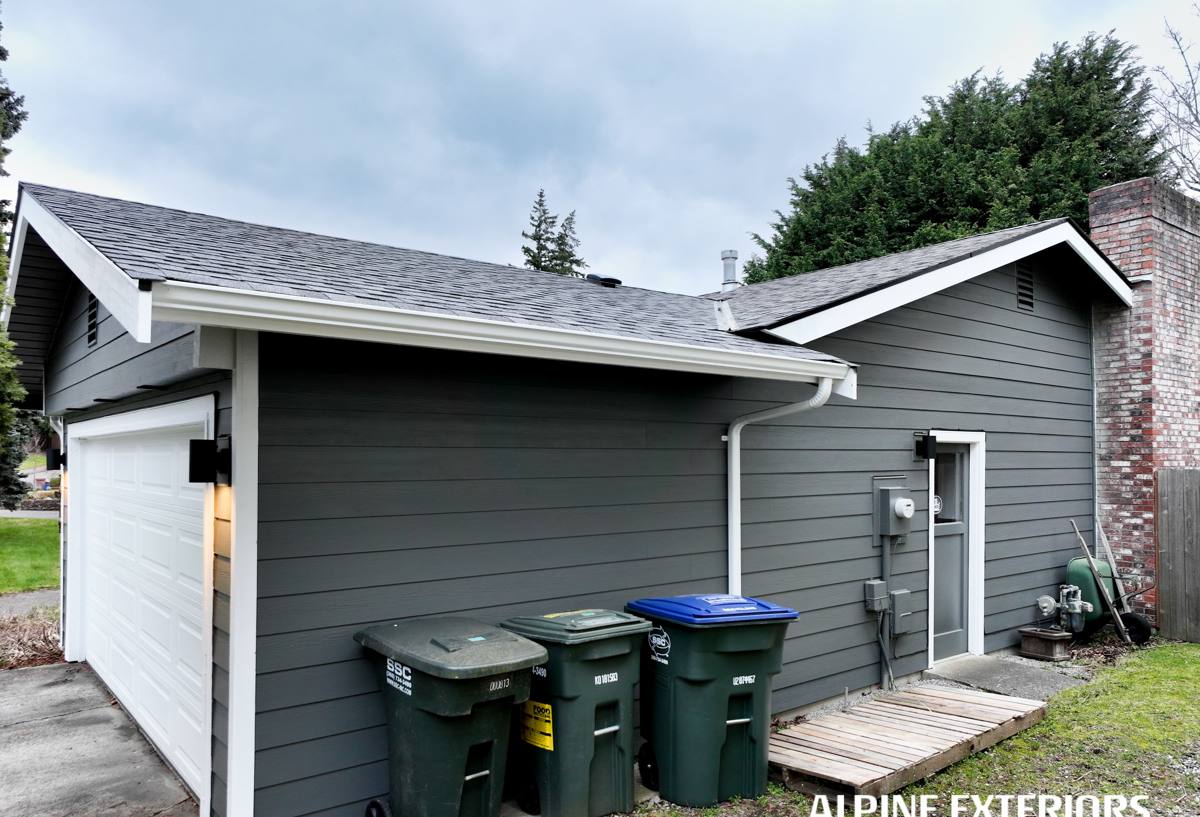
What "Correct" Siding Installation Actually Involves
A siding job can look identical from the curb and perform completely differently depending on what's happening underneath. In a coastal wind zone, the details that don't show are the ones that determine whether the siding survives the next major storm.
Fastening and Wind Rating
Every siding product has a manufacturer-specified fastening schedule — nail or screw type, spacing, and penetration depth — that's engineered to meet a specific wind rating. Skipping fasteners to save time, using the wrong gauge, or fastening into weak substrate all quietly reduce the wind rating of the whole wall, even though nothing looks wrong until a storm tests it.
Moisture Management
Behind every siding panel needs to be a continuous weather-resistive barrier, properly lapped and sealed, so any water that gets past the siding drains back out instead of sitting against the sheathing. Wind-driven rain off the Gulf will find any gap in that barrier over time — the siding is the first defense, the water-resistive barrier behind it is the second, and both have to be done right.
Flashing and Trim Details
Windows, doors, and any wall penetration are where siding jobs most often fail. Correct flashing directs water out and away at every one of those transitions, and factory-recommended gaps, caulking, and trim details keep panels from trapping moisture at the joints. This is the part of the job that takes the most time and is the easiest to shortcut — which is exactly why it matters most to get right.
Why We Install Only James Hardie Fiber Cement
We made a decision early on to install one siding system: James Hardie fiber cement. We don't install vinyl, LP SmartSide, Cemplank, Allura, or primed wood siding, and we think Clearwater-area homeowners deserve an honest explanation of why, not just a sales pitch for what we do sell.
Fiber cement is non-combustible, which matters in a state with year-round sun and heat. It doesn't warp, sag, or soften in high heat the way vinyl can, and it doesn't rely on paint or a factory laminate to survive constant UV the way engineered wood products do. James Hardie also builds region-specific HZ product lines engineered for humid, storm-prone climates like ours, and backs its ColorPlus factory-applied finish with a long, transferable limited warranty that covers both the substrate and the finish when the product is installed to spec.
None of that makes fiber cement a magic material — it still has to be installed correctly to deliver on that warranty and that performance. But it gives us a product system engineered for exactly the conditions Clearwater-area homes face, backed by manufacturer specifications we can install to the letter every time. That combination is why we standardized on it instead of offering a menu of products with very different long-term track records in this climate.
Our Installation Process for Clearwater-Area Homes
Every job follows the same disciplined sequence, whether it's a full re-side or a repair on an existing Hardie installation:
- On-site inspection of the existing wall assembly, including a check for hidden moisture or sheathing damage before any siding comes off.
- Removal of old siding and inspection of the sheathing underneath, with any rot or damaged substrate repaired before moving forward.
- Installation of a continuous weather-resistive barrier, properly overlapped and sealed at every seam.
- Flashing of all windows, doors, and wall penetrations to direct water out and away from the structure.
- Installation of James Hardie panels or lap siding to the manufacturer's fastening schedule and wind-rating specifications.
- Trim, corner, and joint work finished to Hardie's clearance and caulking specifications to keep water from getting trapped.
- Final walkthrough and cleanup, with the job checked against manufacturer install requirements before we call it done.
That sequence doesn't change based on schedule pressure or weather. Skipping a step to move faster is exactly how coastal siding jobs fail early, and we'd rather take the time than hand a homeowner a problem with a five- or ten-year fuse on it.
Signs Your Current Siding Is Already Failing
Coastal wear on siding is often gradual, so homeowners tend to notice it only after it's advanced. Watch for these signs:
- Visible warping, buckling, or waviness along wall sections
- Cracking or splitting, especially around seams and corners
- Soft or spongy spots when you press on the siding
- Paint that's peeling, bubbling, or fading unevenly
- Streaking or dark staining, particularly near the roofline or in shaded areas
- Gaps opening up at seams, trim, or window and door edges
- A musty smell or visible mold along interior walls that back up to exterior siding
- Rising cooling costs with no other obvious explanation
Any one of these is worth a professional look. Left alone, moisture intrusion behind siding tends to get worse quietly, since the damage is happening on the sheathing side, out of view.
Hardie vs. the Alternatives: A Cost and Performance Comparison
Here's how the products we get asked about compare on the factors that actually matter in a coastal climate like this one:
| Factor | James Hardie Fiber Cement | Vinyl | LP SmartSide |
|---|---|---|---|
| Wind/impact resistance | High — engineered HZ lines for storm zones | Moderate; can crack or blow off in high wind | Moderate; dependent on proper sealing |
| Moisture behavior | Resists moisture damage when sealed and flashed correctly | Doesn't absorb water, but traps moisture behind it if installed poorly | Engineered wood core is vulnerable if water gets past the finish |
| UV/fade resistance | Strong, especially with ColorPlus factory finish | Can fade and become brittle over time in intense sun | Depends on site-applied or factory paint quality |
| Salt air durability | Non-corrosive material, holds up well | Generally stable, but seams and fasteners can degrade | Wood-based core is more sensitive to prolonged moisture and salt exposure |
| Typical maintenance | Periodic cleaning and caulk checks | Low, but repairs can be hard to color-match | Requires diligent paint and seam maintenance |
| Warranty structure | Long, transferable limited warranty on product and finish | Varies widely by manufacturer and grade | Varies; often shorter on the finish than the substrate |
Upfront cost for fiber cement is generally higher than vinyl and comparable to or somewhat above engineered wood products, but the comparison that matters most to homeowners is cost over the life of the siding — repainting, seam repair, and moisture damage add up, especially in a climate this demanding.
Why Hiring a Crew That Already Works This Area Matters
Siding installation isn't a generic skill that transfers evenly from one climate to another. A crew that's used to installing in a dry inland market doesn't automatically know the flashing details, fastening adjustments, and moisture-barrier practices that hold up against Gulf Coast wind and rain. A crew that already works the Clearwater and greater Seminole area has seen how James Hardie siding performs here specifically — through storm seasons, through humidity, through salt air — and installs to that reality rather than a generic instruction sheet.
That local experience also shows up in smaller, practical ways: knowing which detailing tends to fail first on Pinellas County homes, understanding local permitting and wind-rating documentation, and being available to service the work after it's installed rather than having done one job in the area and moved on.
Maintenance After Installation
Correctly installed James Hardie siding is low-maintenance, not no-maintenance. A periodic rinse to clear salt residue and airborne debris, an annual visual check of caulking at trim and penetrations, and prompt attention to any impact damage will keep the system performing the way it's designed to. Caulking is the one component that ages faster than the siding itself in this climate, so it's worth checking every year rather than waiting for a leak to find it for you.
If you're weighing a siding replacement or repair for a home in the Clearwater area, we're happy to take a look and give you a straight, no-pressure estimate — what your home actually needs, not a generic package. Use the form below to get started.