 Seminole Siding
 Indian Shores sits right on the barrier island strip along the Gulf, and that location changes what "siding repair" means compared to a repair job a few miles inland in Seminole proper. A cracked panel, a soft spot near a window, or a failing seam doesn't stay a small problem for long out here — the same salt air, sun, and wind that make the location desirable are also what turn a minor repair into a bigger one if it sits too long. We do siding repair work throughout the Seminole area, and Indian Shores comes up regularly because the exposure is more direct and less forgiving than most of Pinellas County's residential grid. This page covers what local homes actually need from a siding repair, what a correct repair job involves, and why we handle it exclusively with James Hardie fiber cement.
Why Indian Shores Siding Takes More Punishment
A home a few blocks off the water in Seminole gets some buffer from trees, neighboring structures, and general distance from the Gulf. A home on or near the barrier island doesn't have that buffer. Wind-driven rain during storms and even routine squalls hits with less resistance out here, which means it finds gaps at butt joints, fastener holes, and trim intersections faster than it would on a more sheltered inland lot. Salt air off the Gulf settles on every exterior surface and works on exposed fasteners, trim, and any compromised finish year-round, not just during storm season. Year-round, intense UV breaks down lower-grade paints and coatings faster here than almost anywhere else in the county, which is why a patch that isn't color- and finish-matched correctly stands out fast on a sun-facing wall. And hurricane-force wind events, when they come, load a barrier island home's exterior more directly than a property with houses and landscaping breaking up the wind path.
None of that means Indian Shores homes need constant repair. It means that when a repair is needed, it needs to be done correctly the first time — because the same conditions that caused the original damage will go straight back to work on a patch job done in a hurry.
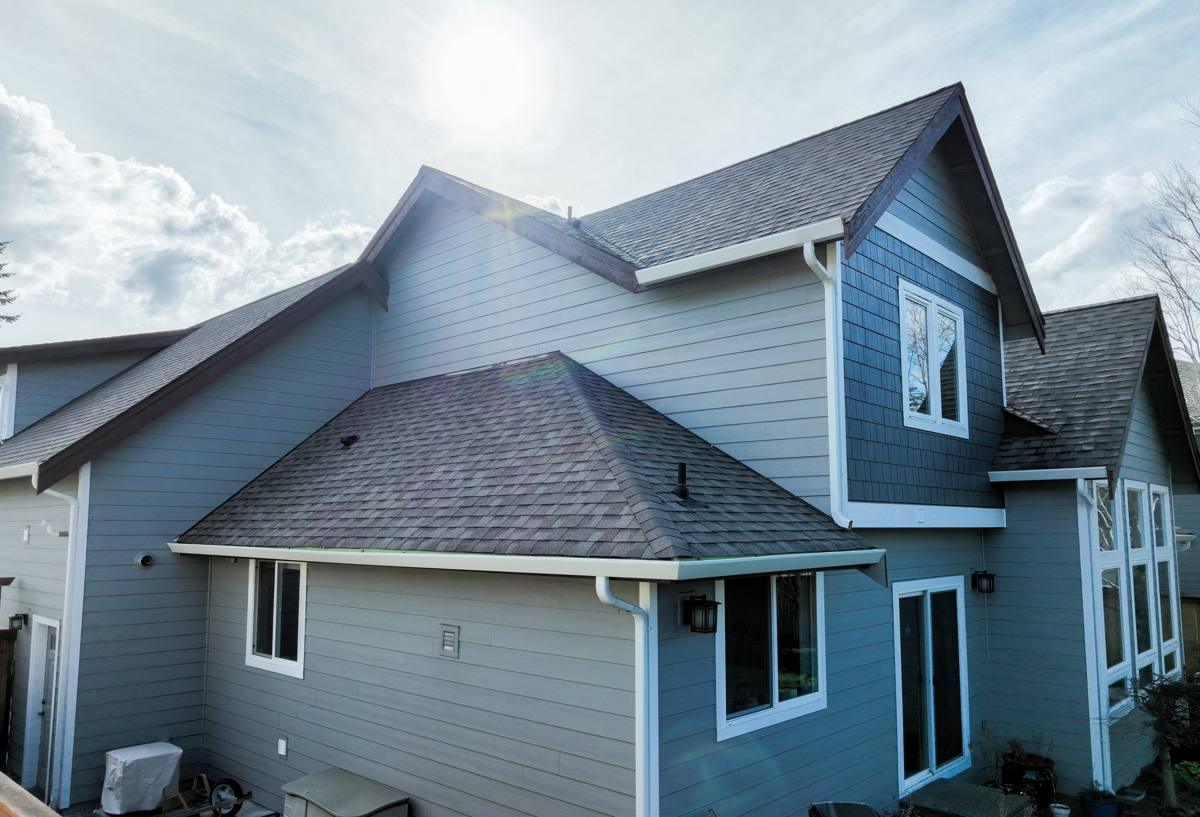
What Repair-Grade Damage Actually Looks Like
Problems That Are a Legitimate Repair
Plenty of siding damage on Indian Shores homes is genuinely localized and fixable without a full re-side. A panel cracked by wind-blown debris, a section pulled loose at a corner during a storm, a soft or discolored spot around a single window where flashing failed, or a run of caulk and trim that's degraded from UV and salt exposure are all common, repairable issues — as long as the damage hasn't spread past what's visible.
Problems That Signal Something Bigger
The judgment call is whether the visible damage is the whole story or just the part you can see. Soft, spongy panels in more than one area, staining that keeps reappearing after a patch, or damage that shows up at multiple points around the same elevation usually means moisture has been getting behind the siding for a while, not just at the spot you noticed. In those cases, a cosmetic patch hides the problem instead of fixing it, and it comes back — usually worse, and usually after the next storm season.
What a Correct Siding Repair Actually Involves
A repair that's done right starts before anyone picks up a piece of siding. We look at what's actually happening behind the damaged section, not just what's visible from the yard. That means checking the sheathing and water-resistive barrier underneath for hidden moisture or soft spots, because installing a new panel over a compromised substrate just guarantees a repeat call. It also means matching the existing siding's profile, exposure, and factory finish correctly — James Hardie's ColorPlus finish is manufactured to a specific batch and color, and a mismatched or field-painted patch is one of the fastest ways a repair becomes visible from the street instead of blending in.
From there, the mechanics matter as much as the material. Flashing at the repaired section has to be integrated correctly with what's around it, not just caulked over. Fasteners need to be the right type and driven to the correct depth and spacing for our wind zone — over-driven or under-driven fasteners are a common cause of repeat siding failures on Gulf-exposed homes. And clearances at grade, trim, and adjoining panels need to match manufacturer spec so water has somewhere to go instead of somewhere to sit.
Why We Repair With James Hardie Fiber Cement, and Only That
We install and repair James Hardie fiber cement exclusively — no vinyl, no LP SmartSide, no other fiber cement brands. On a repair job, that standardization actually matters more than it might seem. A single-brand, single-product approach means we're working with a system we know in depth: how its panels handle, how its ColorPlus finish weathers and matches over time, and how its HZ product line, engineered for humid, high-moisture Gulf Coast climates like ours, performs against the exact combination of salt, sun, and wind that Indian Shores homes deal with. Fiber cement is also non-combustible, which matters to some homeowners independent of the coastal-durability question.
If your home currently has a different siding product and needs repair, we'll always be straight with you about what we can and can't match. A Hardie repair panel isn't going to blend seamlessly into an existing vinyl or engineered-wood wall, and we'd rather tell you that upfront than sell you a patch that looks wrong the day it's finished.
Our Indian Shores Repair Process
- Inspection. We look at the damaged area and the surrounding siding, and check behind the affected section for hidden moisture or substrate damage before quoting anything.
- Diagnosis. We determine whether the damage is isolated or a symptom of a larger flashing, drainage, or installation issue that needs to be addressed alongside the visible repair.
- Sourcing and matching. We match the existing panel profile, exposure, and finish as closely as James Hardie's current product line allows, and we tell you honestly if an exact match isn't available.
- Substrate repair. Any compromised sheathing or water-resistive barrier found during the inspection gets repaired before new siding goes back on — never covered over.
- Installation. The repair section is installed to manufacturer fastening, clearance, and flashing specifications, not just fitted to look right from a distance.
- Final check. We walk the repaired area with you, cover any touch-up or caulking needs, and flag anything nearby worth keeping an eye on before the next storm season.
Repair vs. Replacement: What Actually Determines the Right Call
| Factor | Repair Usually Makes Sense | Replacement Usually Makes Sense |
|---|---|---|
| Extent of damage | Isolated to one or two sections or elevations | Spread across multiple walls or recurring in the same areas |
| Substrate condition | Sheathing and framing underneath are sound | Rot or moisture damage found in the framing or sheathing |
| Age of existing siding | Siding is relatively current and in good condition elsewhere | Siding is original, decades old, or already showing wear across the home |
| Product match | Current James Hardie product line and color are still available | Discontinued profile or finish makes a clean match impossible |
| Storm history | Damage traces to a single, identifiable event | Repeated damage after multiple storm seasons in the same spots |
There's no universal cutoff — a home with otherwise sound, well-installed siding can take a targeted repair and be fine for years. A home where damage keeps reappearing, or where the substrate is already compromised in more than one place, is usually better served by addressing a larger section or the full elevation at once rather than repeating repair visits.
What to Look for in a Siding Repair Crew for a Barrier Island Home
- Experience specifically with James Hardie fiber cement, not general "siding repair" with whatever product is on hand
- A willingness to check behind the damaged panel for hidden moisture before quoting a price
- Straight talk about whether an exact color and profile match is realistic given current product availability
- Familiarity with Pinellas County's wind zone and fastening requirements, not a generic out-of-market standard
- A clear explanation of what caused the original damage, not just a plan to cover it up
- Proof of manufacturer training or certification for the product being repaired
A crew that already works this stretch of the coast has seen how flashing, fastening, and moisture problems actually play out on Gulf-exposed homes. That's not something a contractor coming from a more sheltered part of the county picks up on the first job.
Keeping Repaired Siding Sound Through the Next Storm Season
A correctly done repair should hold up the same way the surrounding siding does, but a few habits help it stay that way in this environment. Rinse accumulated salt film off exterior walls periodically, since it's a slow, constant process rather than a one-time storm effect. Keep an eye on caulk lines and trim joints near the repaired area after each storm season, since UV and salt exposure age sealant faster here than inland. And if you notice new soft spots, staining, or gaps developing anywhere near a previous repair, get it looked at early — on a barrier island home, small problems don't stay small for long.
If you're dealing with damaged siding in Indian Shores or anywhere nearby in the Seminole area, we're happy to take a look and give you a straightforward, no-pressure estimate using the form below — no obligation, just an honest read on what your home actually needs.