 Seminole Siding
 Why Composite Decking Fits Kenneth City's Climate
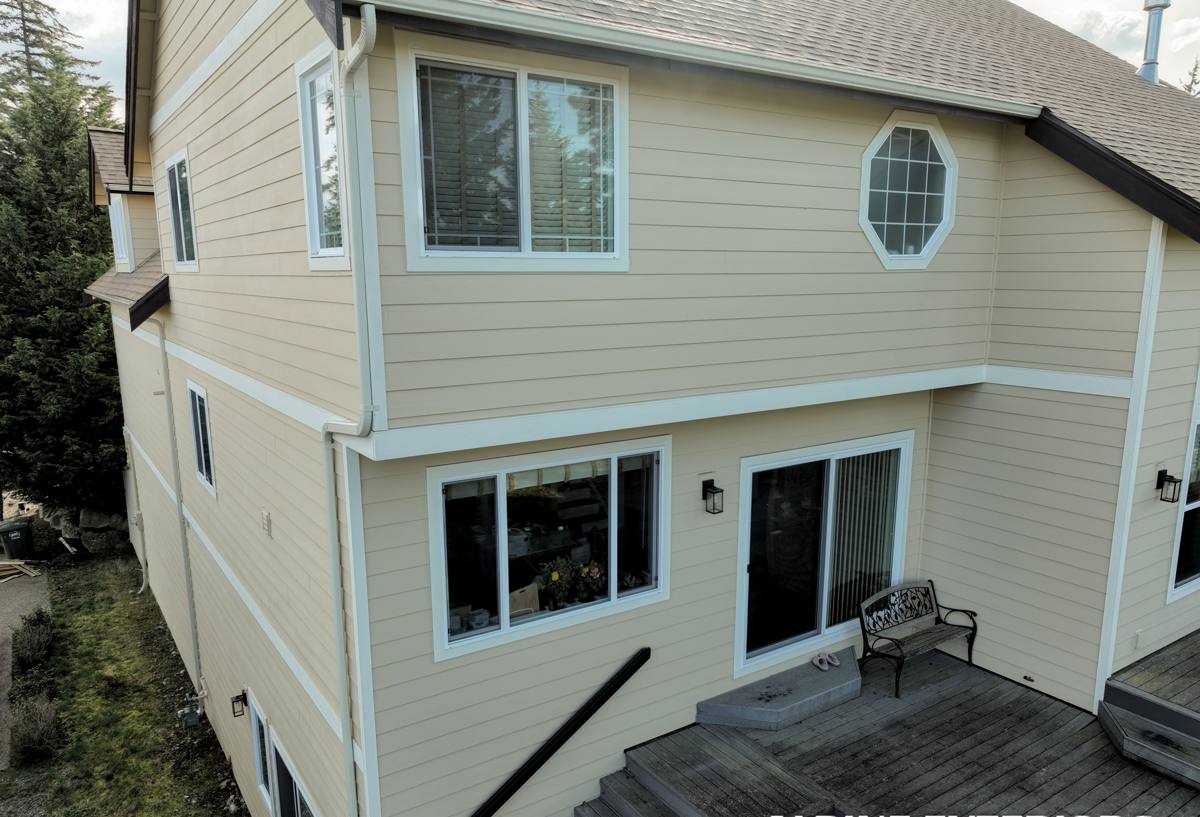
Kenneth City sits inland between Seminole and the rest of Pinellas County, and it's easy to assume that a few extra miles from the beach means a deck out here has an easier life than one on the immediate coast. It doesn't, not really. Pinellas is one of the narrowest, most densely built counties in Florida, and no property in it is far removed from salt-laden air, hurricane wind exposure, or the same intense sun that beats down on the coastline itself. A deck built from the wrong material, or built from the right material but assembled without attention to the details, shows the strain of that climate faster than most homeowners expect.
Composite decking, when it's a genuinely well-engineered product installed correctly, is built to handle that kind of punishment better than dimensional lumber does. This page covers what that means specifically for a deck going in on a Kenneth City property: what the local climate actually does to a deck, what a correct composite installation involves, how our process works here, and why it matters that we already build decks in this part of Pinellas County rather than learning the area on your job.
What Pinellas County's Climate Does to a Deck
Sun and Heat, Nearly Every Day of the Year
Florida gets more direct sun exposure than almost anywhere else in the country, and unlike a wall or a roofline, a deck usually has no shade protecting it — it takes sun for most of the day, most of the year. UV breaks down unstabilized plastics, fades pigment, and dries out untreated wood fiber over time. On lower-quality composite boards, that same sun exposure also drives surface temperature high enough to matter for bare feet by mid-afternoon in summer. How well a board's cap layer and color are engineered determines how much of that heat and UV load actually reaches the material underneath.
Hurricane Wind and Wind-Driven Rain
Pinellas County sees tropical storm and hurricane conditions as a recurring reality, not a rare event to plan loosely around. A deck's framing, its ledger connection to the house, and its railing system all need to be sized and fastened for wind loads that a lot of the country never has to design for. Wind-driven rain behaves differently than a straight-down summer shower, too — it gets pushed sideways and up under board edges, which is part of why drainage and correct board gapping matter as much as which decking material sits on top.
Salt Air, Even This Far from the Immediate Coast
Kenneth City isn't a waterfront address, but it doesn't need to be for salt air to matter. Pinellas County is a narrow peninsula wrapped by Tampa Bay and the Gulf of Mexico, and salt-laden air rides well inland on a normal onshore breeze. It's a slower, less obvious form of exposure than a canal-front lot deals with, but over years it still accelerates corrosion in exposed fasteners, brackets, and railing hardware. That's why fastener grade isn't a place to cut corners here, even on a lot that isn't sitting directly on open water.
Humidity and Moisture at the Substructure
Humidity stays high across most of the year in this part of Florida, and that moisture works on a deck from underneath as much as it does from the top. The substructure — the framing that actually carries the deck's structural load — needs material and fasteners that hold up under sustained dampness without rotting or corroding. That framing does the real work no one sees once the surface boards are down, and it's usually the first thing to fail if it was built with the wrong materials.
What "Composite Decking" Actually Covers
Capped vs. Uncapped Boards
Composite decking is generally a blend of wood fiber and plastic, but the ratio, the plastic type, and how the board is finished vary widely between manufacturers and even between product lines from the same manufacturer. Capped composite wraps a protective plastic shell around that wood-plastic core, which limits moisture absorption, staining, and UV fade. Uncapped composite — the older style of the product — leaves the core exposed on all sides, so it absorbs more moisture and shows fading, staining, and mold growth sooner, especially in a humid climate like this one. We standardize on capped composite for Kenneth City installs because it's the version of this product actually engineered for conditions like ours.
Where PVC Decking Fits In
Some manufacturers also make fully cellular PVC decking, which has no wood fiber in it at all. PVC resists moisture completely and some product lines stay noticeably cooler underfoot, but it can flex more under concentrated point loads and typically costs more upfront than capped composite. Neither one is automatically the better choice — it comes down to budget, how much direct sun the specific deck location gets, and how the space will actually be used. We'll walk through that tradeoff honestly rather than steering you toward whichever product happens to carry a better margin.
What a Correct Composite Deck Build Involves
The decking boards get most of the attention when people picture a new deck, but the substructure and fastening details underneath are what actually determine whether it holds up here. A build done right for a Kenneth City property includes:
- Framing material rated for Florida's ground moisture and sustained humidity, sized to the specific site rather than a generic lumber spec
- Stainless steel or coated fasteners throughout, not standard-grade hardware that corrodes faster under Gulf Coast humidity and inland salt exposure
- Hidden fastener systems on the visible surface where the product supports it, for a cleaner deck face and less exposed metal over time
- Board gapping sized correctly for expansion and contraction, since composite reacts to Florida's heat swings differently than a cold-climate spec sheet assumes
- Ledger board flashing and attachment done correctly where the deck ties into the house — a common failure point under wind and wet conditions
- Joist spacing matched to the specific composite product's span rating rather than a generic wood-framing spacing
- Railing and post attachment sized to hold up under hurricane-level wind loads, not just everyday foot traffic
- Drainage and airflow built into the substructure so moisture doesn't sit against the framing after every rain
Skipping any one of these rarely causes a visible problem in the first year. It shows up later — as a soft spot in the framing, a railing post that's started to work loose, or rust staining bleeding out around a fastener that was never rated for this climate to begin with.
How Our Process Works
We start with a site visit: existing deck condition if this is a replacement, drainage and grade around the area, how much direct sun the space gets across the day, and any framing issues that need to be addressed before new decking goes down. From there we go through composite and PVC product options that fit your budget and how the space will actually get used, whether that's a simple entertaining deck, a quiet spot off the back of the house, or something built around a pool.
Permitting for deck work in Kenneth City follows Florida Building Code requirements, and depending on the scope of the project it can run through the Town of Kenneth City directly or through Pinellas County — we handle that process rather than leaving it for you to sort out. Once permitted, the build follows the sequence above: substructure first, with every framing and fastening decision matched to the site's actual sun and moisture exposure, then the composite surface, railing, and any trim or fascia work. We close out with a walkthrough covering the maintenance the specific product you chose actually needs, which is usually minimal but not zero.
Composite Decking Compared to the Alternatives
| Material | How It Handles Florida Sun & Salt Air | Maintenance | Typical Lifespan Here |
|---|---|---|---|
| Capped composite | Strong — cap layer resists UV fade, moisture absorption, and staining | Occasional washing; no sealing or staining required | Long-term, backed by manufacturer warranty |
| Cellular PVC | Excellent — no wood fiber to absorb moisture or humidity at all | Occasional washing; no sealing or staining required | Long-term, generally at a higher upfront cost |
| Uncapped composite | Moderate — absorbs some moisture, fades and stains faster under Florida sun | Periodic cleaning to manage mold and surface wear | Shorter than capped products in this climate |
| Pressure-treated wood | Weak over time — humidity and salt-laden air corrode fasteners faster | Regular sealing or staining to prevent rot and graying | Shortest option, with the most ongoing upkeep |
| Tropical hardwood | Good natural density, but still needs finish upkeep against UV and humidity | Periodic oiling to prevent graying and surface checking | Long if maintained; degrades faster if neglected |
What Composite Decking Still Needs From You
Composite decking is genuinely low-maintenance compared to wood, but low-maintenance isn't the same as maintenance-free. A little routine attention goes a long way toward getting the full service life out of it in this climate:
- Rinse or wash the surface periodically to clear pollen, organic buildup, and airborne salt residue before it stains the cap layer
- Keep the gaps between boards clear of debris so water and airflow can move through the way the system was designed to drain
- Check railing posts and visible hardware once or twice a year for early signs of corrosion or loosening, especially after storm season
- Trim back landscaping that holds moisture against the deck edge or blocks airflow underneath the structure
- Address any substructure concerns — soft framing, standing water underneath — right away, since that's a structural issue, not a cosmetic one
Why It Matters That We Already Work in Kenneth City and Seminole
A crew that mostly builds decks elsewhere in the state can still install composite decking competently, but this pocket of Pinellas County has its own set of details that don't come up everywhere — permitting that can run through a small town rather than the county directly, humidity and inland salt exposure that older mid-century homes here weren't originally built to shrug off, and lot sizes and access that are often tighter than what a crew from further out is used to working around. Building here regularly means we're not guessing at any of that or figuring it out on your project.
That familiarity also shows up in smaller, less obvious ways — knowing which composite lines actually hold their color and structure after a few Florida summers rather than just a few months, and being straightforward with you about what your specific deck needs versus what's simply an upsell.
Get a Straight Answer About Your Deck
Whether you're replacing a worn-out wood deck, building new, or just want a straight read on what composite decking would take on your Kenneth City property, we're glad to walk the site with you and lay out the options plainly. Reach out below for a free, no-pressure estimate.