 Seminole Siding
 Why Decks in Kenneth City Wear Out Faster Than the Manual Says
Kenneth City sits in the middle of Pinellas County, close enough to the Gulf that salt-laden air reaches every yard in town, even ones without a water view. Add in Florida's UV load, near-daily summer humidity, and the wind-driven rain and occasional hurricane-force gusts that come with living on a peninsula, and you have a climate that is genuinely harder on outdoor structures than most of the country. A deck rated for "20 years" in a manufacturer's brochure is usually tested against milder conditions than what it faces here.
Three things do most of the damage locally: sustained UV exposure that breaks down wood fibers and fades or chalks composite surfaces, moisture cycling from afternoon storms that swells wood and stresses fasteners and connections, and airborne salt that accelerates corrosion on anything metal — screws, joist hangers, post bases, even the fasteners inside a "weather-resistant" composite board. None of these show up overnight. They show up as a deck that looked fine two summers ago and now has soft spots, rust streaks, or a railing that flexes more than it should.
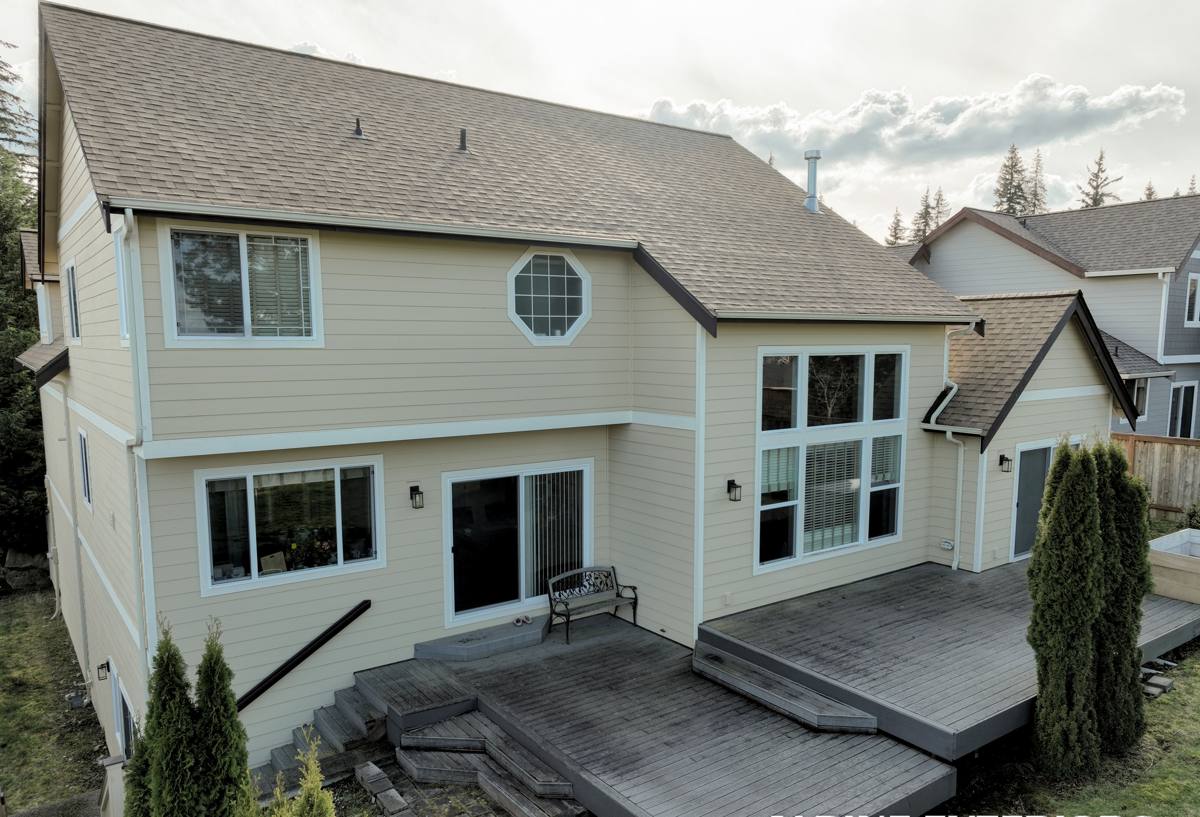
Repair or Replace? Signs to Watch For
Not every tired-looking deck needs a full replacement, but in this climate the line gets crossed sooner than homeowners expect, especially once the structural framing is involved rather than just the surface boards. A few boards you can swap. Rot in the ledger board or posts, or corrosion in the connections holding everything together, is a different problem — one that repair can't really fix long-term.
- Soft, spongy, or springy decking when you walk across it, especially near the house or stair landings
- Visible rot, splitting, or dark staining at the ledger board where the deck attaches to the house
- Rust bleeding from fasteners, joist hangers, or post bases
- Railings or stair stringers that wobble, even slightly, under normal use
- Gaps opening up between boards, or fasteners backing out and popping above the surface
- A deck more than 15-20 years old that has never had the substructure inspected
- Any sign the ledger flashing has failed and water has been getting behind the house siding or trim
If what you're seeing is limited to the top boards, repair or a partial resurface can make sense. If it's in the framing, the ledger, or the connections, replacement is almost always the more honest recommendation — patching a compromised structure just delays the cost and adds risk in the meantime.
Decking Material Options for Salt Air and Sun
There is no single "best" decking material — there's a best material for your budget, your maintenance appetite, and how much sun and salt exposure your particular yard gets. Here's how the common options actually perform under Pinellas County conditions, not just what the packaging claims.
| Material | UV / Fade Behavior | Moisture & Salt Air | Maintenance | Typical Lifespan Here |
|---|---|---|---|---|
| Pressure-treated pine | Fades and grays without regular sealing | Prone to cupping/splitting if not sealed; fasteners must be corrosion-rated | Annual cleaning, resealing every 1-2 years | 10-15 years with upkeep |
| Capped composite | Good fade resistance; cap layer resists chalking better than early composites | Handles moisture well; check fastener hardware rating | Occasional washing, no sealing or staining | 20-25+ years |
| Cellular PVC | Very good fade and UV resistance | Doesn't absorb moisture; unaffected by salt air | Low; occasional washing | 25-30+ years |
| Tropical hardwoods (e.g., ipe) | Grays without oiling; oiling restores color | Naturally dense and rot-resistant, but still needs sealed end cuts | Oiling 1-2x per year to maintain color | 20-25+ years structurally |
Our standard is to steer most Kenneth City homeowners toward capped composite or PVC decking for the walking surface, simply because the maintenance burden of wood in this climate is real and ongoing — it's not that wood decking is a bad product, it's that keeping it looking and performing well here takes consistent upkeep most people underestimate when they choose it. For framing, we don't cut corners regardless of what decking material sits on top: the structure has to be built to the same standard whether the surface is wood or composite.
What We Won't Compromise On, Regardless of Material
Whatever decking product you choose, the substructure and hardware decisions matter more to long-term performance than the brand of board on top. That means treated or naturally decay-resistant framing lumber, stainless or hot-dip galvanized fasteners and connectors rated for coastal exposure, and proper ledger flashing so water is directed away from your home's structure rather than trapped against it.
What a Correct Deck Replacement Actually Involves
A deck replacement done right is a structural project, not a cosmetic swap of old boards for new ones. Here's what should happen underneath the surface, whether or not it's visible once the job is finished:
Ledger Board and Flashing
The ledger — the board that attaches the deck to your house — is the single most common failure point on older decks, and it's often invisible until there's a problem. Correct installation means proper flashing that sheds water away from the house framing, corrosion-resistant lag bolts or structural screws (not nails), and a gap or membrane that keeps moisture from wicking into the house band board.
Footings and Posts
Footings need to be sized and set to local frost and load requirements — which in Florida is less about frost depth and more about proper bearing and wind uplift resistance — with posts anchored using post bases rather than buried directly in concrete, which traps moisture against the wood and shortens its life.
Joists, Beams, and Hardware
Joist hangers, hurricane ties, and structural screws all need to be rated for coastal/exterior exposure. This is one of the easiest places for a lower-cost job to cut corners, because the difference between standard and coastal-rated hardware isn't visible once the decking is down — but it's the difference between hardware that lasts and hardware that starts rusting within a few seasons of salt air exposure.
Railings and Stairs
Railing posts need to be through-bolted into the framing, not just screwed to the rim joist, and stair stringers need full structural support at the base. These are also the components local code inspectors look at most closely, because they're the most common source of injury when a deck fails.
Our Deck Replacement Process, Start to Finish
We keep the process straightforward and give you visibility at each stage rather than disappearing until the job is "done."
- On-site assessment. We inspect the existing deck's framing, ledger, footings, and hardware — not just the surface boards — so any replacement quote reflects what's actually needed, not a guess based on square footage alone.
- Material and layout discussion. We walk through decking material trade-offs based on your budget and how the deck is used, and confirm layout, railing style, and stair placement.
- Permitting. Deck replacements involving structural framing typically require a permit in Pinellas County jurisdictions. We handle the application and coordinate inspections as part of the job, not as an extra line item you have to manage yourself.
- Demolition and disposal. Full removal of the old deck, including framing and footings that aren't being reused, with the site cleaned and hauled off.
- Structural rebuild. New or reinforced footings, framing, ledger flashing, and hardware installed to current code and coastal-exposure standards.
- Decking, railing, and stairs. Surface material installed per manufacturer spacing and fastening specs, with railings and stairs built to code.
- Final walkthrough and inspection. We review the finished deck with you and coordinate the final inspection where required.
Permits and Local Code Considerations in Pinellas County
Most deck replacements that involve rebuilding the structure — as opposed to a simple like-for-like board swap on an already-sound frame — require a building permit in Pinellas County jurisdictions, including work in and around Kenneth City. Permitted work means an inspector checks footings, framing, ledger attachment, and railing/stair safety against current code before it's signed off. That's a genuine benefit to you as the homeowner: it's a second set of eyes confirming the structure is sound, and it protects you at resale, since unpermitted deck work is a common flag that comes up in home inspections. We pull the necessary permits as part of our process rather than leaving that step to the homeowner.
Cost Factors to Expect
Every deck is different, so we won't quote a number without seeing the site, but the main cost drivers are consistent from job to job:
| Factor | Why It Moves the Price |
|---|---|
| Decking material chosen | Pressure-treated lumber costs less upfront; composite and PVC cost more but reduce maintenance spending over the deck's life |
| Deck size and shape | Multi-level decks, curves, and cutouts around trees or utilities add labor and material |
| Condition of existing footings/framing | Footings that can be reused (if structurally sound) reduce cost versus a full tear-out and rebuild |
| Railing style | Cable, glass, and composite railing systems cost more than standard baluster railing |
| Stairs and landings | Additional stair runs or landings add framing, decking, and railing linear footage |
| Site access | Decks with limited access for equipment or material staging can add labor time |
As a general rule, choosing a lower-maintenance material like composite or PVC costs more at installation but saves on the sealing, staining, and board replacement that wood decking asks for every year or two in this climate — worth weighing against your timeline for staying in the home.
Keeping Your New Deck Looking Right
Even low-maintenance materials benefit from a little routine attention, especially with the pollen, salt residue, and organic debris that build up outdoors here year-round.
- Rinse or wash the deck surface every few months to clear salt residue, pollen, and dirt buildup
- Keep gutters and downspouts clear so runoff isn't dumping directly onto or under the deck
- Trim back plants and shrubs touching the deck to allow airflow and reduce trapped moisture
- Check railings and stair connections periodically for looseness, especially after major storms
- For wood decking, plan on resealing or staining on the schedule your material requires — don't wait until it visibly grays
- Watch the area where the deck meets the house each rainy season for any signs of water intrusion
Why Hiring a Crew That Already Works Kenneth City Matters
Deck replacement isn't a job where general contracting experience from another climate automatically translates. A crew that regularly works Kenneth City and the surrounding Seminole area already knows the coastal-rated hardware requirements, the local permitting process, and the failure patterns specific to this environment — because they've seen the ledger boards that rotted from a bad flashing detail and the post bases that rusted through in half the expected time. That familiarity shows up in fewer surprises during the job and a deck that's actually built for the conditions it has to survive, not a generic spec sheet from somewhere with a milder climate.
It also means a shorter distance to travel for the initial assessment, follow-up questions, or a warranty check-in down the road — something worth factoring in alongside price when comparing contractors.
If your deck is showing its age or you're just not sure whether it needs repair or full replacement, we're glad to take a look and give you a straight answer. Reach out for a free, no-pressure estimate using the form below.