 Seminole Siding
 Building a Deck That Actually Holds Up in Ridgecrest
A deck in Ridgecrest has to earn its keep in a way most inland decks never will. Between the year-round UV load, the salt-laden air blowing in off the Gulf, the sudden wind-driven downpours, and the real possibility of a hurricane putting the whole structure to the test, a deck built to generic specs is a deck that will start failing within a few seasons. We build decks specifically for this stretch of Pinellas County, and that shapes almost every decision we make — from the hardware in the framing to the fasteners on the last board.
This page is about one job in one neighborhood: deck building for Ridgecrest homes. Not a general overview of decking nationwide, but what actually matters for a deck going into the ground and up against a house right here in Seminole.
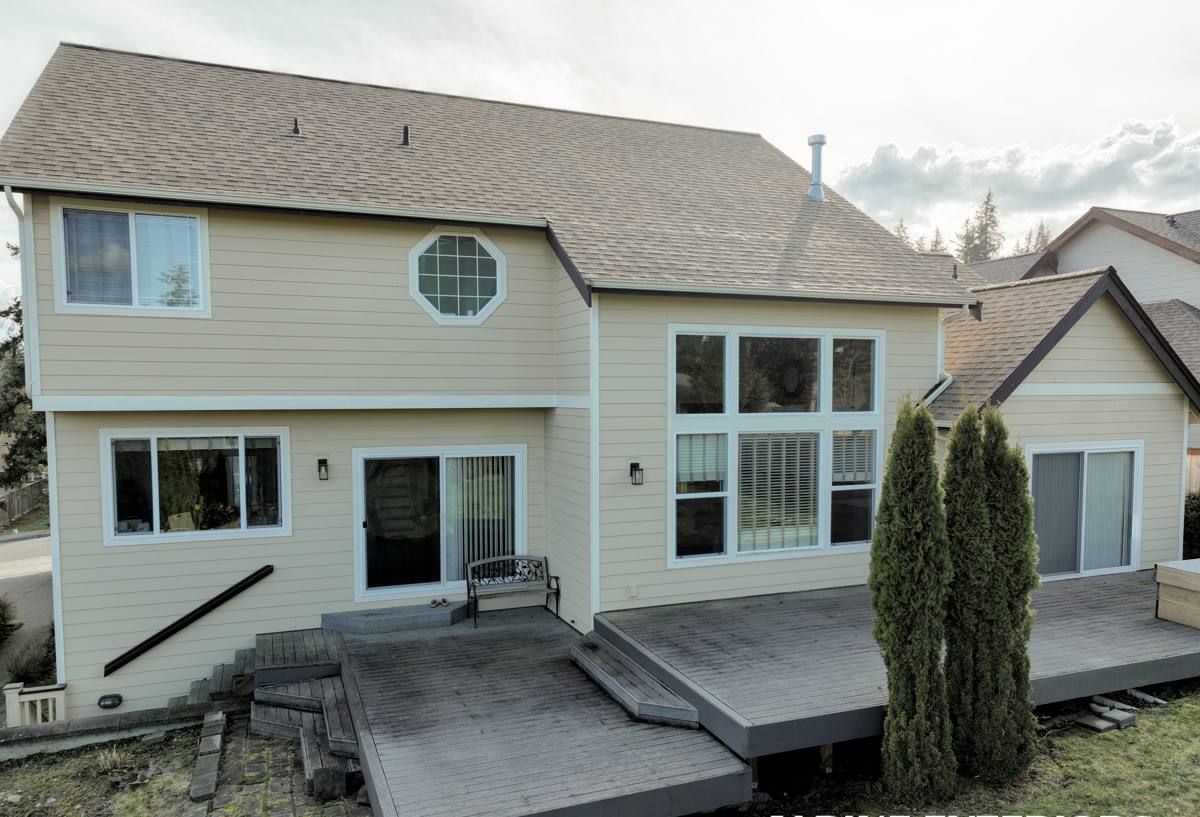
What Coastal Pinellas County Weather Does to a Deck Over Time
Salt Air and Corrosion
Even a few miles from open water, airborne salt works its way into every exposed metal fastener on a deck. Standard zinc-coated screws and nails corrode faster here than the same hardware would inland, and once a fastener starts rusting, it stains the decking around it, weakens its grip, and eventually needs replacing — which means pulling apart boards that were never meant to come up. This is one of the most common corner-cutting mistakes we see on older decks in the area: hardware picked for cost, not climate.
UV and Material Fade
Florida sun is relentless, and it doesn't take a break in the winter the way it does further north. Wood decking grays and checks (splits along the grain) faster under constant UV exposure, and lower-grade composite boards can fade unevenly, especially where a rail or planter casts a partial shadow. Material choice and finish matter more here than in a milder climate.
Wind-Driven Rain and Moisture Intrusion
Storms here rarely come straight down — wind pushes rain sideways, which means it finds its way into any gap in flashing, any unsealed end cut, and any spot where a ledger board wasn't properly separated from the house wall. Moisture trapped behind a deck ledger is one of the more serious problems we find on repair calls, because it can quietly rot structural framing and even damage the house's rim joist before it's visible from the outside.
Hurricane-Force Wind Loads
A deck is a horizontal structure attached to your house, and in a hurricane it can act like a sail or a lever if it wasn't engineered for wind uplift. Post-to-footing connections, joist hangers, and the ledger attachment are the parts of a deck that matter most in a storm — far more than the decking surface itself — and they're also the parts that are hardest to fix after the fact, because they're hidden once the deck is finished.
Choosing the Right Decking Material for a Ridgecrest Home
There's no single "best" decking material — there's a best material for your budget, your maintenance appetite, and how the deck will be used. Here's how the common options actually compare under Pinellas County conditions:
| Material | Moisture & Rot Resistance | UV/Fade Behavior | Maintenance | Typical Lifespan Here |
|---|---|---|---|---|
| Pressure-treated wood | Good if sealed and maintained; end cuts need re-treating | Grays without regular sealing | Annual cleaning, resealing every 1-2 years | 10-15 years with upkeep |
| Composite decking | Very good; doesn't rot or splinter | Fades slightly in first year, then stabilizes; quality varies by product line | Occasional washing, no sealing | 20-25+ years |
| Cellular PVC | Excellent; fully moisture-immune | Best UV stability of the three | Lowest; soap and water | 25+ years |
| Tropical hardwoods (e.g., ipe) | Naturally dense and rot-resistant | Grays without oiling; needs regular oil treatment to hold color | Highest — periodic oiling required | 25+ years if maintained |
We won't push composite or PVC on every job just because they're lower-maintenance — a well-built pressure-treated deck that's sealed on a normal schedule is a perfectly honest choice for a homeowner who doesn't mind the upkeep. What we will do is walk through the real maintenance commitment of each option before you decide, because the material that looks cheapest on day one isn't always the cheapest over ten years of Florida sun and salt air.
What a Correctly Built Deck Involves
Footings and Posts
Footings need to be sized and set to local soil conditions and wind uplift requirements, not just poured to a rule-of-thumb depth. Undersized or shallow footings are one of the more common shortcuts on lower-bid deck jobs, and they're invisible until the deck starts to rack or a post shifts after a storm.
Ledger Attachment and Flashing
Where the deck meets the house is the single most important — and most often botched — connection on the whole structure. It needs proper flashing to keep water from wicking into the house's framing, and lag bolts or through-bolts sized for the actual load, not just nailed on.
Hardware and Fasteners
We use hot-dip galvanized or stainless-steel joist hangers, bolts, and screws throughout — not because it's required on every job, but because it's the standard we hold ourselves to for anything going up this close to the Gulf. Coated deck screws marketed as "exterior-rated" are often adequate inland; near the coast they're a false economy.
Railings and Guards
Railings need to meet height and baluster-spacing requirements and be attached to structural framing, not just fastened to decking boards. This matters for safety and for passing inspection.
Board Spacing and Ventilation
Proper gapping between boards lets a deck dry out after Florida's frequent afternoon rain instead of holding moisture against the framing underneath. Under-deck airflow matters too, especially on lower decks close to grade.
Permitting and Code Requirements in Seminole
Deck construction in Seminole falls under Pinellas County's building permitting process, and most new decks — especially any attached to the house or built above a certain height — require a permit and inspection. Permit requirements exist for a real reason here: they're the mechanism that ensures footings, ledger attachment, and railing construction actually meet the wind and structural standards this area needs. Skipping the permit process might save time up front, but it leaves you without inspection sign-off, which can complicate insurance claims or a future home sale.
We handle the permit application and coordinate inspections as part of the build — it's not an add-on service, it's part of doing the job correctly.
Our Deck Building Process
- Site visit and assessment — we look at grade, drainage, sun exposure, existing structure (if replacing a deck), and how the space will actually be used.
- Design and material selection — sizing, layout, and an honest conversation about material trade-offs for your budget and maintenance preference.
- Permit filing — we prepare and submit the permit package with Pinellas County so nothing is built ahead of approval.
- Footings and framing — the structural work that determines how the deck performs in wind and moisture over the long run.
- Decking, railings, and finish work — the visible layer, installed to the fastening and gapping standards the material requires.
- Final inspection and walkthrough — we don't consider the job finished until it's passed inspection and you've walked the deck with us.
Why a Crew That Already Works Ridgecrest Matters
A deck contractor who works this neighborhood regularly has already dealt with the same soil, the same permitting office, and the same weather exposure your home faces. That familiarity shows up in small but real ways — knowing which footing approach performs well in the local soil, knowing what the county inspector will want to see at each stage, and knowing which hardware and material choices hold up here versus which ones look fine on a spec sheet but fade or corrode faster than advertised in a coastal environment. It also means a crew that's around after the build is done, not one that pulled a permit from out of the area and disappeared once the final payment cleared.
Deck Maintenance Checklist for Ridgecrest Homeowners
- Rinse salt residue off the deck surface and railings every few weeks, especially after windy stretches
- Check fasteners and hardware annually for early rust staining or loosening
- Inspect the ledger flashing where the deck meets the house for gaps or water staining
- Reseal or re-oil wood decking on the schedule the product requires — don't wait until it looks dry and gray
- Clear leaves and debris from between boards so water doesn't pool or wick into framing
- Walk the deck after any major storm and check posts, railings, and stairs for movement before using it
- Keep sprinkler heads and irrigation aimed away from wood posts and framing
Getting Started
If you're planning a new deck or replacing one that's showing its age, we're glad to take a look and give you a straightforward, no-pressure estimate — no invented urgency, just an honest read on what your Ridgecrest property needs and what it will take to build it right. Use the form below to get in touch and we'll set up a time to visit the site.