 Seminole Siding
 Decks Take a Beating on St. Pete Beach
A deck on a barrier island lives a harder life than one a few miles inland. St. Pete Beach sits right on the Gulf, which means every deck out here is dealing with salt-laden air, intense UV exposure nearly year-round, wind-driven rain that finds its way into joints and end grain, and the occasional hurricane-force wind event that tests every fastener and connection. None of that is unique to any one home — it's just the baseline for anything built this close to the water in Pinellas County.
That environment is why a deck that might last two or three decades in a drier, shadier inland yard can start showing real structural problems in half that time near the beach. Salt air accelerates corrosion in metal fasteners and connectors. UV breaks down the lignin in wood fibers and dries out sealants faster than manufacturers' timelines usually assume. Wind-driven rain pushes moisture sideways into places a vertical rain event never would — behind ledger boards, into post bases, under railing posts. Understanding that is the starting point for doing a deck replacement right out here, not just a generic rebuild.
Repair or Replace? Reading the Signs
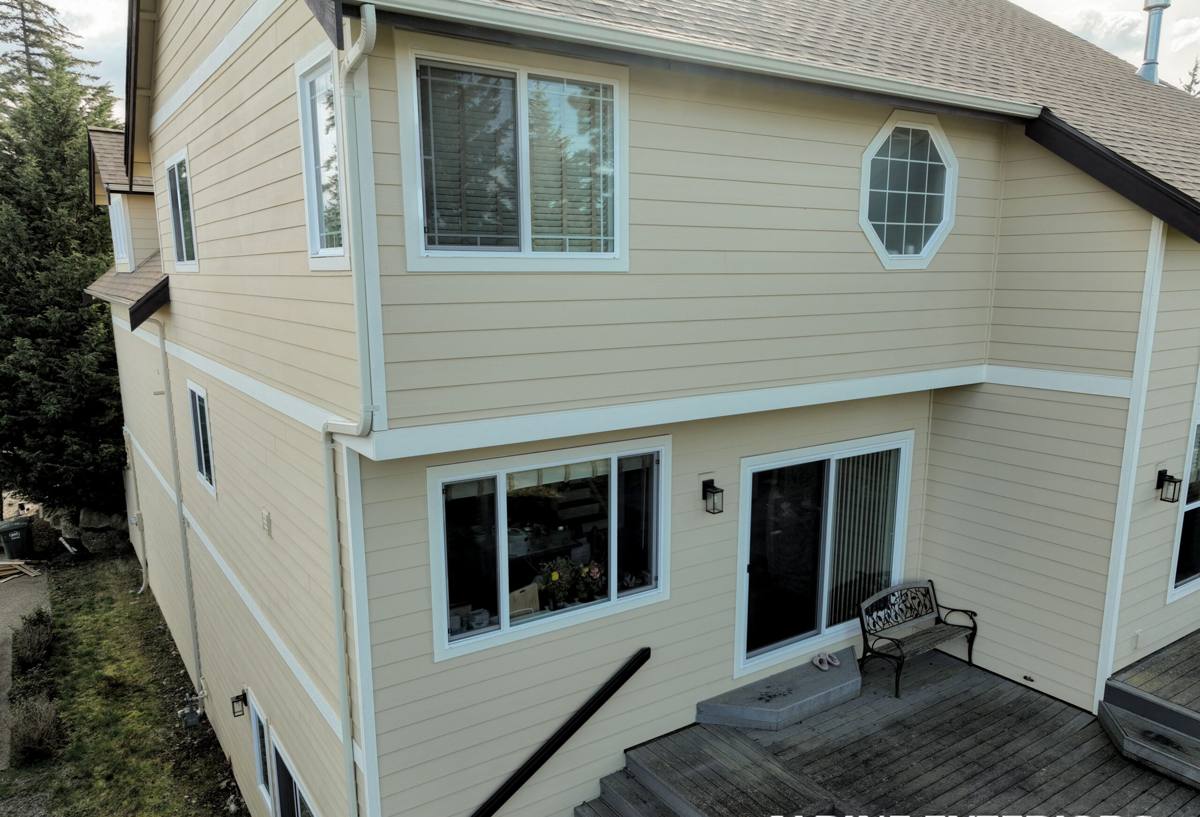
Not every deck problem means a full replacement, but on a coastal property, problems tend to compound faster than homeowners expect. A board that looks fine on top can be failing underneath where salt air and trapped moisture have been working on the framing for years. Before we ever recommend a full replacement, we look at the substructure, not just the surface — because that's where the real story is.
- Boards that feel soft, spongy, or springy underfoot, especially near the house or at board ends
- Fasteners with visible rust streaks, bleeding, or heads that have corroded away
- Railings or stair stringers that wobble or flex more than they used to
- Gaps opening up where the deck framing meets the ledger board attached to the house
- Popped or backed-out nails and screws across multiple boards, not just one or two
- Visible cracking, splitting, or checking that runs deep into the board rather than just surface graying
- Support posts or footings that show movement, settling, or exposed/rotted wood at grade
If most of what you're seeing is cosmetic — surface graying, minor splintering on a handful of boards — a repair or resurfacing can make sense. But once the framing, fasteners, or connections are compromised, patching the decking on top is just delaying a job that will cost more later and carries real safety risk in the meantime.
Choosing Materials for a Gulf-Front Property
Material choice matters more here than almost anywhere else in the region. What performs well in a shaded inland yard doesn't necessarily hold up under constant salt spray and full-sun exposure. We walk every homeowner through the honest trade-offs rather than pushing one product as a cure-all.
| Material | Salt Air Resistance | UV/Fade Resistance | Maintenance | Typical Lifespan |
|---|---|---|---|---|
| Pressure-treated wood | Moderate — depends on fastener quality and sealing schedule | Fades and grays without regular sealing | Annual cleaning and resealing recommended | 10-15 years near the coast |
| Tropical hardwoods (e.g., ipe) | Good — naturally dense and rot-resistant | Grays over time unless oiled regularly | Periodic oiling to maintain color and prevent checking | 20-25+ years with upkeep |
| Composite decking | Good — resists rot and insect damage | Varies by brand; capped composites resist fading better | Low — occasional washing, no sealing | 20-30 years |
| PVC decking | Excellent — fully synthetic, doesn't absorb moisture | Very good with quality capstock | Low — soap and water cleaning | 25-30+ years |
Fasteners and hardware matter just as much as the decking surface. We use corrosion-resistant, marine-grade or stainless fasteners and connectors on coastal jobs — standard hot-dip galvanized hardware can start showing rust bleed within a few seasons of direct salt air exposure, which stains the decking and eventually weakens the connection itself.
Why We're Selective About What We Install
We don't install every product on the market for beachfront homes. Some decking and railing systems that perform fine inland aren't built with coastal-grade fastener systems, hidden moisture channels, or capstock formulations suited to constant salt exposure. When we steer a homeowner away from a particular product, it's about matching the material to this specific environment — not a knock on the manufacturer. Our standard is simple: if we wouldn't expect it to hold up on a Gulf-facing property, we don't put our name on the installation.
What a Correct Deck Replacement Actually Involves
A deck replacement is more than pulling up old boards and screwing down new ones. On a coastal property, the parts you don't see matter more than the surface.
Framing and Fasteners
We inspect and typically replace the ledger board, joists, beams, and posts as part of a full replacement — reusing framing that's already been exposed to years of salt air and moisture cycling is a common source of early failure in "replacements" that only swapped out the decking on top. All structural fasteners and joist hangers get upgraded to corrosion-resistant hardware rated for coastal or treated-lumber contact.
Ledger Board and Flashing
The ledger board — where the deck attaches to the house — is the single most common failure point on any deck, and it's especially vulnerable here because wind-driven rain pushes water sideways into places a normal rain event wouldn't reach. Proper flashing, correctly lapped with the house's water-resistive barrier, is non-negotiable. This is also the connection point that has to resist uplift in high wind, so it gets engineered fastening, not just what looks sturdy.
Permits and Wind Load Requirements
Deck replacements in St. Pete Beach and elsewhere in Pinellas County generally require a permit and inspection, and the structure has to meet current Florida Building Code wind load provisions for this region. That affects post spacing, footing depth, railing attachment, and guard height. We handle the permitting and coordinate inspections as part of the job so homeowners aren't left chasing down paperwork.
Railings, Stairs, and Guard Requirements
Railings and stairs are where a lot of older decks fall out of code without anyone realizing it — a deck built or last rebuilt years ago may simply not meet current guard height, baluster spacing, or graspable handrail requirements. As part of a full replacement, we bring these elements up to current code, which matters both for safety and for avoiding issues if the property is ever inspected for insurance, sale, or a future permit. On elevated decks especially, railing post attachment needs to be engineered for wind load, not just fastened into the rim joist with a couple of lag bolts.
Our Deck Replacement Process
We keep the process straightforward and communicate what's happening at each stage, since a deck replacement disrupts a homeowner's outdoor living space for a stretch of time.
- On-site assessment — we inspect the existing deck's framing, ledger connection, posts, and footings to determine what can be reused (rarely much on a coastal home) and what needs full replacement.
- Material selection — we walk through decking, railing, and fastener options suited to a Gulf-front property, with honest cost and maintenance trade-offs for each.
- Permitting — we prepare and submit the permit application and coordinate required inspections with the local building department.
- Demolition and disposal — old decking, framing, and hardware are removed and hauled off.
- Framing and structural work — new or reinforced footings, posts, beams, joists, and properly flashed ledger connection.
- Decking, railing, and stairs installed — following manufacturer fastening specs and current code for guard height and spacing.
- Final inspection and walkthrough — we confirm everything passes and go over basic care with the homeowner before we call the job done.
Living With a New Deck Near the Water
Even the most durable materials benefit from a little upkeep in a salt air environment. Rinsing the deck periodically to clear salt residue, keeping gutters and drainage clear so water doesn't pool against the framing, and doing a quick visual check of fasteners and railing connections after major storms will catch small issues before they become expensive ones. If you chose wood, staying on a resealing or oiling schedule matters more here than it would inland, since sun and salt both accelerate breakdown of the finish.
Why Local Experience on St. Pete Beach Matters
A deck replacement done by a crew unfamiliar with barrier island conditions often looks fine on day one and starts showing problems within a couple of years — usually because standard hardware, standard fastening schedules, or standard material assumptions were used on a property that needed coastal-grade everything. Working regularly in St. Pete Beach means we already know what the salt air, wind exposure, and local permitting process require, so we're not guessing or learning on your project. That familiarity also means fewer surprises during permitting and inspection, since we're used to what Pinellas County's coastal wind requirements call for.
If your deck is showing wear, feels less solid than it used to, or you're just planning ahead before it becomes a safety issue, we're happy to take a look and give you a straightforward read on repair versus replacement. Reach out for a free, no-pressure estimate — the form below gets you started.