 Seminole Siding
 Siding That Has to Earn Its Keep in Bardmoor
Bardmoor homes sit inland enough from the Gulf to feel like they're spared the worst of coastal weather, but Seminole's exterior building materials don't get an easy pass just because they're a few miles from open water. Salt air travels on prevailing winds across Pinellas County regardless of how far a house sits from the shoreline, and it settles into whatever cladding is on the wall. Combine that with the intense, near-constant Florida UV load, the wind-driven rain that rides in ahead of summer storms and tropical systems, and the occasional hurricane-force gust, and you have a climate that is genuinely hard on siding — harder than most manufacturers' marketing materials let on.
Bardmoor's housing stock spans several decades of construction, which means the siding on any given block is likely a mix of original material, one or two rounds of replacement, and everything in between. When we're asked to look at a home in this neighborhood, we're usually looking at either failing original siding that was never rated for this environment, or a replacement product that's degrading faster than the homeowner expected. Both point to the same lesson: in this climate, the material matters as much as the installation.
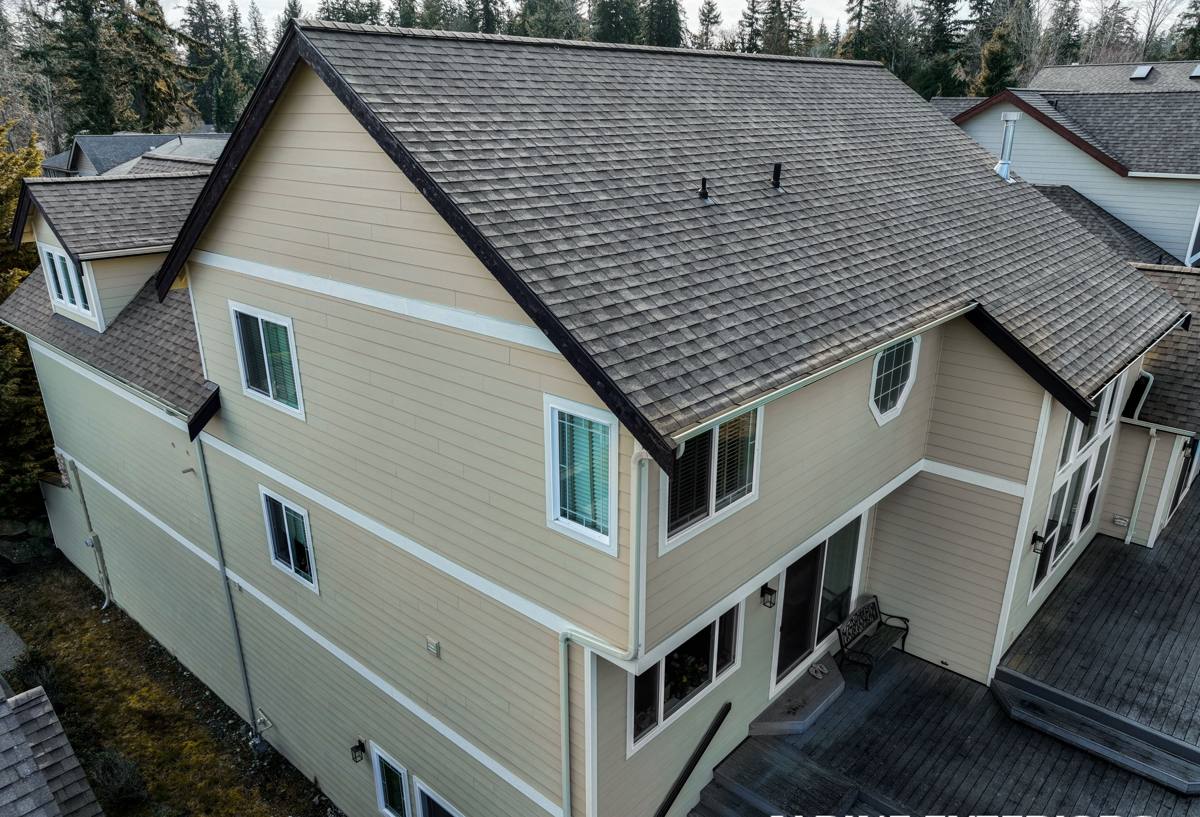
Why We Only Install James Hardie in This Neighborhood
We install James Hardie fiber cement siding exclusively — not vinyl, not LP SmartSide, not Cemplank or Allura, not primed wood. That's not a marketing position, it's a standard we hold because of what we see on Seminole homes over time. Fiber cement is non-combustible, dimensionally stable in heat and humidity swings, and — when it's Hardie's HZ5 formulation, engineered for the humid Southeast — it's built specifically to resist the moisture cycling that this climate throws at cladding year-round.
Vinyl siding softens, warps, and can pull away from fasteners under sustained high heat and direct sun exposure, which is exactly what Bardmoor gets for most of the year. Wood-based and engineered-wood products depend heavily on an intact factory or field-applied coating to keep moisture out; once that coating is compromised by UV or a missed maintenance cycle, the substrate underneath is vulnerable in a way fiber cement simply isn't. James Hardie's ColorPlus factory finish is baked on and warranted against fading and peeling, which matters enormously under Florida sun — a huge percentage of the "my siding calls I get every year" is homeowners on other products chasing repaints that Hardie owners don't have to think about.
What HZ5 Actually Changes
James Hardie makes region-specific formulations, and the HZ5 line is engineered for high-humidity, high-moisture climates like ours — as opposed to the HZ10 formulation built for colder, drier northern regions. Installing the correct regional product isn't a technicality; it affects how the board handles moisture absorption and expansion over its service life. This is one of the first things we confirm on every Bardmoor estimate, because using the wrong regional formulation is a mistake that doesn't show up for a few years — by which point it's expensive to fix.
What Correct Installation Actually Requires
Fiber cement siding is only as good as the installation underneath it. Hardie's product warranty is explicit about this, and a huge share of the siding "failures" we get called out to inspect trace back to installation shortcuts, not the material itself. On a Bardmoor home, given the wind and rain exposure, the details below aren't optional extras — they're the difference between siding that performs for decades and siding that lets water behind the wall.
- Weather-resistive barrier and flashing: a continuous, properly lapped water-resistive barrier behind the siding, with correctly integrated flashing at every window, door, and roofline intersection — this is the actual waterproofing layer, not the siding itself.
- Correct fastener pattern and type: Hardie specifies fastener size, spacing, and embedment depth by product line and wind exposure; in a hurricane-wind-rated area like Seminole, this isn't a place to cut corners or use a generic nail schedule.
- Proper clearances: minimum gaps between the bottom of the siding and grade, roofing, decks, and patios so water can't wick into the board or sit against it.
- Joint and seam treatment: factory-primed cut edges re-sealed in the field, and butt joints treated per Hardie's published details rather than just butted and caulked.
- Caulking discipline: the right sealant in the right places — enough to seal, not so much that it traps moisture or blocks the assembly's ability to dry.
Any one of these done wrong can void the manufacturer's warranty even though the siding itself is a top-tier product. This is exactly why "who installs it" matters as much as "what's being installed."
Our Process for a Bardmoor Home
1. On-Site Assessment
We walk the exterior with you, note the condition of the existing siding and the substrate underneath it, check for moisture intrusion or soft sheathing at vulnerable points (window sills, roof-wall intersections, lower wall sections), and talk through what your home actually needs versus what looks fine from the curb but isn't.
2. Substrate and Barrier Prep
Old siding comes off, the sheathing gets inspected and repaired where needed, and a new weather-resistive barrier goes on with attention to every penetration and transition. This step is invisible once the job is done, which is exactly why it's the step that gets shortcut on lower-bid jobs — and exactly why we don't skip it.
3. Installation to Hardie Spec
Panels or planks are installed per James Hardie's published installation guide for our wind zone and climate region, with correct fastening, flashing, and joint treatment throughout.
4. Finish and Walkthrough
Trim, caulking, and touch-up work are completed, the site is cleaned up, and we walk the finished exterior with you before calling the job done.
Product Lines and Color Options
James Hardie's product line gives Bardmoor homeowners real flexibility in look without giving up performance. The table below covers the main options we work with:
| Product | Best For | Notes |
|---|---|---|
| HardiePlank Lap Siding | Traditional and most common look | Available in smooth or cedar-textured finish; the most common choice on Seminole homes |
| HardiePanel Vertical Siding | Accent walls, gables, modern styling | Often mixed with lap siding for visual contrast |
| HardieShingle | Accent areas, gables, coastal-style detailing | Staggered or straight-edge panel options |
| HardieTrim | Corners, window and door trim, fascia | Matches the fiber cement system so trim ages consistently with the field siding |
All of these are available with ColorPlus factory finish, which applies the color and clear coat under controlled factory conditions rather than in the field — this is a meaningfully more durable and consistent finish than field-painted siding, and it carries its own finish warranty separate from the product warranty.
What Drives the Cost of a Bardmoor Siding Job
| Factor | Why It Matters |
|---|---|
| Home size and wall complexity | More corners, dormers, and roof-wall intersections mean more flashing detail and labor time |
| Substrate condition | Rot or moisture damage found during tear-off adds repair scope before new siding can go on |
| Product line and profile | Plank, panel, and shingle products carry different material and labor costs |
| Trim and accent work | Vertical accents, shingle-style gables, and custom trim details add time beyond a straight lap-siding job |
| Access and site conditions | Fencing, landscaping, pool cages, and tight side yards affect how efficiently a crew can work |
We give straightforward, itemized estimates so you know what you're paying for and why — no vague lump-sum numbers that hide whether proper flashing and prep are actually included.
Why Local, Bardmoor-Familiar Experience Matters
A crew that already works in Seminole and the surrounding Pinellas County neighborhoods knows what this specific climate does to a home over years, not just what a manufacturer's brochure says it should do. That means recognizing the early signs of moisture intrusion at a roofline before they become a structural repair, knowing which wall orientations take the worst UV and sun exposure and need extra attention, and understanding how wind-driven rain actually moves across a house in this part of Florida versus how it's described in a generic installation manual. It also means being available for warranty follow-up and questions long after the crew has packed up — not a one-time crew that's out of state by the time an issue shows up.
Maintenance: What Bardmoor Homeowners Actually Need to Do
- Rinse the exterior periodically to clear salt residue and dirt buildup, especially on sides that face prevailing wind.
- Inspect caulking at trim joints, window and door surrounds, and butt joints once a year and re-caulk where it's cracked or pulled away.
- Keep sprinklers and irrigation heads from spraying directly onto the siding — constant wetting shortens the life of any exterior material.
- Walk the perimeter after major storms and look for cracked panels, loose trim, or gaps at flashing points.
- Trim vegetation back from the siding so leaves and moisture don't sit against it.
Compared to vinyl or wood-based products, Hardie with ColorPlus finish needs far less of this list to stay looking and performing correctly — but "far less" isn't "none," and a quick annual check catches small issues before they become expensive ones.
When It's Time to Replace
Common signs we see on Bardmoor homes include visible cracking or buckling in the current siding, soft or spongy spots (usually a sign of moisture behind the material), paint that keeps failing no matter how often it's redone, and gaps or separation at seams and corners. If you're seeing any of these, it's worth having someone look at the substrate underneath, not just the surface — that's where the real story is.
If you'd like an honest look at your Bardmoor home's siding, we offer free, no-pressure estimates. We'll tell you plainly what condition your current siding is in and what a correct James Hardie installation would involve — no obligation either way.