 Seminole Siding
 Siding Installation for Bardmoor: A Different Climate Problem Than Most of the Country
Bardmoor is an established residential community in Seminole, tucked into Pinellas County a few miles from the Gulf. Homes here face a combination of stresses that most siding products were never engineered to handle for the long haul: hurricane-force wind gusts, wind-driven rain that gets forced sideways into wall assemblies, some of the most intense year-round UV exposure in the continental United States, and a steady drift of salt air off the coast that attacks fasteners, caulk, and paint film. Any one of those factors is manageable. All four, working on a home continuously for decades, is what actually determines whether a siding installation holds up or quietly fails behind the surface.
When we talk about "siding installation" in Bardmoor, we're not just talking about fastening boards to a wall. We're talking about a system — water management, fastening pattern, clearances, and finish — that has to be correct for this specific climate from day one, because mistakes here don't show up as cosmetic issues. They show up as rot, mold, and structural repair bills five to ten years later.
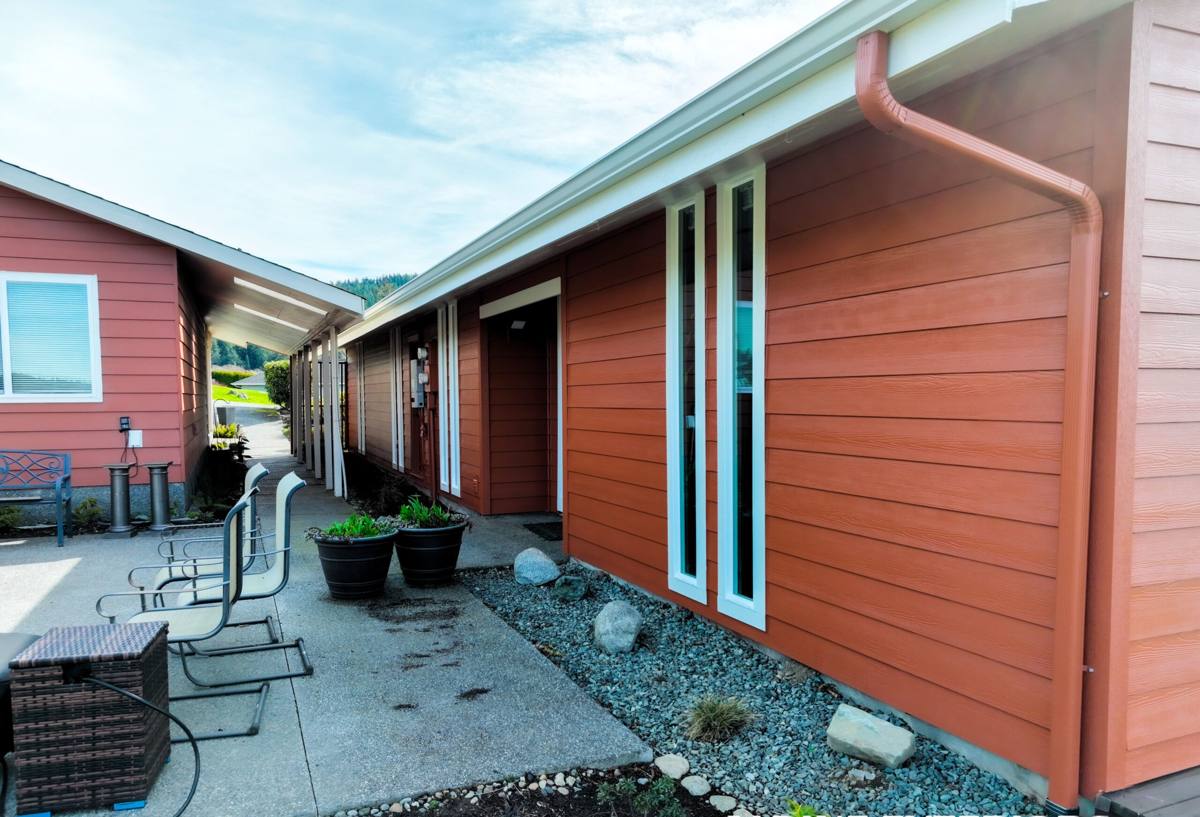
What Bardmoor Homes Are Up Against
Wind
Pinellas County sits in a high-wind coastal zone, and Bardmoor is no exception. Siding has to be rated and fastened to resist sustained uplift and wind-driven debris, not just look good on a calm day. Under-fastened or improperly nailed siding is one of the most common causes of storm damage we get called to repair after a named storm passes through.
Wind-driven rain
Rain that falls straight down is easy to shed. Rain that's being pushed sideways at 40+ mph finds every gap in flashing, every unsealed seam, and every place where siding was installed tight to trim instead of with a proper drainage gap. Correct installation assumes rain will be driven into the wall — the whole point of the water-resistive barrier and flashing details is to get that water back out before it reaches the structure.
UV exposure
Florida sun degrades paint film and substrate faster than almost anywhere else in the country. Siding that isn't engineered with UV-stable pigments and finishes will chalk, fade, and become brittle years ahead of schedule, especially on south- and west-facing walls.
Salt air
Even a few miles inland, salt-laden air corrodes exposed metal fasteners and accelerates the breakdown of lower-grade caulks and sealants. Fastener choice and sealant quality matter more here than in a landlocked climate.
What a Correct Installation Actually Involves
A siding job that's built to last in Bardmoor isn't defined by the brand name on the box — it's defined by whether the underlying details were done right. That includes:
- A continuous, correctly lapped water-resistive barrier behind the siding, with no gaps at penetrations
- Proper flashing at every window, door, and roof-to-wall transition, installed in the correct shingle-lap order so water sheds outward
- Manufacturer-specified fastener type, size, and spacing — not "close enough"
- Correct clearance gaps at the bottom of the siding, at trim, and at any place siding meets a horizontal surface like a roof or deck
- Field-cut edges sealed and primed before installation, not left raw
- Caulk and sealant products rated for coastal UV and salt exposure, not general-purpose hardware store caulk
Skip any one of these steps and the siding might look fine for a year or two. The failures that actually matter — moisture intrusion, fastener corrosion, panel cracking — show up later, once they're expensive to fix.
Common Problems We See on Older Bardmoor Homes
Many homes in this neighborhood are several decades old, and it's common for the siding to be original or a prior replacement that's now past its useful life. The patterns we see most often when we inspect these homes include:
- Cracked or shrunken caulk lines at trim and window edges, letting water track behind the siding
- Faded, chalky paint on south- and west-facing elevations from years of direct sun
- Rust staining below fastener heads on older metal or lower-grade siding products
- Soft or spongy trim boards where wind-driven rain has been getting behind the siding at corners
- Gaps or buckling where the siding was installed without room to expand and contract with temperature swings
None of these are unusual for the age and exposure of these homes — they're exactly what you'd expect from decades of coastal Florida weather on an aging exterior. The question for a homeowner is whether it's still a maintenance issue or whether it's become a moisture problem that needs to be addressed before new siding goes on.
Why We Only Install James Hardie Fiber Cement
We install James Hardie fiber cement siding exclusively. We don't install vinyl, LP SmartSide or other engineered wood products, Cemplank, Allura, or primed wood siding — not because those products don't have a place in the market, but because after years of working on homes in this exact climate, we standardized on the one product system that consistently holds up to it without shortcuts.
Fiber cement is non-combustible, which matters in a state where wildfire and lightning-driven brush fires are a real if secondary risk, and it doesn't provide the food source that engineered wood products can if moisture ever does get behind them. James Hardie's HardieZone system also lets us specify a version of the product engineered for this specific humidity and moisture profile, rather than a one-size-fits-all product built for a drier climate. The factory-applied ColorPlus finish is baked on under controlled conditions and backed by its own finish warranty, which matters enormously in a market where UV fading is one of the top complaints homeowners have about site-painted siding.
None of this means other products are inherently defective — vinyl and engineered wood siding both have legitimate uses. But we've made a professional decision to put our installation crews, our warranty, and our reputation behind one system that we've seen perform correctly, installed correctly, in this exact climate. That's the whole reason we don't offer alternatives.
Our Installation Process
Every job follows the same sequence, whether it's a single elevation repair or a full re-side:
- Inspection and moisture check. Before we quote anything, we look at the existing wall assembly for hidden rot or moisture damage that needs to be addressed before new siding goes on.
- Tear-off. Old siding, damaged trim, and compromised barrier material come off. We don't install new siding over a wet or rotted substrate.
- Substrate repair. Any damaged sheathing or framing gets repaired or replaced before we move forward.
- Water-resistive barrier. A continuous, correctly lapped barrier goes on with proper integration at every window and door opening.
- Flashing. Every penetration and transition gets flashed in the correct order so water is directed outward, not trapped.
- Siding installation. James Hardie panels or lap siding go on to manufacturer spec — correct fastener pattern, correct clearances, correct joint treatment.
- Trim and caulk. Coastal-grade sealants go in at every joint and penetration.
- Final walkthrough. We inspect the finished job with the homeowner before calling it done.
Why a Crew That Already Works Bardmoor Matters
Siding installation isn't just a product spec — it's local knowledge applied correctly. A crew that regularly works this neighborhood already understands the age and construction patterns common to Bardmoor homes, knows what Pinellas County's permitting and wind-load requirements call for on a residential re-side, and has already seen how these specific homes behave under coastal exposure. That's different from a crew learning the neighborhood's quirks for the first time on your job.
It also matters for scheduling and follow-up. A local crew can respond quickly if a storm rolls through mid-project or if a warranty question comes up years later, instead of a homeowner trying to track down a contractor who did one job in the area and moved on.
Cost Factors for a Bardmoor Siding Installation
Every home is different, but the variables that move the price on a project like this are consistent. We won't quote a number without seeing the home, but here's what actually drives cost:
| Factor | Why It Matters | Effect on Cost |
|---|---|---|
| Extent of tear-off | Full removal of old siding and barrier vs. limited sections | Higher with full removal |
| Substrate condition | Hidden rot or moisture damage requires repair before new siding goes on | Increases if repairs are needed |
| Home size and elevation complexity | More square footage, corners, and window/door openings mean more labor and flashing detail | Scales with complexity |
| Siding profile chosen | Lap siding vs. panel systems, plank width, and trim style | Varies by product line |
| Color and finish | Factory ColorPlus finish vs. field-painted options | Modest difference, affects long-term maintenance |
| Access and site conditions | Mature landscaping, fencing, or tight lot lines can slow the work | Can add labor time |
Maintaining Your Siding After Installation
Correctly installed fiber cement siding is low-maintenance, but "low" isn't "none" — especially in this climate. A simple annual routine keeps small issues from becoming expensive ones:
- Rinse salt residue and dust off exterior walls once or twice a year, especially on Gulf-facing elevations
- Walk the exterior after any major storm and look for cracked caulk, loose trim, or impact damage
- Keep sprinklers from spraying directly and continuously onto the same section of wall
- Trim back shrubs and trees so foliage isn't holding moisture against the siding
- Re-caulk joints as needed rather than waiting for a visible gap to let water in
- Address any soft spots, staining, or bubbling paint promptly rather than waiting for the next project
If your Bardmoor home's siding is showing its age, or you're planning ahead rather than waiting for a problem to force the decision, we're glad to take a look and give you an honest, no-pressure assessment. There's no cost or obligation for an estimate — just a straight answer on what your home actually needs.