 Seminole Siding
 Siding on the west side of Pinellas County works harder than siding almost anywhere else in the country. Between hurricane-season wind loads, wind-driven rain that gets pushed sideways into every seam and joint, and UV exposure that runs strong nearly twelve months a year, a home's exterior cladding is under constant, low-grade attack even when there's no storm in the forecast. Add in the salt content that rides the air off the Gulf, and you have a climate that will find every weak point in a siding system faster than almost any other part of the country. This page is about one specific job, done right, in this specific area: siding repair for homes in and around Clearwater, close to our Seminole base.
Why Siding in This Area Fails Faster Than the National Average
Most siding damage isn't caused by one dramatic event. It's cumulative. A home in Pinellas County deals with several stressors stacked on top of each other, and each one shortens the useful life of whatever is on the wall:
- Wind-driven rain gets forced horizontally into laps, seams, and fastener penetrations during the frequent thunderstorms this area sees, not just named storms.
- UV exposure is close to year-round here, which breaks down caulking, degrades unprotected wood, and fades unstable finishes faster than the manufacturer's own testing sometimes predicts for milder climates.
- Salt-laden air off the Gulf accelerates corrosion on fasteners, flashing, and any exposed metal trim, which in turn creates staining and moisture paths into the siding itself.
- Humidity keeps wall assemblies damp longer after every rain event, which matters enormously for how forgiving — or unforgiving — a given siding material is of water contact.
None of that means every home needs a full re-side. It does mean repairs in this area need to be diagnosed with those four stressors in mind, not treated as a generic patch job.
Signs a Clearwater-Area Home Needs Siding Repair
Most homeowners notice siding problems only after they've become visible from the street. By that point, there's usually been damage happening out of sight for a while. Here's what we tell people to actually check:
- Soft or spongy spots when you press on siding near the bottom courses, around window and door trim, or under roof-to-wall transitions
- Visible cracking, chipping, or delamination at panel edges or corners
- Streaking or dark staining below seams, nail heads, or trim joints — a sign water is tracking somewhere it shouldn't be
- Caulk that has pulled away, cracked, or gone brittle at butt joints and trim lines
- Panels that have separated, bowed, or pulled loose from the wall, especially after a windy stretch of weather
- Rust bleed around fastener heads or flashing
- A musty smell or visible mold near an exterior wall on the interior side of the house
Any one of these on its own might be a small, contained repair. Several of them together, especially spread across more than one wall, usually means moisture has been getting behind the siding for a while and the repair needs to start with finding out how far it's traveled.
What a Correct Repair Actually Involves
It starts behind the siding, not on top of it
The single biggest mistake in siding repair is treating it as a cosmetic fix — cutting out a bad section, nailing up something that looks close enough, and caulking the edges. If there's been water intrusion, the housewrap, sheathing, and framing behind that section need to be checked before anything new goes up. Repairing over damaged sheathing just seals the problem in.
Matching material and finish
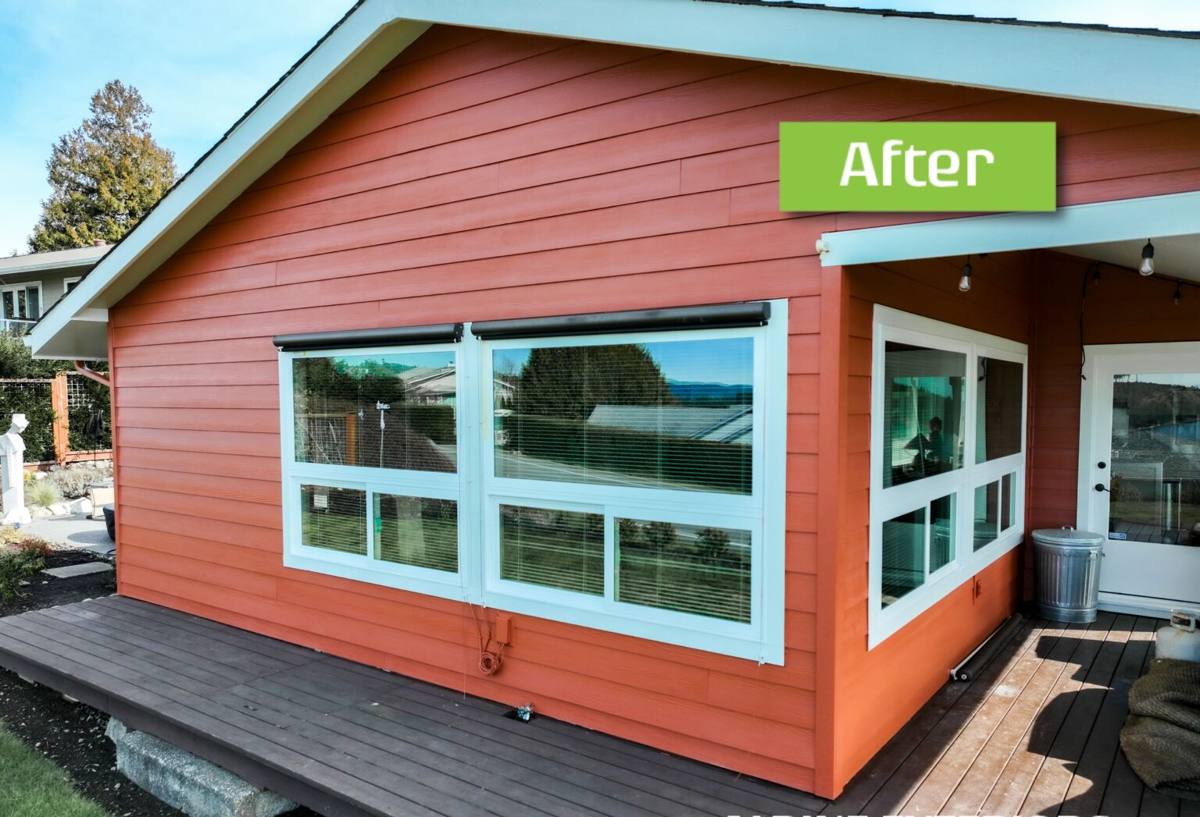
We only install and repair James Hardie fiber cement siding, and one advantage of working exclusively in one product family is that we know the profiles, reveals, and ColorPlus factory finishes well enough to match a repair section cleanly instead of leaving an obvious patch. Matching an existing installation correctly means matching the plank width, the exposure, and — where the color has faded evenly across the wall — sometimes recommending a slightly larger repair area so a brand-new section doesn't stand out next to sun-aged panels.
Flashing and fastening, not just the panel
A huge share of repeat siding failures in this climate trace back to flashing that was missed or fasteners that were placed wrong the first time, not the siding material itself. Any proper repair re-checks the flashing at windows, doors, and horizontal trim, and re-fastens according to manufacturer spec for wind exposure — which in coastal Pinellas County is not the same spec as an inland installation.
Common Repair Scenarios We See in This Part of Pinellas County
| Scenario | Typical Cause | What the Repair Usually Requires |
|---|---|---|
| Cracked or split panels near corners | Wind flex, impact, or expansion/contraction stress on an unstable or improperly fastened product | Section replacement, corner trim check, fastening review |
| Soft/rotted trim at window and door casings | Wind-driven rain intrusion through failed caulk joints or missing flashing | Trim removal, sheathing inspection, re-flashing, new trim |
| Staining and rust streaks below seams | Corroding fasteners or flashing reacting with salt air | Fastener replacement, spot repaint or panel replacement, source of moisture identified |
| Panels pulling away from the wall | Under-fastening or fastener failure under wind load | Re-fastening to code, replacement of any panel that cracked during separation |
| Widespread caulk failure at joints | UV breakdown of an aging caulk line, common after years of full-sun exposure | Full joint re-caulk with a product rated for this climate, inspection for water behind the joint |
How Our Repair Process Works
1. Inspection
We walk the affected area and the rest of the exterior, since siding problems on one wall are often an early warning for the walls that take the same weather exposure. We check for soft spots, look at flashing details, and note anything that suggests moisture has traveled beyond the visibly damaged section.
2. Diagnosis and scope
We tell you plainly whether this is a contained repair or whether the damage points to a bigger underlying issue. We're not going to talk a homeowner into a full re-side for a problem that's genuinely a localized repair, and we're not going to patch over something that's going to fail again in a year.
3. The repair itself
Damaged material comes out, whatever is behind it gets inspected and corrected if needed, and new James Hardie material goes back in matched to the existing plank size, exposure, and finish, fastened to spec for this area's wind exposure.
4. Cleanup and final check
We walk the repair with you before we consider the job done, and we check that trim lines, caulk joints, and paint match cleanly with the surrounding siding.
What Affects the Cost of a Siding Repair
| Factor | Why It Matters |
|---|---|
| Size of the damaged area | A single panel is a different job than a full wall section |
| Whether sheathing or framing is affected | Water damage behind the siding adds carpentry work beyond the siding itself |
| Height and access | Second-story and gable repairs require staging or lift access |
| Matching an older installation | Discontinued colors or profiles may need a larger repair area or a repaint to blend |
| Flashing and trim condition | Repairs that also require re-flashing take longer than a straight panel swap |
Because of how much these factors vary house to house, we don't publish flat repair pricing — a same-day estimate after a physical inspection is the only honest way to scope it.
Why a Crew That Already Works This Area Matters
Siding repair done well requires knowing how a specific climate behaves against a specific product, not just knowing how to swap a panel. A crew that works Seminole, Clearwater, and the surrounding Pinellas County communities regularly has already seen how wind-driven rain finds its way into a badly caulked joint, how salt air treats exposed fasteners over a few seasons, and where flashing details typically get missed on homes built to older code cycles in this part of the state. That local pattern recognition is what keeps a repair from becoming a repeat visit.
It also matters that we work with one siding system. We install and repair James Hardie fiber cement exclusively — we don't stock or match vinyl, LP SmartSide, or other fiber cement brands. That focus means when we're matching a repair to your existing siding, we're working inside a product family we know in depth, not guessing at how a brand we don't normally install will behave once it's back on the wall.
Repair or Replace? How We Help You Decide
Not every damaged section means the whole house needs new siding, and not every homeowner who calls about a repair actually has a repair-sized problem. A few honest markers we use:
- Repair is usually right when damage is localized, the siding elsewhere is sound, and the underlying sheathing tests dry once opened up.
- Replacement is usually the better call when moisture damage shows up in multiple areas, when the original installation has systemic flashing or fastening problems, or when the existing material is a product we'd already steer a homeowner away from installing new (see our other pages on why we don't install certain siding products).
- Age and finish condition factor in too — a 20-year-old installation with widespread finish failure may cost close to the same to keep patching as it would to address properly.
We'll always tell you which side of that line your house is on, based on what we actually find during the inspection, not on which answer is more profitable for us.
If you're seeing cracked panels, soft trim, staining, or separation on a home in the Clearwater area near Seminole, we're glad to take a look. Reach out for a free, no-pressure estimate — a member of our local crew will walk the exterior with you, tell you honestly what's going on, and lay out what a correct repair actually involves before any work starts.