 Seminole Siding
 Bardmoor is an established residential neighborhood in the Seminole area of Pinellas County, and the siding calls we get from here are rarely about a cosmetic upgrade. By the time a homeowner in this neighborhood is asking about replacement, the siding has usually been through years of the same cycle every exterior surface in this part of Florida goes through: intense year-round UV, wind-driven rain, salt air drifting in off the Gulf, and the real possibility of hurricane-force wind loads for several months of the year. That combination doesn't leave much room for patch-and-hope repairs to keep working indefinitely. This page focuses specifically on what a full siding replacement involves for a Bardmoor home, what the local climate demands from the material and the installation, and why the details matter more here than a lot of homeowners expect.
When a Bardmoor Home Needs Full Replacement, Not Another Repair
Bardmoor's housing stock spans several decades, and a lot of it was sided with whatever material was standard when the home was built rather than anything engineered for Florida's specific climate stresses. Older wood-based siding, aging vinyl, and even earlier-generation fiber cement all reach a point where recoating, caulking, or swapping a few damaged boards stops solving the underlying problem. Once moisture has worked its way behind the siding, or the material itself has become brittle and porous from decades of UV exposure, repair work becomes a temporary fix on a system that's already failing.
Why Patch Jobs Stop Working
A single cracked board or a resealed joint can buy time, but it doesn't address what's happening behind the siding. If the water-resistive barrier underneath has degraded, or if wind-driven rain has already found its way into the wall assembly through years of small gaps, replacing individual pieces just delays the point where the whole wall needs to come apart. We'd rather tell a homeowner honestly that a section-by-section repair isn't worth the money than sell patch work we know won't hold.
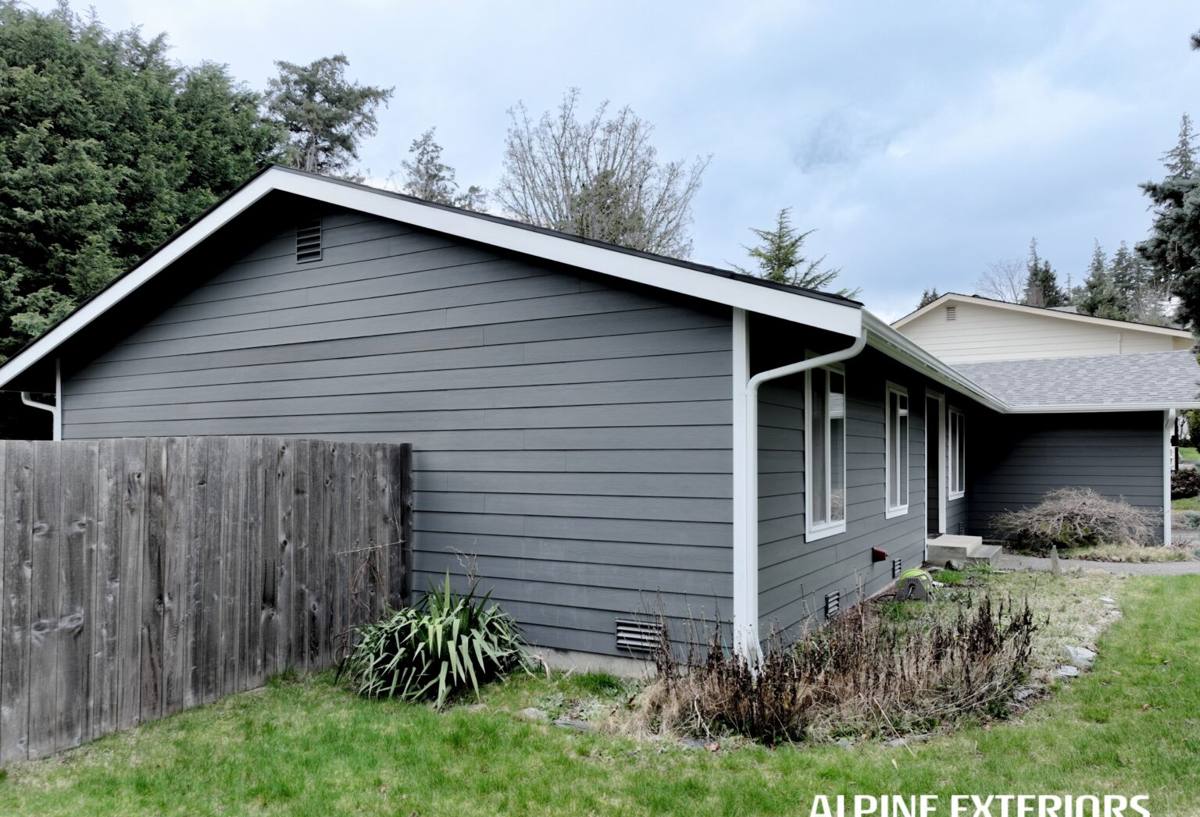
What Pinellas County Climate Does to Siding Before It's Replaced
Hurricane-Force Wind
Every wall in Bardmoor is subject to Pinellas County's wind zone requirements, and older siding — especially anything that was never rated for current wind loads — is often the first thing to show damage after a storm season. Loose panels, popped fasteners, and lifted edges are common on aging siding that was installed to a lower standard than current code requires.
Year-Round UV
Florida's sun angle and day length put more cumulative UV load on exterior surfaces than most of the country sees in a year. On older paint and lower-grade coatings, that UV breaks down the pigment binders over time, which is why so much aging siding in this area looks chalky, faded, or blistered on its sun-facing walls well before it fails structurally.
Wind-Driven Rain
Vertical rain is manageable for almost any siding. Rain pushed sideways by sustained high winds is different — it finds its way into butt joints, fastener holes, and trim intersections that stay dry in a normal rain event. Over enough storm seasons, that's exactly where old siding starts to fail from the inside out.
Salt Air
Bardmoor sits inland of the immediate coastline, but Pinellas County as a whole gets airborne salt carried in off the Gulf and the bay, and it settles on every exterior surface in the area over time. Salt accelerates corrosion on exposed fasteners and trim and contributes to the slow breakdown of coatings and adhesives, which is a quieter but constant part of why siding here ages faster than it would inland in a drier climate.
Repair vs. Full Replacement: How to Tell Which One You Need
| What You're Seeing | Repair May Be Enough | Points to Full Replacement |
|---|---|---|
| Damage location | Isolated to one or two boards or a small section | Spread across multiple elevations or the whole home |
| Moisture behind siding | None found on inspection | Soft sheathing, staining, or musty odor found on tear-back |
| Age of current siding | Under 15 years, otherwise sound | Original siding is 20-25+ years old with no replacement history |
| Fastener and joint condition | Mostly intact, minor caulk touch-up needed | Widespread popped fasteners, open joints, or lifted panels |
| Storm performance | No damage after recent hurricane seasons | Recurring wind or water damage after storms |
What a Correct Siding Replacement Job Actually Involves
Tear-Off and What's Underneath
A real replacement starts with removing the existing siding entirely, not working around it. That's the only way to actually see the sheathing, framing, and any hidden moisture damage that's been developing out of sight. On homes with older siding, we routinely find soft or damaged sheathing near window and door openings, at roof-to-wall transitions, or along the bottom courses closest to grade — areas that take the most water exposure over time.
Water-Resistive Barrier and Flashing
Whatever caused the old siding to fail is often tied to how — or whether — the wall was properly wrapped and flashed in the first place. A correct replacement includes installing a proper water-resistive barrier and integrating flashing correctly at every window, door, and penetration, so wind-driven rain has nowhere to get behind the new siding the way it did the old.
Fastening and Wind Zone Compliance
Pinellas County's wind zone requirements set specific fastening schedules for exterior cladding, and a replacement project is the opportunity to actually meet them, rather than repeating whatever fastening pattern the old siding used decades ago. That includes correct fastener type, spacing, and penetration depth for the wind loads this part of the county sees.
Why We Replace Old Siding With James Hardie Fiber Cement Only
We install exclusively James Hardie fiber cement, and on a replacement project that decision matters even more than on new construction, because the whole point of replacing failed siding is to stop repeating the same problem. James Hardie's HZ5 product line is engineered specifically for humid, high-moisture climates like ours, its ColorPlus factory finish resists the fading and chalking that plain field-painted siding shows under Florida UV, and it's non-combustible, which isn't a concern with the fiber cement itself but is often part of what homeowners ask about when weighing materials. We don't offer vinyl, LP SmartSide, or other fiber cement brands like Cemplank or Allura — not because those products have no merit, but because we'd rather install one system to a high standard, back it with a strong transferable warranty, and know exactly how it performs under the conditions Bardmoor homes actually face.
Choosing the Right Hardie Product Line for a Bardmoor Home
James Hardie makes several product profiles, and the right one depends on the home's architecture and the homeowner's preference, not a one-size-fits-all default.
- HardiePlank lap siding — the most common choice for traditional single-family homes, available in multiple exposure widths and finish textures
- HardieShingle — for homes with a shingle-style look, staggered or straight-edge, without the moisture sensitivity of real wood shingles
- HardiePanel with battens — for a board-and-batten look on full elevations or accent areas
- HardieTrim — matched trim boards for corners, fascia, and window and door surrounds so the finished look is consistent
We walk through these options during the estimate, including which profiles and ColorPlus finishes pair well with the home's existing rooflines and architectural style.
Our Siding Replacement Process, Start to Finish
- Exterior inspection — checking for soft spots, existing moisture damage, and flashing condition before any work is scheduled
- Honest scope and estimate — a clear explanation of what tear-off is likely to reveal and a straightforward number, not a lowball that grows later
- Tear-off — full removal of the existing siding and inspection of the sheathing and framing underneath
- Repair of hidden damage — any rotted sheathing or framing found during tear-off is repaired or replaced before new siding goes on
- Water-resistive barrier and flashing — installed and integrated correctly at every window, door, and penetration
- James Hardie installation — plank, panel, or shingle siding installed to manufacturer specification and Pinellas County wind code
- Trim and finish work — corner boards, fascia, and trim matched to the chosen Hardie product line
- Final walkthrough — reviewing caulking, touch-up needs, and basic care so the homeowner knows what to expect going forward
What Affects the Cost of a Full Siding Replacement
| Factor | Why It Matters |
|---|---|
| Home size and number of stories | More surface area and taller walls mean more material and labor time |
| Condition found during tear-off | Hidden sheathing or framing repair adds cost that only becomes clear once old siding is off |
| Product line chosen | Lap siding, shingle profiles, and board-and-batten looks carry different material and labor costs |
| Trim and detail complexity | Homes with more corners, window trim, and architectural detail take more labor to finish correctly |
| Existing siding removal | Some materials are more labor-intensive to strip and dispose of than others |
We walk through these factors specifically during the estimate rather than quoting a flat per-square-foot number that doesn't reflect what your home actually needs.
Why Hiring a Crew That Already Works Bardmoor Matters
Siding replacement quality comes down to details that don't show up until years later — how flashing was lapped, how much clearance was left at the bottom course, whether fasteners were driven to the right depth for this wind zone. A crew that regularly works Seminole and the surrounding Pinellas County area has already seen how those details play out on this housing stock, under this specific mix of storm exposure, UV load, and salt air. That experience matters more here than in a milder climate, because the margin for error is smaller — wind-driven rain and salt air find weaknesses that a gentler climate would let slide for years without consequence.
It also matters for permitting. A contractor who pulls permits in Pinellas County regularly knows what the county's wind zone requirements actually call for and what inspectors are checking, rather than applying a generic standard that doesn't match local code.
Questions Worth Asking Before You Hire
- Do they pull their own permits and know Pinellas County's current wind zone requirements?
- Can they show proof of manufacturer certification for the product they're installing?
- How do they handle sheathing or framing repair if it's found during tear-off?
- What does the flashing and water-resistive barrier plan look like for your home specifically?
- Is the estimate itemized enough to show what's driving the cost?
- What warranty coverage applies to both the material and the installation labor?
Signs It's Time to Get a Siding Replacement Estimate
- Siding that's chalking, fading unevenly, or peeling faster on sun-facing walls
- Soft or spongy areas when pressing near windows, doors, or the bottom courses
- Visible gaps, warping, or buckling, especially after a recent storm season
- Rust streaks or corrosion around fasteners and trim
- Musty odors or staining on interior walls that back up to exterior siding
- Siding that's 20-25 years old or more with no documented replacement history
None of these signs automatically mean a full tear-off is required, but they're worth a professional look before the next storm season rather than after water has already worked its way into the sheathing and framing.
If you're in Bardmoor or elsewhere around Seminole and wondering whether your siding needs a real look, we're happy to come out and give you a straightforward, no-pressure estimate using the form below.